Creative OOH advertising works when it stops feeling like advertising — and starts earning its place in the cultural landscape.
The problem with most outdoor advertising
Most brands treat OOH as a media decision. They buy the space, hand over a resized digital asset, and move on. The creative is an afterthought. The location is chosen by reach metrics. The result is wallpaper — technically present, culturally invisible.
This is the fundamental misunderstanding at the heart of most outdoor advertising investment. Brands optimize for impressions and end up with none that matter. A billboard seen by 200,000 people who immediately forget it is not a brand touchpoint. It's a sunk cost dressed up as a media plan.
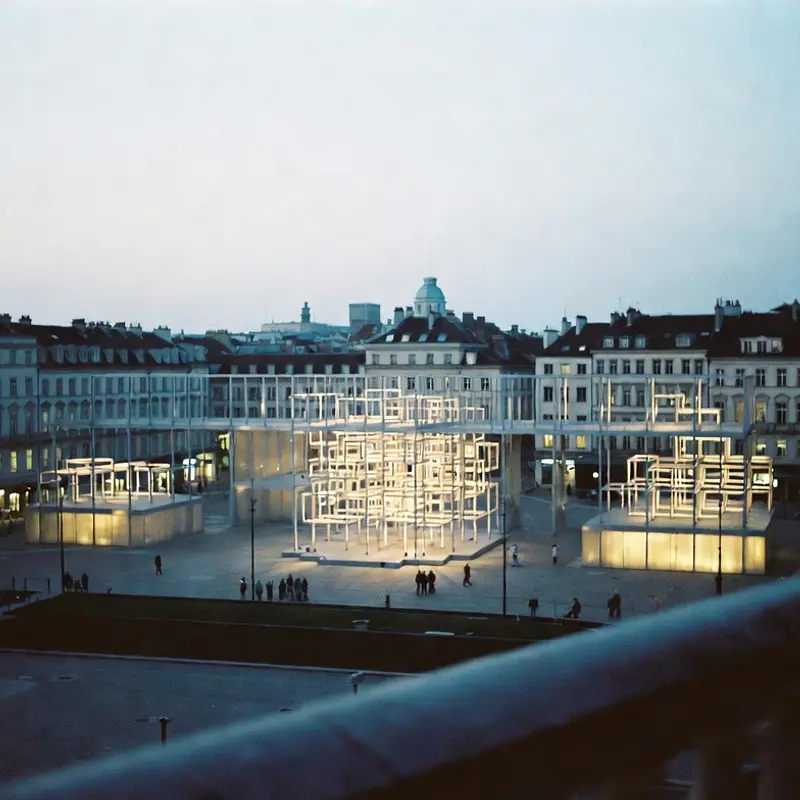
The Swatch BREAK FREE campaign in Berlin is a precise example of what it looks like when a brand chooses the right medium for the right cultural moment rather than defaulting to static placement.
The projection strategy was a deliberate cultural choice, not a media one. Guerrilla mapping allowed the campaign to behave like street culture itself — ephemeral, unexpected, embedded in Berlin's nighttime rhythm. The moving visuals echoed the dynamism of the BREAK FREE collection's breakdance heritage, while the temporary nature of the intervention kept the brand credible within a culture that values authenticity over spectacle. No static placement would have done the same work.
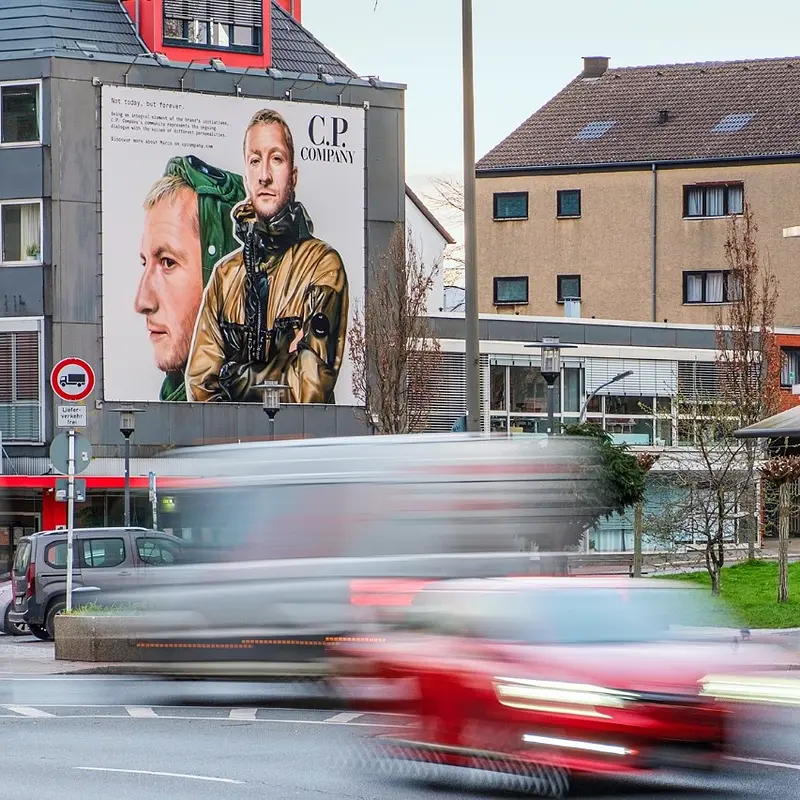
The brands that get OOH right approach it from the opposite direction. They start with a creative idea specific enough to justify the space. They choose locations for cultural resonance, not just footfall. And they invest in execution with the same rigor they'd apply to a flagship retail environment or a product launch. The result doesn't look like advertising. It looks like something that belongs there — which is precisely why people stop, photograph it, and share it.
The difference between OOH that gets noticed and OOH that gets forgotten isn't budget. It's creative ambition combined with cultural intelligence.
What separates OOH that earns attention from OOH that buys it
There are two logics operating in outdoor advertising, and most brands conflate them.
Media logic asks: how many people will see this? Where is the highest-traffic location? What's the cost per thousand impressions? These are legitimate planning questions. But they are entirely the wrong questions to ask when building a creative concept.
Cultural logic asks something different: why would anyone care? What makes this specific to this place, this moment, this audience? What does this piece of work say about the brand that a digital banner never could?
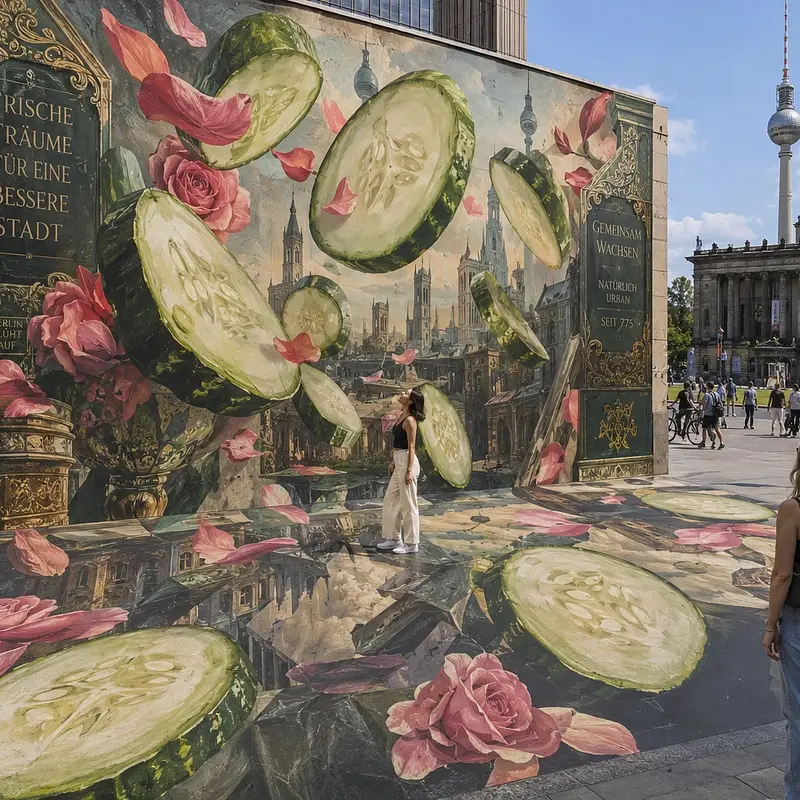
The campaigns that cross from advertising into culture are built on cultural logic first, media logic second. They are site-specific — conceived for a particular wall, street, or city, not for a generic surface. They are made with craft that rewards close attention. And they are bold enough to generate a reaction beyond passive awareness. People don't share billboards. They share work that surprises them, that shows genuine creative commitment, that feels like it was made for them rather than at them.
This is also where the investment case becomes clear. A culturally significant OOH piece generates organic amplification that no media buy can replicate. The earned media value — social sharing, press coverage, word of mouth — routinely exceeds the production cost of the work itself. The brands that understand this stop thinking about OOH as a cost line and start treating it as a cultural asset.
The role of cultural collaboration in outdoor advertising
The gap between OOH that looks like advertising and OOH that looks like it belongs is almost always a gap in creative process. Specifically, it's the gap between work made by a production team following a brief and work shaped by a cultural collaborator with genuine creative authority.
When artists, muralists, and artisans are embedded in an OOH project from the concept stage — not brought in at the end to execute a pre-approved design — the work carries a quality that audiences recognize without being able to articulate it. It has specificity. It has point of view. It has the kind of craft that makes someone slow down rather than scroll past.
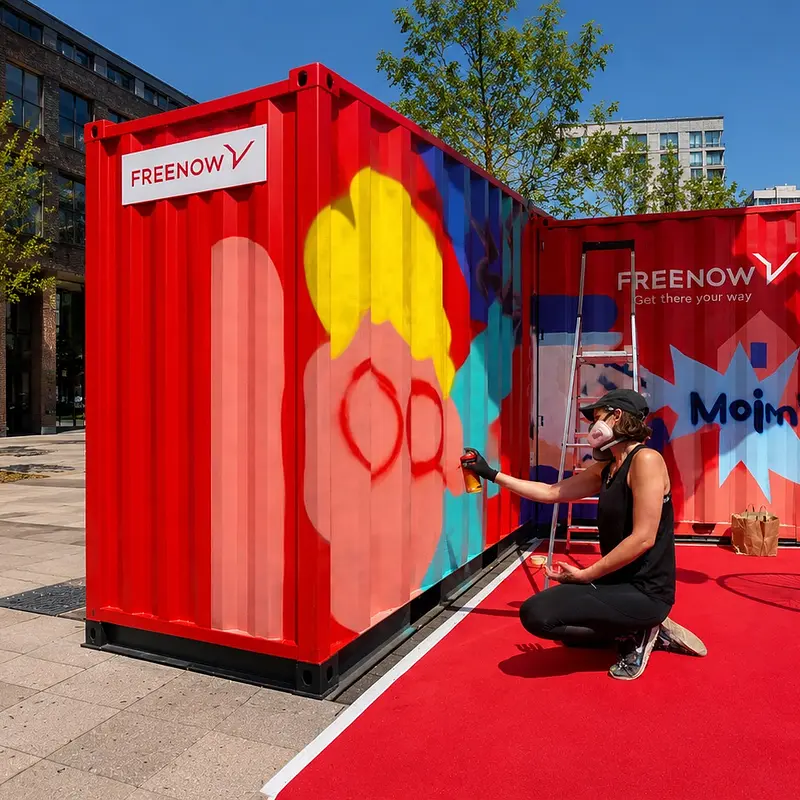
This is not about decorating a campaign with artistic credentials. It's about building the creative concept in collaboration with someone whose entire practice is rooted in the specificity of place, surface, and visual language. A muralist working at scale on a specific wall in a specific city brings knowledge and intuition that no studio-based design process can replicate. The result is work that feels native to its environment rather than imposed on it.
The brands that consistently produce the most culturally resonant OOH — from large-format murals to site-specific installations — share a common approach: they integrate cultural collaborators early, give them genuine creative latitude, and invest in execution that honors the scale of the work.
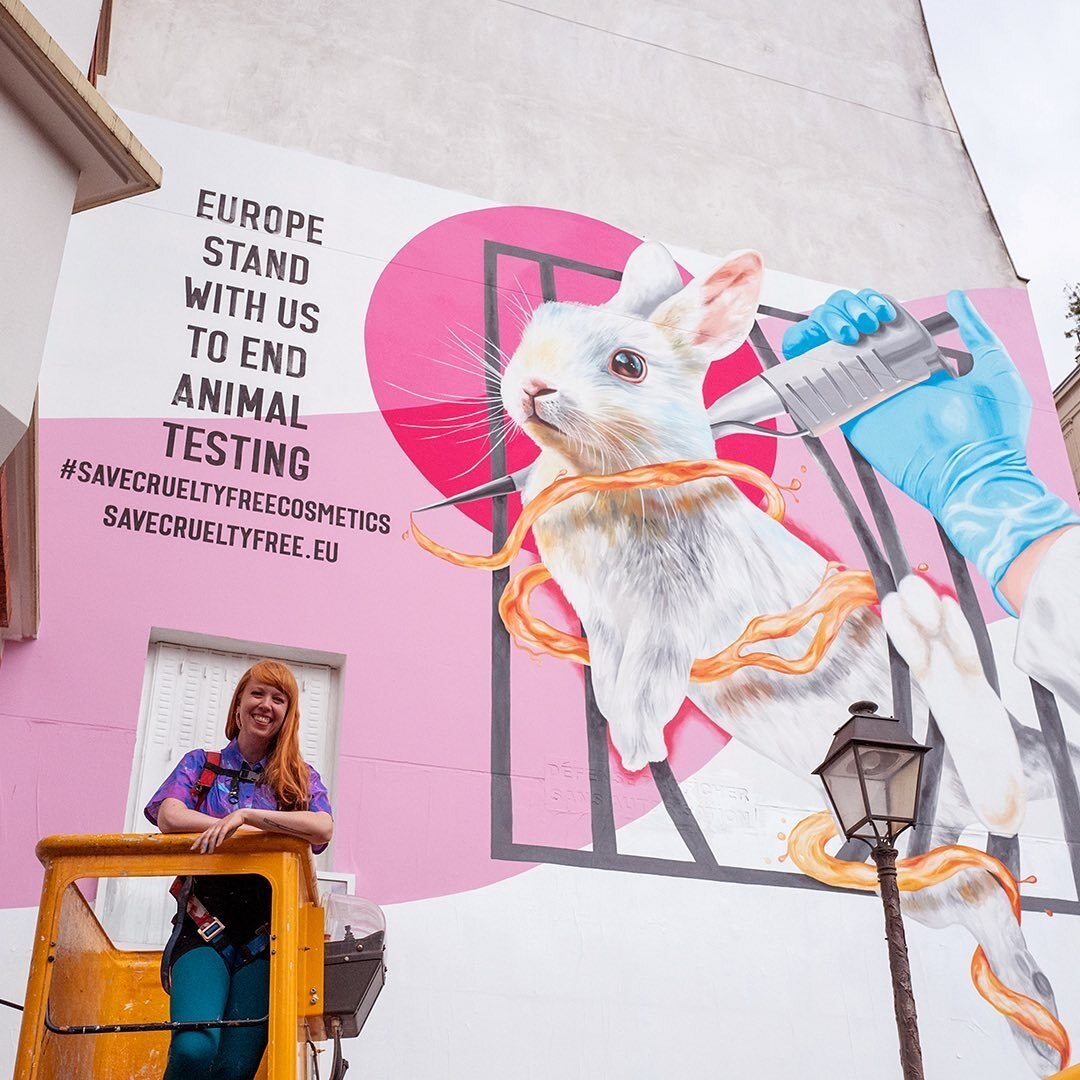
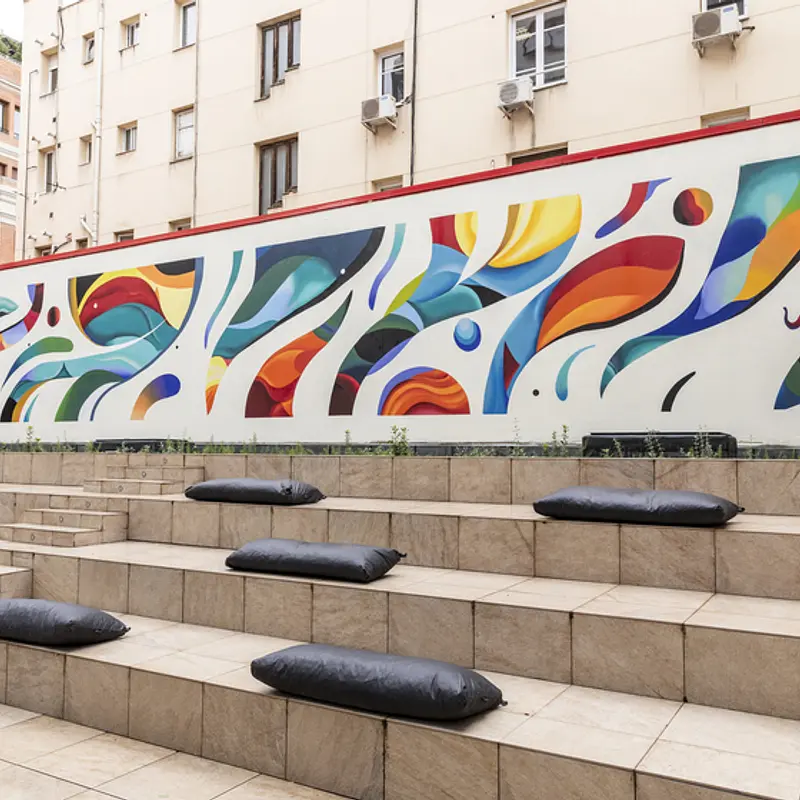
The Dove x The Body Shop campaign against animal cosmetic testing is a precise example of what this looks like in practice. Nina Valkhoff — a muralist whose practice is built around endangered species and the natural world — was not chosen for her technical ability alone. She was chosen because her work, her values, and her audience were in genuine alignment with the campaign's message. The result was a mural that didn't need to explain itself. Valkhoff's community already understood what it stood for — and trusted it, because the person who made it stood for the same thing. That kind of cultural credibility cannot be bought through media placement. It has to be earned through the right collaboration.
Nina Valkhoff x Dove,Paris. A creative OOH campaign developed through cultural collaboration — the creative concept shaped by the artist, the brand present without overwhelming the work. Produced by Basa Studio.
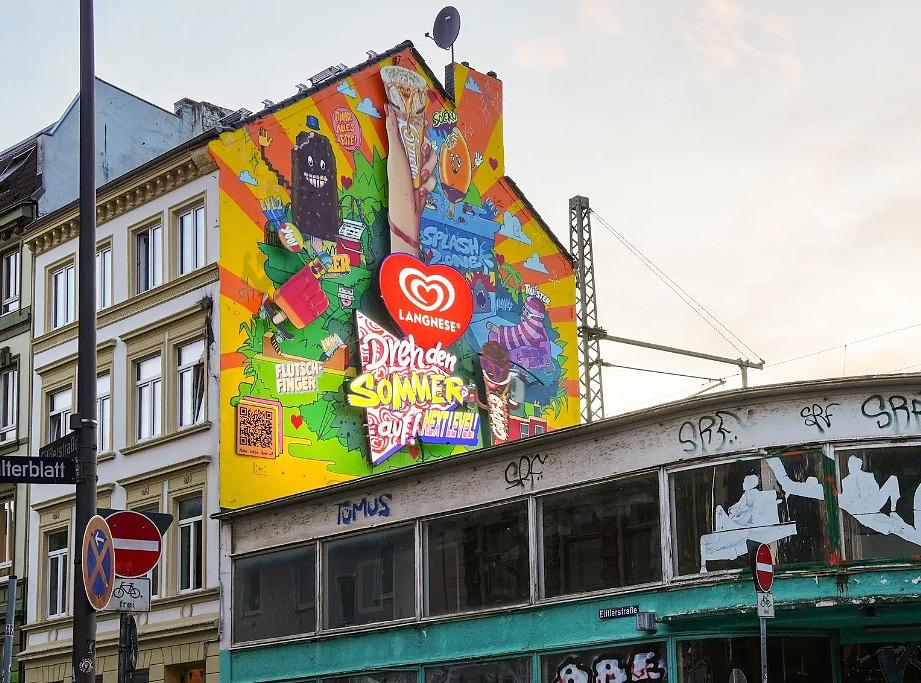
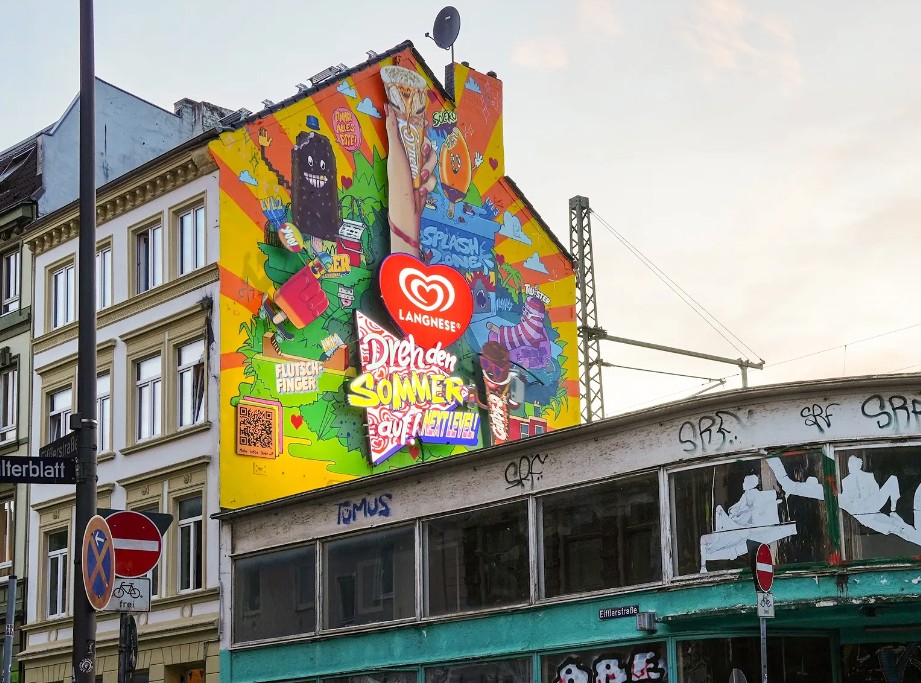
The same principle applies when the brief calls for something technically ambitious. For Langnese's 2025 summer campaign in Hamburg, Outframe led a team of four artists across ten days to transform a building facade on Schulterblatt — one of the city's busiest social districts — into a large-format mural OOH brand activation that moved. Literally. Three kinetic elements built into the mural shifted with the wind, while LED-illuminated brand logos lit the piece after dark. Eighty spray cans, three weeks of custom kinetic engineering, and a separately designed garage door at the same building — turned into a dedicated selfie spot. Passersby stopped to film it before any paid media ran alongside it. That is what experiential OOH looks like when craft, technology, and creative ambition are given room to work together.
Detail view. The Langnese logo and campaign lettering were LED-illuminated — the mural worked as hard after dark as it did in daylight
Mural advertising campaigns that became cultural moments
The most instructive outdoor advertising campaigns are not the ones with the largest media budgets. They are the ones where creative ambition produced outcomes no media plan could have predicted.
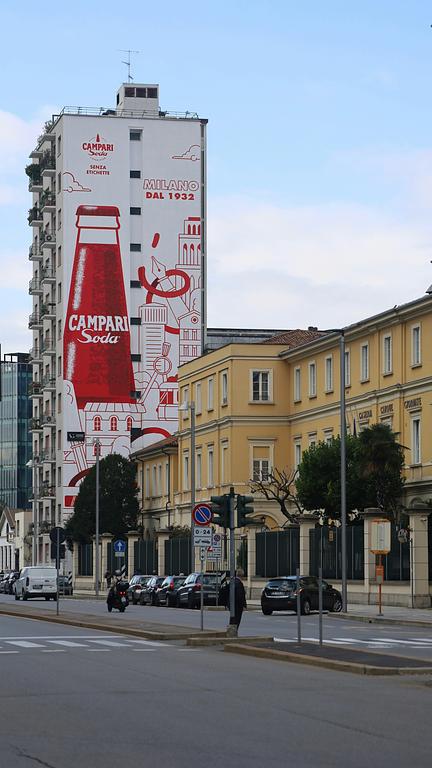
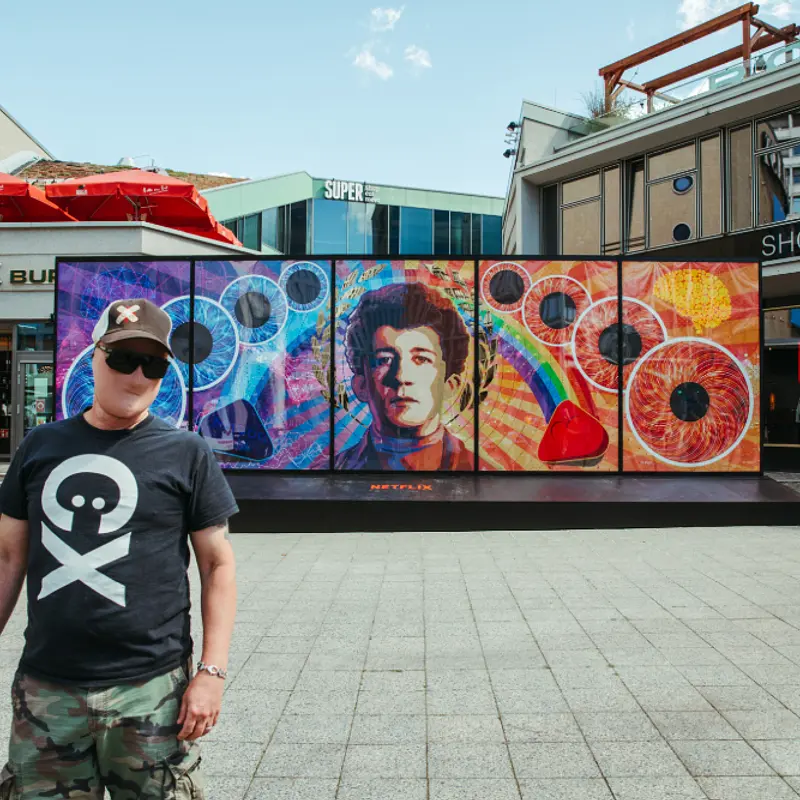
Netflix's approach to mural advertising in Europe offers a useful reference point for what bold OOH looks like when executed with genuine creative authority. Rather than applying a single campaign visual across standardized formats, Netflix has consistently commissioned site-specific interpretations from individual artists — giving each work a distinct visual identity while maintaining narrative coherence across cities. The result is OOH that functions simultaneously as brand advertising and public art. People seek it out. They document it. They talk about it.
The underlying principle is consistent across the best-performing campaigns: creative specificity beats production scale. A mural that was clearly made for this wall, in this neighborhood, with this artist's hand in it, will outperform a perfectly produced generic visual every time. Not because specificity is aesthetically superior — but because specificity is what makes something feel real. And audiences, particularly in saturated media environments, have a finely calibrated detector for the difference between work that was made and work that was placed.
The brands that understand this treat OOH as a distinct medium with its own creative demands. Scale, surface, light, weather, neighborhood context: these are not constraints to work around. They are the brief.
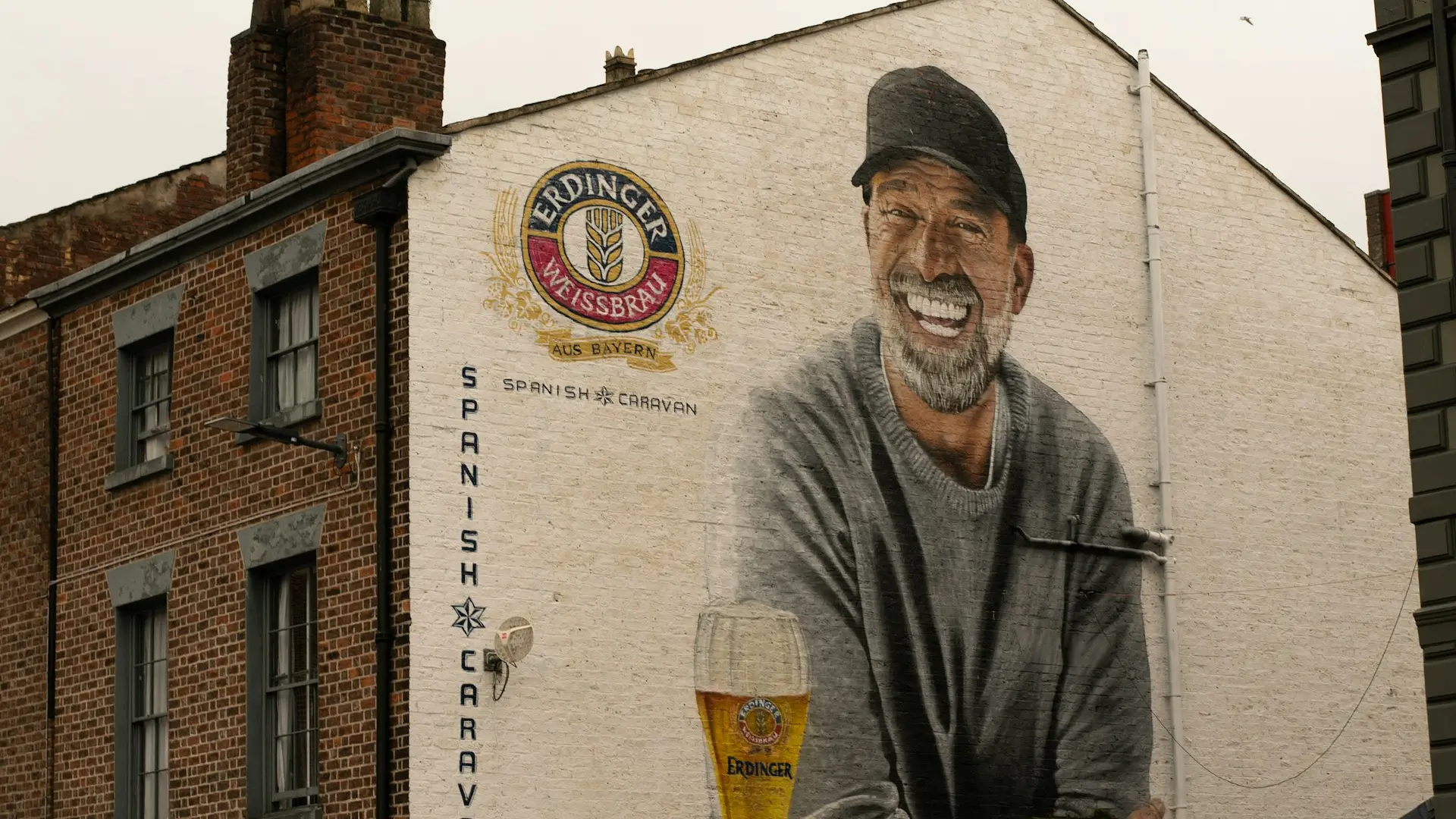
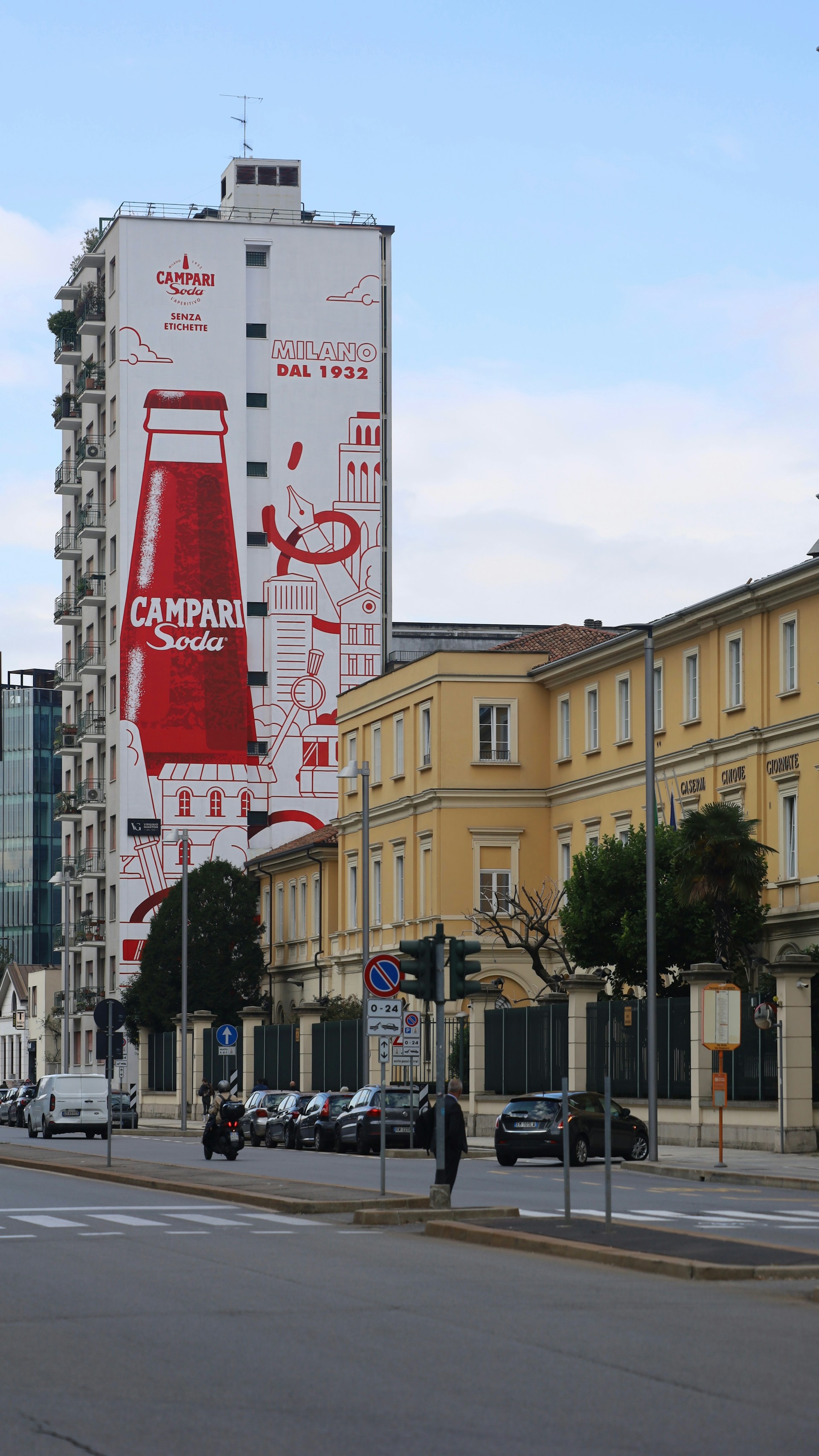
Campari Soda, Milan. "Milano dal 1932" — OOH advertising that derives its authority from belonging to the city it's painted in. Photo: Claudio Poggio
What brands get wrong when briefing OOH
The most common OOH briefing failure is treating the medium as a delivery mechanism rather than a creative opportunity. Brands brief for impressions rather than impact, hand over finished artwork rather than an open creative question, and choose locations after the concept is locked rather than as part of it.
Three patterns appear consistently in briefs that produce forgettable work.
The resized digital asset. A visual designed for a 9:16 social format, scaled up and applied to a 20-square-meter wall. The medium change is purely technical. The creative thinking remains digital. The result looks exactly like what it is: an afterthought.
The location-first decision. The site is chosen before the concept exists — usually because a specific location was available or affordable. Creative then has to work backwards from a space rather than forwards from an idea. The work ends up generic by necessity.
The compressed timeline. OOH involving cultural collaboration — particularly large-format murals and site-specific installations — requires lead time that most campaign production schedules don't allow for. Rushing the creative process produces exactly the kind of work that earns no attention.
The most effective OOH briefs do the opposite. They open with a creative question rather than a finished direction. They treat location selection as a creative decision. And they build in the time and budget for execution that honors the scale of the medium.
OOH advertising as a long-term cultural touchpoint
The brands that consistently produce culturally significant OOH are not approaching it campaign by campaign. They are building a cumulative presence in physical space — a body of outdoor work that, over time, compounds into genuine cultural authority.
This is the strategic argument for treating OOH as a touchpoint in a broader "Cultural Brand Building"strategy rather than a standalone activation. Each piece of work builds on the last. Each collaboration deepens the brand's relationships with the cultural communities that matter to its audience. Each site-specific work adds to a geography of brand presence that is genuinely difficult for competitors to replicate — because it is rooted in real creative relationships and real places, not in media buying power.
The brands that get this right — across fashion, automotive, lifestyle, and beyond — share a common orientation: they think about OOH the way they think about their retail environments or their product design. Not as a cost to be managed, but as a touchpoint where cultural depth is either built or missed entirely.
The street is not a billboard network. For the brands that treat it that way, that's all it will ever be.
Related creative stories
Browse through other features, interviews and guides to discover creative brand collaborations, meet innovative artists and creators, find out how new artforms are energizing advertising, & more.
We're excited to hear from you! If you're looking for artistic solutions for your next creative marketing campaign, send us your briefing. We can also help create a killer concept if you're in an early ideation phase. Check out our services for more.
Send your briefing
About you
THANK YOU
Your inquiry has been sent
We have received your inquiry. We'll get back to you within 24-48 hours to discuss your project. If you need urgent assistance, reach us on WhatsApp: +49 176 432 64506. In the meantime, we invite you to explore our insights, case studies, and lessons from building culturally grounded brand experiences.
Please contact us by phone if you're not able to reach us via this form.
THANK YOU
We have received your inquiry. We'll get back to you within 24-48 hours to discuss your project. If you need urgent assistance, reach us on WhatsApp: +49 176 432 64506. In the meantime, we invite you to explore our insights, case studies, and lessons from building culturally grounded brand experiences.
We use cookies to help empower our artists and make them accessible to clients. Check out our Privacy Policy and Terms of Service to see how your data can make a difference.