Hand-painted OOH advertising is how premium brands turn a media buy into a cultural moment that earns attention rather than demanding it.
The Billboard That Stopped Traffic — and Started a Conversation
There is a particular kind of attention that no programmatic campaign can manufacture. It happens when someone stops mid-stride, looks up, and says: who made that?
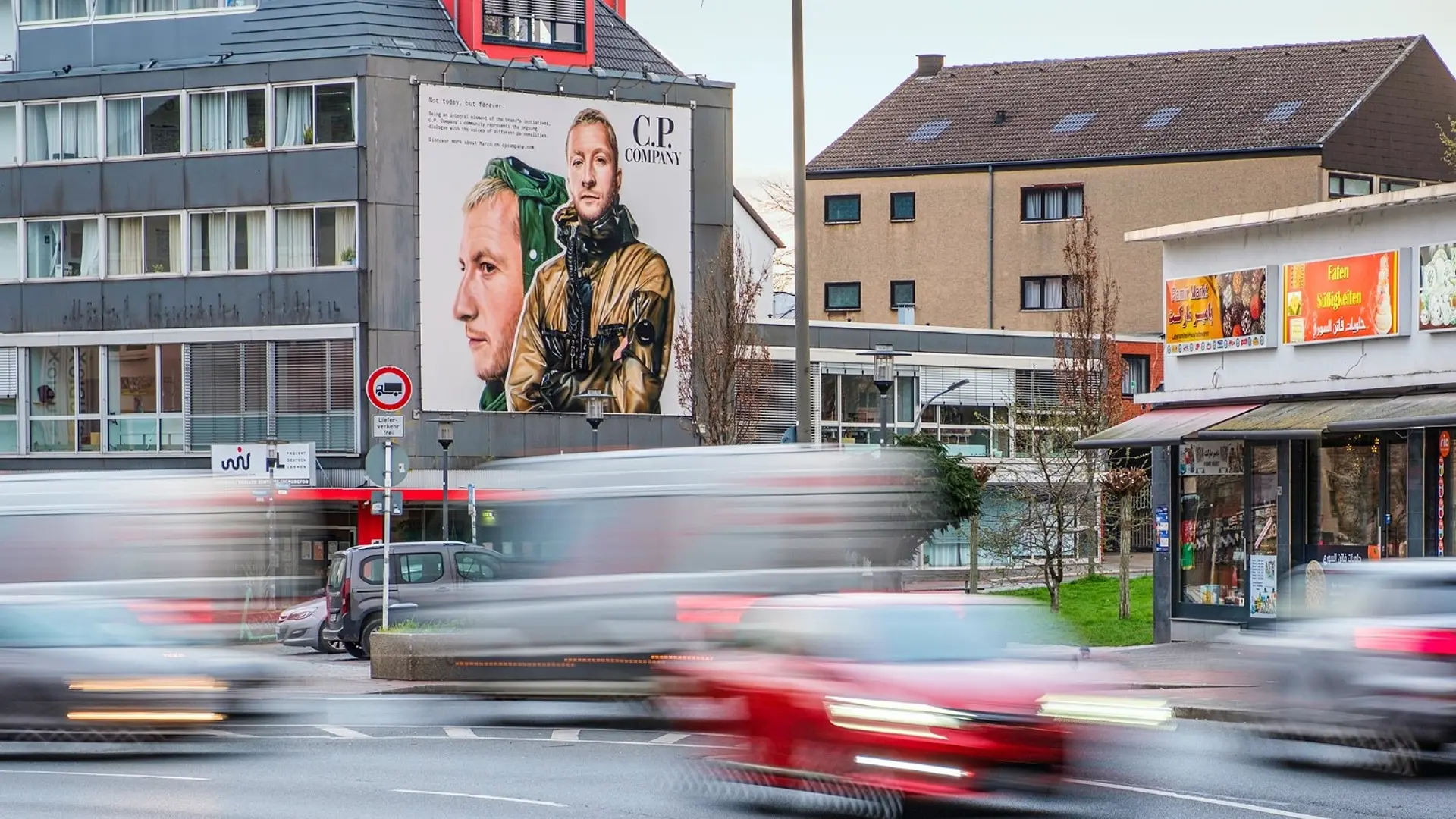
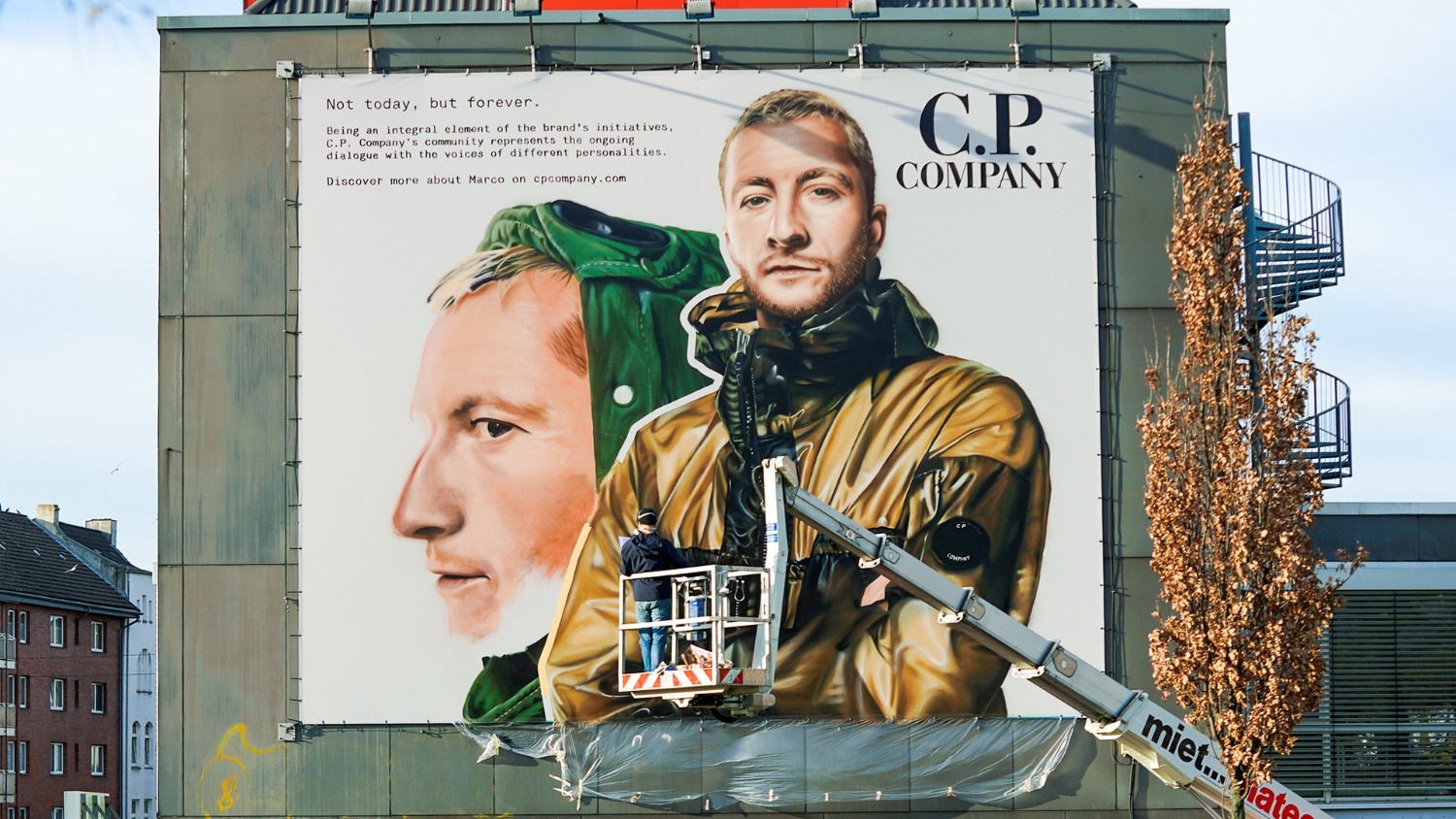
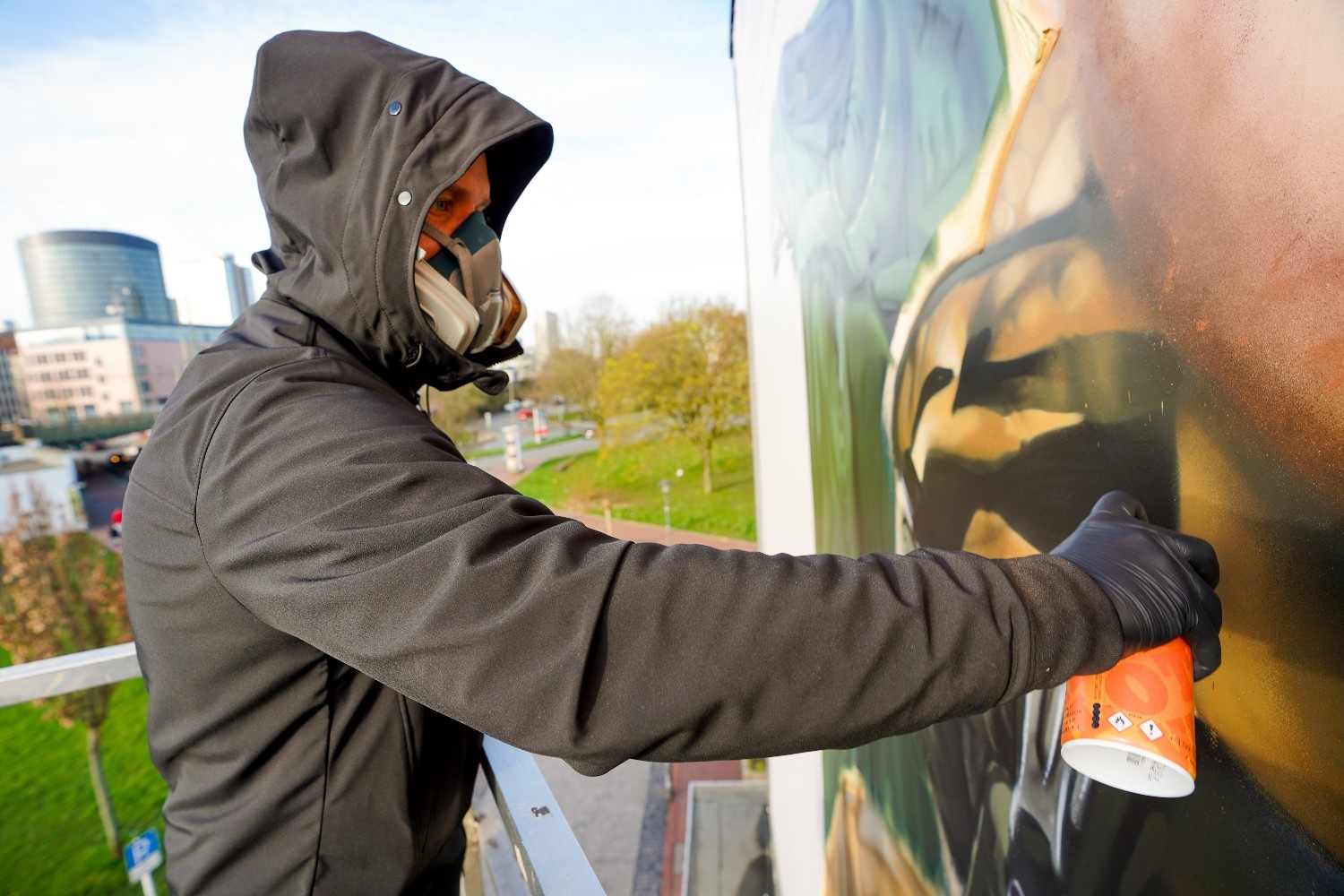
That is what C.P. Company achieved in Dortmund. At one of the city's busiest intersections — visible from the B54 federal highway, steps from the DFB Museum and the main train station — the Italian premium sportswear brand commissioned a 70-square-meter hand-painted portrait of German football star Marco Reus. Not a printed billboard. Not a digital screen. A portrait executed entirely by hand, with 100 spray cans, over five days, by artists selected for their mastery of hyperrealistic portraiture.
The result was not just an advertisement. It was a landmark. And that distinction — between something people glance at and something people seek out — is precisely what makes hand-painted OOH advertising one of the most strategically powerful touchpoints available to premium brands today.
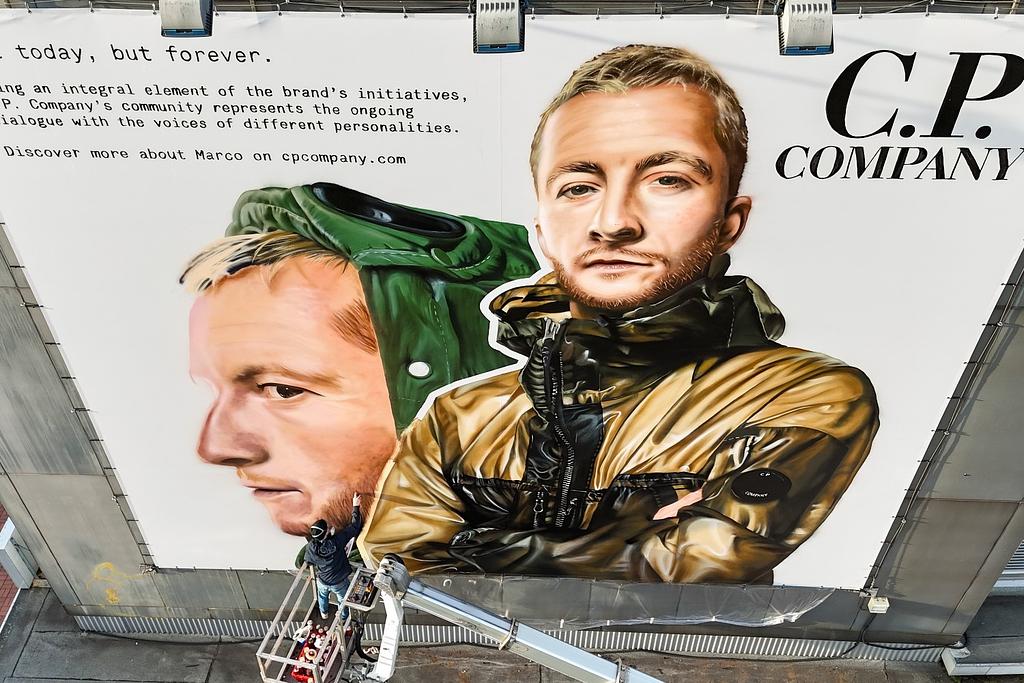
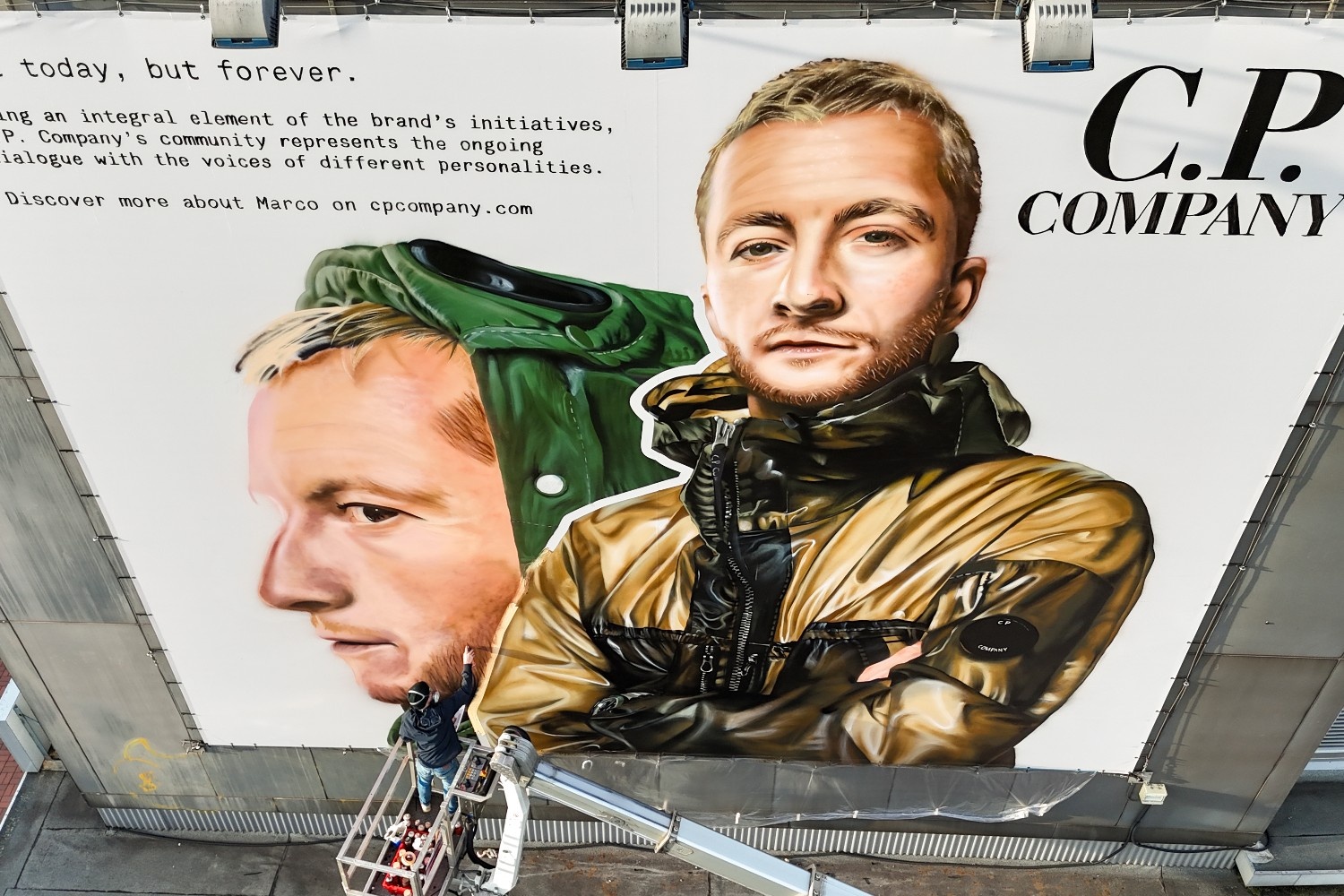
The 70-square-meter C.P. Company mural being painted on location in Dortmund — five days of execution on a specially prepared XL poster surface, visible from the B54 federal highway.
Why Premium Brands Are Returning to Artisanal Execution
Digital out-of-home is everywhere. Programmatic placement is efficient. And precisely because of that ubiquity, it has become invisible.
Premium and luxury brands are facing a paradox: the more optimized their media buying becomes, the less their presence registers. Audiences — particularly the affluent, culturally literate consumers these brands depend on — have developed a sophisticated immunity to polished, algorithm-placed creative. They don't just ignore it. They distrust it.
Hand-painted mural advertising breaks that pattern at a structural level. It is inherently local, inherently singular, and inherently human. There is no template. No versioning. No A/B test. Every brushstroke is a decision, and audiences — even those who cannot articulate why — sense that difference.
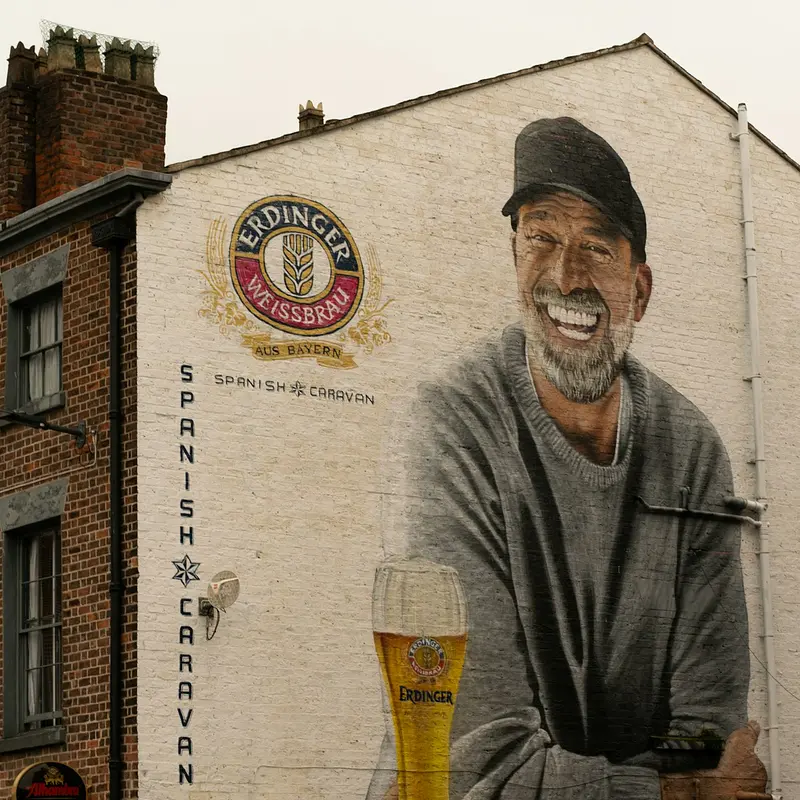
This is what the luxury sector has started calling "slow luxury": a deliberate return to artisanal techniques that signal investment, care, and permanence. Major fashion houses — Loewe, Gucci, Hermès, Swarovski, Valentino, Burberry — are increasingly commissioning hand-painted murals as a strategic choice, not a stylistic detour. For brands like C.P. Company, this is not nostalgia — it is a signal about what kind of brand they are.
For brands considering this format, the C.P. Company campaign in Dortmund makes the case clearly: hand-painted OOH advertising earns a different kind of attention — one that printed and digital formats, however well-placed, cannot replicate.
"What makes this project unique is not just its scale, but how it transforms a traditional advertising space into an artistic landmark. The combination of a VIP testimonial, premium fashion, and street art creates a powerful statement about the brand's identity."
explains the project lead at Basa Studio.
Location as Strategy, Not Just Media Planning
What elevated the C.P. Company campaign beyond a well-executed production was the deliberateness of its placement.
The intersection near the DFB Museum and Dortmund's central station is not simply high-traffic. It is a cultural crossroads: a place where locals, tourists, football supporters, and fashion-conscious visitors naturally converge. For a brand like C.P. Company — rooted in technical sportswear with genuine football heritage — this location was not chosen for impressions. It was chosen for cultural resonance.
This is the distinction that separates hand-painted OOH advertising done well from hand-painted OOH advertising done for show. Location selection in this context is not a media planning exercise. It is a brand strategy decision. The question is not where will the most people see this? but where will the right people encounter this, in the right context, and what will they feel when they do?
A 70-square-meter portrait of Marco Reus — one of German football's most recognizable figures — placed at the gateway to the city's football and cultural district, wearing C.P. Company's latest collection, is a statement of belonging. It tells a story about the brand's relationship to football culture, to German cities, to craft. No media brief captures that. It requires strategic intention from the earliest stages of concept development.
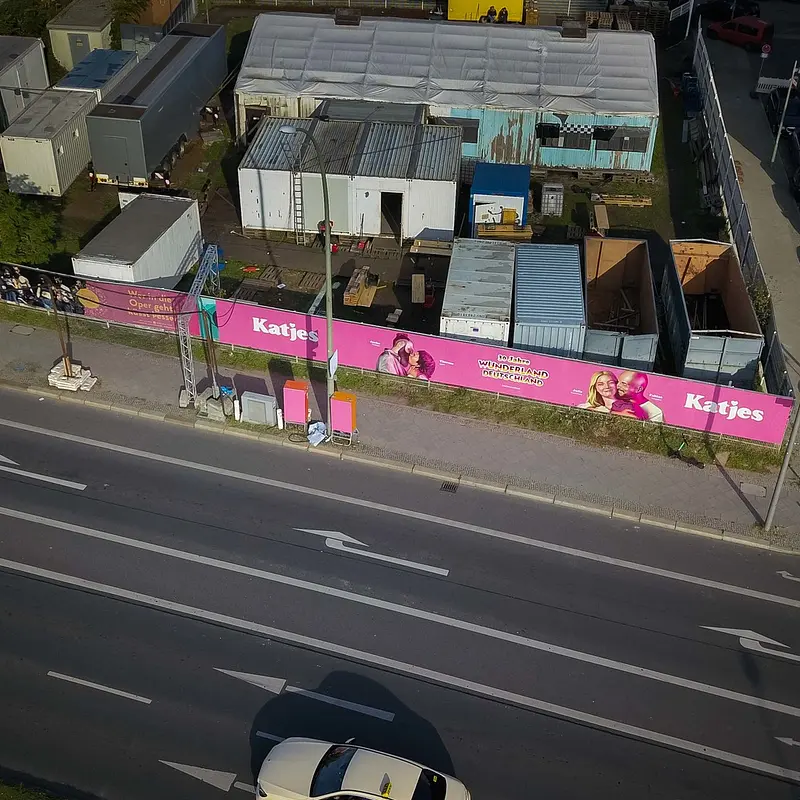
The strategic location near the DFB Museum maximizes visibility for both locals and tourists.jpg20.7 MB
The Production Reality Behind the Cultural Impact
It is worth being direct about what this kind of campaign requires — because the gap between what it takes and what brands typically budget for OOH is significant.
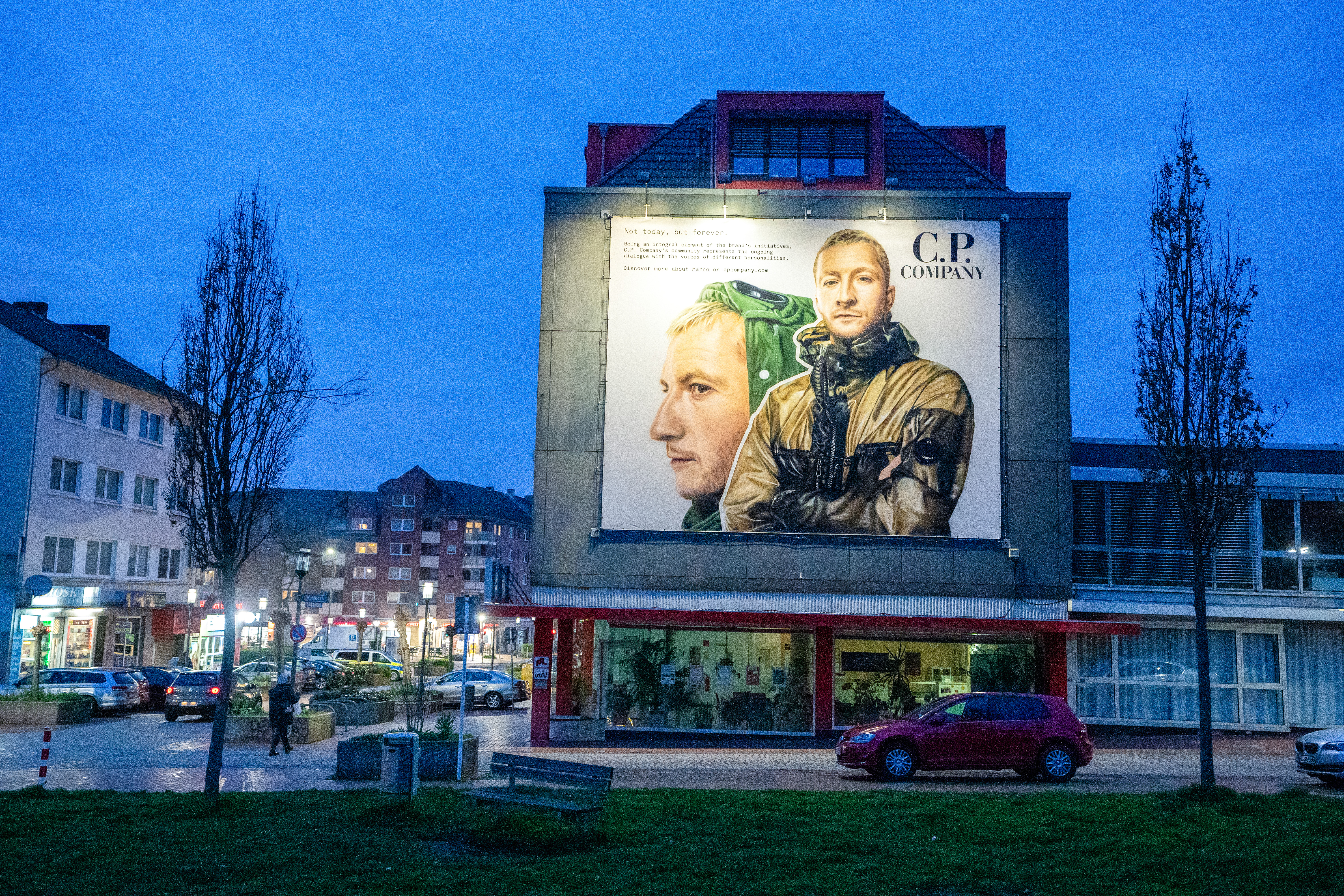
The C.P. Company Dortmund campaign involved a 14-day installation window, professional lighting for 24-hour visibility, comprehensive permit management across multiple city authorities, dedicated photo and video production across multiple days, and the coordination of specialists in hyperrealistic portraiture working on a non-standard surface at scale.
This is not a production a brand can improvise. The artists involved were not selected because they were available — they were selected because they possessed a specific technical capability: the ability to render a recognizable human likeness with precision at monumental scale, on a material and surface that behaves differently from a studio canvas, in outdoor conditions, to a deadline.
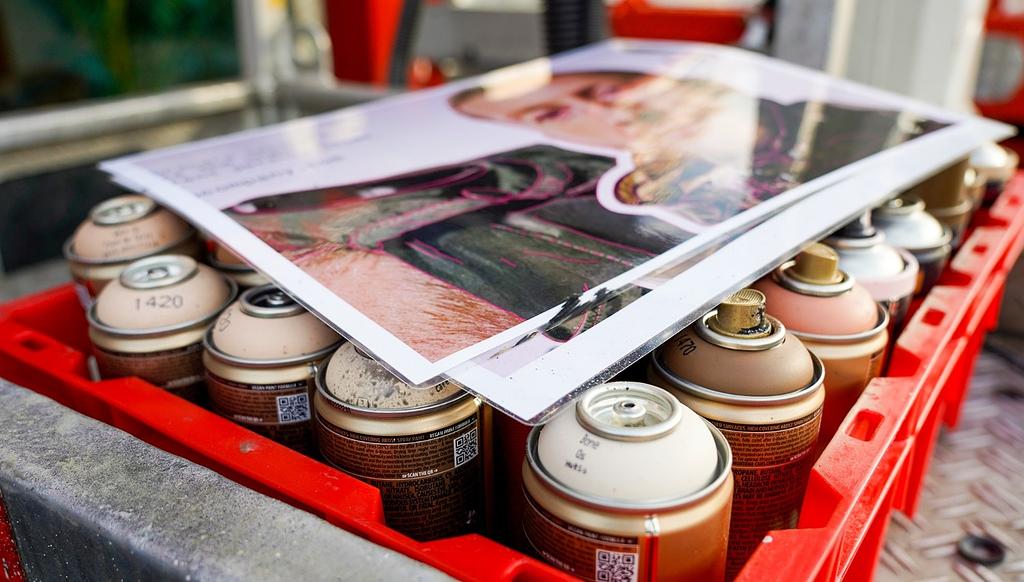
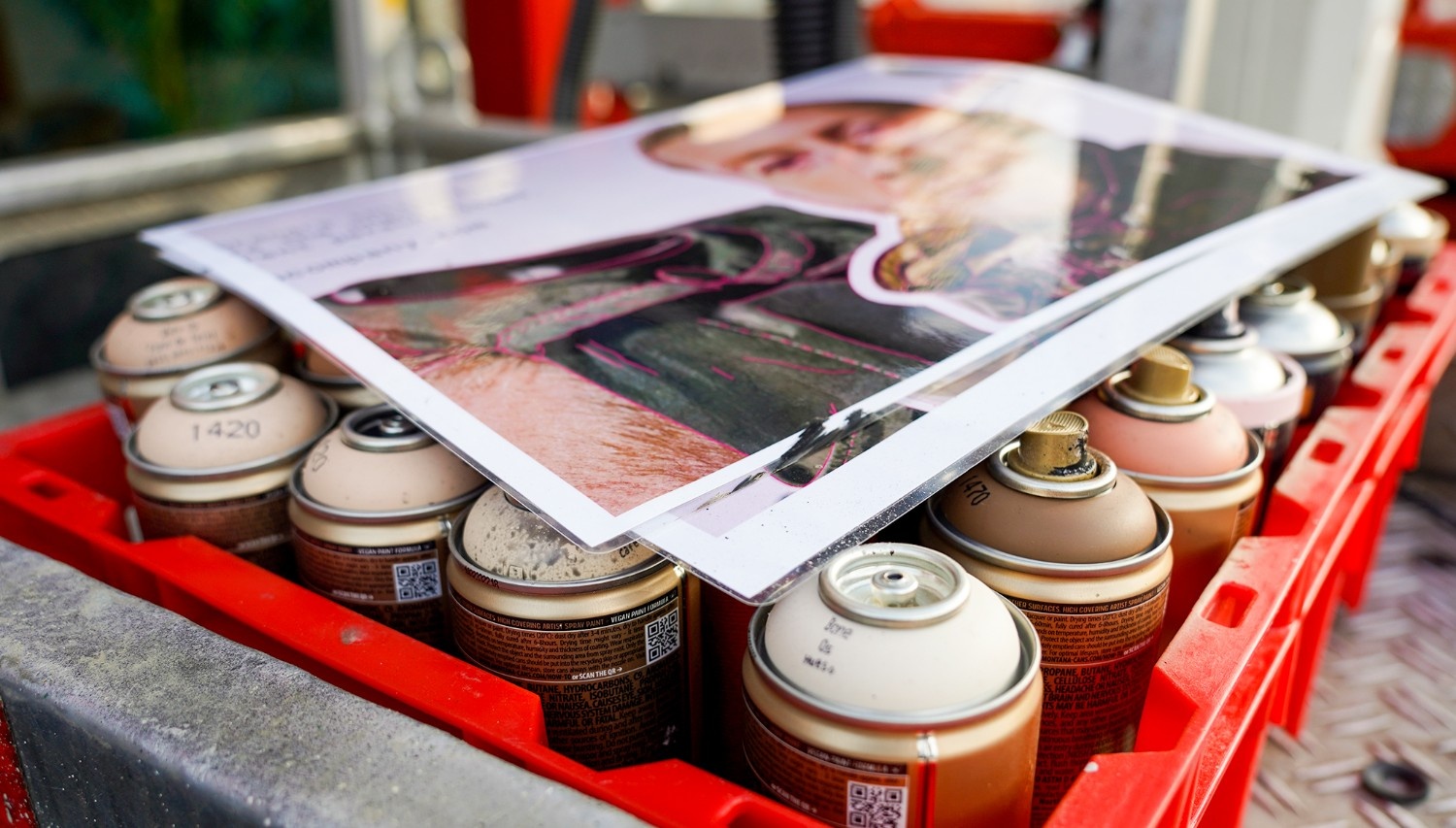
Over 100 spray cans were prepared for the execution — each colour selected to achieve the precision required for hyperrealistic portraiture at 70 square meters.
The coordination required — between the brand, a Munich-based agency partner, the artists, city permitting offices, lighting suppliers, and documentation teams — demands a production partner who understands both the creative and the logistical dimensions simultaneously. Misalignment at any point collapses the outcome.
"This kind of hand-painted advertising requires perfect synchronization between multiple stakeholders. From securing permits to coordinating with photographers and videographers, every element had to align perfectly to achieve the desired impact."
notes the project coordinator.
What Hand-Painted OOH Delivers That Digital Cannot
Let's talk about outcomes, because the business case for hand-painted OOH advertising is stronger than it might appear from the investment figure alone.
Earned media amplification. A well-executed mural generates organic social content at a scale no paid campaign can replicate for the same cost. The C.P. Company installation in Dortmund was documented not just by the brand's own production team but by passersby, football fans, and local media. That content circulates with a credibility that branded content does not carry — it is shared because it is genuinely interesting, not because an algorithm placed it.
Duration and physical presence. Digital OOH cycles through dozens of creatives per hour. A hand-painted mural owns its location for the duration of its installation — in this case, 14 days. That sustained physical presence builds familiarity and memory encoding in ways that rotating digital cannot match.
The aerial perspective reveals both the scale of the execution and the precision required — every detail of fabric, skin tone, and shadow rendered by hand at monumental size.
Cultural authority. This is the hardest to quantify and the most valuable. When a premium brand invests visibly in craft — when the execution itself communicates care, skill, and intention — it shapes how audiences perceive the brand's relationship to quality. Hand-painted OOH advertising is a public declaration of values, not just a media placement.
Audience self-selection. The people who stop, photograph, and share a hand-painted mural are precisely the culturally engaged, aesthetically literate consumers that premium brands most want to reach. The medium selects for its audience.
The technical precision required for hyperrealistic portraiture at this scale demands artists selected specifically for that capability — not generalist muralists.
The Strategic Brief Comes First
The risk brands face when approaching hand-painted OOH advertising is treating it as a production format rather than a strategic decision. Commissioning a mural because murals are having a moment is the fastest route to a campaign that feels exactly like what it is: a brand chasing a trend.
What made the C.P. Company campaign land was that every element — the location, the subject, the scale, the timing, the artist selection — served a coherent strategic argument about the brand's identity and its relationship to German football culture. The execution was impressive. But the thinking came first.
For CMOs and brand directors considering this format, the right starting question is not what should we paint? It is what do we want this presence to say about who we are, and where in the cultural landscape do we belong? The answers to those questions determine everything that follows — location, scale, artistic direction, and the kind of collaborators who can bring it to life with genuine craft.
Hand-painted OOH advertising, done well, is one of the most direct expressions of cultural brand building available. It is public, permanent within its window, rooted in human skill, and impossible to replicate at scale. In a media environment defined by frictionless reproduction, that singularity is its own form of premium.
A Final Note on Investment
The C.P. Company campaign represented a total investment covering artisan execution, professional lighting, permit management, multi-day photo and video production, installation and dismantling, materials, and specialist equipment. For brands accustomed to thinking about OOH purely in terms of media spend, the all-in cost of a hand-painted execution can feel unfamiliar.
It shouldn't. The comparison is not between a printed billboard and a painted one. The comparison is between a media placement and a cultural moment — and those are not priced the same way, because they do not deliver the same thing.
Related creative stories
Browse through other features, interviews and guides to discover creative brand collaborations, meet innovative artists and creators, find out how new artforms are energizing advertising, & more.
We're excited to hear from you! If you're looking for artistic solutions for your next creative marketing campaign, send us your briefing. We can also help create a killer concept if you're in an early ideation phase. Check out our services for more.
Send your briefing
About you
THANK YOU
Your inquiry has been sent
We have received your inquiry. We'll get back to you within 24-48 hours to discuss your project. If you need urgent assistance, reach us on WhatsApp: +49 176 432 64506. In the meantime, we invite you to explore our insights, case studies, and lessons from building culturally grounded brand experiences.
Please contact us by phone if you're not able to reach us via this form.
THANK YOU
We have received your inquiry. We'll get back to you within 24-48 hours to discuss your project. If you need urgent assistance, reach us on WhatsApp: +49 176 432 64506. In the meantime, we invite you to explore our insights, case studies, and lessons from building culturally grounded brand experiences.
We use cookies to help empower our artists and make them accessible to clients. Check out our Privacy Policy and Terms of Service to see how your data can make a difference.