Mural advertising works when it earns its place in culture. Here's how Maybelline Berlin used a 30-metre wall at the East Side Gallery to do exactly that.
Most OOH advertising asks for attention. The best mural advertising earns it — by giving something back to the street before asking anything in return. When Maybelline Berlin approached Basa Studio to bring their #BraveTogether mental health initiative to life in Berlin, the brief wasn't about reach or impressions. It was about credibility: could a beauty brand enter one of the most culturally charged conversations of our time without it feeling like a campaign?
The answer was yes. But it required a different kind of thinking.
OOH advertising is one of the few brand touchpoints where the audience hasn't opted in — which means the work has to justify its presence on the street. For Maybelline Berlin, that justification came from the decision to treat the wall not as media space, but as a platform for four female artists whose practices were already rooted in the themes the brand wanted to address.
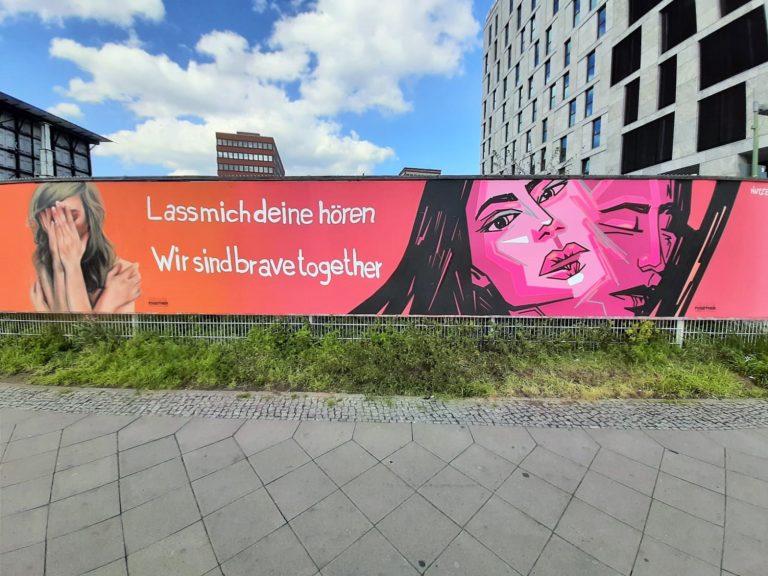
Mural Advertising for Maybelline by four female artists in Berlin.
The strategic decision: artists before brief
The most common failure mode in a cause marketing campaign is leading with the message and sourcing creative execution afterward — which is exactly how brands end up with work that feels commissioned rather than believed. Basa Studio inverted that logic. Before the wall was planned, before the colour palette was confirmed, the question was: which artists are already living and working inside this conversation?
Fabifa, Caro Pepe, Anne Bengard, and La Mia from Tape Over were selected not because their visual styles were convenient, but because their practices — built around freedom of expression, imperfection, and emotional vulnerability — gave the campaign genuine artistic credibility. These weren't artists briefed to illustrate a concept. They were cultural voices given a platform and a shared colour palette, and trusted to say something true.
That distinction matters more than it might appear. Audiences — particularly in Berlin, a city with a long and contentious relationship between street culture and commercial advertising — are acutely sensitive to the difference between brands using art and brands participating in it.
The location: why the East Side Gallery changes everything
Mural advertising in Berlin is never context-neutral. The city's walls are already doing something — carrying history, political memory, neighbourhood identity — and any mural advertising campaign that doesn't reckon with that will read as intrusion, not contribution.The city's walls carry memory, and few carry more than the East Side Gallery — the longest surviving section of the Berlin Wall, repurposed since 1990 as an open-air gallery housing over a hundred works by artists from across the world.
Placing a brand activation here was a deliberate act of cultural positioning. The East Side Gallery is not a blank canvas. It is a site of documented artistic and political history, and any new work added to it is implicitly in dialogue with everything already there. For a campaign about breaking the silence around mental health — about expressing what is usually kept private — the location carried enormous symbolic weight that no media buy could have manufactured.
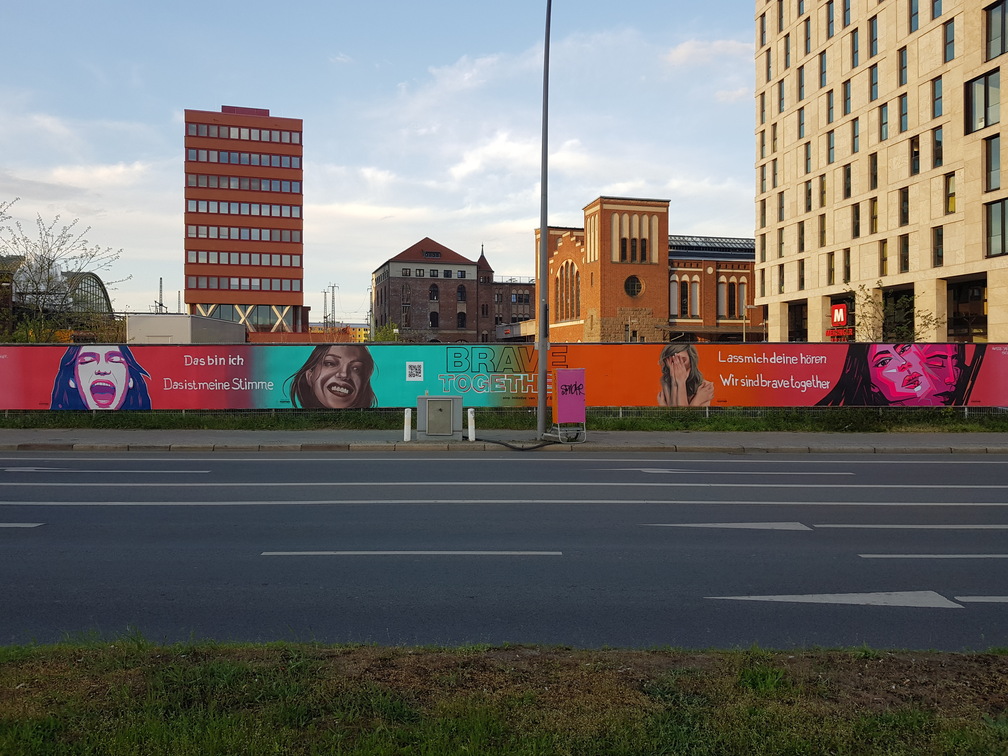
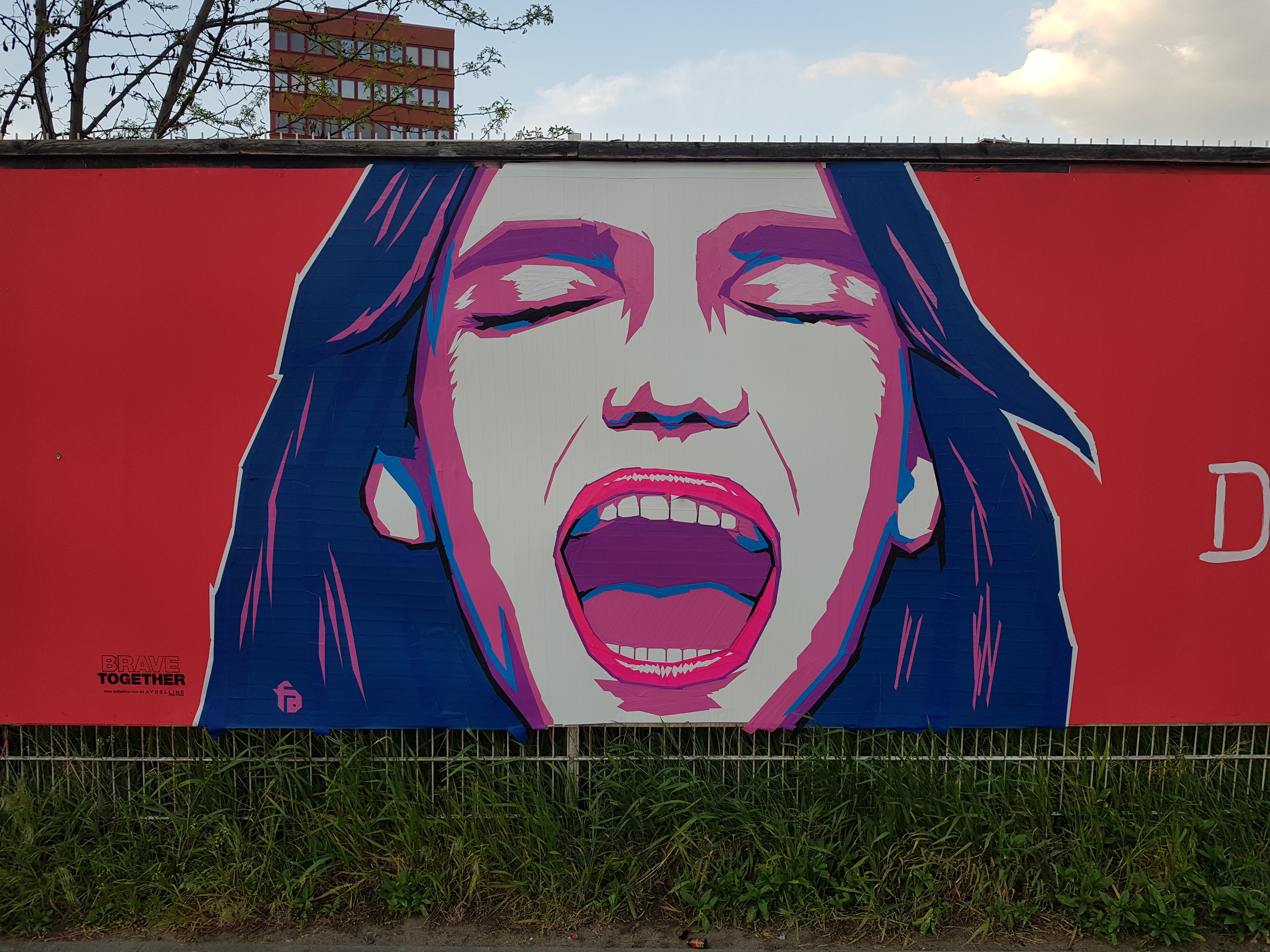
The 30-metre wall was divided across four artists, each given six metres and one emotion to explore: expression, relief, silent sadness, and the particular courage that lives inside vulnerability. The remaining space carried the brand mark — present, but not dominant.
The 30-metre mural at the East Side Gallery, Berlin. Four artists, four emotions, one shared colour palette.
The medium: tape art and spray paint as strategic choices
The decision to combine tape art and spray paint wasn't purely aesthetic. Each medium carried a different cultural signal, and the tension between them — the precision of tape against the spontaneity of spray — reflected something true about the subject matter.
Tape art, as a discipline, requires an almost architectural approach to mark-making: every edge is deliberate, every line the result of a decision. Spray paint carries a different history on Berlin's walls — looser, faster, more associated with the urgency of expression over the perfection of form. Together, they produced a visual language that felt neither manufactured nor accidental.
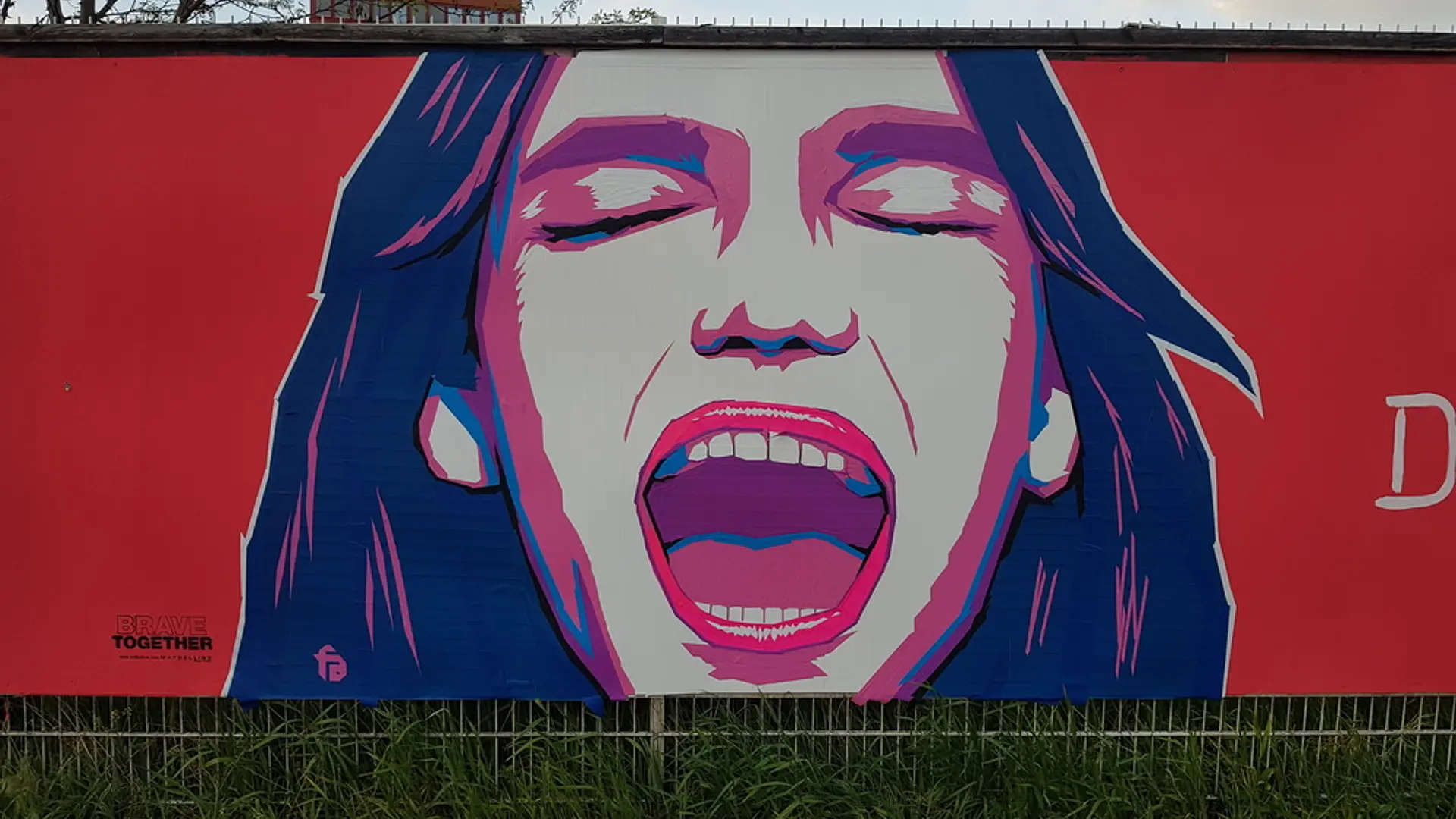
La Mia's bright tape work — vibrant contrasts that arrived at the wall on rolls and left as a kind of structured joyfulness — sat alongside Anne Bengard's spray-painted figure burying four hands in her own face, a gesture at once introverted and quietly self-comforting. Caro Pepe's laughing-crying portrait occupied the middle register, emotionally and physically. Fabifa's shouting figure opened the sequence.
The four panels read as a single conversation across thirty metres of wall.
Tape art and spray paint on the fence. The medium reflected the message: precision and spontaneity held together.
What the campaign achieved — and why it matters for brands
The #BraveTogether mural ran for its intended duration and generated significant organic amplification — not because it was designed to go viral, but because it was genuinely worth looking at. That distinction is the entire argument for mural advertising done this way: shareability as a byproduct of quality, not as the goal.
For Maybelline, the outcomes reached well beyond the immediate audience passing the East Side Gallery. The mural extended the brand's reach into communities that don't follow Maybelline on social media, don't engage with beauty category advertising, and would have filtered out a conventional OOH campaign entirely. A 30-metre painted wall in a location with documented cultural authority is harder to ignore — and harder to dismiss — than a poster on a bus shelter.
There is also a longer-term brand-building logic at work. Experiential marketing in Berlin — particularly at locations with the cultural specificity of the East Side Gallery — generates a different kind of brand memory than conventional media. Audiences who witnessed the mural being painted, who stopped to watch the process over three days, carry a richer association with the brand than those who saw a 30-second pre-roll. That association compounds over time in ways that reach metrics don't capture.
The production reality: three days, one wall, considerable wind
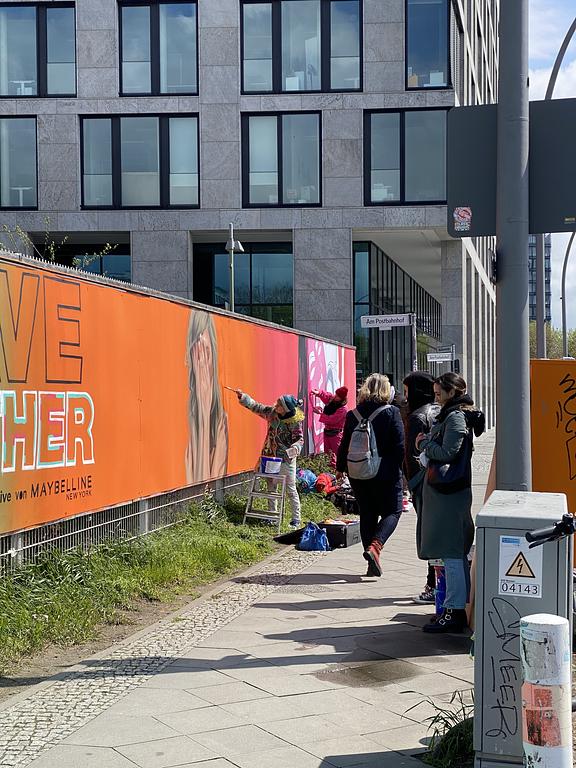
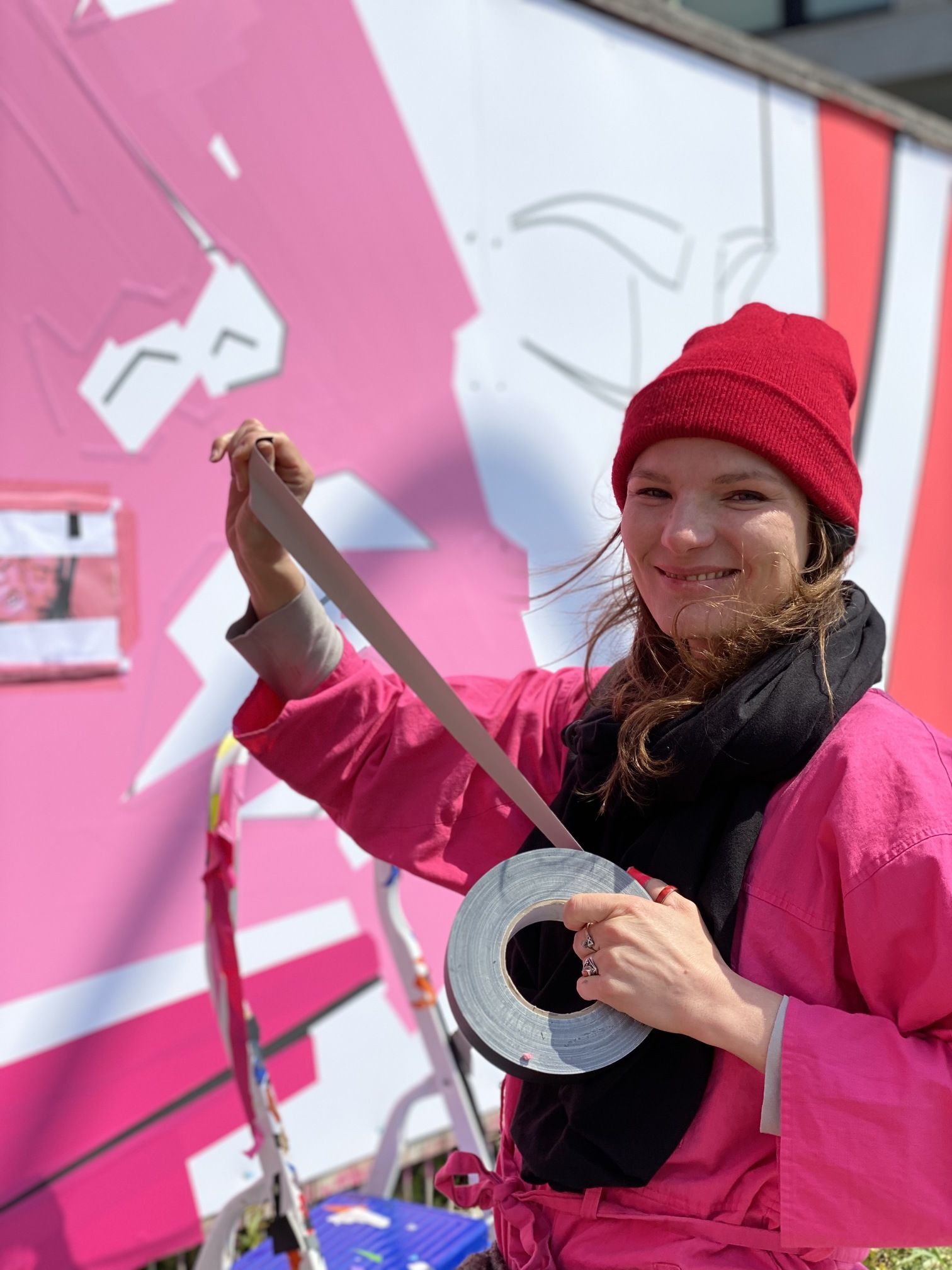
Case studies have a tendency to flatten the difficulty of execution. The #BraveTogether mural was produced over three days in Berlin weather that cooperated minimally — significant wind, cold conditions, and the specific technical challenge of applying tape to a silicone-coated surface that tape adhesive struggles to grip.
This is worth naming because it speaks directly to the kind of production partner a brand needs when the work is genuinely public and genuinely irreversible. A mural at the East Side Gallery cannot be revised in post-production. This is what separates a well-executed OOH advertising campaign from a printed poster: the work is permanent, public, and accountable to the street from the moment it begins.Every decision — the height of a figure, the edge of a tape line, the saturation of a spray colour — is permanent from the moment it lands on the wall.
Basa Studio's role across projects like this is not to manage artists from a distance. It is to hold the full creative and logistical complexity — vendor coordination, site permissions, materials sourcing, timeline management — so that the artists can do the only thing that matters: make work that is true.
Three days of production, one wall, no second chances. Mural advertising at this scale is an exercise in irreversible decision-making.
What this means for brands considering mural advertising in Berlin
Berlin is not a forgiving city for brands that haven't done the cultural thinking. The gap between a brand activation that earns respect and one that gets painted over — literally, in some parts of the city — often comes down to whether the brand came with something to give or only something to sell.
The #BraveTogether mural worked because Maybelline came with the former. The mental health conversation was one the artists were already part of. The East Side Gallery was a location with earned symbolic resonance for the subject. The colour palette was shared, not imposed. And the finished work was something that would have stood on its own merits whether or not it carried a brand mark.
That is the standard mural advertising in Berlin should be held to. And when a brand meets it, the wall does the rest.
LaMia at work on the BraveTogether mural. Three days of production at the East Side Gallery, Berlin. Source: Caro Pepe.
Related creative stories
Browse through other features, interviews and guides to discover creative brand collaborations, meet innovative artists and creators, find out how new artforms are energizing advertising, & more.
We're excited to hear from you! If you're looking for artistic solutions for your next creative marketing campaign, send us your briefing. We can also help create a killer concept if you're in an early ideation phase. Check out our services for more.
Send your briefing
About you
THANK YOU
Your inquiry has been sent
We have received your inquiry. We'll get back to you within 24-48 hours to discuss your project. If you need urgent assistance, reach us on WhatsApp: +49 176 432 64506. In the meantime, we invite you to explore our insights, case studies, and lessons from building culturally grounded brand experiences.
Please contact us by phone if you're not able to reach us via this form.
THANK YOU
We have received your inquiry. We'll get back to you within 24-48 hours to discuss your project. If you need urgent assistance, reach us on WhatsApp: +49 176 432 64506. In the meantime, we invite you to explore our insights, case studies, and lessons from building culturally grounded brand experiences.
We use cookies to help empower our artists and make them accessible to clients. Check out our Privacy Policy and Terms of Service to see how your data can make a difference.