Brand activation at Fashion Week demands more than presence — it demands a cultural moment. Here's how Thomas Sabo built one.
When a jewelry brand becomes a cultural moment
Fashion Week is one of the most competitive stages in brand marketing. Every brand present is chasing the same thing: earned attention. Press coverage, social amplification, cultural relevance that outlasts the event itself. Most achieve none of it — they show up, they spend, and they disappear into the noise.
Thomas Sabo chose a different approach. For Berlin Fashion Week, the German jewelry brand — with over 300 stores across five continents and a legacy stretching back to 1984 — was introducing Rita Ora as its new global brand ambassador. The moment was high-stakes: this was the public launch of a partnership that would anchor the campaign "The Magic of Jewelry." They needed an activation that matched the weight of that announcement.
They didn't commission a display stand or a media backdrop. They commissioned an artist.
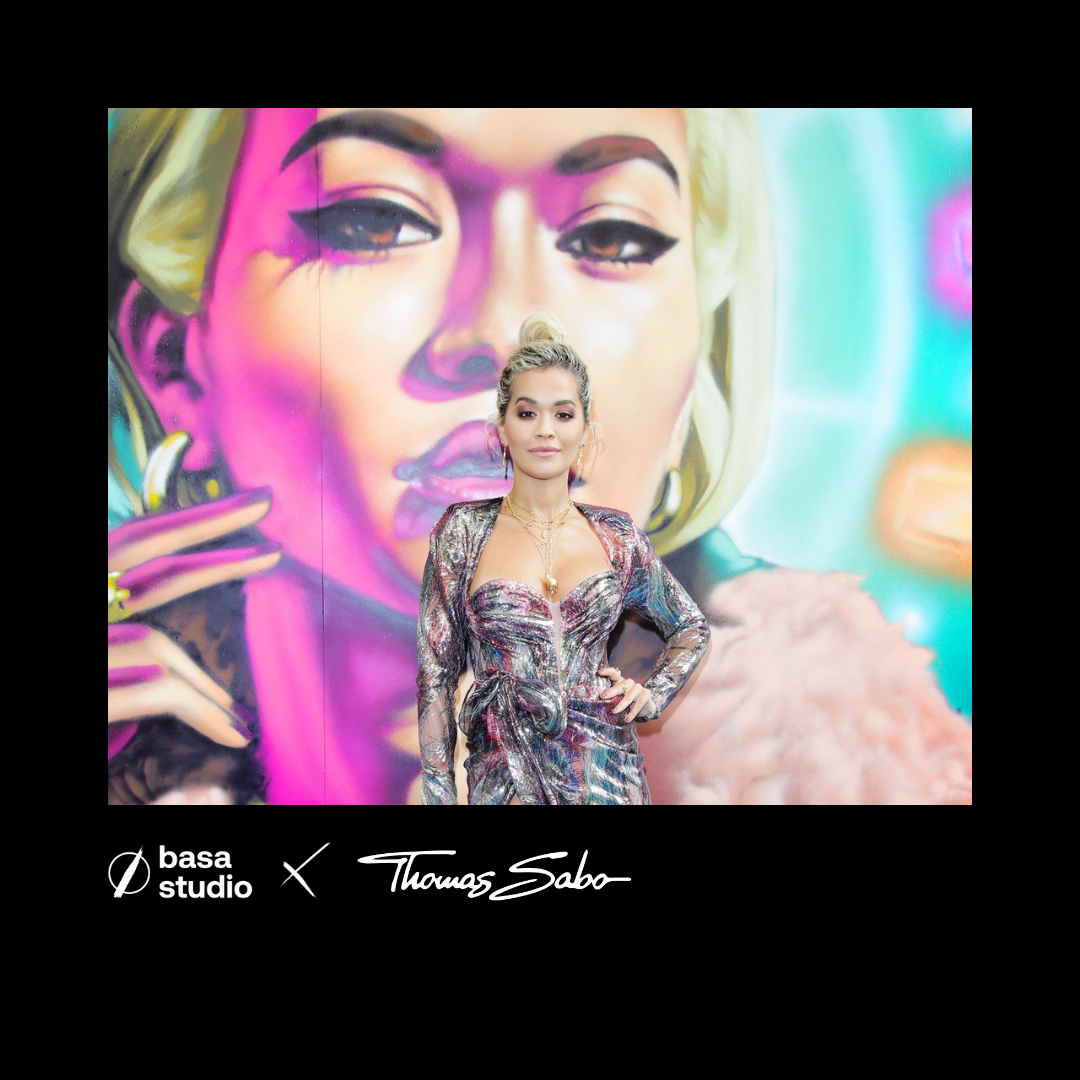
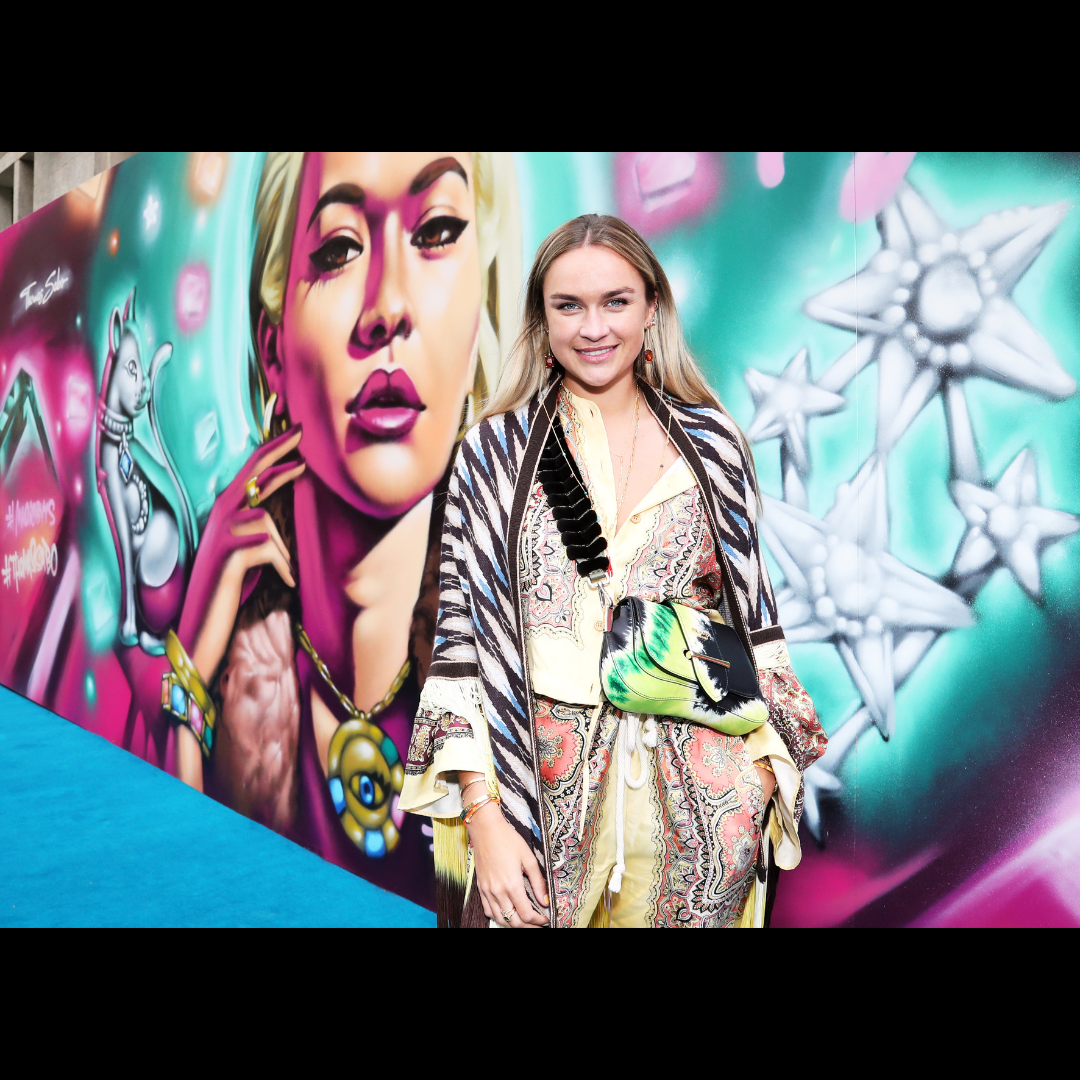
Rita Ora in front of the commissioned artwork by Nasca Uno. The mural served as the centerpiece of Thomas Sabo's brand activation at Berlin Fashion Week.
The strategic logic behind the collaboration
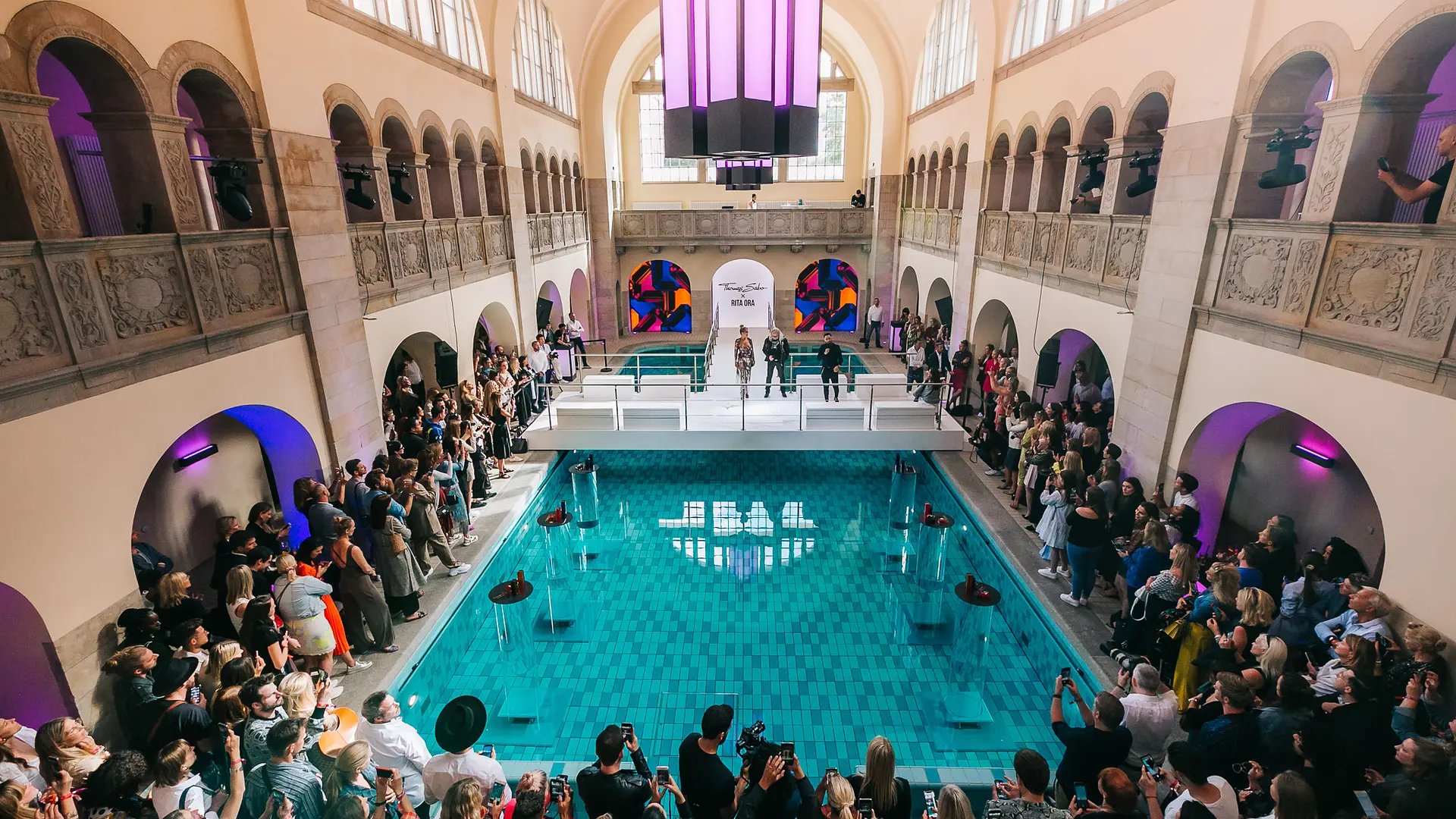
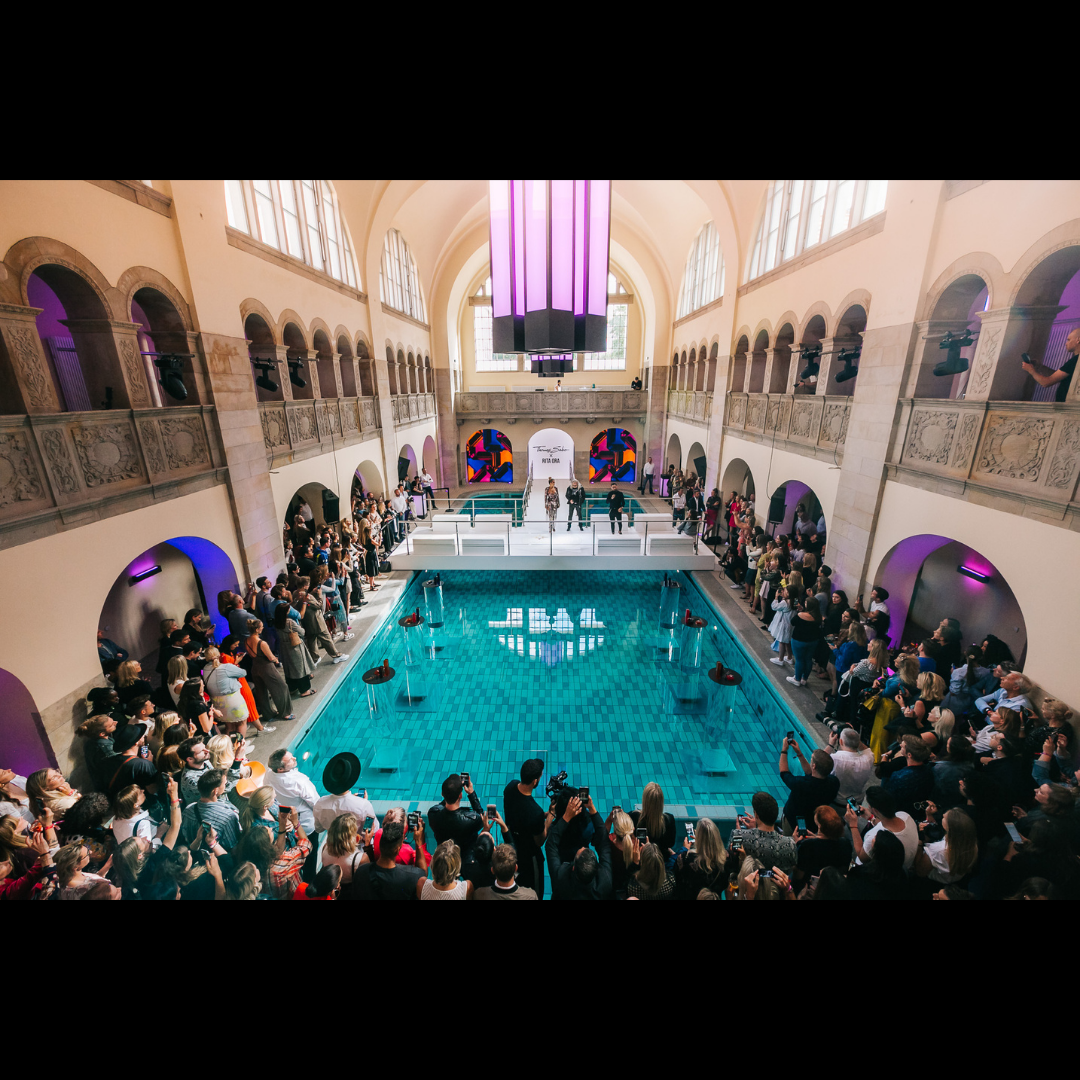
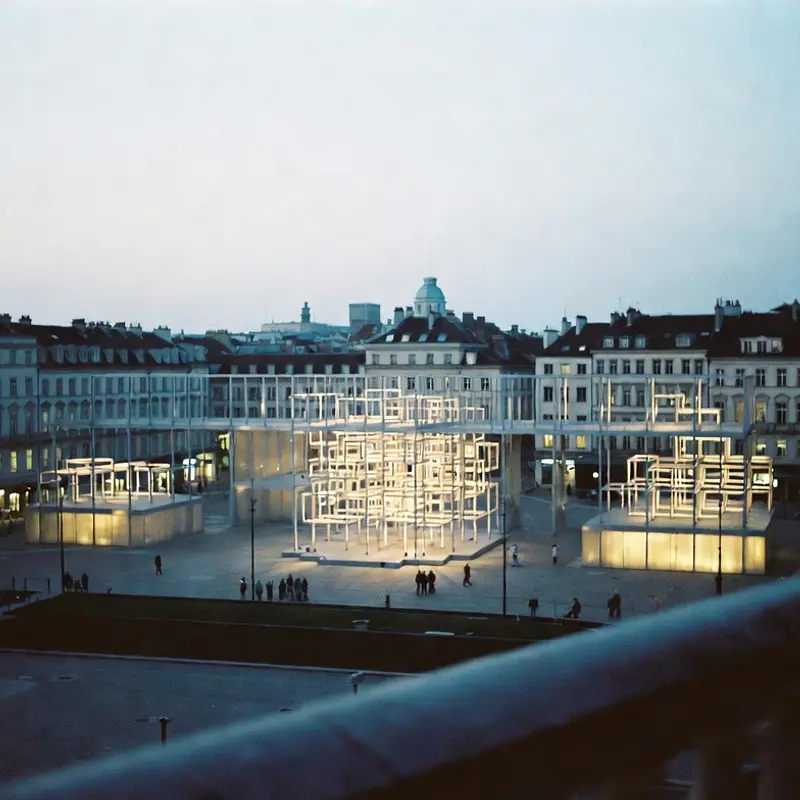
The venue was Stadtbad Oderberger — a historic Berlin swimming hall turned event space, with the architectural gravitas to match the occasion. The event format was a blue carpet affair: photographers, press, fashion industry guests, and celebrities. Everything was designed to generate imagery that would spread beyond the room.
The artist brief given to Nasca Uno — a Berlin-based artist with a distinctive surrealist figurative style and an established track record in brand collaborations — centered on Rita Ora's portrait and key pieces from Thomas Sabo's Autumn/Winter collection. The commission required the artist to synthesize two sets of visual identities: the singer's persona and the brand's aesthetic. The result was an 8 × 2.70 meter canvas that became the defining visual of the evening.
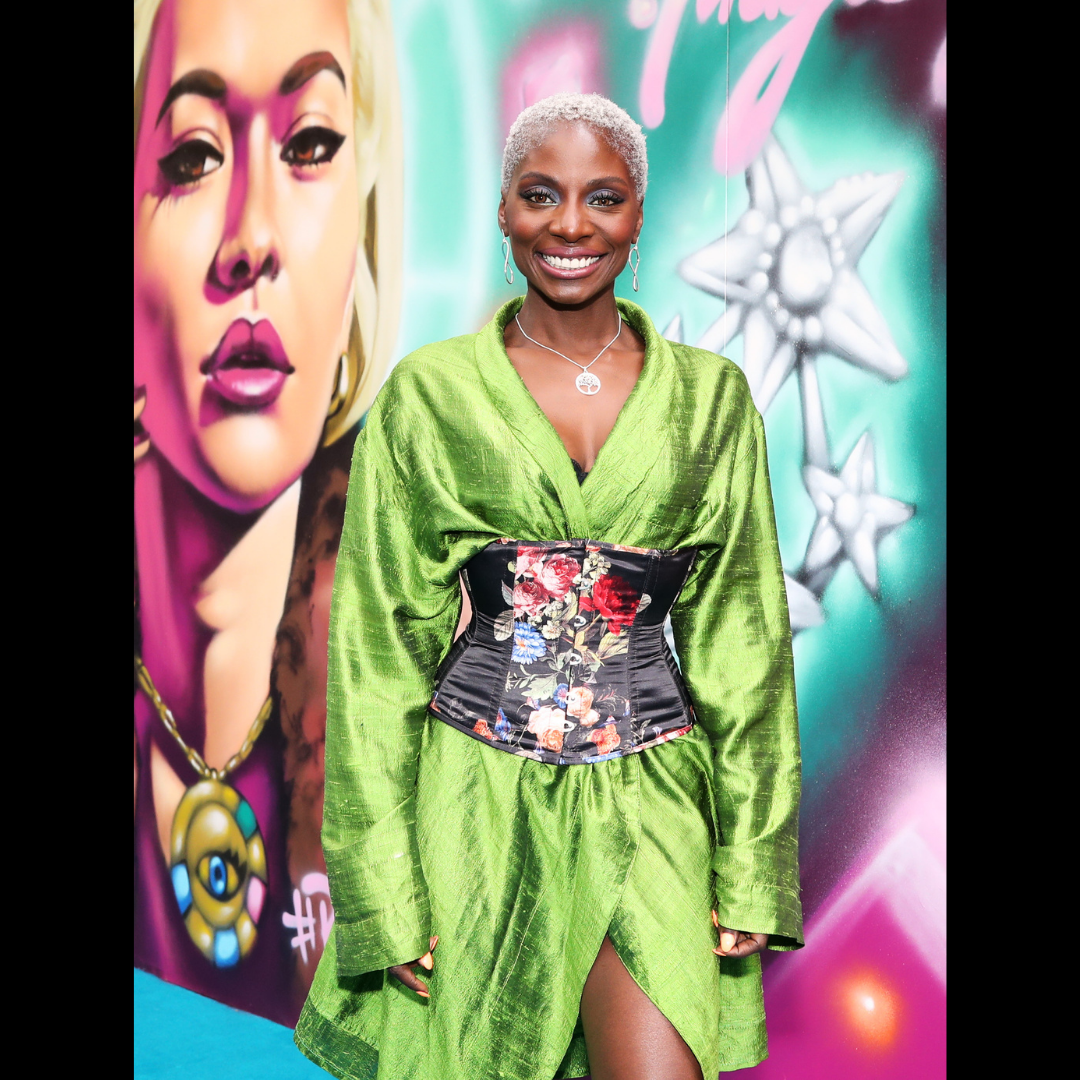
This is where the strategy becomes visible. Every guest photographed on that blue carpet was photographed in front of the artwork. Every celebrity post, every press shot, every social media image from the event carried Nasca Uno's painting — and with it, the Thomas Sabo brand — into audiences far beyond the guest list.
Stadtbad Oderberger, Berlin — the historic swimming hall chosen as the venue for Thomas Sabo's Fashion Week brand activation. The space added architectural weight to the partnership announcement.
Why cultural collaboration outperforms branded production
A branded backdrop — printed vinyl, logo-forward, photographically flat — would have done the technical job. It would have placed the Thomas Sabo name behind every photograph. But it would not have generated the response that a commissioned artwork did.
The difference is cultural signal. When a brand collaborates with an artist of genuine standing — someone with an independent practice, a recognizable style, and a reputation that exists completely outside the brand — the collaboration carries a different kind of authority. Guests don't see a prop. They see a cultural moment. The brand's name is present, but the artwork does the work of meaning-making.
This is a distinction that matters enormously at events like Fashion Week, where industry insiders have extremely sensitive detectors for authenticity. The rooms are full of people whose professional judgment is precisely calibrated to recognize the difference between a brand trying to look culturally relevant and a brand that actually is.
Our partners - Knueppel & Compagnon, had given him an outline for the artwork. The commission was to feature Rita Ora’s face and jewelry from Sabo’s Autumn/Winter collection.
The mechanics of earned attention
The Thomas Sabo activation generated attention through a mechanism that paid media cannot replicate: organic endorsement from people who were genuinely in the room. When fashion industry guests, artists, and celebrities photograph themselves at an event and share those images — not because they were paid to, but because the event gave them something worth sharing — the reach and credibility of that content is categorically different from a sponsored post.
Guests on the blue carpet in front of Nasca Uno's mural. Every photograph taken at the event carried the artwork — and the Thomas Sabo brand — into organic social media reach.
What Thomas Sabo got right — and what other brands miss
Fashion Week brand activation at this level requires a specific set of decisions, made early, that most brands defer or get wrong.
The brief was specific without being prescriptive
Thomas Sabo gave Nasca Uno a clear commercial frame — Rita Ora's portrait, the A/W collection — but didn't attempt to dictate his style. The result was a work that was both brand-legible and artistically credible. This balance is difficult to achieve and easy to lose: too much creative control from the brand side and you get illustration, not art; too little and you risk work that serves the artist's agenda rather than the brand's moment.
Pieces from Thomas Sabo's Autumn/Winter collection on display at the event. The collection formed part of Nasca Uno's creative brief alongside Rita Ora's portrait.
The artist was matched to the brand, not just the brief
Nasca Uno's surrealist figurative style aligned with Thomas Sabo's aesthetic identity — a brand known for intricate, character-driven jewelry design. The collaboration didn't create cognitive dissonance; it amplified both parties' visual languages simultaneously. This alignment is not accidental — it requires genuine knowledge of the artist's practice and honest assessment of where it intersects with the brand's identity.
The cultural moment preceded the product push
The evening was structured around the announcement of the Rita Ora partnership, not around a product catalogue. The A/W collection was present, but in service of a larger cultural narrative. Thomas Sabo understood that Fashion Week audiences respond to meaning before they respond to products — and that the most effective way to introduce a collection is through a moment that gives people something to talk about beyond the product itself.
The compounding value of a cultural brand activation
A branded backdrop depreciates the moment it's photographed. A commissioned artwork appreciates. The Thomas Sabo x Nasca Uno canvas existed before the event — documented in the artist's studio — and continued to exist after it. The story of its creation, the process behind the commission, the artist's own account of the brief and the making: all of this extends the lifecycle of the activation far beyond the evening itself.
This is the compounding logic of cultural brand building. Each activation, done well, generates assets — images, narrative, credibility — that outlast the moment. Over time, a brand that consistently invests in genuine cultural collaboration builds a reputation that functions as a filter: the kind of collaborators, press, and audiences a brand attracts begin to reflect the quality of its cultural commitments.
For Thomas Sabo, the Berlin Fashion Week activation was not just a launch event for the Rita Ora partnership. It was a demonstration of how a jewelry brand — operating in a category that risks looking purely commercial — can earn a place in culture rather than simply buying one.
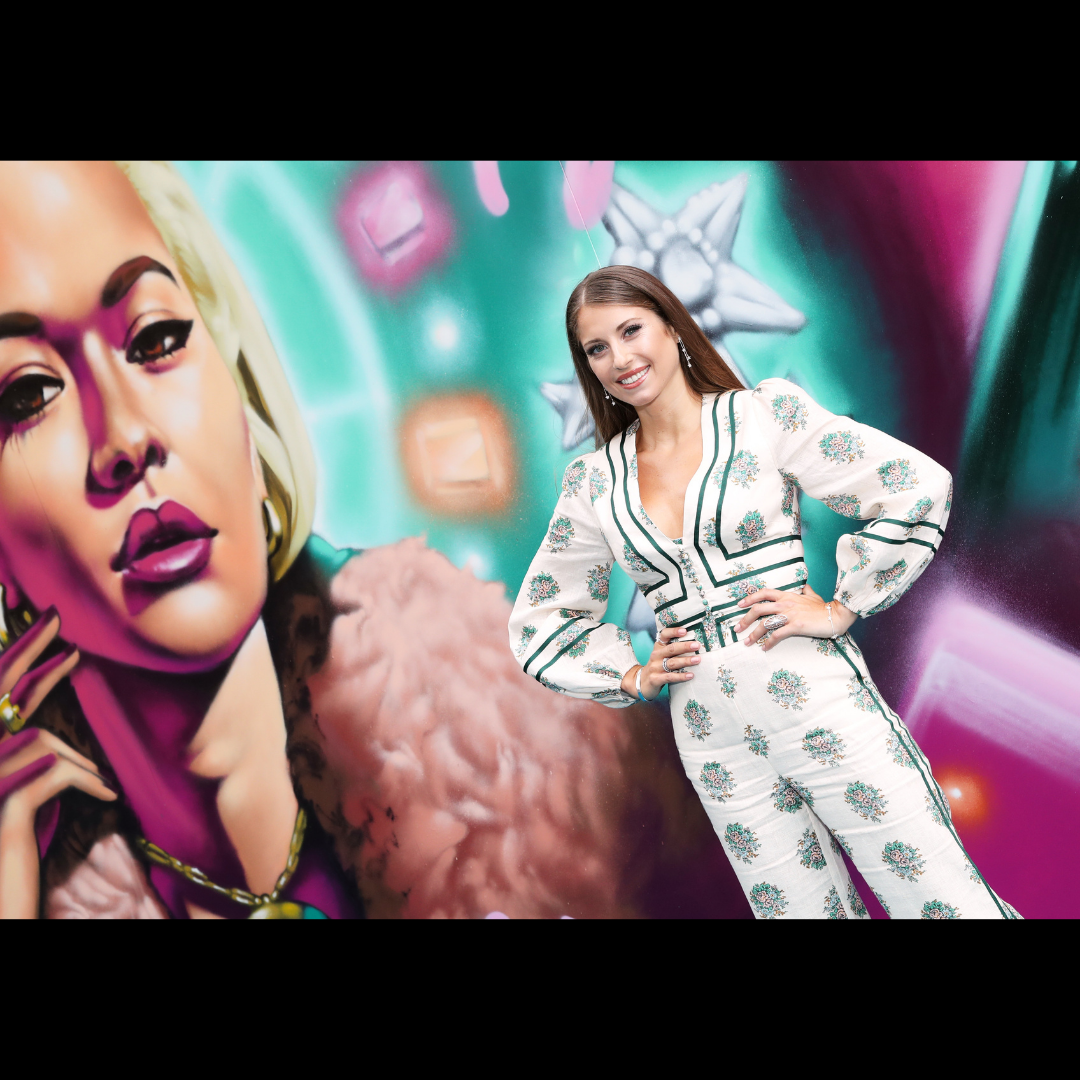
Cathy Hummels at the Thomas Sabo blue carpet event, Berlin Fashion Week.
Nikea Ata Thompson at the Thomas Sabo event. The mural became the consistent visual backdrop across all guest photography from the evening.
Nina Süess on the blue carpet. Each guest photograph extended the mural's — and the brand's — reach beyond the event itself.
Related creative stories
Browse through other features, interviews and guides to discover creative brand collaborations, meet innovative artists and creators, find out how new artforms are energizing advertising, & more.
We're excited to hear from you! If you're looking for artistic solutions for your next creative marketing campaign, send us your briefing. We can also help create a killer concept if you're in an early ideation phase. Check out our services for more.
Send your briefing
About you
THANK YOU
Your inquiry has been sent
We have received your inquiry. We'll get back to you within 24-48 hours to discuss your project. If you need urgent assistance, reach us on WhatsApp: +49 176 432 64506. In the meantime, we invite you to explore our insights, case studies, and lessons from building culturally grounded brand experiences.
Please contact us by phone if you're not able to reach us via this form.
THANK YOU
We have received your inquiry. We'll get back to you within 24-48 hours to discuss your project. If you need urgent assistance, reach us on WhatsApp: +49 176 432 64506. In the meantime, we invite you to explore our insights, case studies, and lessons from building culturally grounded brand experiences.
We use cookies to help empower our artists and make them accessible to clients. Check out our Privacy Policy and Terms of Service to see how your data can make a difference.