Installation advertising works when culture does the heavy lifting. How Netflix and Chemical X built a branded art installation Berlin didn't forget.
Why Most OOH Advertising Disappears
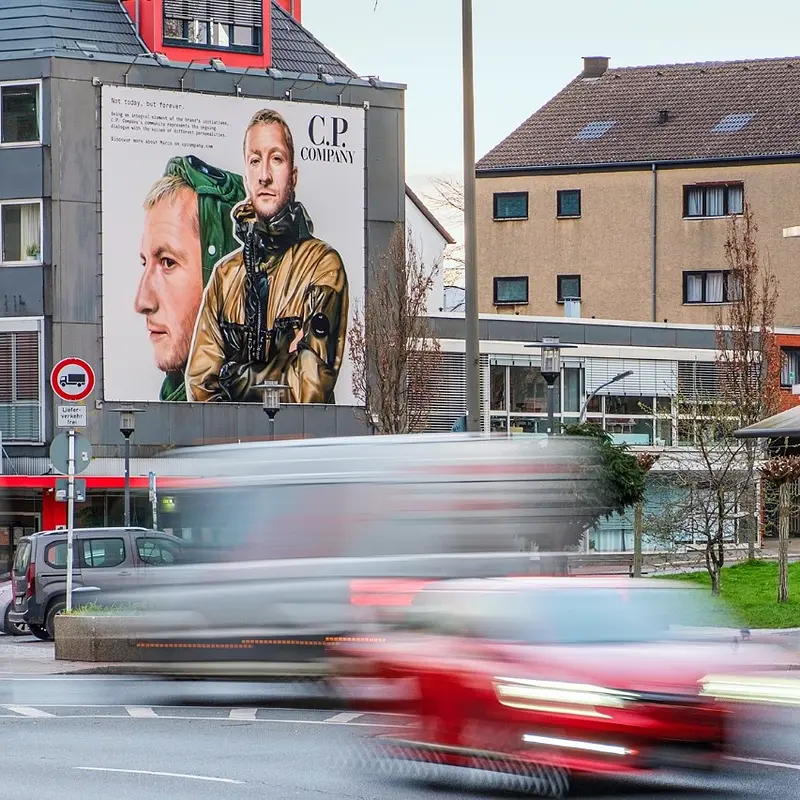
Out-of-home advertising has a visibility problem — not in the literal sense, but in the cultural one. Brands spend significant budgets on formats that audiences have learned to ignore. The format is familiar. The execution is predictable. The result is presence without impact.
The brands that break through aren't spending more. They're thinking differently. Instead of asking where can we place this? they ask what would make someone stop, photograph this, and talk about it for weeks? That shift — from placement to cultural moment— is the foundation of effective installation advertising.
Netflix approached the challenge of launching Season 2 with a clear ambition: create something in the public space that would earn attention — not demand it. The show's subject matter — a teenage drug dealer building an online empire — gave creative license for a concept that matched the tone of the series without retreating into safe, generic promotion.
The strategic decision was to commission Chemical X, a globally recognized artist known for boundary-pushing public work, to create an original installation that would live at the intersection of art and advertising. This wasn't decoration. It was a deliberate choice to let artistic vision lead the cultural conversation, with the Netflix brand present but not dominant.
That strategic clarity — knowing when to lead with the brand and when to let culture carry it — is what separates installation advertising that earns press from installation advertising that earns nothing.
From Concept to Construction: What It Actually Takes
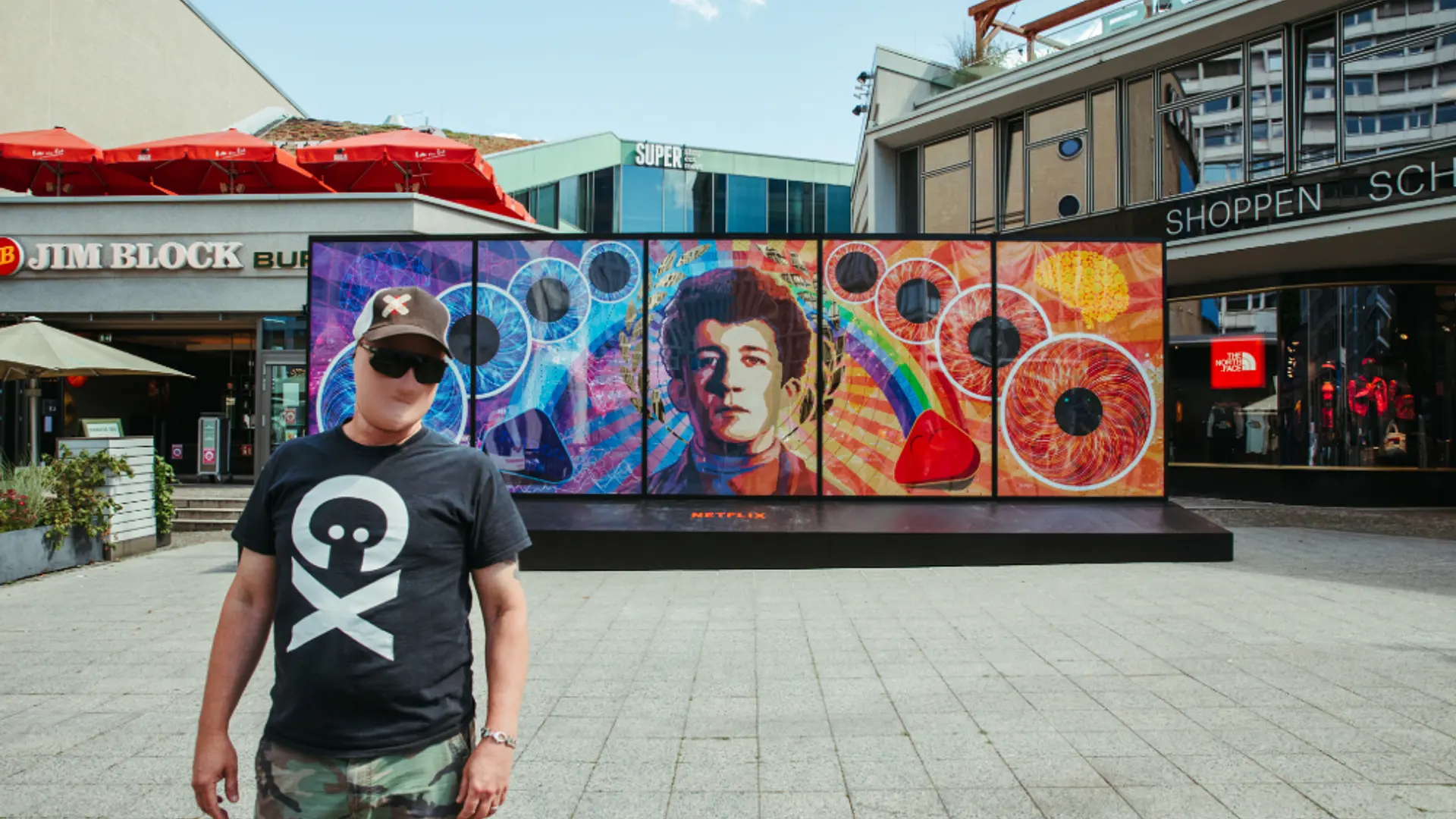
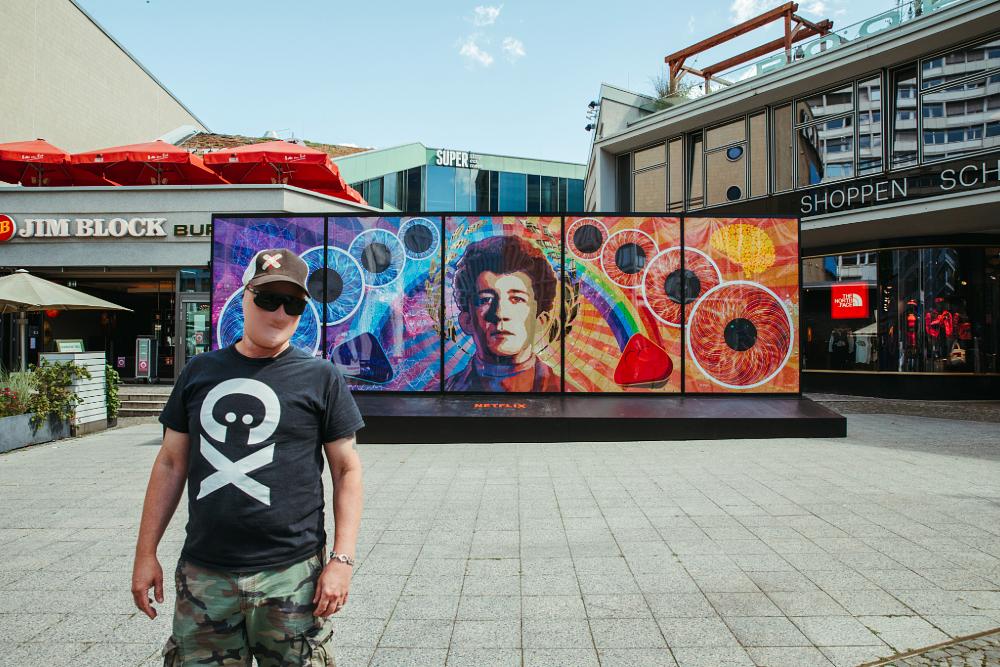
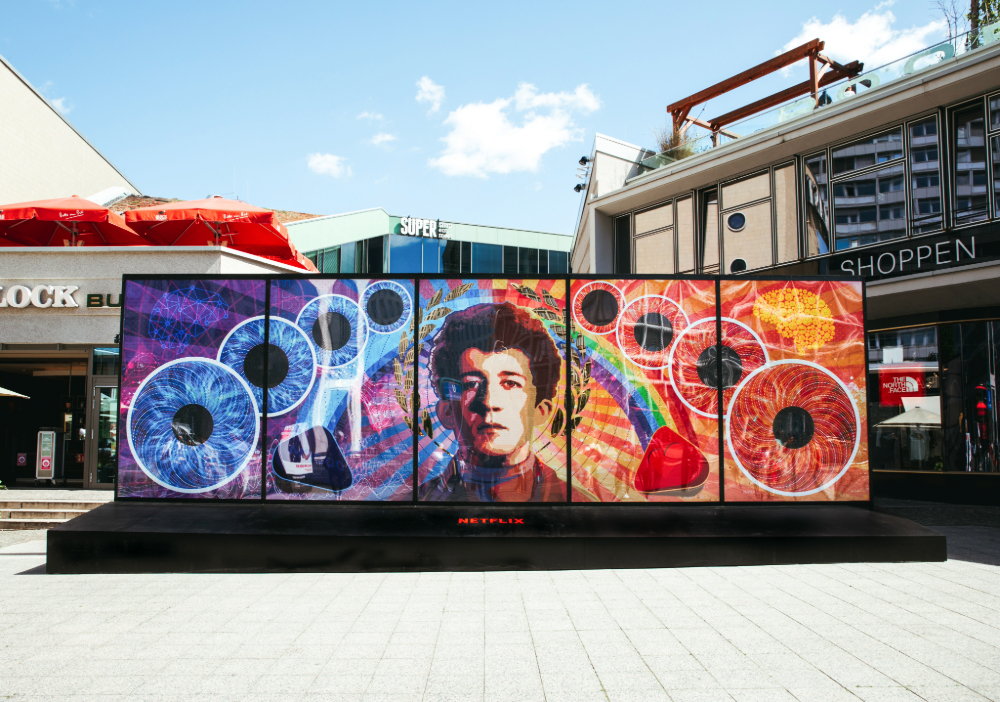
The installation depicted Moritz, the show's protagonist played by Maximilian Mundt, rendered in Chemical X's signature style: a three-meter tall portrait crowned with a laurel wreath — part Julius Caesar, part contemporary anti-hero — his pupils gradually expanding outward across the mural's surface.
The production required a level of coordination that goes well beyond what most brands — or most agencies — are equipped to manage.
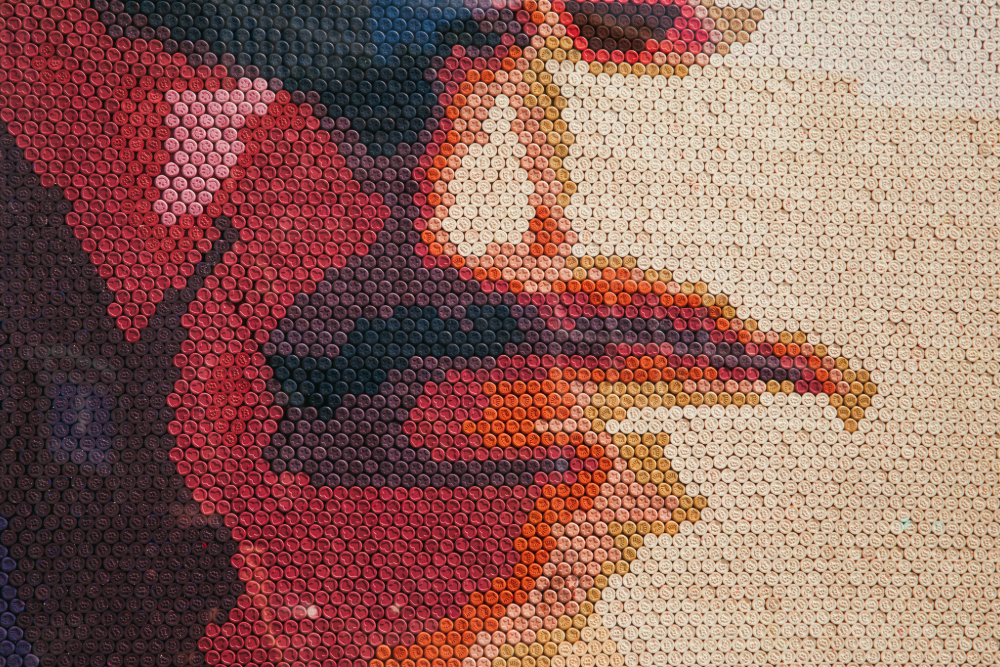
The pills themselves were fabricated by Rock & Roll Bonbonmanufaktur Ehrenfeld, the show's on-screen candy maker. Color matching across 20 specific shades required 35 kilos of pigment. Each pill was shaped individually under a five-ton press in 0.8 seconds — between 3,500 and 4,500 per hour. Covering Moritz's face alone required 46,000 pills and four people working eight-hour days for five consecutive days.
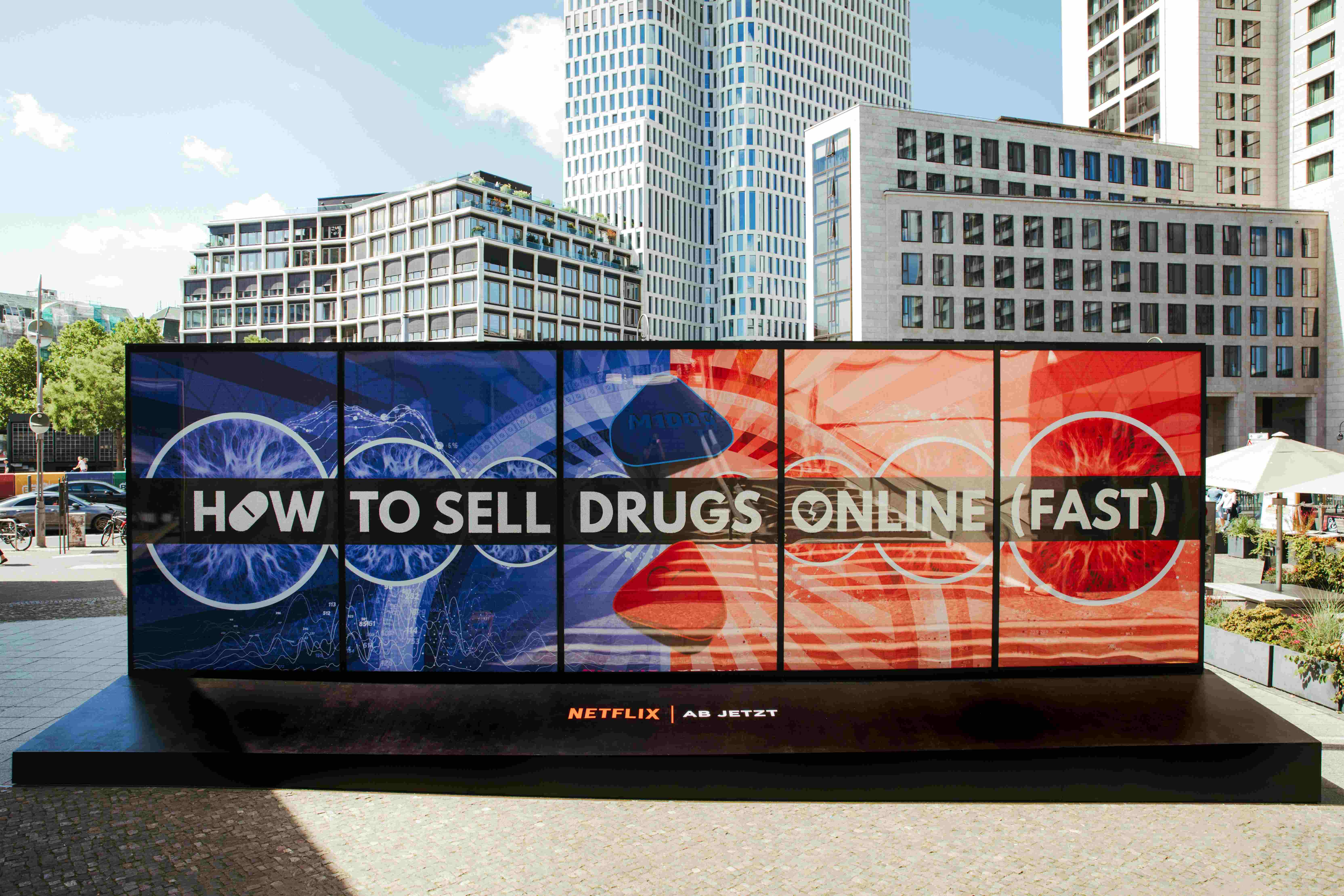
The five two-meter panels — each weighing 100 kilograms — were engineered in three layers: an aluminum Dibond base, a carved acrylic sheet to hold each pill in position, and a sealed exterior acrylic layer. A heavy-duty crane lifted each panel into place without disturbing a single pill.
Six weeks from briefing to installation. Zero margin for error.
The Role of Strategic Production in Installation Advertising
Projects like this don't fail at the concept stage. They fail at execution — when the complexity of coordinating artists, fabricators, local production partners, and brand stakeholders across a compressed timeline overwhelms the team responsible for delivery.
For the Berlin execution, Basa Studio brought in Old Yellow, a Berlin-based creative production team with a portfolio spanning stories-high public art and branded interior transformations for clients including Motel One and Adidas. Their on-the-ground expertise was essential — not just for the physical installation, but for anticipating and solving the engineering challenges that emerged throughout fabrication.
This is the production reality that brands rarely anticipate when they commission installation advertising: the concept is 20% of the work. The remaining 80% is engineering, coordination, and the ability to solve problems that no brief could have predicted — from crane logistics to pill-by-pill color calibration.
Cultural Impact Beyond the Installation
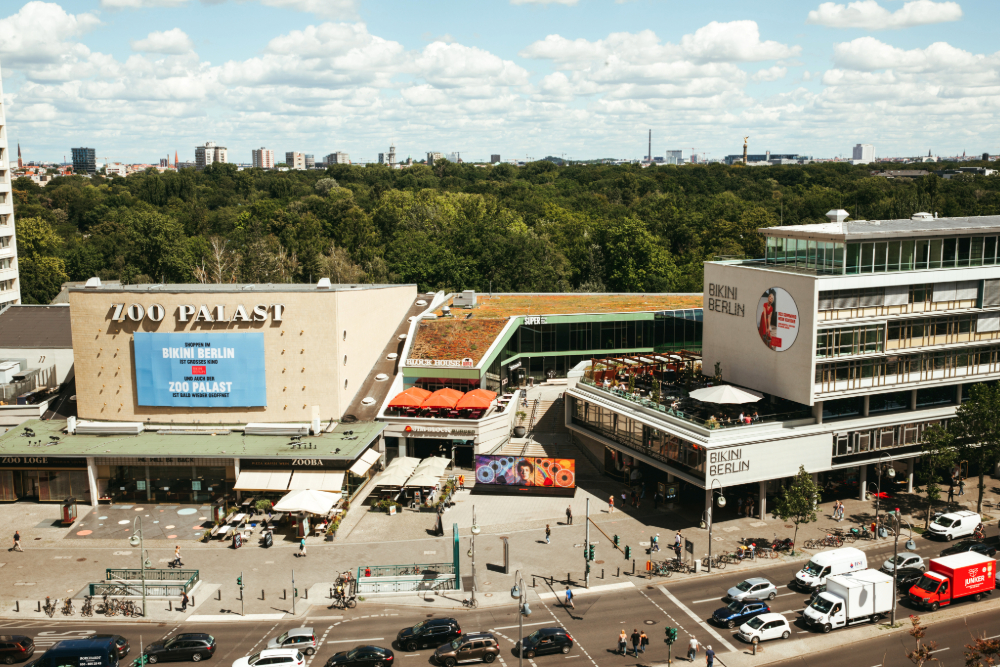
The Chemical X installation ran for ten days at Bikini Berlin. In that window, it drew consistent foot traffic from people who had heard about it, photographed it, and shared it — long before the show's premiere date.
Season 2 of How To Sell Drugs Online (Fast) launched on July 21st to strong audience reception, eventually earning a third season commission. The installation itself was covered by international design and culture media including Designboom, extending its reach far beyond Berlin and far beyond the ten-day window in which it physically existed.
This is the multiplier effect that installation advertising — done at this level — creates. The physical installation is the seed. The cultural conversation it generates is the harvest.
The Netflix x Chemical X installation is not a template. It's a demonstration of a strategic approach that can be applied at different scales and across different contexts — but only when a few conditions are met.
Cultural fit must come before creative fit. Chemical X wasn't chosen because his aesthetic matched Netflix's brand guidelines. He was chosen because his practice, his reputation, and his willingness to engage with provocative subject matter made him the right collaborator for this specific project. That precision in partnership is what made the concept credible.
The medium must carry the message. The pills weren't a visual device — they were the argument. Every material, structural, and production decision reinforced what the installation was trying to say. When medium and message are this aligned, installation advertising stops being advertising and starts being culture.
Production ambition must match creative ambition. A concept at this scale requires a production team that can execute it without compromise. That means experience managing complexity, local relationships that translate creative vision into physical reality, and the ability to absorb and solve problems that no brief anticipated.
Brands that approach installation advertising as a media format will always underperform. Brands that approach it as a cultural investment — with the strategic clarity, the right creative collaborators, and the production infrastructure to deliver — create moments that earn attention long after the installation comes down.
Build Installation Advertising That Earns Its Place in Culture
Brands that earn cultural attention don't do it by accident. They do it by making decisions — about who they collaborate with, what medium they choose, and whether their production can match their ambition. The Netflix x Chemical X installation got all three right. send us your briefing if you want to talk about what that looks like for your brand.
Browse through other features, interviews and guides to discover creative brand collaborations, meet innovative artists and creators, find out how new artforms are energizing advertising, & more.
We're excited to hear from you! If you're looking for artistic solutions for your next creative marketing campaign, send us your briefing. We can also help create a killer concept if you're in an early ideation phase. Check out our services for more.
Send your briefing
About you
THANK YOU
Your inquiry has been sent
We have received your inquiry. We'll get back to you within 24-48 hours to discuss your project. If you need urgent assistance, reach us on WhatsApp: +49 176 432 64506. In the meantime, we invite you to explore our insights, case studies, and lessons from building culturally grounded brand experiences.
Please contact us by phone if you're not able to reach us via this form.
THANK YOU
We have received your inquiry. We'll get back to you within 24-48 hours to discuss your project. If you need urgent assistance, reach us on WhatsApp: +49 176 432 64506. In the meantime, we invite you to explore our insights, case studies, and lessons from building culturally grounded brand experiences.
We use cookies to help empower our artists and make them accessible to clients. Check out our Privacy Policy and Terms of Service to see how your data can make a difference.