Street-Level OOH Advertising: The Katjes Berlin Case
Street-Level OOH Advertising: The Katjes Berlin Case
Jonas Butt
Share on
Street-level OOH advertising earns attention when it's built on a genuine cultural idea — Katjes proved it opposite Berlin's East Side Gallery.
There's a version of outdoor advertising that interrupts people. And there's a version that draws them in. For Katjes, a German confectionery brand marking the 30th anniversary of the Berlin Wall's fall, the difference came down to one strategic decision: treating the anniversary as a cultural moment worth genuinely engaging with — not a calendar hook to print on a panel.
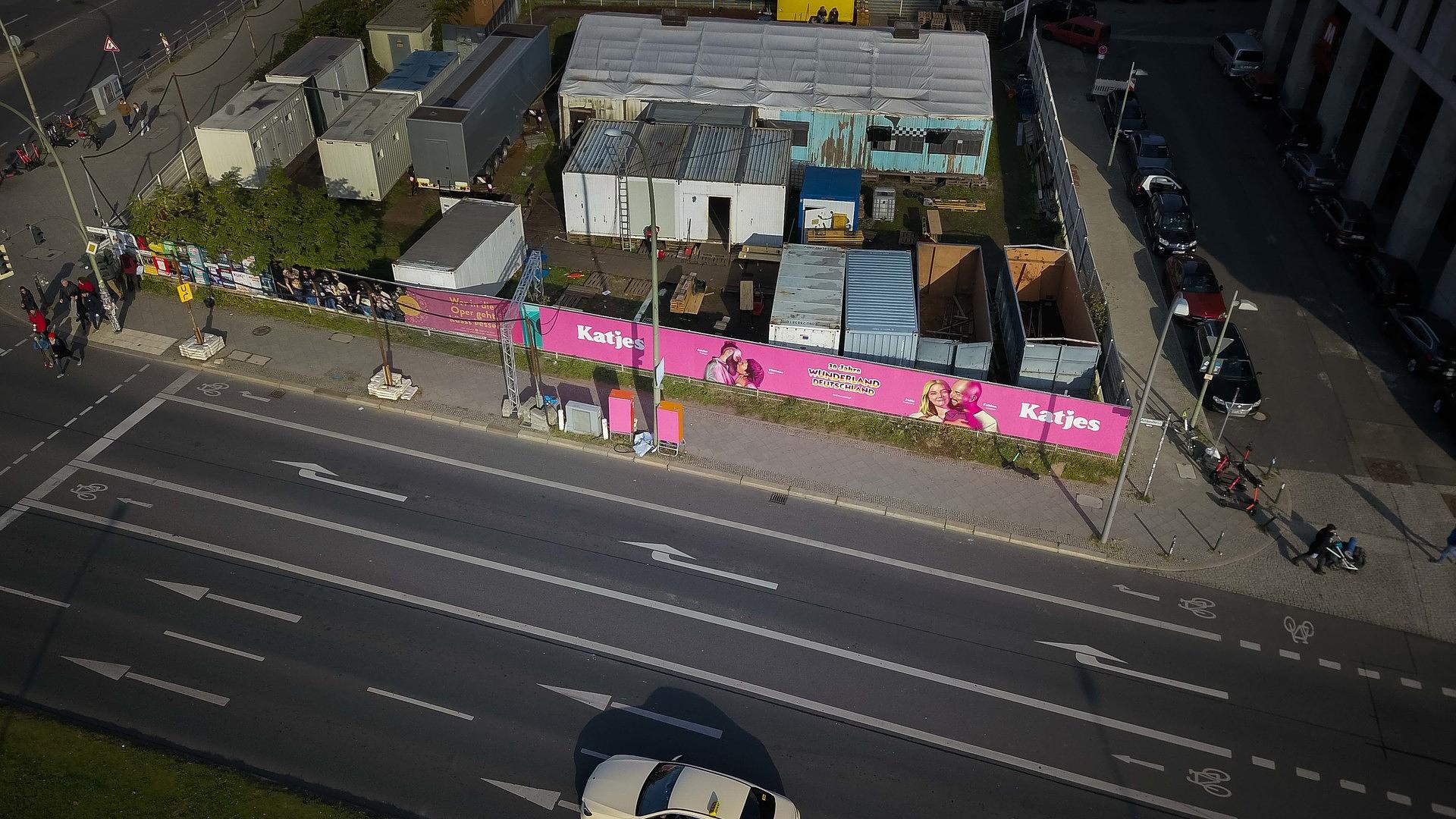
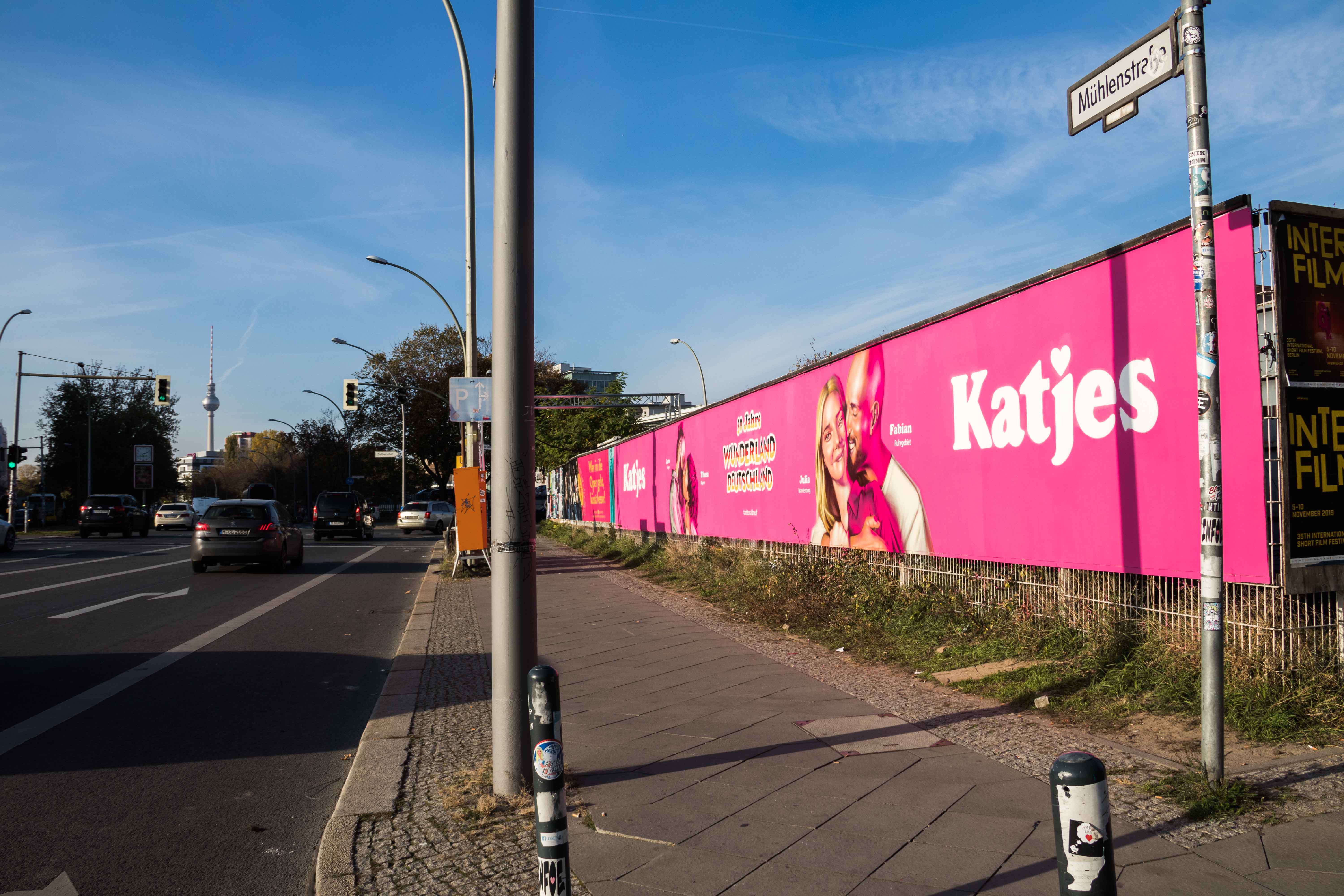
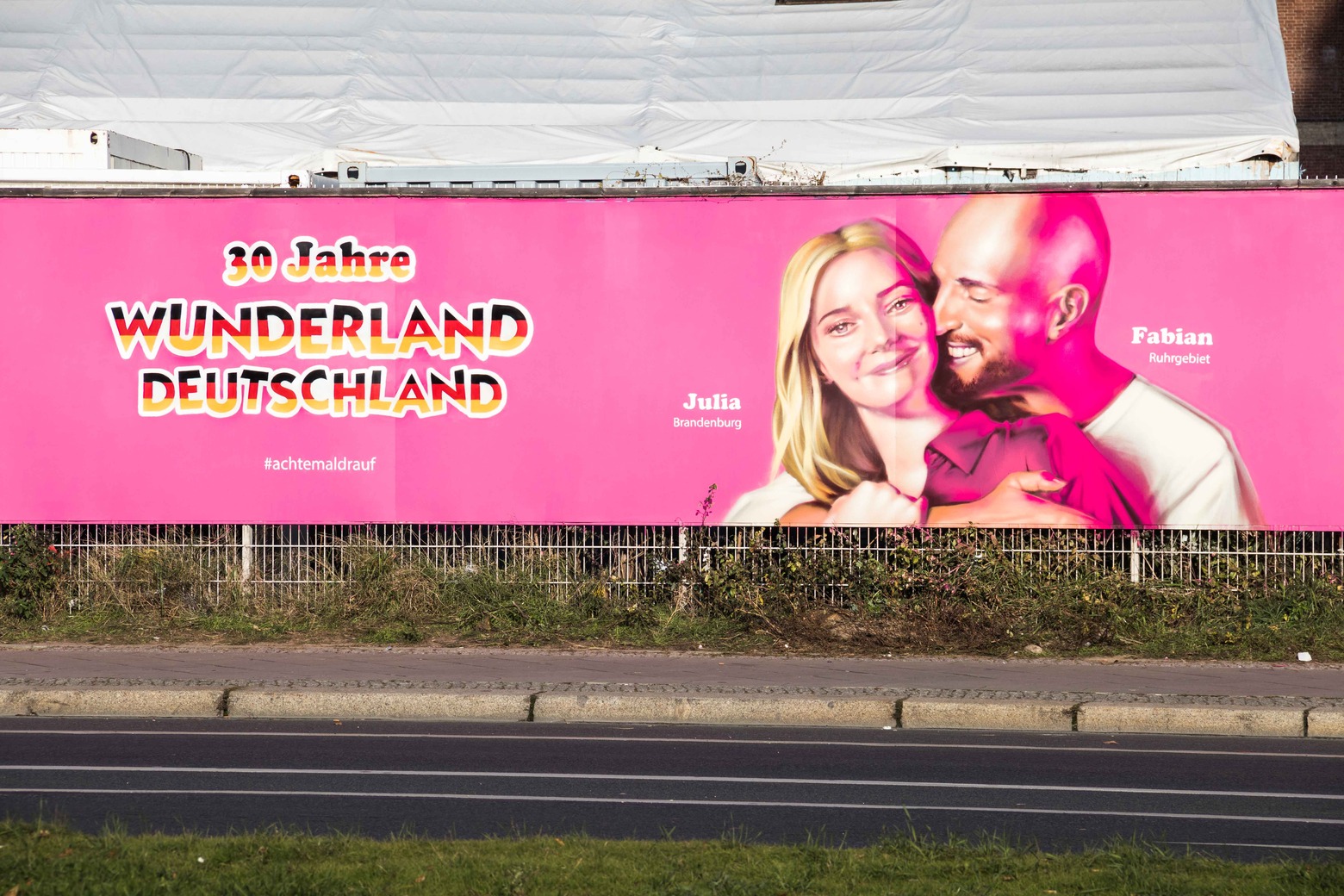
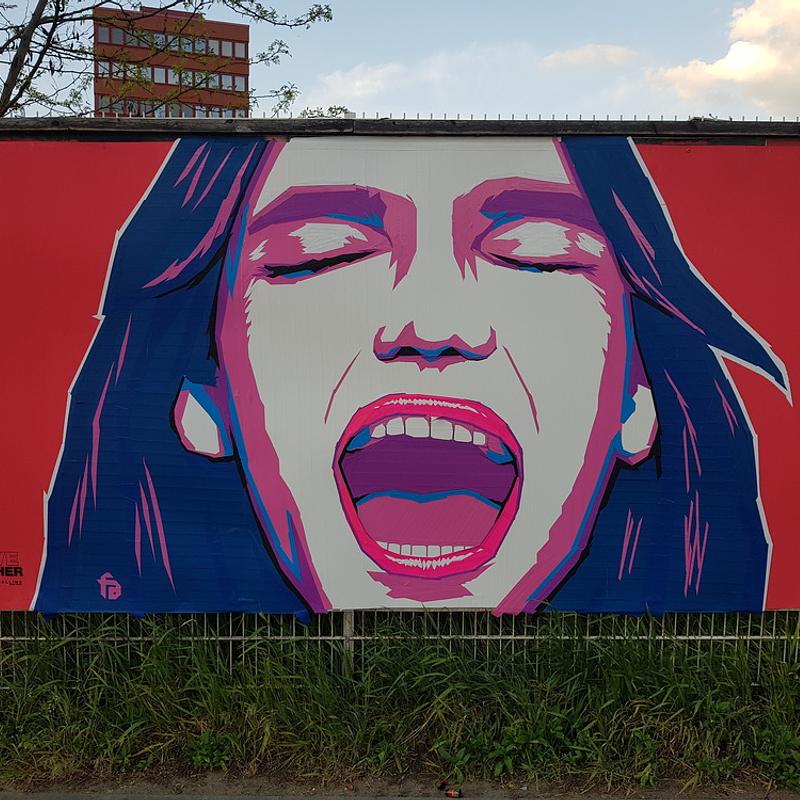
The Katjes campaign running the full length of the Mühlenstraße hoarding opposite the East Side Gallery. At street level and pedestrian scale, the format invited engagement rather than demanding attention from a distance.
The result was a large-scale hand-painted mural campaign positioned directly opposite one of Berlin's most culturally loaded public spaces. It didn't just perform as advertising. It performed as culture.
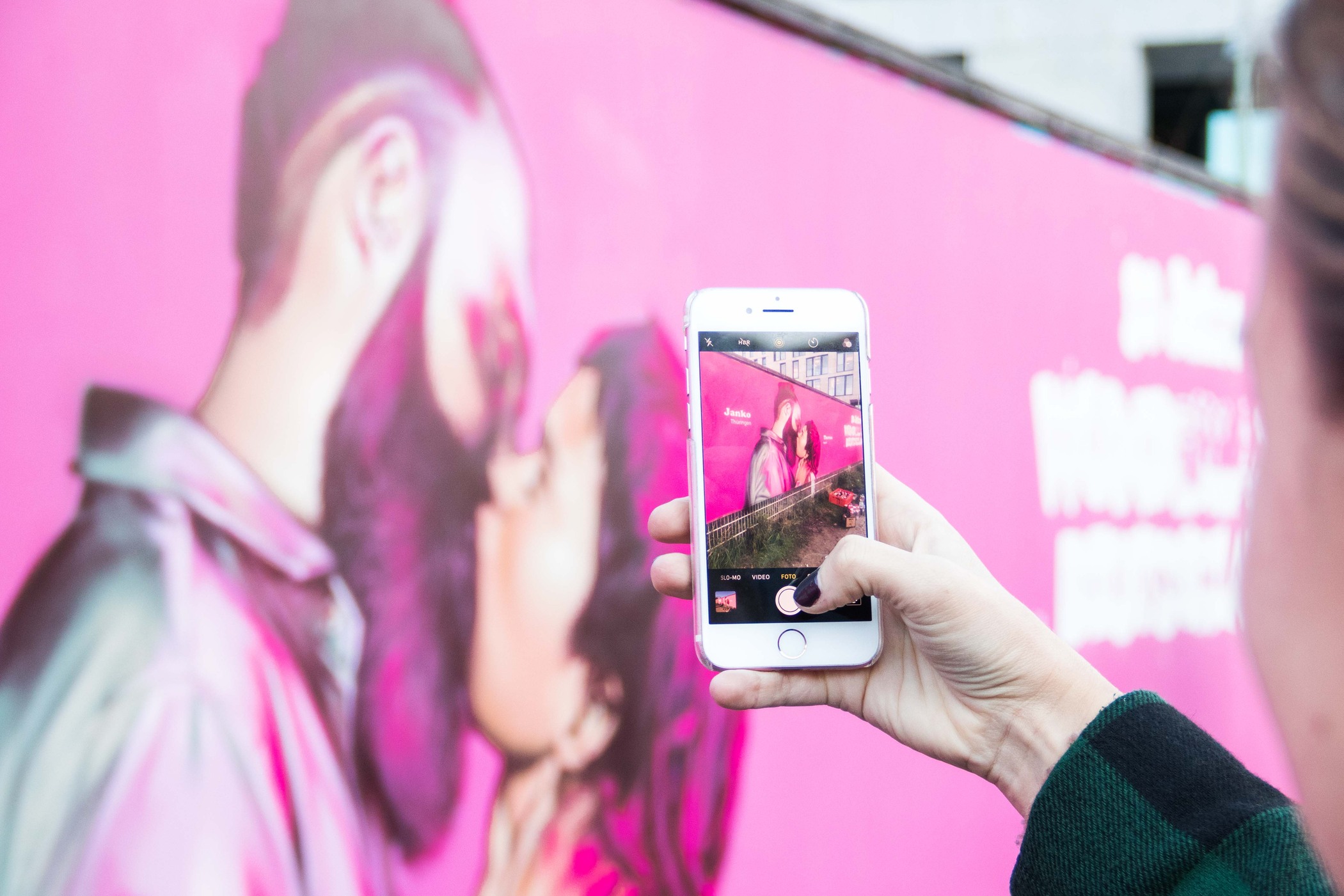
The Katjes mural campaign positioned at street level opposite the East Side Gallery. Hand-painted at billboard scale, it sat directly in the eyeline of pedestrians, tourists, and photographers who frequent the area daily.
Why Street-Level OOH Made Strategic Sense
Katjes didn't come to BASA Studio looking for a mural. They came with a campaign brief: mark a significant cultural anniversary, launch a new product tied to German reunification, and reach a Berlin audience that is visually literate, culturally aware, and largely immune to conventional advertising formats.
The brief pointed toward OOH. But conventional OOH — printed panels, digital screens, flyposted paper — would have landed flat against a backdrop as culturally charged as the East Side Gallery. The location demanded something at human scale. Something made by hand. Something that could hold its own next to internationally commissioned works that have defined that street for three decades.
Street-level placement wasn't just a media buy decision. It was a strategic one. At eye level, the campaign would meet its audience exactly where they were — on foot, moving slowly, culturally primed to engage with what they saw on that street.
The Case for Mural Advertising at This Location
The East Side Gallery is not a neutral backdrop. It draws a demographically diverse audience — Berliners, international tourists, photographers, art-world visitors — who have chosen to spend time in a space defined entirely by the quality of what's painted on its walls. These are not audiences who respond to interruption. They reward brands that contribute something genuine to the visual environment they've come to experience.
Conventional printed OOH in this location would have registered as noise. A hand-painted mural, executed at the same scale and with the same level of craft as the works surrounding it, had a chance to earn its place.
This is thestrategic logic of mural advertisingin culturally saturated urban environments: the format borrows credibility from its context. But only if the execution is genuinely worthy of that context. A technically poor mural in a location like this damages brand perception rather than building it. The bar is set by everything else on the street.
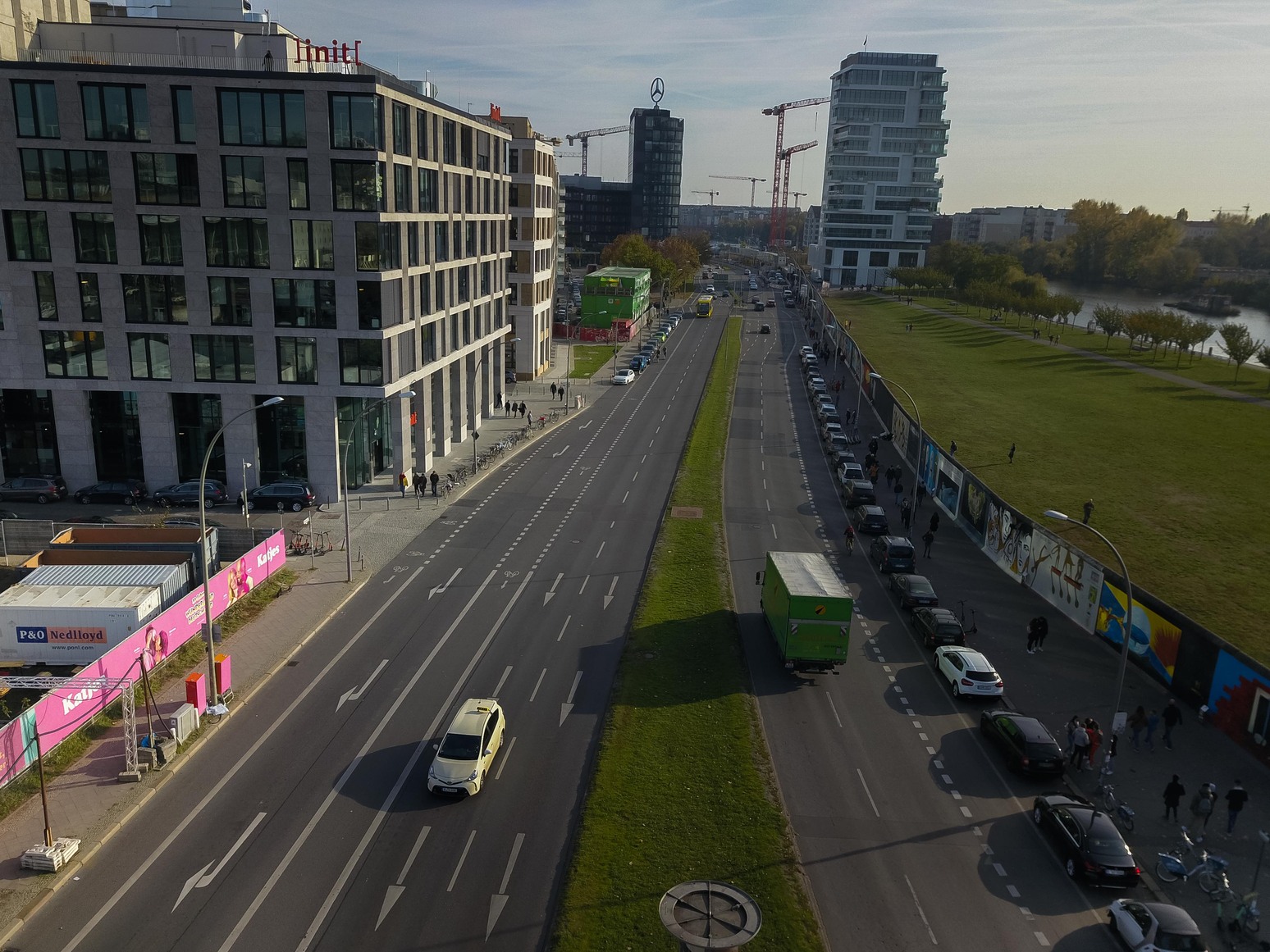
Positioned directly opposite the East Side Gallery, the campaign's location set the cultural standard the execution had to meet. Street-level placement put the mural in the direct eyeline of the area's characteristically engaged, slow-moving audience.
Artist Selection as Strategic Decision
The campaign required a Berlin-based artist with two qualities that don't always coexist: exceptional technical skill in large-format figurative painting, and the local credibility to work at this location without the result feeling imported or inauthentic.
Nasca Uno fit both. A Berlin-based painter with deep roots in the city's public art scene, he brought the technical command to execute photorealistic portraiture at billboard scale — and the local fluency to understand what the East Side Gallery means to the people who walk past it every day.
This is where curated collaboration becomes a strategic asset rather than a production decision. The right cultural collaborator doesn't just produce better-looking work. They bring contextual credibility that a printed panel — however well-designed — cannot manufacture. Katjes needed an artist whose presence in this location would read as natural, not commissioned.
The Creative Concept: Real Couples, Real Stories
The creative direction came from Katjes. The brand knew exactly what they wanted to communicate: the human stories of East-West couples reunited by the Wall's fall. The product they were launching — "Wunderland Deutschland," a goodie bag celebrating love, friendship, and German unity — needed an emotional anchor that felt earned rather than engineered.
Julia from Brandenburg, Fabian from the Ruhrgebiet — real couples, named and identified by hometown, painted at street scale along Mühlenstraße opposite the East Side Gallery.
The campaign chose to feature real couples, named and identified by their hometowns, painted at a scale that demanded attention without demanding it loudly. No headline copy overwhelming the image. No promotional mechanics breaking the surface. Just portraiture, in a striking pink palette, on a street already saturated with art.
This is the counterintuitive logic of street-level OOH advertising done well: the less it looks like advertising, the more effectively it communicates. Audiences in culturally primed environments are acutely sensitive to inauthenticity. Remove the promotional mechanics, trust the idea, and the work earns attention rather than fighting for it.
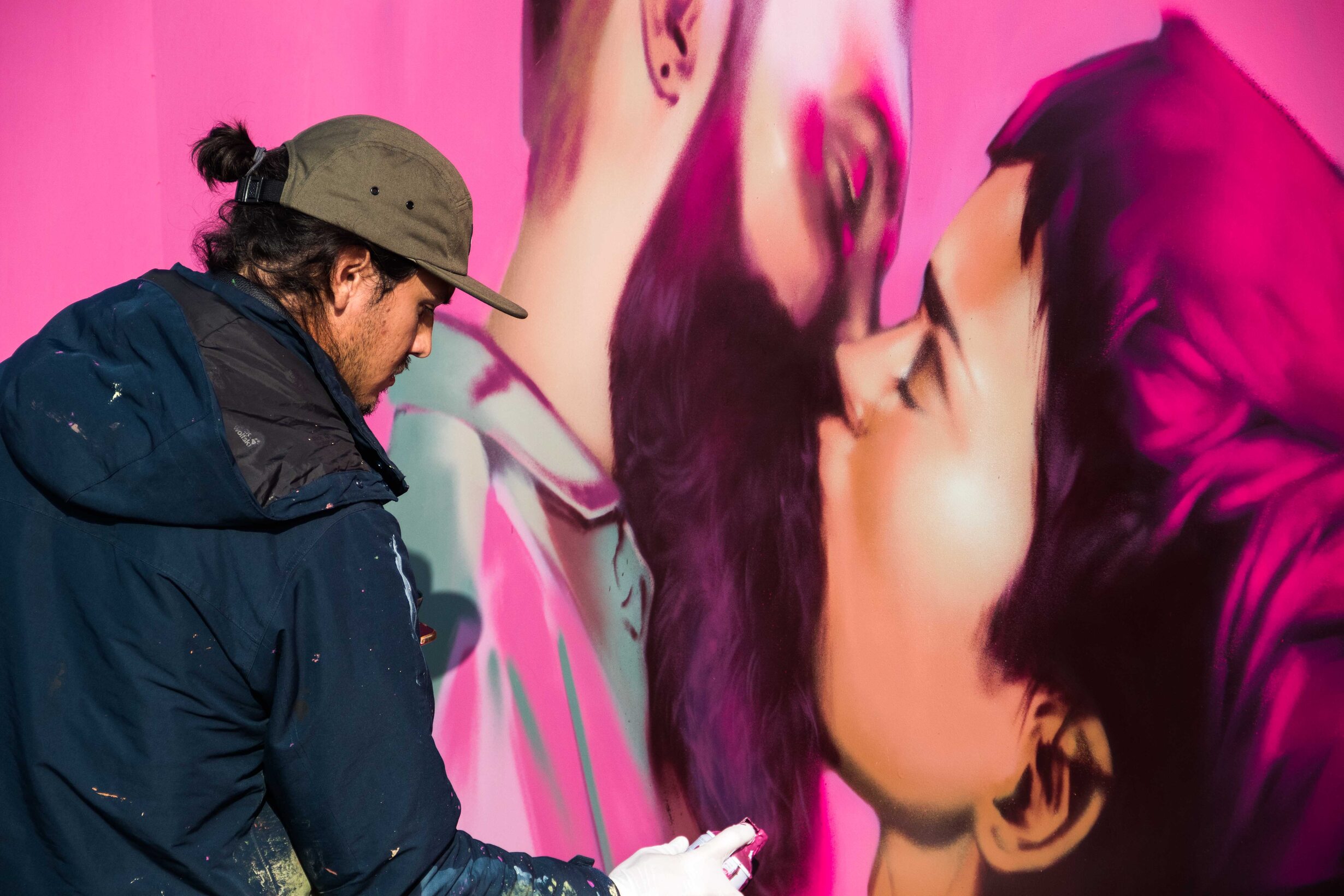
Executed in photorealistic portraiture at billboard scale, the mural's hand-painted quality was visible up close — a deliberate contrast to the printed formats that dominate most OOH campaigns.
What the Campaign Delivered
The response was immediate and organic. Situated on a street already known for its murals, the campaign attracted the area's characteristically engaged audience — passersby, tourists, and photographers who documented and shared the work without any paid amplification strategy prompting them to do so.
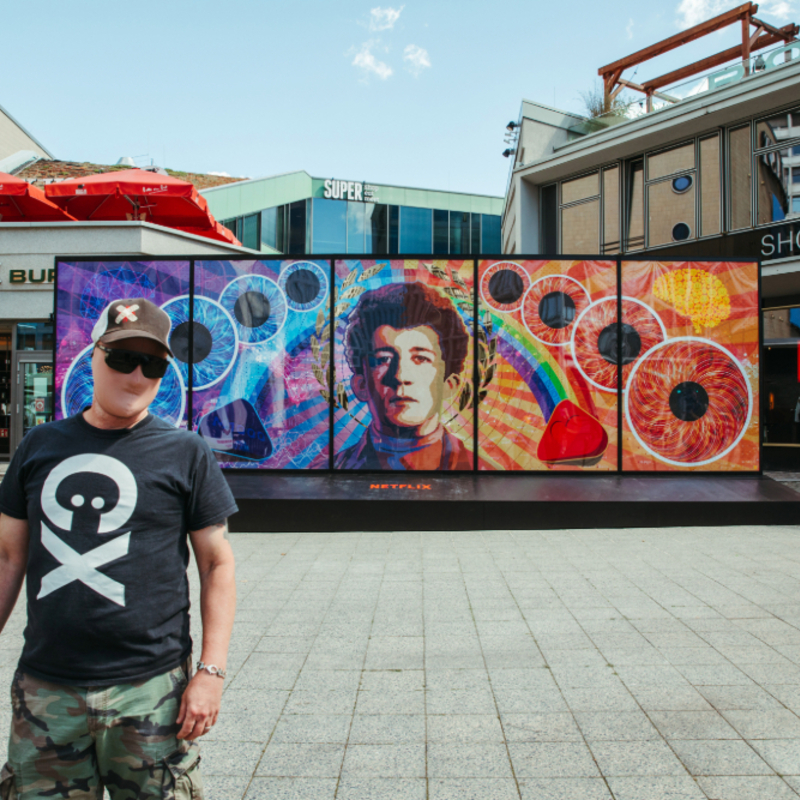
For Katjes, a brand new to this format, the outcome surpassed internal expectations. The campaign demonstrated something that media planning spreadsheets rarely capture: that a single well-placed, well-executed street-level OOH activation in the right cultural context can generate earned media value that outlasts its physical run — a dynamic explored in depth in Basa's Netflix x Chemical X Berlin installation.
The campaign also produced a direct commercial outcome that rarely features in OOH post-campaign reporting: Nasca Uno's work led to a second commission from Katjes. When a brand activation generates that kind of internal momentum — where the client returns because the format delivered — it's a reliable signal that the work performed against more than awareness metrics.
The Broader Lesson for OOH Planning
Most OOH planning optimizes for reach: the highest number of impressions across the most locations for the lowest CPM. That logic works for product awareness campaigns with broad demographic targets and simple messages.
It works less well for campaigns where brand perception is as important as brand recall — anniversaries, product launches with emotional narratives, campaigns entering culturally specific markets where authenticity is the price of entry.
For those briefs, the street-level OOH advertising calculus shifts. Spend less on distributed reach. Spend more on a single location, a higher level of craft, and a cultural collaborator who brings genuine contextual credibility. The Katjes campaign didn't reach everyone in Berlin. It reached exactly the right people, in exactly the right frame of mind, with exactly the right execution — and those people did the rest.
That's not a creative outcome. That's a media strategy outcome.
Related creative stories
Browse through other features, interviews and guides to discover creative brand collaborations, meet innovative artists and creators, find out how new artforms are energizing advertising, & more.
We're excited to hear from you! If you're looking for artistic solutions for your next creative marketing campaign, send us your briefing. We can also help create a killer concept if you're in an early ideation phase. Check out our services for more.
Send your briefing
About you
THANK YOU
Your inquiry has been sent
We have received your inquiry. We'll get back to you within 24-48 hours to discuss your project. If you need urgent assistance, reach us on WhatsApp: +49 176 432 64506. In the meantime, we invite you to explore our insights, case studies, and lessons from building culturally grounded brand experiences.
Please contact us by phone if you're not able to reach us via this form.
THANK YOU
We have received your inquiry. We'll get back to you within 24-48 hours to discuss your project. If you need urgent assistance, reach us on WhatsApp: +49 176 432 64506. In the meantime, we invite you to explore our insights, case studies, and lessons from building culturally grounded brand experiences.
We use cookies to help empower our artists and make them accessible to clients. Check out our Privacy Policy and Terms of Service to see how your data can make a difference.