The cultural brand building process has five phases — and where most agencies stop at concept, the best work starts.
Most brand activations are conceived in a boardroom, handed to a production team, and delivered on time. The brief is met. The budget is spent. And six weeks later, nobody remembers it happened.
The problem isn't execution. It's the process. When culture is treated as a finishing layer — a mural on the wall, an artist brought in at the eleventh hour — it shows. Audiences can feel the difference between a brand that has earned its cultural presence and one that has simply purchased it.
A rigorous cultural brand building process looks nothing like a traditional agency workflow. It's slower to start, more demanding in the middle, and far more durable in its outcomes. This article maps out what that process actually involves — phase by phase — and why the sequence matters as much as the individual steps.
What Is an Example of Cultural Branding?
Before mapping the process, it helps to see what the outcome looks like in practice.
When Deutsche Bahn commissioned Basa Studio to develop a public art activation across three Berlin S-Bahn stations — Wedding, Frankfurter Allee, and Bornholmer Strasse — the brief was not about aesthetics. It was about solving a measurable brand problem: grey, deteriorating transit environments were generating negative brand association and commuter discomfort, while graffiti removal was creating significant recurring operational costs.
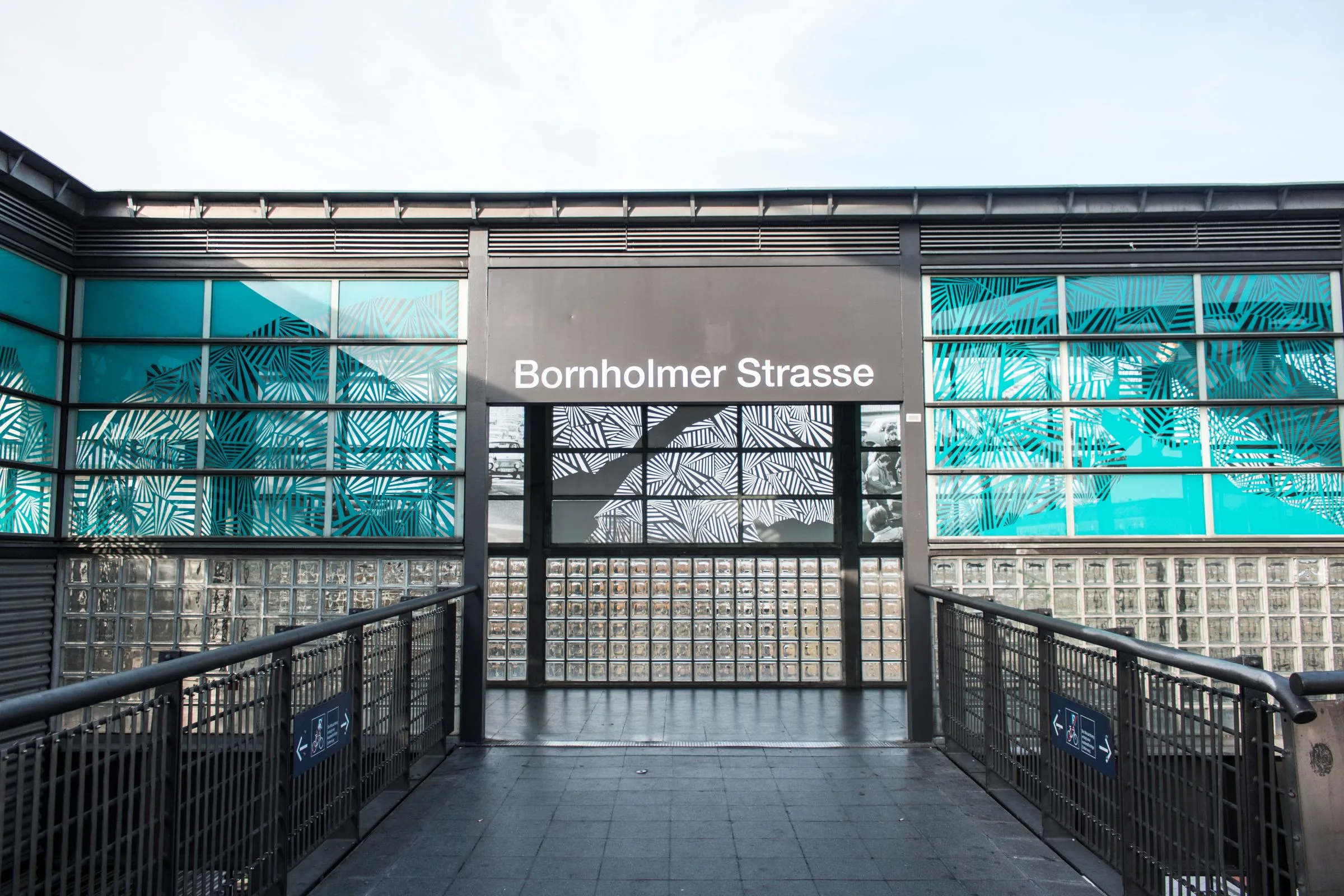
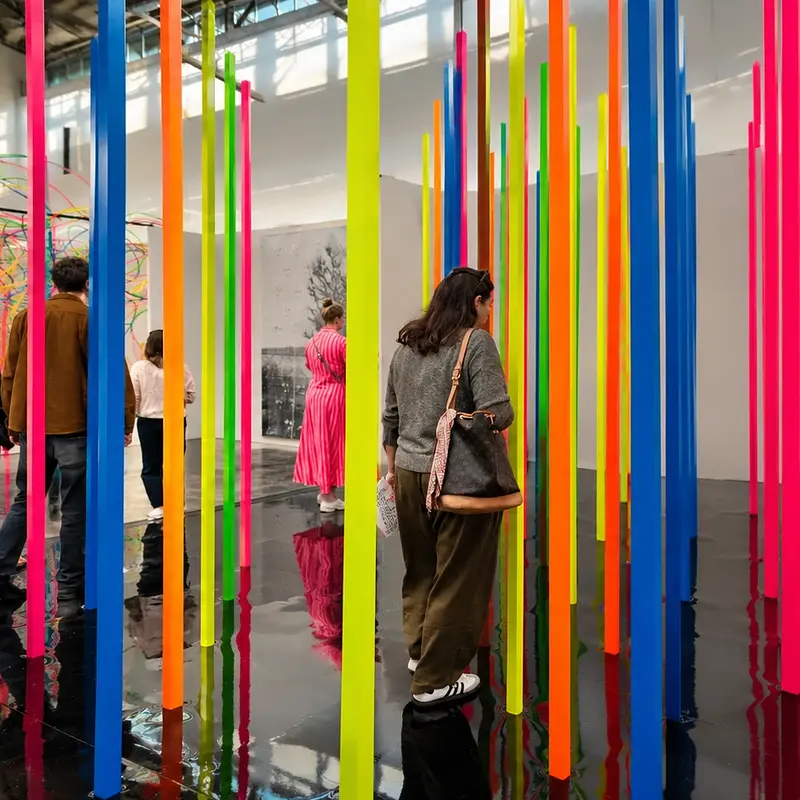
The response was three site-specific cultural interventions, each built around the distinct history, architecture, and community character of its station. At Bornholmer Strasse — a former East-West border crossing — artists Guillermo S. Quintana and Amanda created a translucent tape art installation designed to respond to shifting natural light across the day. The medium was chosen precisely because of its relationship to light and transparency: conceptual depth that emerged directly from the station's historical context, not from a mood board.
That is cultural branding. Not a campaign layered over a space, but cultural values embedded in how the work is made, who makes it, and why. The distinction — substance over signal — is the founding principle of every cultural brand building process worth undertaking.
Bornholmer Strasse S-Bahn station, Berlin. Tape art by Guillermo S. Quintana and Amanda, produced by Basa Studio for Deutsche Bahn's Quality Offensive programme. A cultural response to a historical space — not decoration, but argument.
Why Process Is the Point
A cultural brand building process is not a project plan with a creative brief attached. It is a deliberate sequence of decisions — strategic, curatorial, creative, spatial, and operational — each of which depends on what came before.
Skip the strategy phase and your concept will be aesthetically interesting but strategically adrift. Rush the collaboration curation and you'll get a collaborator who looks right on paper but brings nothing of genuine cultural substance to the work. Treat production as a commodity and you'll watch a strong concept degrade through compromise.
The five-phase process below is the operational detail behind the strategic framework — moving from the what of cultural brand building to the how, phase by phase, and what separates an agency that truly understands this from one that doesn't.
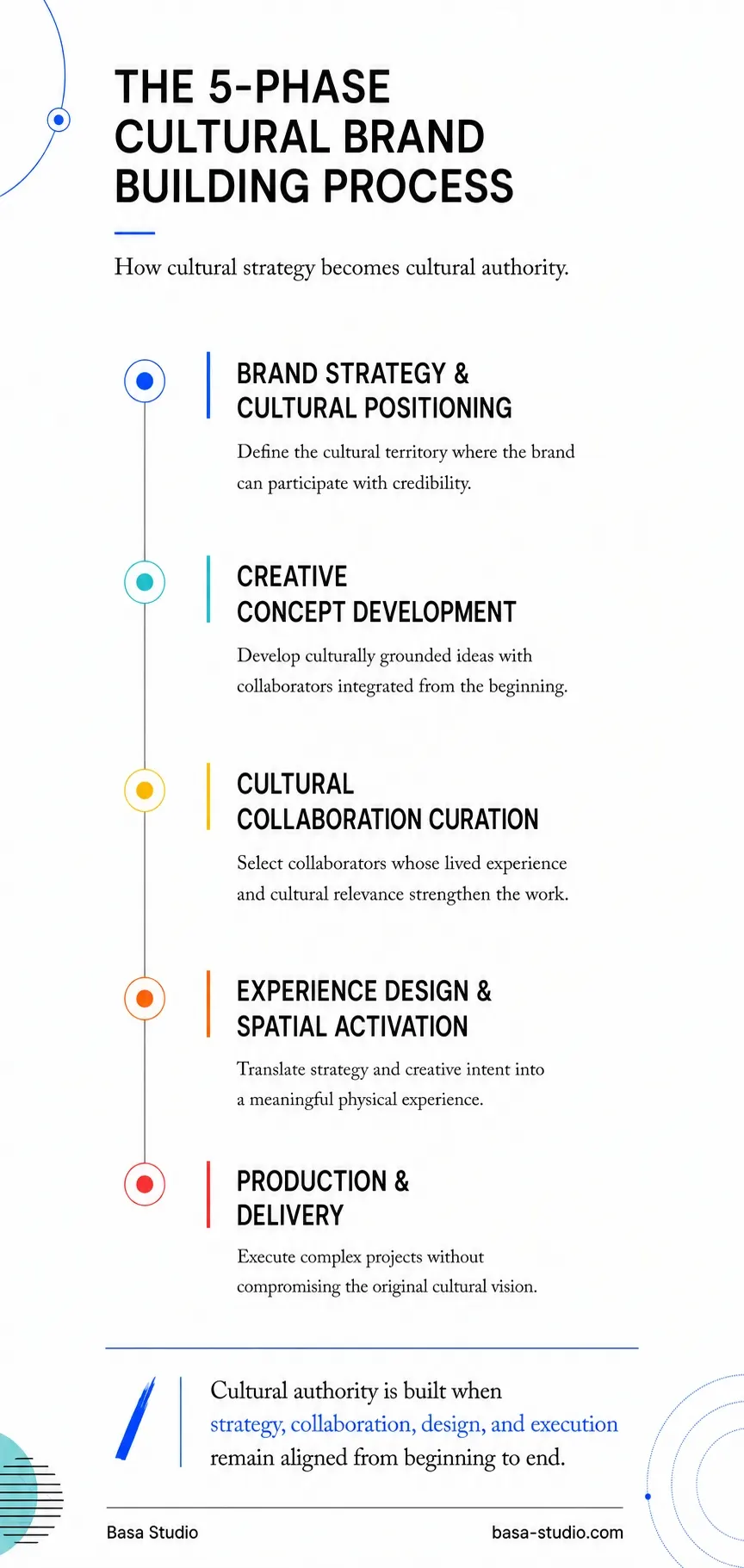
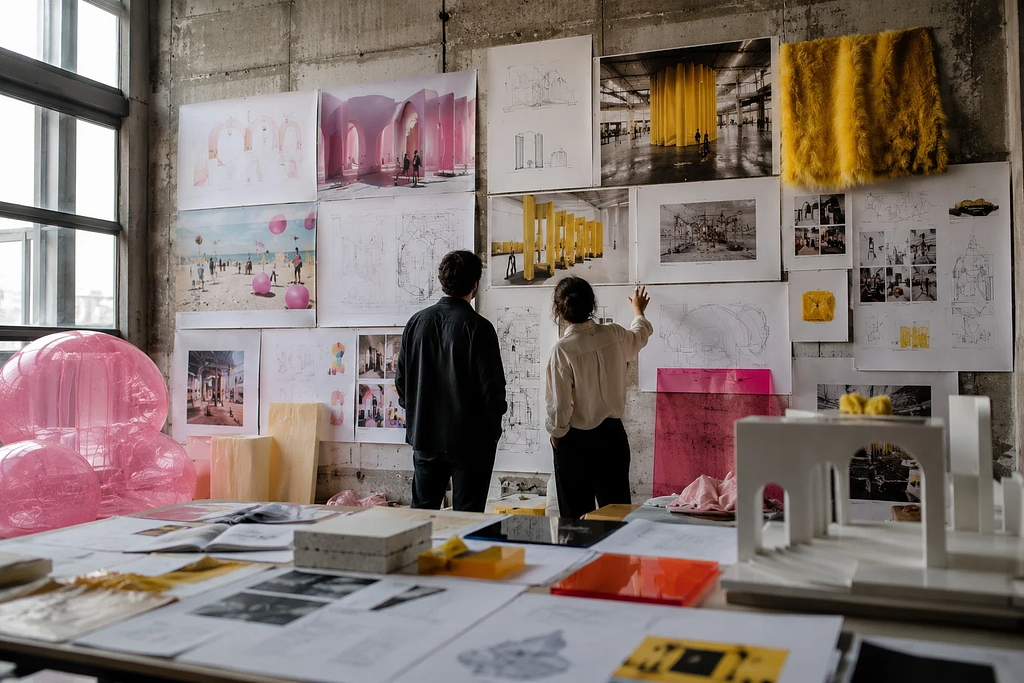
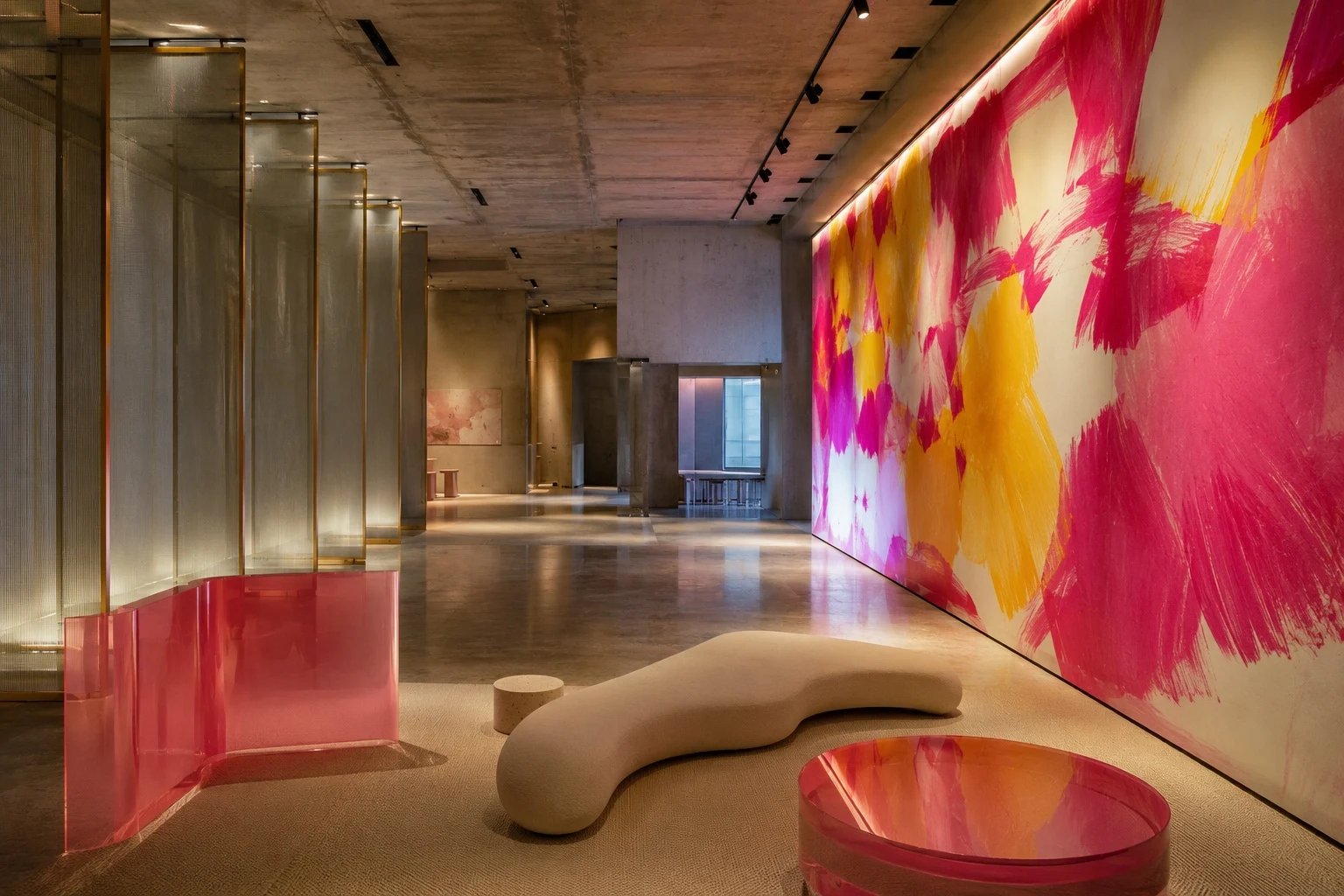
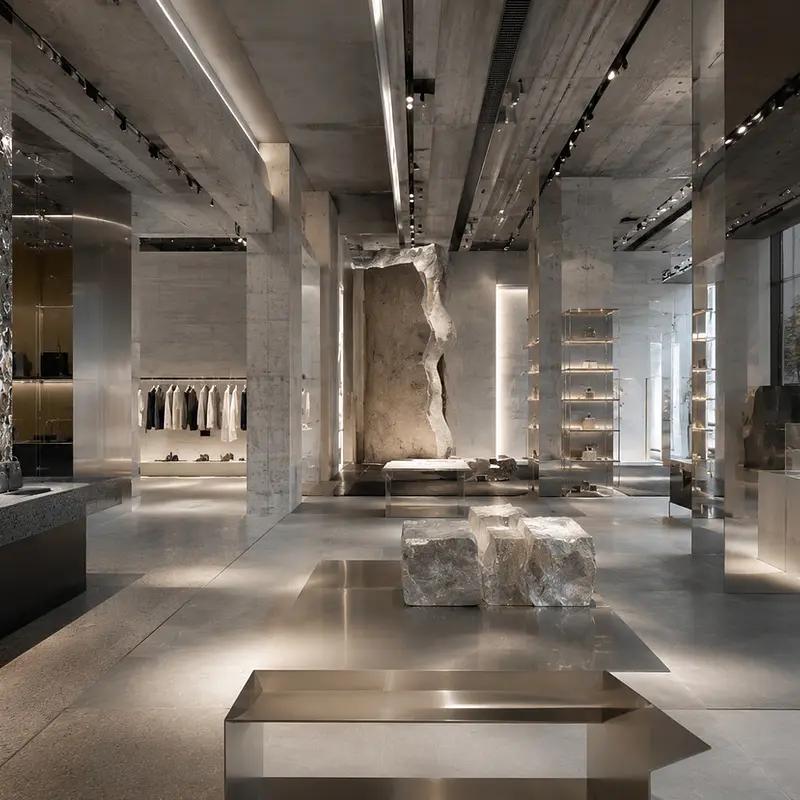
The five-phase cultural brand building process — each phase builds on the last. Collapsing or reordering them is where most activations go wrong.
Phase 1: Brand Strategy & Cultural Positioning
Every cultural brand building process begins with a question most agencies skip: where does this brand authentically belong in culture?
This is not a trend audit. It is not a competitor benchmarking exercise. It is a rigorous examination of the brand's values, history, audience, and genuine areas of cultural permission — the territories where it can participate with credibility rather than opportunism.
This phase runs two workstreams in parallel. The first is cultural positioning: identifying the intersection between what the brand stands for and the cultural moments, communities, and craft traditions that resonate with its audience. The second is long-term vision: working with in-house researchers and futurists to anticipate where cultural relevance is building, not just where it currently sits.
The output of this phase is not a mood board. It is a strategic foundation — a defined cultural territory, a set of non-negotiable brand values, and a clear brief for what the work needs to achieve. Without this, everything that follows is guesswork dressed as creativity.
What goes wrong here: Brands that skip this phase tend to gravitate toward whatever cultural territory feels exciting at the time — music, sustainability, urban culture — without interrogating whether they have the credibility to show up there. The result is the cultural equivalent of a tourist in costume.
Phase 2: Creative Concept Development
With a strategic foundation in place, concept development begins — and this is where Basa Studio's process diverges most sharply from a traditional agency model.
Rather than developing concepts internally and presenting them to a client for approval, cultural collaborators — artists, artisans, and cultural innovators — are integrated from the beginning of the creative process. This is not a token inclusion. It changes what gets made.
When an acclaimed cultural innovator is in the room at the ideation stage, the concept is shaped by lived experience, cultural knowledge, and craft perspective that no strategy deck can replicate. The result is ideas with genuine cultural substance rather than a borrowed cultural aesthetic.
This phase also accounts for production reality. Creative concepts that ignore material, logistical, and budget constraints are not bold — they are irresponsible. Feasibility is assessed as concepts develop, not after a client has already committed to something undeliverable.
What goes wrong here: Concepts developed without cultural collaborators in the room tend to reach for cultural references without understanding them. The aesthetic is right; the substance isn't. Culturally literate audiences — the exact audiences premium brands are trying to reach — notice immediately.
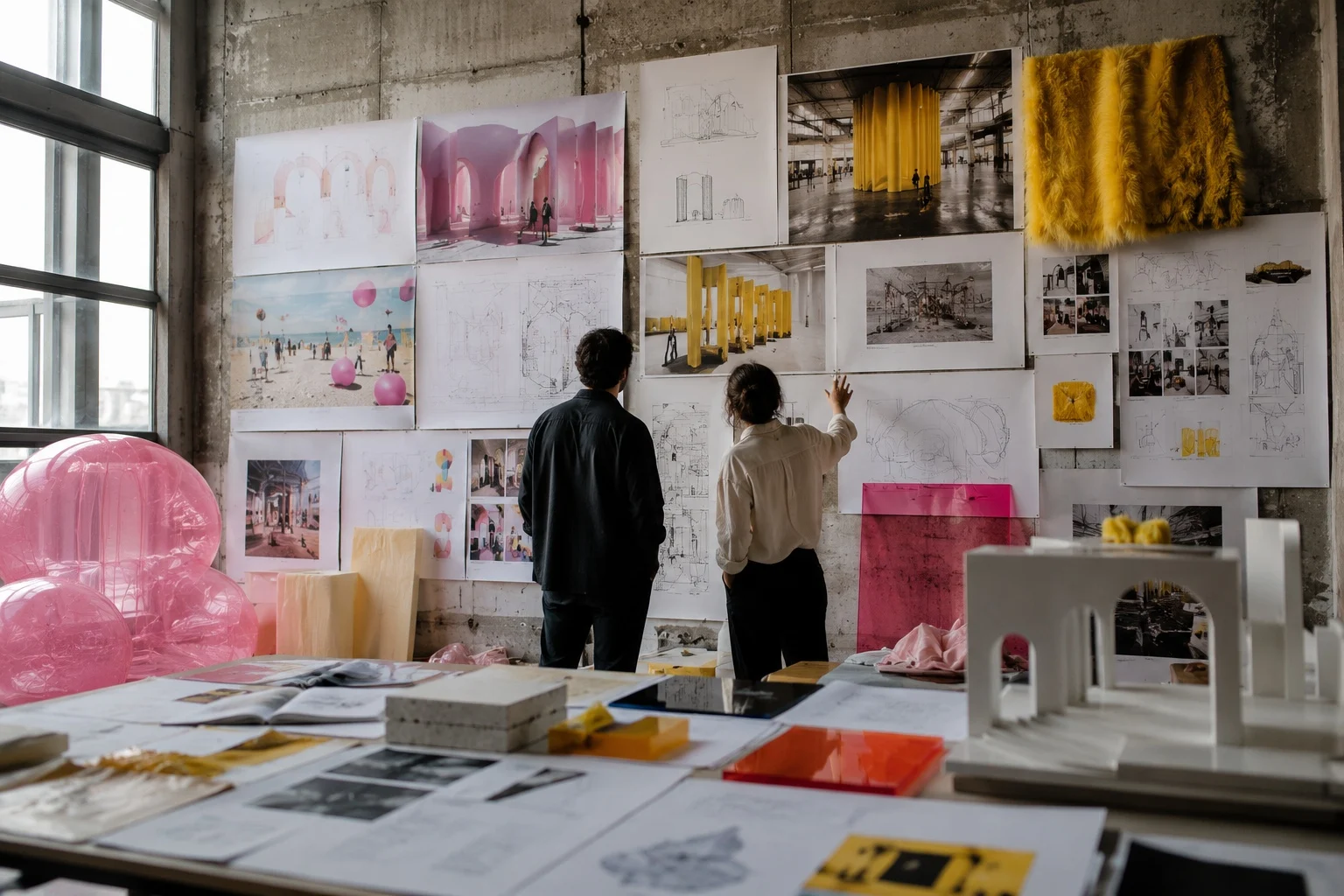
Concept development begins with cultural collaborators in the room — not as consultants at the end, but as co-creators from the start.
Phase 3: Cultural Collaboration Curation
This is the phase that most clearly distinguishes a cultural brand building process from a standard production workflow — and it deserves more strategic attention than it typically receives.
Selecting the right cultural collaborators is not a casting exercise. It is a strategic decision that determines whether the work earns genuine cultural credibility or merely borrows cultural aesthetics. The wrong collaborator — however talented — can undermine a concept entirely, either because the alignment between their practice and the brand's values is superficial, or because audiences see through the partnership.
The curation approach at Basa Studio goes well beyond creative style. Collaborators are evaluated on lived experience, authentic connection to the project's cultural territory, personal advocacy, and — critically — the communities and cultural capital they bring. A well-matched collaborator doesn't just execute a concept; they extend its reach into communities the brand could never access through paid media.
The Deutsche Bahn project illustrates this precisely. At Frankfurter Allee station, artist Falk Land was selected in part because he lives in the adjacent Friedrichshain neighbourhood. His work drew on the area's landmark statues and street grid to create something that reads as a portrait of place. When a brand commissions from someone with lived proximity to the site, the resulting work carries credibility that imported aesthetics never will.
This phase also involves structuring the collaboration itself — defining how the collaborator's creative authorship is protected, where their input is integrated, and how the partnership is communicated to audiences. Done well, this transforms an activation into a genuine cultural moment.
What goes wrong here: Brands that treat collaborator selection as a procurement decision — filtering by follower count, availability, and day rate — reliably produce work that feels transactional. The collaborator delivers. The brand pays. The audience shrugs.
Phase 4: Experience Design & Spatial Activation
With strategy defined, concept developed, and collaborators confirmed, the work enters its most visible phase: translating ideas into physical reality.
Experience design is not a handover. The strategic and creative intent established in phases one through three must survive contact with architecture, materials, logistics, and physical space — and that requires the same rigour of integration that shaped the earlier phases.
Basa Studio's design approach brings together architects, experiential designers, and cultural collaborators as a single team — ensuring spatial execution remains culturally coherent, not just aesthetically polished. This matters because the gap between a strong concept and a strong space is where most activations lose their cultural depth. Decisions made under time pressure — a material substitution here, a layout compromise there — quietly erode the work's integrity.
The phase also accounts for the specific demands of different touchpoints: a branded art installation operates differently from a retail interior, which operates differently from a product launch experience. Each format has its own spatial logic, audience behaviour, and measurement criteria. A process that treats them interchangeably will underperform across all of them.
The final phase is where ambition meets accountability — and where the operational rigour of a serious agency becomes visible.
Production at this level is not logistics management. It is the simultaneous coordination of vendors, fabricators, cultural collaborators, technical specialists, client teams, venue partners, and regulatory requirements — across multiple locations, often in multiple countries, always under time pressure.
The Deutsche Bahn project ran across three live transit stations simultaneously, with artists and production teams working within strict operational constraints while the stations remained in active use. Coordinating creative decision-making with engineering requirements, safety protocols, and live scheduling is not a standard agency capability. It requires a production model built around cultural intelligence as much as operational precision.
Basa Studio's approach to this phase runs on two principles. The first is meticulous precision: managing complexity so ambitious concepts are delivered without compromise. The second is cultural adaptability — applying rigorous standards while remaining genuinely responsive to local working cultures, materials, and contexts across Europe.
This distinction — strategic intent protected all the way through delivery — is what separates a cultural brand building process from a brand building workflow that simply produces outputs.
What goes wrong here: Production treated as a commodity phase reliably produces commodity results. Budget pressure forces material substitutions. Timeline pressure forces creative compromises. The work arrives on time and on budget — and looks like it was made in a hurry.
Why the Sequence Is Non-Negotiable
The five phases above are not modular. They are sequential and interdependent. You cannot run a meaningful collaboration curation process without a defined cultural positioning. You cannot design a coherent spatial experience without a concept shaped by the collaborators who will execute it. And you cannot deliver without a production team that understands the cultural intent it is responsible for protecting.
This is the fundamental difference between a cultural brand building process and a traditional agency workflow. Traditional agencies produce campaigns. A rigorous cultural process produces brand assets — experiences, spaces, and cultural associations that compound in value over time.
For brands willing to invest in the process, not just the output, the return is not measured in a single activation. It is measured in the cultural authority that accumulates across every touchpoint, every collaboration, and every year the brand shows up with genuine depth.
The Brief Is Where the Process Starts
If you are a CMO or Marketing Director reading this, the question the process raises is practical: where does your brand currently sit within it?
Most brands arrive somewhere between phase one and phase two — they have a campaign idea, a budget, or a touchpoint they want to activate, but they haven't yet done the strategic work that would make any of those things culturally meaningful. That's not a criticism. It's the starting point.
The cultural brand building process begins with a brief — and a conversation about what the brand genuinely stands for, where it has cultural permission to operate, and what kind of work it wants to be known for. Everything else follows from there.
Related creative stories
Browse through other features, interviews and guides to discover creative brand collaborations, meet innovative artists and creators, find out how new artforms are energizing advertising, & more.
We're excited to hear from you! If you're looking for artistic solutions for your next creative marketing campaign, send us your briefing. We can also help create a killer concept if you're in an early ideation phase. Check out our services for more.
Send your briefing
About you
THANK YOU
Your inquiry has been sent
We have received your inquiry. We'll get back to you within 24-48 hours to discuss your project. If you need urgent assistance, reach us on WhatsApp: +49 176 432 64506. In the meantime, we invite you to explore our insights, case studies, and lessons from building culturally grounded brand experiences.
Please contact us by phone if you're not able to reach us via this form.
THANK YOU
We have received your inquiry. We'll get back to you within 24-48 hours to discuss your project. If you need urgent assistance, reach us on WhatsApp: +49 176 432 64506. In the meantime, we invite you to explore our insights, case studies, and lessons from building culturally grounded brand experiences.
We use cookies to help empower our artists and make them accessible to clients. Check out our Privacy Policy and Terms of Service to see how your data can make a difference.