What brands can learn from the art world isn't about aesthetics. It's about a fundamentally different approach to building lasting brand authenticity.
Most brand campaigns are built around a quarter. Most serious artists build around a decade. That gap — between the time horizon of commerce and the time horizon of culture — explains more about why brand activations fail to resonate than any brief, budget, or execution failure ever could. The art world has spent centuries developing principles that produce lasting cultural authority. Brands are only beginning to understand what those principles are — and what it would mean to apply them.
This is not an argument for brands to become galleries. It is an argument for brand strategists to pay closer attention to how the art world actually works: how it builds reputation, earns trust, sustains relevance, and — crucially — how it decides what not to do.
The Time Horizon Problem
A campaign has a lifespan. A gallery has a reputation. The distinction sounds obvious, but its implications for brand strategy are profound.
As Highsnobiety documents, when Raf Simons launched his menswear label in 1995 and spent the following decade building a distinctive aesthetic vocabulary rooted in youth culture and craft, he was not optimising for the next season. He was constructing a body of work. By the time that work became culturally dominant, the depth behind it was legible. That is an artist's time horizon, not a marketer's.
The art world's relationship with time is not incidental — it is structural. A collector who acquires work by an emerging artist is making a bet on trajectory, not current market position. A gallery that represents an artist for twenty years is building something that no single show could create. Reputation in the art world accretes; it is not manufactured in a campaign cycle.
For brands, the art world lesson is this: cultural authority cannot be booked in a media plan. It is built incrementally, through a consistent point of view sustained over time. Hermès and Loewe, for example, have it because they made decisions that were not optimised for the next quarter. They made them for the next decade.
The question for any brand team is not "what are we doing this season?" It is "what are we becoming over time?" Those are different questions. The art world asks the second one by default.
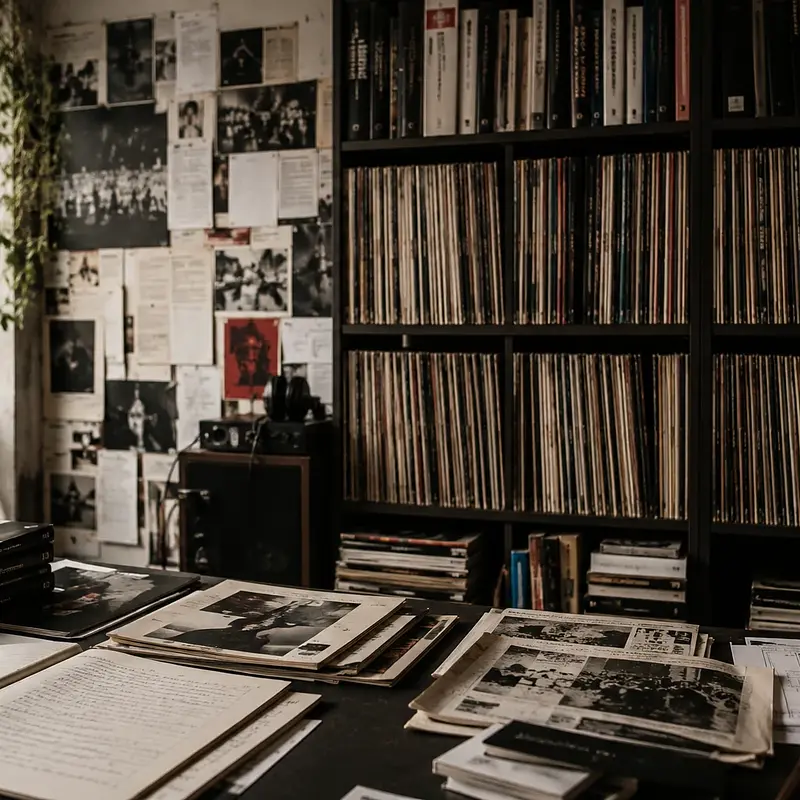
The art world's long game: galleries build reputation over decades, not campaigns. Brands that understand this think differently about time.
Intrinsic Motivation and Why It Produces Different Work
There is a reason the most culturally resonant brand work tends to come from collaborations where the creative brief is opened up, not narrowed down. The art world can explain why.
The best cultural work — the kind that lasts, that gets studied, that shifts what is considered possible — comes from intrinsic creative motivation. Artists make work because they need to make it. The urgency is internal. The standard is self-imposed. The result carries a particular quality of conviction that audiences can feel, even when they cannot articulate it.
Most brand briefs, by design, operate in the opposite direction. They define outputs, set guardrails, specify deliverables, and measure compliance. That is not a criticism — it is a description of how organisations manage risk. But it is also a description of how you systematically eliminate the conditions that produce genuinely resonant work.
The brands that have understood this have learned to write briefs that open space rather than close it. They bring creative collaborators in at the strategy stage, not the execution stage. They define the territory of a collaboration, not the output of it. They accept that genuine creative vision will sometimes produce something unexpected — and they have built enough internal confidence in their own point of view to trust that result.
That is an art world lesson. It is also, increasingly, a competitive advantage.
Cultural Capital: Earning It vs. Borrowing It
The concept of cultural capital — the idea that accumulated credibility, taste, and association carry real value distinct from financial assets — has migrated from sociology into brand strategy for a reason: it describes something practitioners have long observed but struggled to name. Some brands carry authority in cultural spaces. Others enter those same spaces and feel like outsiders. The difference is rarely about budget.
In a brand context, cultural capital is the accumulated credibility that allows a brand to operate as a genuine participant in culture rather than a sponsor of it. And the distinction matters enormously — because audiences feel it immediately.
A brand that borrows cultural capital licenses a famous artist's name for a season, runs the collaboration across all channels, and moves on. The association is visible. The depth is not. Audiences who care about the artist — who have followed the work, who understand the context — can see the transaction clearly. The cultural capital does not transfer. It is rented, not earned.
A brand that earns cultural capital does something different. It develops a consistent aesthetic philosophy. It makes choices that reflect a genuine point of view, not just a desire to be seen with the right names. It accepts projects that are harder to execute because they are truer to that philosophy. Over time, the accumulated weight of those decisions creates something that cannot be bought in a single collaboration: the perception that this brand understands culture, participates in it honestly, and has earned its place in it.
Charlotte Specht, CEO and co-founder of Basa Studio, has watched this shift play out across a decade of working at the intersection of art and commerce. Her read on where brands stand now is unambiguous: "The brands we see struggling are still trying to buy their way into culture. Audiences have become very good at ignoring what doesn't feel real. The brands that are winning — and will keep winning — are the ones that have something genuine to say and find the right creative voices to say it with. That is not a trend. That is the new baseline."
The art world teaches this through the concept of provenance. In the art market, a work's value is inseparable from its story — who made it, when, under what conditions, for what purpose. Fakes and forgeries are not just legally problematic; they are culturally inert, because the story is false. Brands that build transparent, authentic creative stories build the same kind of lasting value. A collaboration with a genuine creative history behind it carries different weight than one assembled for a product launch.
Cultural capital cannot be rented from a famous name. It is built through repeated, genuine creative decisions — and audiences know the difference.
What Galleries Know About Curation That Most Brand Managers Don't
The word "curation" has been hollowed out by marketing usage. In its original sense — the sense serious galleries still practice — curation is a discipline of refusal as much as selection. A gallery that says yes to everything is not curating; it is warehousing.
The galleries that have built lasting reputations tend to share a characteristic that is easy to observe but hard to replicate: a coherent programme sustained over time. Walk through the exhibition history of any gallery with genuine standing and a consistent set of values emerges, independent of any single show. Collectors and critics read that coherence and draw conclusions about intelligence, taste, and integrity.
Brands rarely think this way. The instinct is to maximise: more partnerships, more collaborations, more activations, more channels. The result is often a brand that feels diffuse — present everywhere, rooted nowhere. The cultural signal it sends is incoherence.
The art world lesson here is not that brands should do less for its own sake. It is that a consistent, legible point of view — one that says something specific about what this brand stands for and what it refuses to be — is more valuable than volume. Curation, in the genuine sense, is a form of brand strategy. The brands that understand this tend to look distinctive. The ones that don't tend to look like everything else.
This is also where the brief becomes the turning point. A brand that has developed genuine aesthetic clarity can write a brief that communicates that clarity to creative collaborators. A brand that has not will produce a brief asking for something "bold but approachable, creative but safe, cultural but broadly appealing" — and receive work that reflects that confusion back at them.
The Provenance Model in Practice
The art world's provenance model has a direct brand equivalent: the creative story behind the work.
When a brand commissions work from an artist with a ten-year body of work, a distinctive visual language, and a documented relationship with a particular community, the resulting work carries that history. It is not a mural or an installation; it is a chapter in a longer story. The audience that encounters it has access to that story — not because it is explained to them in a caption, but because it is legible in the work itself.
This is what separates culturally grounded work from decoration. Decoration occupies space. Culturally grounded work means something. It has a reason to exist beyond the fact that a wall needed filling or a product needed launching.
Brands that adopt the provenance model do not just commission work. They build creative relationships. They return to the same artists and artisans across multiple projects. They develop a recognisable aesthetic vocabulary that accumulates meaning over time. Each new work is in conversation with what came before — and the audience, if it is paying attention, notices.
The art world has always understood that the most valuable works are not the ones that appeared in isolation. They are the ones that belong to a body of work, a career, a vision sustained over time. For brands, the same logic applies. Single activations, however well executed, do not build cultural authority. Programmes do.
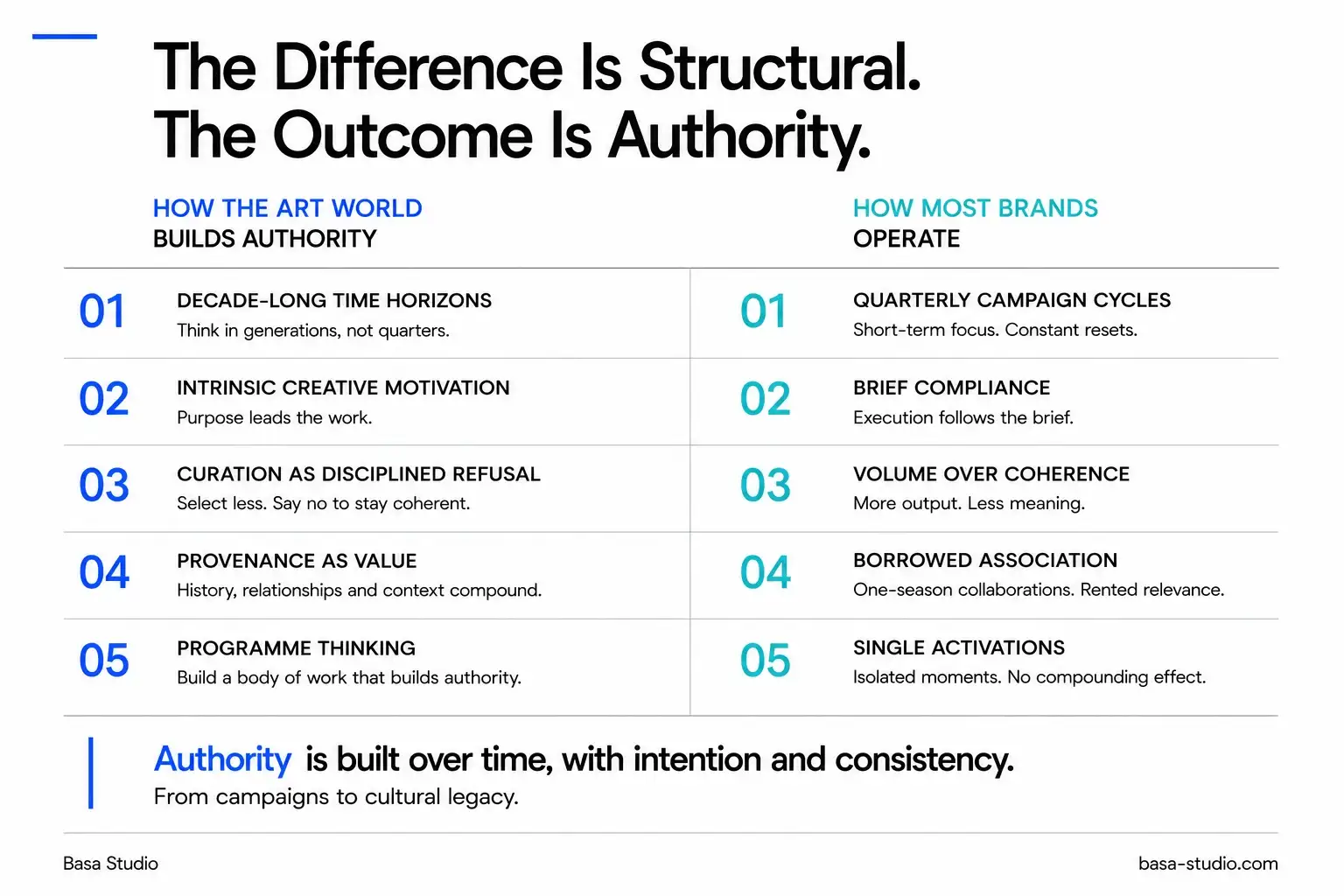
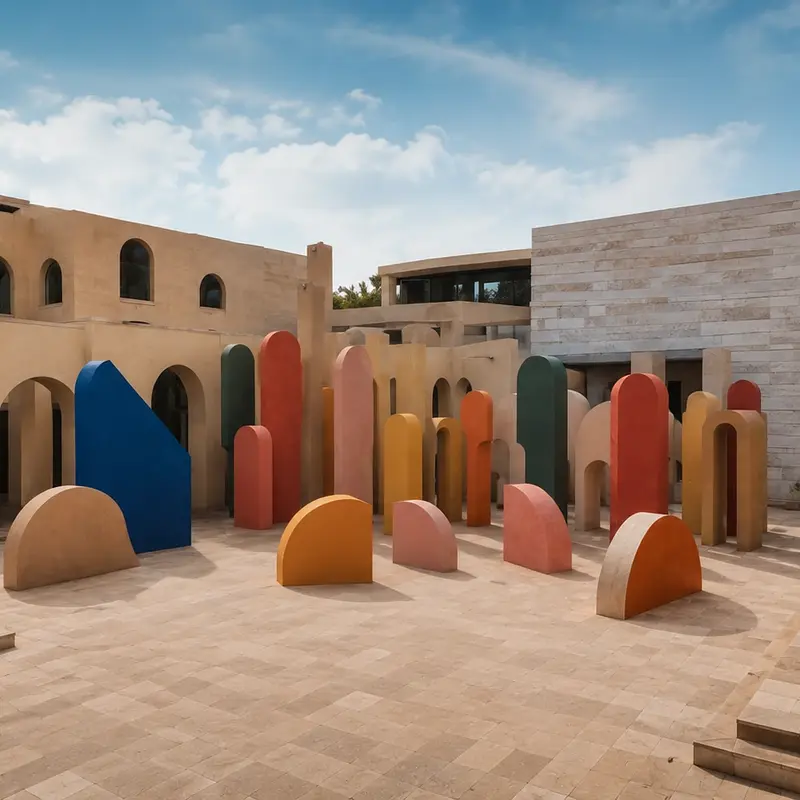
Five structural differences between how the art world builds authority and how most brands run activations — and what it would mean to close the gap.
What This Requires From Brand Strategy
None of this is theoretical. These are operational decisions that determine what kind of work a brand produces and what kind of cultural standing it accumulates over time.
A brand that wants to adopt the art world's time horizon needs to make a structural commitment: a multi-year creative programme, not a series of disconnected activations. It needs a point of view stable enough to guide decisions across that programme — and senior leadership willing to protect it when short-term pressures push for something safer or more familiar. Understanding what that commitment actually costs — and why it is worth it — is where most brand teams need to start.
A brand that wants to earn cultural capital rather than borrow it needs to rethink who it brings into the creative process and at what stage. Artists and artisans integrated from strategy — who shape the concept, not just execute a brief — produce fundamentally different work from those handed a finished idea and asked to make it look interesting. The difference shows in the work. It also shows in how audiences receive it. It is precisely this model — artists and artisans integrated from strategy, not decoration — that sits at the core of Basa Studio's approach to cultural brand building.
A brand that wants to curate rather than accumulate needs the discipline to say no: to partnerships that don't fit, to activations that dilute the point of view, to collaborations that are commercially attractive but culturally incoherent.
These are not easy decisions. The art world has been making them for centuries, and even there they are not always made well. But they are the decisions that determine whether a brand builds something that lasts — or produces another activation that nobody remembers by the following quarter.
The art world's lessons are not about aesthetics. They are about strategy. For brands serious about cultural depth, they are among the most useful available — and among the most consistently ignored.
Related creative stories
Browse through other features, interviews and guides to discover creative brand collaborations, meet innovative artists and creators, find out how new artforms are energizing advertising, & more.
We're excited to hear from you! If you're looking for artistic solutions for your next creative marketing campaign, send us your briefing. We can also help create a killer concept if you're in an early ideation phase. Check out our services for more.
Send your briefing
About you
THANK YOU
Your inquiry has been sent
We have received your inquiry. We'll get back to you within 24-48 hours to discuss your project. If you need urgent assistance, reach us on WhatsApp: +49 176 432 64506. In the meantime, we invite you to explore our insights, case studies, and lessons from building culturally grounded brand experiences.
Please contact us by phone if you're not able to reach us via this form.
THANK YOU
We have received your inquiry. We'll get back to you within 24-48 hours to discuss your project. If you need urgent assistance, reach us on WhatsApp: +49 176 432 64506. In the meantime, we invite you to explore our insights, case studies, and lessons from building culturally grounded brand experiences.
We use cookies to help empower our artists and make them accessible to clients. Check out our Privacy Policy and Terms of Service to see how your data can make a difference.