Mizter Rad — entrepreneur, engineer, and futurist — on where cultural brand building is heading, and why most brands are already behind.
Mario Rueda's (aka Mizter Rad) path doesn't follow a conventional blueprint. He's worked on construction sites at One World Trade Center, studied Mandarin in Tianjin, volunteered with indigenous communities in the Amazon, worked at L'Oréal, and eventually built a street art marketplace from a kitchen table in Lisbon.
That idea became a platform behind more than 120,000 brand projects with companies like Tesla, BMW, Google, Netflix, and LVMH — but the more interesting story is what he learned along the way.
Because Mario has experienced culture from multiple sides: from inside the communities brands spend millions trying to reach, from the operational reality of scaling creative work, and from conversations with the scientists and founders thinking about the future of humanity.
Today he co-founds Basa Studio and hosts the Mizter Rad Show, where he explores the ideas shaping the next century — from AI and biotechnology to the future of human creativity.
What connects all of these chapters is a question at the centre of his work: how does something move from being a cultural signal to becoming a force that shapes business? In this conversation, we explore what that journey taught him about the relationship between culture and commerce.
A note before we begin: Mario is co-founder of Basa Studio. This is a founder's perspective, not a neutral one — and that is precisely what makes it worth reading.
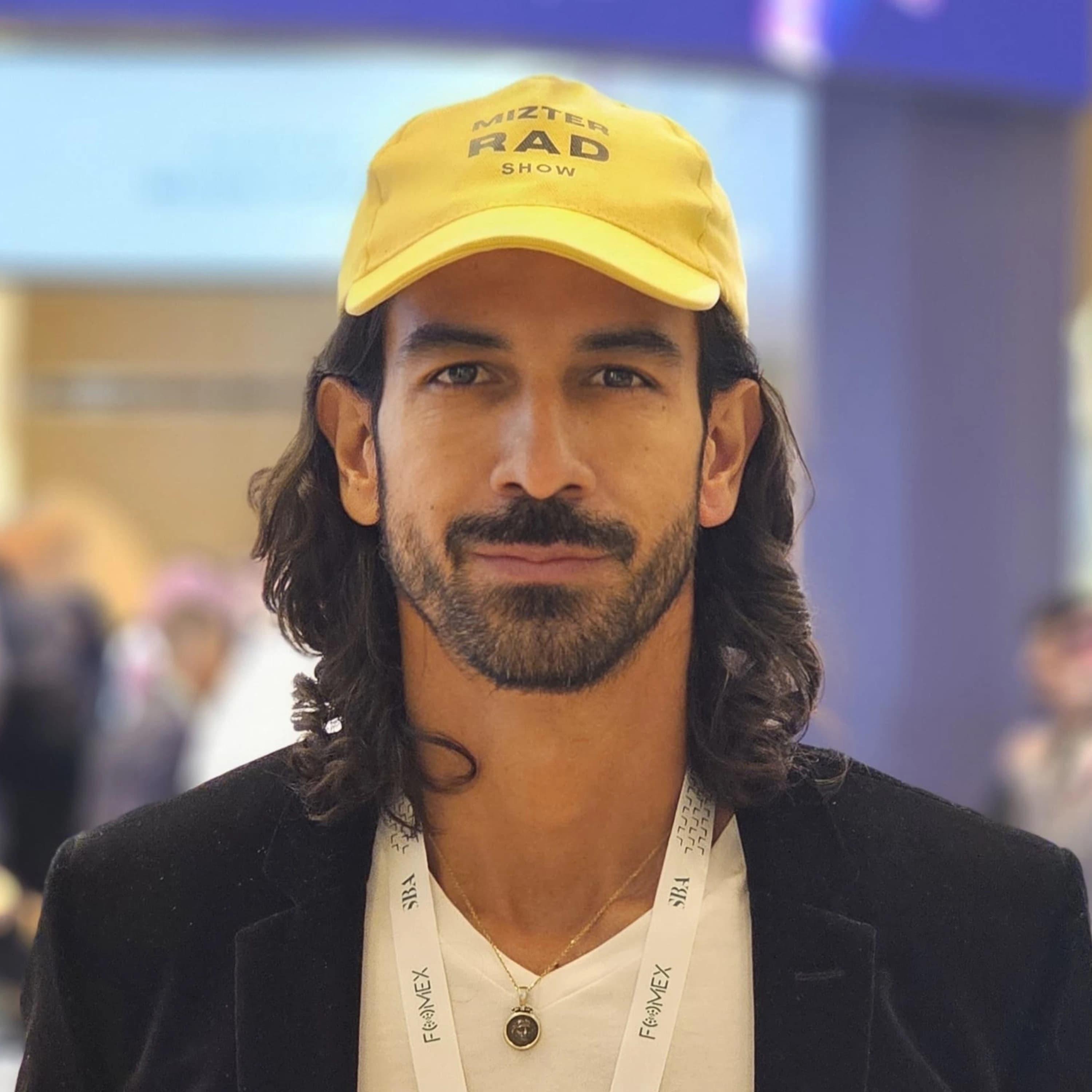
Mario Rueda — entrepreneur, engineer, futurist, and co-founder of Basa Studio. He hosts the Mizter Rad Show, a podcast exploring the future of humanity through conversations with researchers, founders, and cultural thinkers.
You built a street art marketplace from a kitchen in Lisbon that ended up facilitating over 120,000 brand projects with companies like Tesla, BMW, Netflix, and LVMH.
What did that teach you about the relationship between culture and commerce that you couldn't have learned any other way?
I was in my late twenties when we started with this idea of helping "undervalued" street artists from a small kitchen in Lisbon. I look back now and realise how naive I was. I thought we lived in a world where commerce and culture — or the arts specifically — weren't friends. In fact, I thought they repelled each other. The opposite is true.
As time passed and I learned more about the sector, I realised that the most successful artists are, more often than not, great at personal branding and marketing. In today's world, whether we like it or not, the reality is that almost everything is becoming monetisable one way or another.
Culture, in my opinion, is one of those abstract things that's increasingly being commercialised — not only through mega concerts, multinational circus shows, or blockbuster visual art exhibitions that tour across the world, but now even more through digital platforms like Netflix, Spotify, YouTube, and TikTok. The biggest lesson for me was realising that culture and commerce aren't opposing forces. Commerce doesn't diminish culture; when done well, it amplifies it.
Through the Mizter Rad Show you speak regularly with AI researchers, synthetic biologists, and quantum computing founders.
When you look at where those technologies are heading, what do you see shifting for cultural brand building?
It's still early, so it's hard to fully understand what these technologies will do to culture long term. Cultural shifts usually take generations to really settle, even if today it feels like everything is accelerating.
But I do think we're entering a world where the line between what is real and what is synthetic, or what is natural versus man-made, is getting blurrier and blurrier. AI, robotics, synthetic biology — these are all essentially making production cheaper, faster, more scalable. At some point a lot of it becomes commoditised. It becomes infrastructure.
And when that happens, the interesting shift is that the differentiator is no longer the machine. It's not the ability to produce. Everyone will have that. It's what you choose to do with it.
I like to think of it almost like an engine and a steering wheel. AI is the engine: it gives you power, speed, efficiency. But as that engine becomes universal, what matters more is the direction. Where you're going. What you stand for.
And I think that's where culture and brand start to matter even more, not less. Because in a world where you can generate almost anything, instantly, the scarce thing becomes judgment. Taste. Conviction. And in some cases, restraint. The decision to stay human in certain parts of the system.
So you start seeing these tensions emerge more clearly over time. Natural versus synthetic. Lab-grown versus soil-grown. Fully automated versus human-crafted. Not because one side is objectively better, but because people will start using these choices as signals of identity and trust.
And in that sense, the companies that win long term are probably not the ones that reject the technology, but the ones that use it aggressively under the hood, while still keeping a very clear human centre on top. A sense of craft. Of intention. Of care.
So if AI becomes infrastructure — available to everyone — where does that leave human creativity? What is the thing it cannot replace?
I don't think AI replaces human creativity. I think it pushes us to define it more sharply. And maybe even value it more.
What AI cannot replace is the decision to stay human in certain parts of the system. Judgment. Taste. Conviction. Restraint. These are not outputs you can automate — they are positions you have to take. And in a world where production is commoditised, the brands that take those positions clearly and consistently are the ones that will build lasting cultural authority.
The risk isn't that AI replaces culture. The risk is that brands use it as a shortcut to avoid the harder work of actually engaging with culture. That shortcut has always existed. AI just makes it cheaper and more tempting.
You've lived on five continents and studied Mandarin in Tianjin.
How does that cross-cultural perspective shape the way Basa Studio approaches brand strategy?
I've had the opportunity to live and spend long periods of time in different cultures, in places that speak languages that aren't mine, where people have very different ways of seeing life, treating each other, and even doing business. And what I've realised over time is that, despite all those differences, there are a lot of underlying similarities in how people operate.
In a way, we're all navigating life with the same underlying tension: trying to move forward, trying to achieve more, while constantly searching for some form of validation or meaning along the way. Sometimes through success, sometimes through attention, sometimes through very small moments of recognition. But no matter where you are, or whether you're introverted or extroverted, people want the same basic things. To be seen. To be listened to. To be respected. To feel like they matter in some way.
And underneath all of that, there's this very old, very human need: to belong. We call it "community building" now, but it's not new at all. It has always existed. It's just been repackaged, rebranded, adapted to whatever language or platform we're using at the time.
And across cultures, I think that's one of the most consistent patterns you see. This idea of tribe. Of people gravitating toward other people who share their values, their taste, their worldview.
So for me, when we think about brand strategy at Basa Studio, it really comes back to that. Not just building attention or visibility, but building that sense of belonging in a way that feels authentic. Creating something where people don't just consume a brand, but feel like they're part of it. And I think doing that well, across cultures, is less about scaling a message, and more about understanding what makes people feel human in the first place.
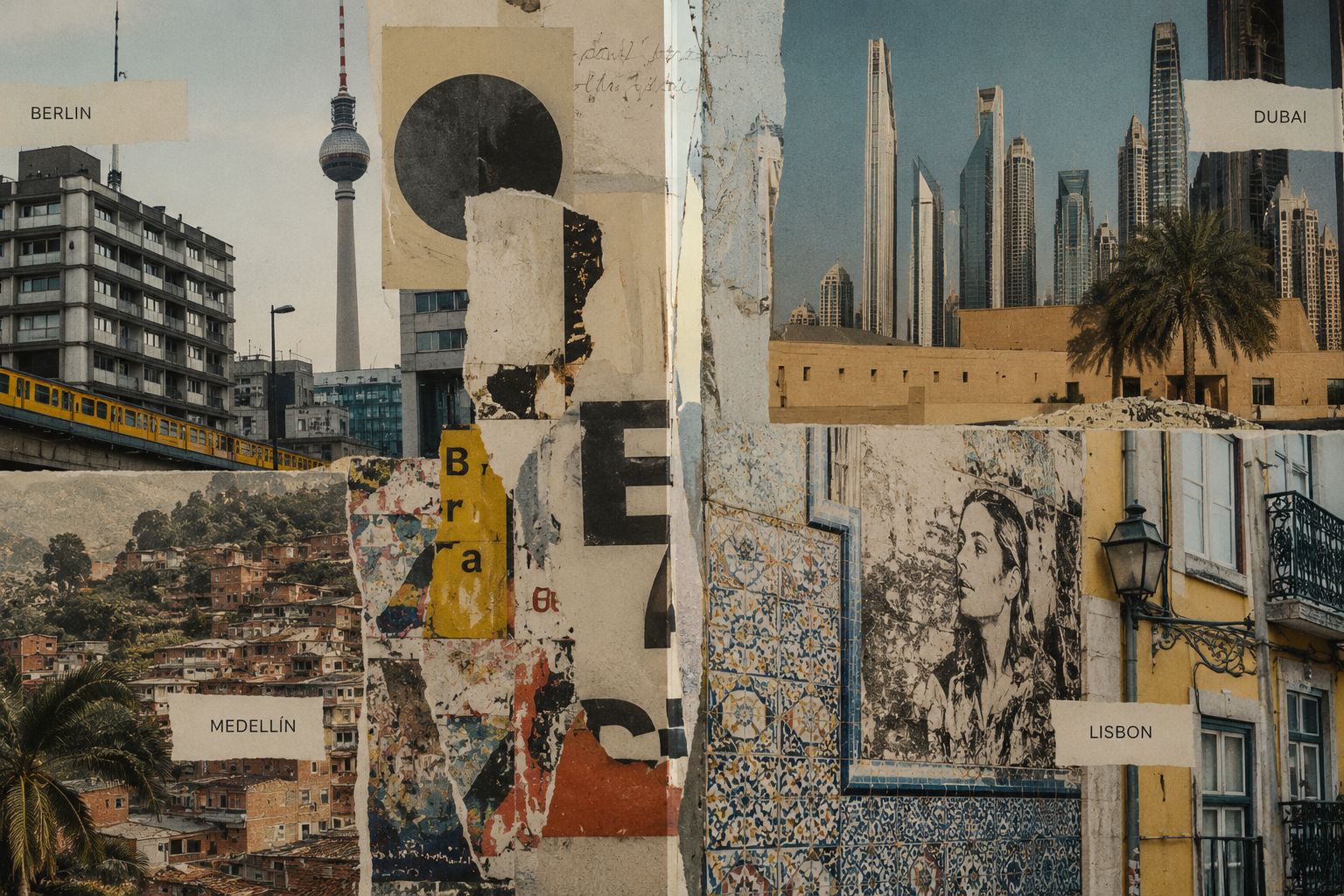
Basa Studio's approach to cultural depth is built from direct experience across very different cultural contexts — from Lisbon to Dubai, from Medellín to Berlin.
What does the future of brand-creator collaboration look like — and how will the relationship between brands and cultural figures change over the next decade?
First of all, I want to make a distinction between a creator and a creative — and this is just my opinion.
A creator, in this internet era, makes money from creating content — not necessarily creative content in the deeper sense. A creator is largely commoditisable, and because of that, I think it tends to deflate in value over time. For most people, it will not be a great long-term business model.
A creative, on the other hand, makes money from their creativity — whether online or offline. And when that is properly professionalised, I think it tends to become more valuable over time.
That said, I think both creators and creatives can build brands and companies. They are just starting from different places, with different tools and different constraints.
Now, when you zoom out, established brands have historically been known for their ability to create movements, products, and companies that can last for decades, even centuries. But increasingly, both creators and creatives are stepping into that same territory — building brands, products, and communities of their own.
But as both sides evolve, I think we'll see a convergence. On one side, big established brands will increasingly try to acquire or integrate smaller grassroots brands and cultural projects — often by bringing in capital, infrastructure, and distribution power. Some will accept that path, others will refuse it. On the other side, independent creators and creatives will continue building outside of those systems, with more speed, lower overhead, and closer proximity to their communities.
What I think the future of brand-creator collaboration looks like is not just collaboration anymore. It becomes more of a spectrum: from fully independent to fully absorbed, where both sides are competing and collaborating in the same cultural space at the same time.
And over time, the difference between "brand" and "creator" stops being about categories, and becomes more about how far something can grow before it starts losing that original human feel behind it.
A grassroots idea starts with a human impulse: expression, taste, identity. If it resonates, it becomes a community. If it grows, it becomes a system: a brand, a platform, a business. And at that point, it either stays close to its origin — keeping that human control and culture intact — or it gets industrialised, optimised, funded, scaled, and sometimes diluted as it grows.
So the real tension isn't "creator vs brand," or even "grassroots vs corporate." It's something simpler: whether something stays close to where it started, or whether growth slowly pulls it away from that original human signal that made it work in the first place.
What do you think most CMOs are getting fundamentally wrong about cultural brand building right now?
I think most CMOs today are not necessarily getting "marketing" wrong — they're getting the time horizon wrong.
A lot of the pressure comes from short-term incentives: quarterly KPIs, performance targets, immediate ROI. That naturally pushes teams toward what is popular right now, what is trending, what can be activated quickly and show an uplift in the next cycle. So you end up with a lot of brands jumping on cultural waves, trying to extract short-term attention from whatever is currently hot, and hoping that translates into sales.
But cultural shifts don't really work like that. They don't happen in quarters. They happen over years, sometimes decades, even generations. And because of that, the real opportunity in cultural brand building is not chasing what is merely popular, but understanding what is actually shifting underneath the surface — what will still matter after the trend cycle fades.
Now, I wouldn't put the blame only on CMOs or marketing teams. I think it's structural. Most large companies are optimised for short-term accountability. CFOs, CEOs, boards — everyone is looking at the same dashboards, the same reporting cycles, the same pressure to show results quickly. And in that environment, it makes sense that jumping on trends feels like the safest option. It's visible, it's measurable, and it can create immediate spikes in attention.
But if you look at the brands that have lasted — especially legacy brands — the ones that consistently win are not the ones that chased every cultural moment. They're the ones that stayed anchored in something deeper, and built slowly over time.
That's a much harder argument to make inside a boardroom. But long-term brand building, when it's done well, almost always compounds in a way short-term activations never do.
The pattern Mario describes comes down to a difference in time horizon. Most brands operate on one of two tracks:
Short-term: chasing cultural moments, jumping on trends, optimising for quarterly attention spikes — visible and measurable, but rarely compounding
Long-term: staying anchored in something deeper, building cultural relationships consistently over years, accepting that the return is slower but structural
The brands that have lasted — especially legacy brands — are almost always in the second category. Not because they rejected short-term thinking entirely, but because they never let it displace the longer game.
Where to find Mario Rueda, aka Mizter Rad.
Mario hosts the Mizter Rad Show, a podcast exploring the future of humanity through conversations with researchers, founders, and cultural thinkers across disciplines. Episodes cover AI, synthetic biology, longevity, quantum computing, network states, and the arts. The show is available on all major podcast platforms and at mizter-rad.com.
Mario Rueda co-founded Basa Studio together with Charlotte Specht. This interview was conducted by the Basa Studio editorial team.
Related creative stories
Browse through other features, interviews and guides to discover creative brand collaborations, meet innovative artists and creators, find out how new artforms are energizing advertising, & more.
We're excited to hear from you! If you're looking for artistic solutions for your next creative marketing campaign, send us your briefing. We can also help create a killer concept if you're in an early ideation phase. Check out our services for more.
Send your briefing
About you
THANK YOU
Your inquiry has been sent
We have received your inquiry. We'll get back to you within 24-48 hours to discuss your project. If you need urgent assistance, reach us on WhatsApp: +49 176 432 64506. In the meantime, we invite you to explore our insights, case studies, and lessons from building culturally grounded brand experiences.
Please contact us by phone if you're not able to reach us via this form.
THANK YOU
We have received your inquiry. We'll get back to you within 24-48 hours to discuss your project. If you need urgent assistance, reach us on WhatsApp: +49 176 432 64506. In the meantime, we invite you to explore our insights, case studies, and lessons from building culturally grounded brand experiences.
We use cookies to help empower our artists and make them accessible to clients. Check out our Privacy Policy and Terms of Service to see how your data can make a difference.