Most brand activations are forgotten within 48 hours. Not because budgets were too small — but because they were built to look cultural, not be it.
There is a metric that rarely appears in post-campaign reports: recall at 72 hours. Not aided recall — the kind where you show someone a logo and ask if they remember. Unaided recall. Did the activation leave any trace at all in the mind of someone who was physically present?
For most brand activations, the answer is no.
This is not a budget problem. Some of the most forgettable brand experiences in recent memory were also the most expensive. It is a structural problem — one that lives inside the agency model, inside the briefing process, and inside the way most brands think about what an activation is actually supposed to do.
This article names that problem directly. And it makes the case for a different approach: cultural brand building — one that earns attention rather than demanding it, and that creates moments people carry with them long after the event is over.
The Campaign Factory Problem
Traditional agencies are built for repeatability. Their business model depends on it. A large agency running dozens of accounts simultaneously cannot afford to reinvent its methodology for every brief — so it doesn't. It applies a proven framework, assigns a team, delivers an execution, and moves on to the next one.
This works well for campaign production. It works badly for cultural resonance.
The result is what might be called the campaign factory problem: activations that are technically competent, visually coherent, and strategically hollow. They hit the brief. They photograph well. They generate impressions. And then they disappear — because they were never designed to mean anything.
The deeper issue is that traditional agencies optimize for outputs their clients can measure easily: reach, impressions, share of voice, media value. These metrics are real. But they measure exposure, not impact. They tell you how many people saw something — not whether it changed how those people feel about the brand.
Cultural resonance is harder to measure and therefore systematically undervalued. Not because CMOs don't care — most do — but because the agency model is not incentivized to pursue it.
The Late-Culture Trap
There is a second structural failure that compounds the first: the tendency to chase culture rather than contribute to it.
Most brands arrive at cultural moments after the moment has already peaked. A subculture gets discovered. A creative scene gets written up. A visual language starts appearing in mainstream media. The brief goes out. The agency responds. The activation launches — six months after the cultural window opened, two months after it closed.
This is the late-culture trap. And it produces a specific kind of cringe that audiences recognize immediately: a brand performing cultural fluency it doesn't actually have.
The audience is not fooled. They can feel the difference between a brand that is genuinely embedded in a cultural moment and one that has reverse-engineered it from a trend report. The former earns attention. The latter demands it — and pays a credibility tax every time it tries.
The most sophisticated brand teams understand this intuitively. The problem is that their agency partners are structurally dependent on trend data, because trend data is legible, shareable, and defensible in a client presentation. Genuine cultural insight — the kind that comes from deep relationships with artists, artisans, and cultural innovators — is harder to package and harder to sell. So it rarely makes it into the brief.
Earning Attention vs. Demanding It
The distinction between earning attention and demanding it is not semantic. It describes two fundamentally different relationships between a brand and its audience — and it has direct implications for ROI.
Demanding attention is what most activations do. They occupy space — physical, digital, sonic — and rely on volume and repetition to generate awareness. The cost is high. The trust generated is low. The audience tolerates it at best.
Earning attention is different. It means creating something that the audience would choose to engage with even if the brand's name weren't attached to it. It means contributing to culture in a way that makes people feel something — curiosity, respect, delight, recognition. The cost per genuine impression is lower. The brand equity generated is compounding.
This is not idealism. Brands that consistently earn attention outperform those that demand it on the metrics that matter most to long-term brand health: consideration, preference, and price elasticity. Consumers pay more for brands they feel a genuine connection with. That connection is built through cultural depth — not campaign volume.
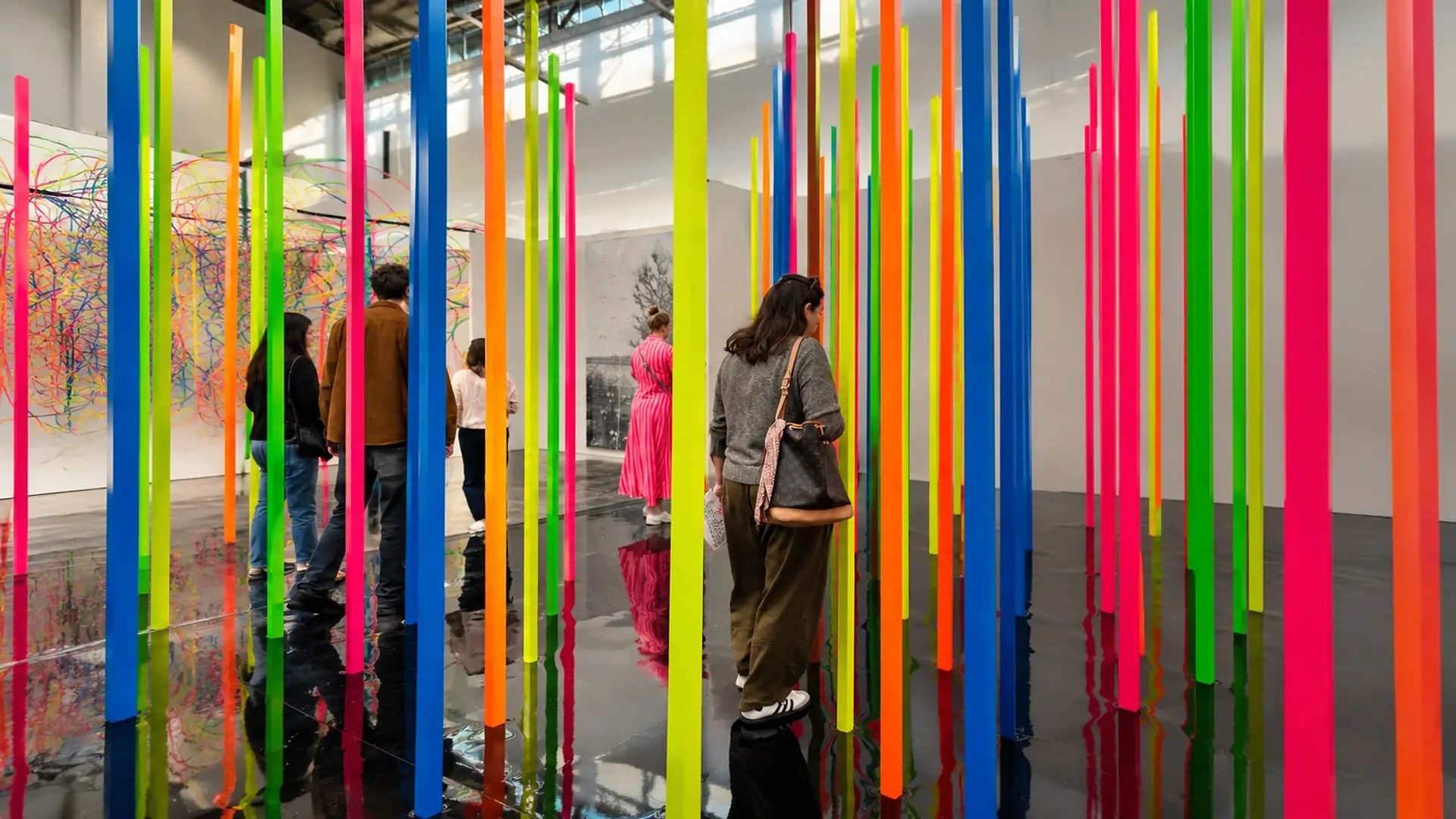
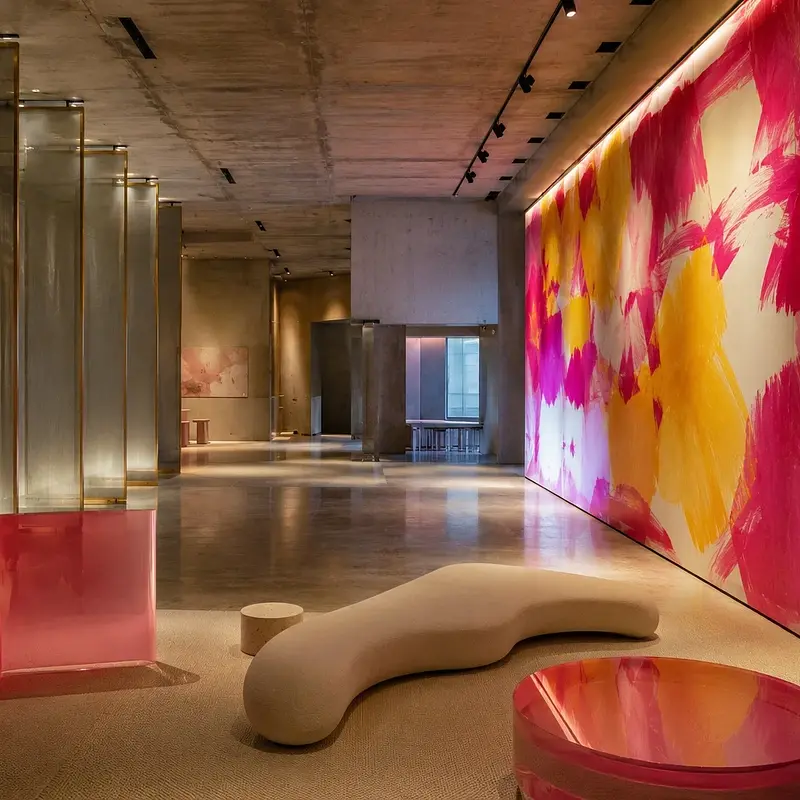
The experiences people choose to engage with build deeper brand connection.
Cultural Branding Examples: What Getting It Right Looks Like
Cultural branding, at its core, is the practice of building brand meaning through genuine participation in culture — not through the simulation of it. It is a brand building strategy that starts with cultural insight and ends with experiences that audiences recognise as real. The brands that do it well don't look like they are trying. That is precisely the point.
The brands that consistently create cultural moments — rather than marketing executions — share a set of structural habits. They brief differently. They partner differently. They measure differently.
The pattern holds across categories. A premium automotive brand that stops centering the car and starts centering a worldview — expressed through a spatial experience designed in genuine collaboration with an architect or artist — creates something an audience wants to be inside, not just adjacent to. The vehicle becomes part of a cultural argument, not a product demonstration.
A lifestyle brand entering a new market doesn't launch with a campaign. It embeds itself — commissioning a local artisan, anchoring an experience in a neighbourhood with genuine cultural weight, inviting the community in before it invites the press. By the time the coverage lands, the brand already belongs there.
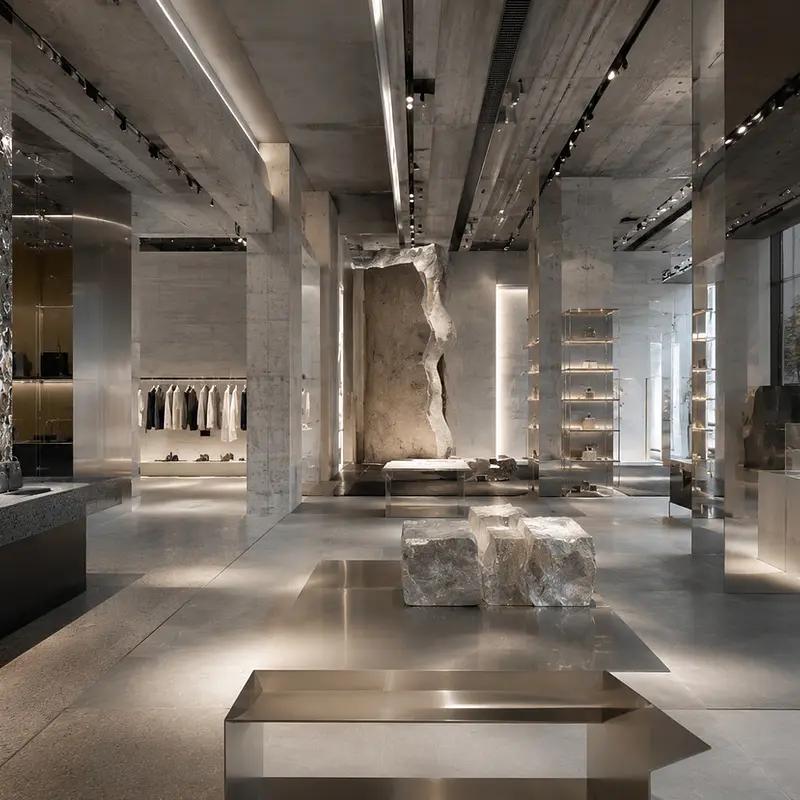
A luxury retailer doesn't redesign its flagship to look more premium. It partners with a cultural innovator whose practice is already shaping how the relevant audience thinks about space, materiality, and craft. The store becomes a destination. Dwell time increases. So does basket size.
Netflix needed to launch Season 2 of How To Sell Drugs Online (Fast) with something Berlin would actually stop for. Working with Basa Studio, they commissioned Chemical X — a globally recognized artist known for boundary-pushing public work — to create a three-meter portrait of the show's protagonist rendered in 130,000 hand-placed fake ecstasy pills across five precision-engineered panels at Bikini Berlin. The installation drew consistent foot traffic for ten days and earned international press coverage that extended the show's cultural reach far beyond any paid media could have replicated. It worked because the collaborator was chosen for cultural fit first — and given genuine creative authority to match.
When Dove and The Body Shop needed to take a stand against animal cosmetic testing, a standard campaign visual would have said the right thing in the wrong way. Basa Studio brought in muralist Nina Valkhoff — whose practice is rooted in endangered species and the natural world — not to execute a pre-approved design, but to shape the concept itself from the start. The resulting mural in Paris didn't need to explain itself: Valkhoff's community already understood what it stood for, because the person who made it stood for the same thing. That kind of cultural credibility cannot be bought through media placement — it has to be earned through the right partnership.
What these two examples share is not a budget level or a category. It is a method: cultural collaborators are integrated from strategy, not just execution — not hired to decorate a pre-decided concept, but brought in as part of the thinking that produces it.
That distinction changes everything about the output.
The Fix: What a Culturally Grounded Brief Actually Looks Like
The problem is structural, so the fix is structural. It does not live in the creative execution — it lives upstream, in how the brief is written and who is in the room when it is written.
A culturally grounded brief starts with a different set of questions. Not: what do we want people to feel about our brand? But: what is already happening in culture that is genuinely relevant to who we are — and where do we have the right to contribute to it?
That shift in question changes the entire downstream process.
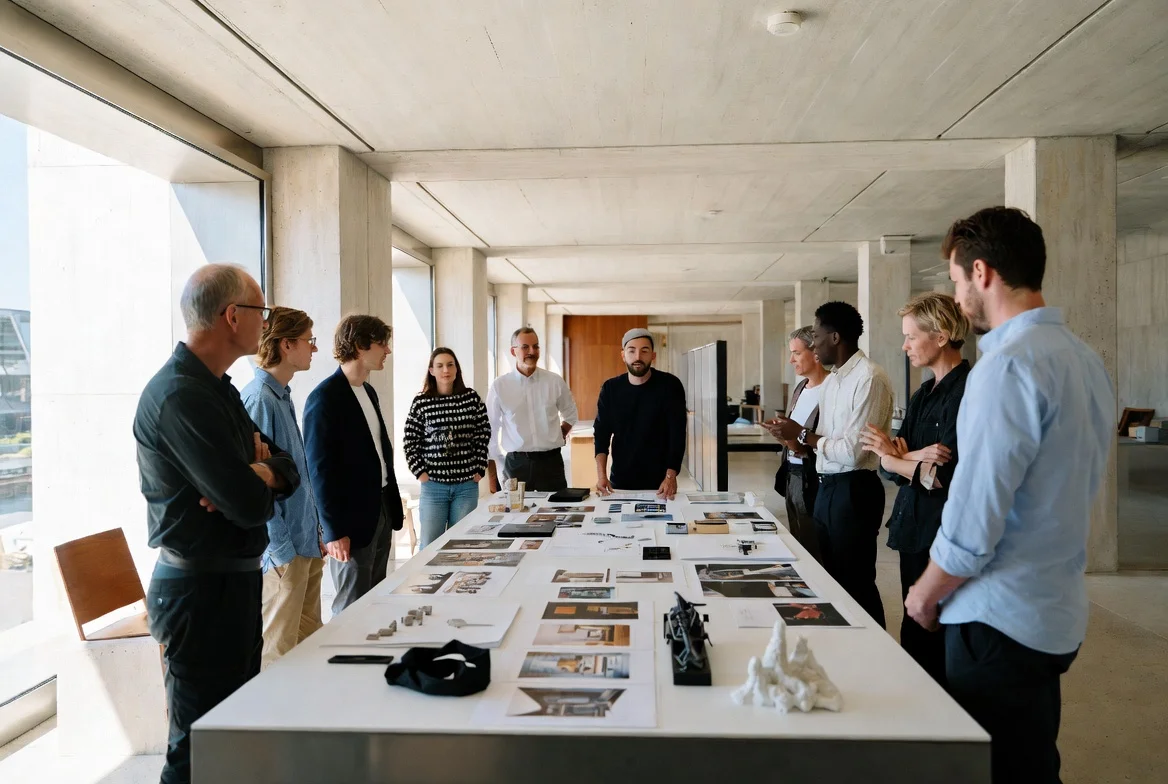
It means cultural collaborators — the artists, artisans, and cultural innovators with genuine credibility inside the relevant scene — are identified before the concept is locked, not after. Their knowledge shapes the brief. Their perspective challenges the assumptions the brand brings to the table. The output is not a brand applying culture. It is a brand embedded in it.
It also means the measurement framework changes. Post-campaign analysis tracks not just reach and impressions but cultural impact indicators: earned media from cultural press, social amplification from within the cultural community itself, qualitative feedback from collaborators and audiences, and — over time — brand equity metrics like consideration and price premium.
This is what Basa builds with its clients: an end-to-end process that moves from cultural strategy through execution without the handoff problem that kills most activations. The cultural insight that informs the brief is the same insight that selects the collaborators, shapes the experience, and defines what success looks like.
This is not a creative methodology. It is a cultural marketing strategy — one that treats cultural depth as a long-term asset rather than a campaign variable.
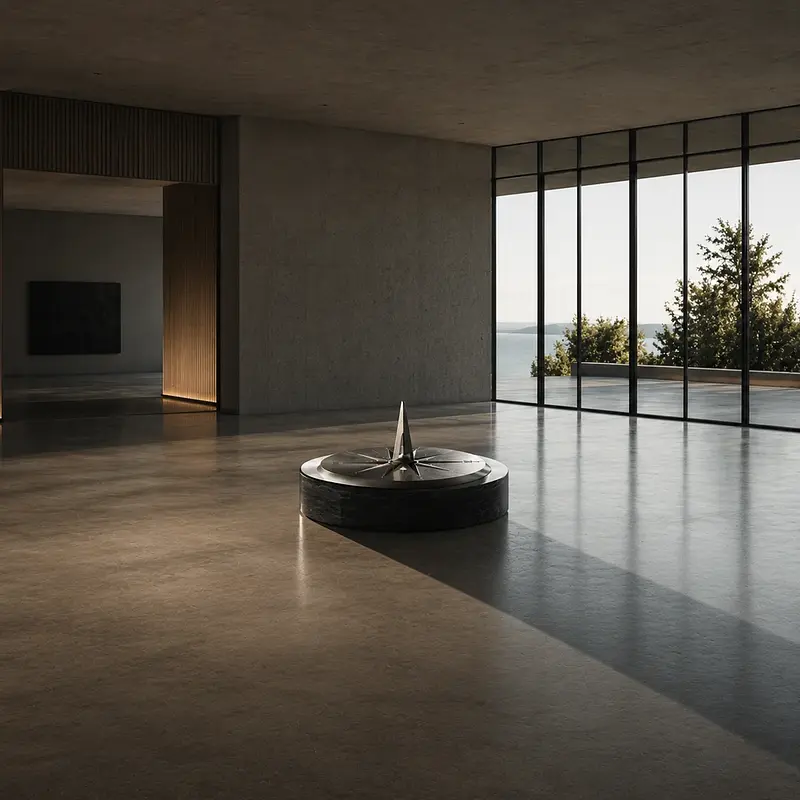
Cultural depth is built upstream — in the brief, not the execution.
What Brands That Get This Right Have in Common
They are not all luxury brands. They are not all large brands. They do not all have the biggest budgets on the market.
What they share is a CMO — or a marketing leadership team — that has made a deliberate decision to compete on cultural authority rather than campaign volume. They have accepted that this requires a different kind of partner, a different kind of brief, and a different kind of patience.
That patience is not passive. It is a strategic choice to invest in cultural credibility before it is needed — rather than scrambling to manufacture it when a campaign demands it. The brands that do this consistently are the ones that show up in cultural conversations they did not initiate, because they have already done the work to belong there. They are referenced by the artists they have worked with. They are written about by press that does not normally cover brand marketing. They attract collaborators who turn down other brands because the fit is not right.
This is not a soft outcome. Kantar BrandZ data shows that culturally vibrant brands grow nearly six times faster than those without cultural relevance — and are significantly more likely to be seen as meaningfully different, which is the proven driver of pricing power and long-term brand value. This is what authentic brand building actually looks like in practice — not a values statement on a website, but a consistent record of cultural investment that audiences and collaborators can point to.
The entry point is not a complete overhaul of how a brand markets itself. It is a single brief written differently. A single activation where the cultural collaborator is in the room from day one. A single experience that is designed to mean something rather than simply to perform.
That is where the compounding begins. And that is the business case for cultural brand building — not idealism, but compounding returns on brand equity, built through cultural depth, touchpoint by touchpoint.
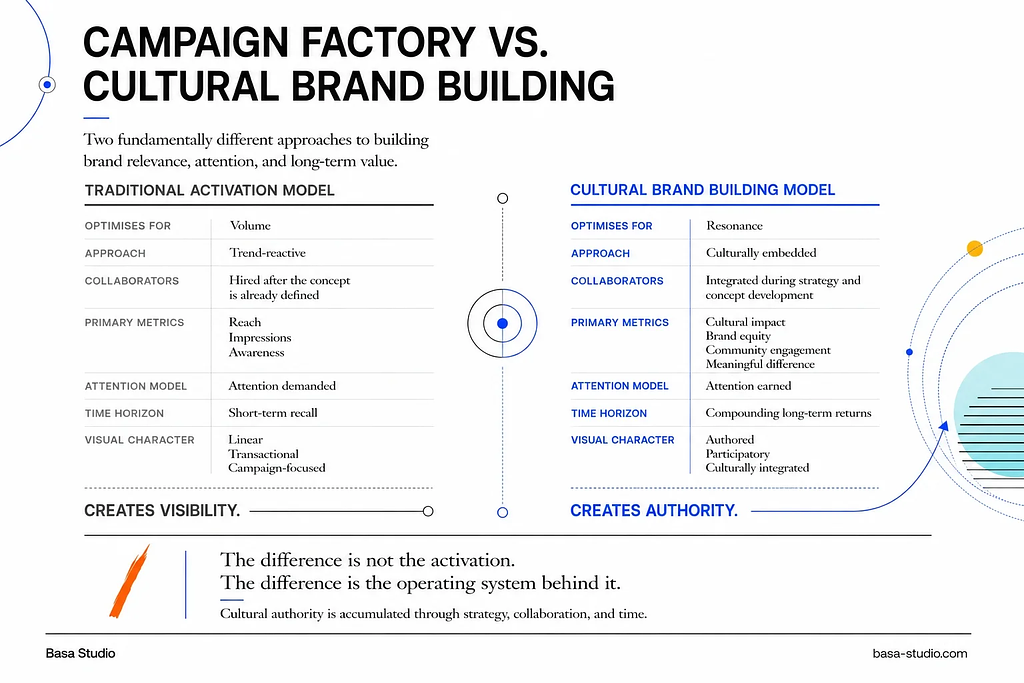
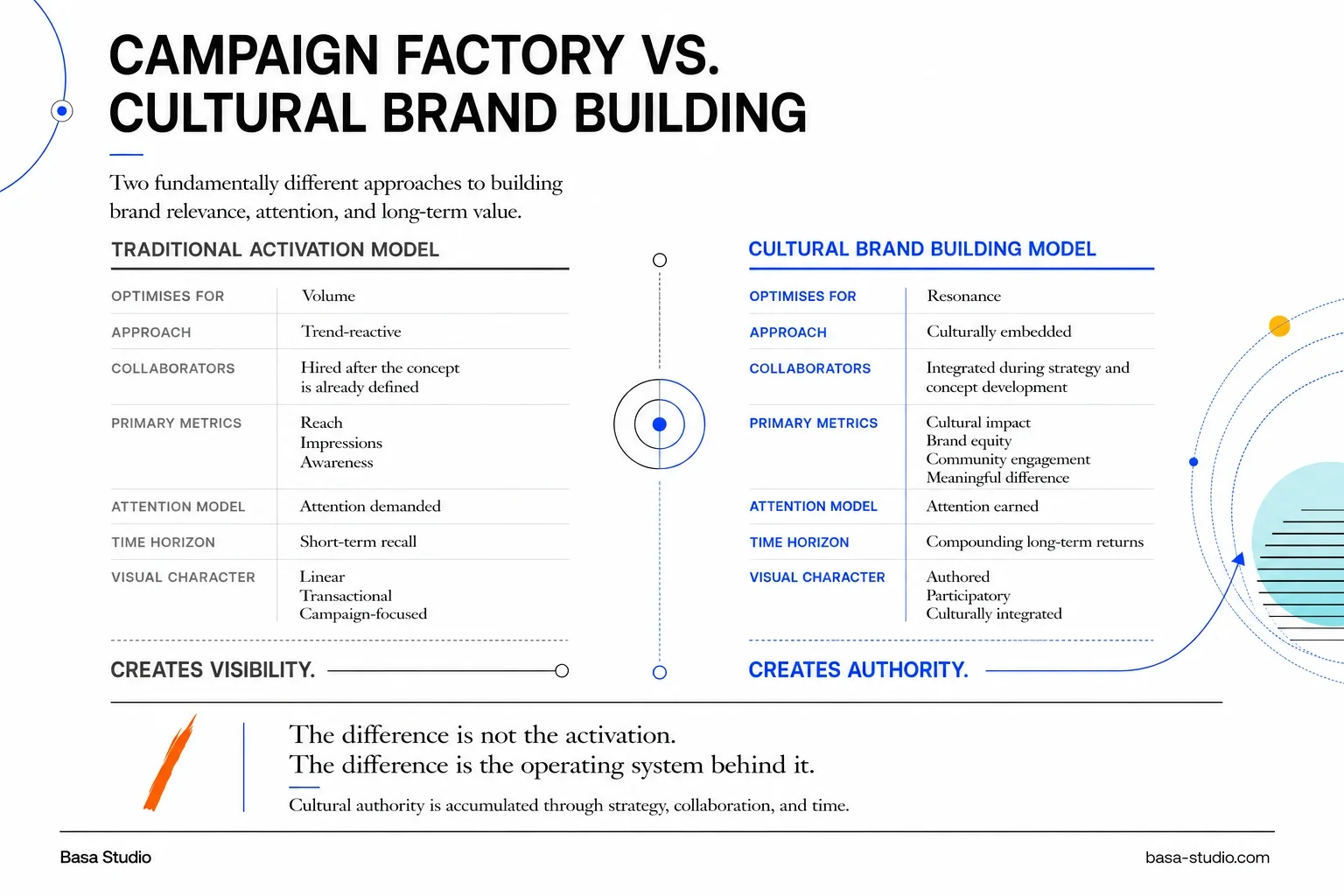
Infographic: Campaign Factory vs. Cultural Brand Building - A Strategic Comparison.
What you are looking for, whether you have named it yet or not, is a cultural marketing agency — one that brings strategic depth and genuine cultural relationships to the brief, not just production capability. Basa Studio builds brand experiences rooted in cultural depth — integrating artists, artisans, and cultural innovators into strategic brand work from brief to execution. If your activations are generating impressions but not impact, — let's talk about what cultural brand building could look like for your brand.
Related creative stories
Browse through other features, interviews and guides to discover creative brand collaborations, meet innovative artists and creators, find out how new artforms are energizing advertising, & more.
We're excited to hear from you! If you're looking for artistic solutions for your next creative marketing campaign, send us your briefing. We can also help create a killer concept if you're in an early ideation phase. Check out our services for more.
Send your briefing
About you
THANK YOU
Your inquiry has been sent
We have received your inquiry. We'll get back to you within 24-48 hours to discuss your project. If you need urgent assistance, reach us on WhatsApp: +49 176 432 64506. In the meantime, we invite you to explore our insights, case studies, and lessons from building culturally grounded brand experiences.
Please contact us by phone if you're not able to reach us via this form.
THANK YOU
We have received your inquiry. We'll get back to you within 24-48 hours to discuss your project. If you need urgent assistance, reach us on WhatsApp: +49 176 432 64506. In the meantime, we invite you to explore our insights, case studies, and lessons from building culturally grounded brand experiences.
We use cookies to help empower our artists and make them accessible to clients. Check out our Privacy Policy and Terms of Service to see how your data can make a difference.