Not all cultural collaborators are the same. Here’s the difference between artists, artisans, and cultural innovators — and when your brand should work with each.
The language of cultural collaboration has a vocabulary problem. Brands talk about "working with artists" as a catch-all — when what they actually mean could refer to three fundamentally different types of people, operating at different stages of a project, contributing different forms of value, and failing in catastrophic ways if confused with one another.
This is the taxonomy Basa Studio uses internally, and the one we apply to every brief. It is not a hierarchy. All three roles are indispensable. The distinction is functional: each type of collaborator does something the others cannot.
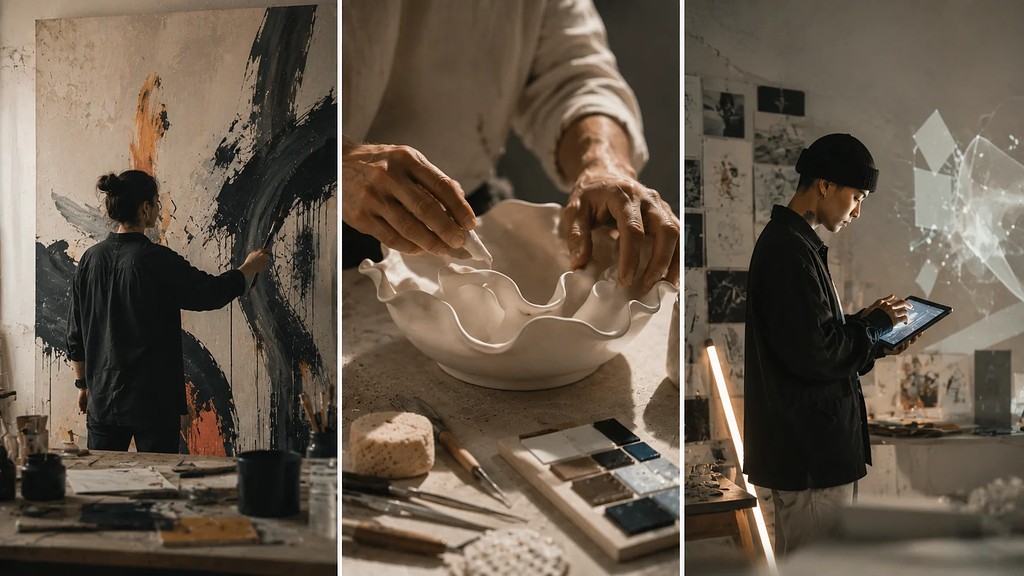
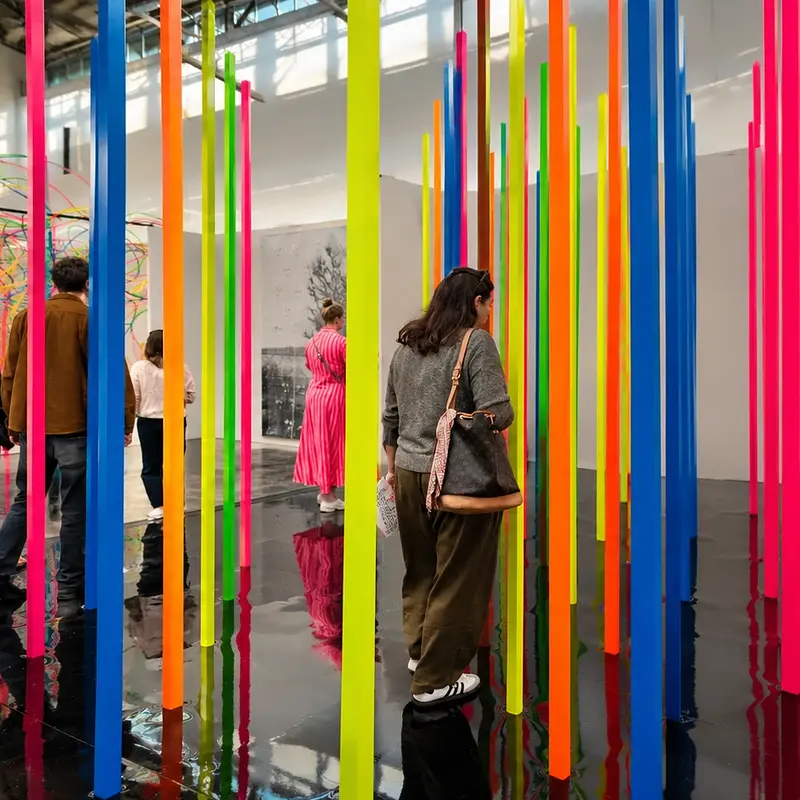
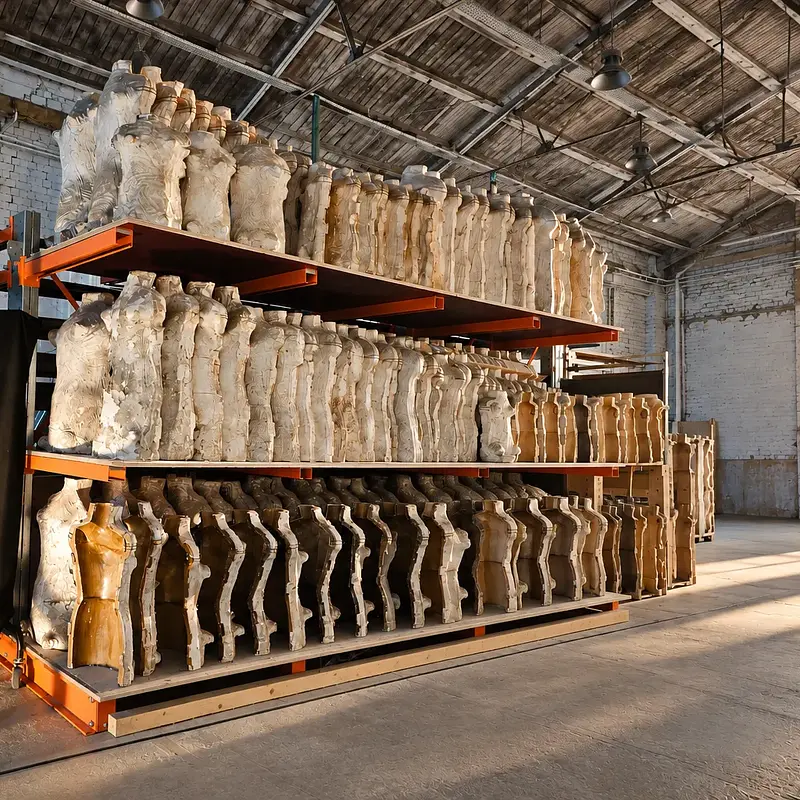
The three cultural collaborator types Basa Studio works with — each defined by a distinct function in brand work. AI-generated.
The Three Types, Defined
Artists: Conceptual Vision and Cultural Credibility
An artist brings a point of view. Their primary contribution to brand work is not execution — it is the idea that makes execution worth doing. They carry cultural credibility that cannot be manufactured: an existing body of work, a community of followers who trust their aesthetic judgment, and a perspective on the world that is distinctly their own.
In a brand project, the artist's role is front-loaded. They are the right collaborator at the strategy and concept stage — when the brief is still open, when the brand is asking what it wants to say and how it wants to be remembered. A strong artist collaboration gives a campaign its conceptual spine. It is the reason the work feels authored rather than assembled.
What artists do not do — or should not be expected to do — is guarantee the physical quality of production, navigate subculture fluency on demand, or subordinate their perspective to brand guidelines. Treating an artist like a production resource is one of the fastest ways to destroy the relationship and dilute the output.
The artist contributes: Conceptual vision. Cultural credibility. Audience and community trust.
Bring them in at: Strategy and concept stage.
A note on designers: the distinction between artist and designer is real — artists typically resist functional briefs; designers typically embrace them — but in practice the terms are sometimes used interchangeably, depending on how a creative chooses to identify. Both can operate at the concept stage simultaneously, each contributing a different dimension of the creative vision. A designer brings systematic thinking, user-orientation, and formal rigour; an artist brings cultural authorship and a perspective that exists independently of the brief. Neither replaces the other, and the label matters less than understanding what that person actually brings to a project.
Artisans: Craft Mastery and Material Excellence
An artisan is defined by mastery over a specific medium — ceramics, leatherwork, glassblowing, typography, weaving, metalwork, carpentry, perfumery. They have spent years, sometimes decades, developing a command of their material that cannot be shortcut. What they bring to brand work is not a concept: it is the execution of a concept at a level of quality that mass production cannot replicate.
The artisan enters a project at the production stage, once the concept is established. Their function is to translate an idea into physical reality with a level of craft that becomes, itself, part of the brand's story. A luxury automotive brand working with a master leatherworker on interior detailing. A spirits label commissioning a hand-thrown ceramic vessel series. A fashion house collaborating with a textile artisan to revive a near-extinct weaving technique. In each case, the artisan's mastery is not decorative — it is the proof point.
Artisans are frequently undervalued in brand work because their contribution is harder to pitch in a deck. The value they create shows up in the object, the texture, the detail — not in a concept presentation. This is precisely why brands that understand craft invest in artisan collaboration early in the production planning process, not as an afterthought.
The artisan contributes: Material mastery. Execution quality. Craft credibility.
Bring them in at: Production stage.
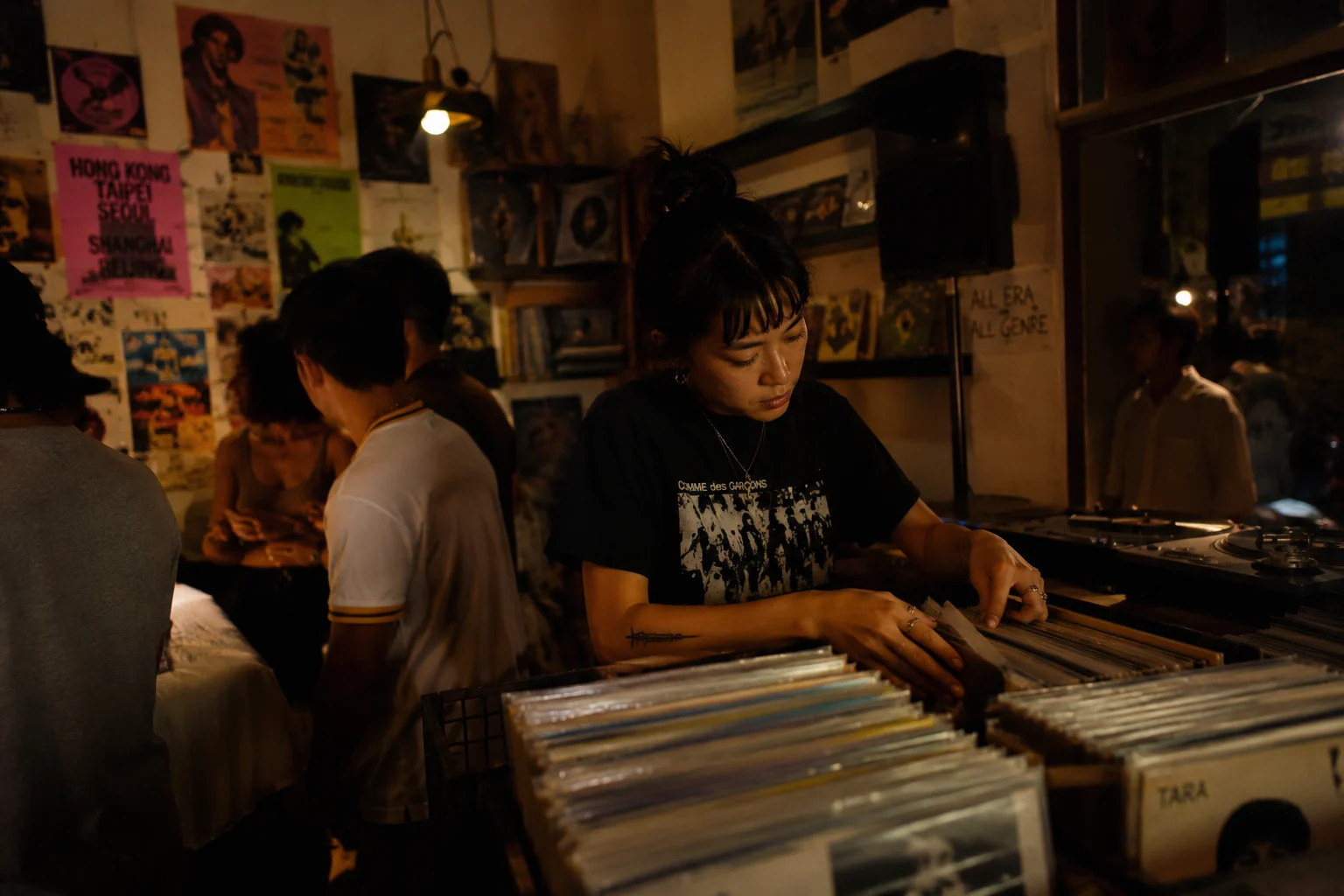
Cultural Innovators: Edge, Fluency, and Cultural Currency
The cultural innovator is the hardest of the three to define — and the most frequently misunderstood. They are not necessarily artists in the traditional sense, and they are not defined by craft mastery. They are defined by cultural fluency: deep immersion in a subculture, scene, or emerging community that a brand cannot access through conventional channels.
Cultural innovators might be DJs, food pioneers, community organisers, skaters, zine editors, sneaker historians, club night founders, or digital-native creators. What they share is a position inside a culture that grants them authenticity, trust, and influence within it. Their primary contribution to brand work is not concept and not craft — it is legitimacy within a specific cultural context.
They are the right collaborator when a brand's brief requires reaching a community it does not belong to, or when a project needs to feel genuinely embedded in a scene rather than adjacent to it. Cultural innovators are also the right collaborator when a brand needs to take creative risks its internal teams are not equipped to take — when the brief requires edge, irreverence, or perspectives that have not yet been absorbed into mainstream brand language.
Critically, cultural innovators are not trend forecasters. They do not tell brands what is about to be popular. They are cultural participants — and their value lies in that participation, not in their ability to translate it into a brand PowerPoint.
The cultural innovator contributes: Subculture fluency. Authentic community access. Edge and cultural currency.
Bring them in at: Concept and activation stage, when cultural legitimacy is a brief requirement.
Cultural innovators bring legitimacy that cannot be borrowed — only earned through genuine community participation. AI-generated.
A Note on Overlap
These categories are functional, not fixed. In practice, a single collaborator can occupy more than one role — an artist who is deeply embedded in the subculture a brand needs to reach is functioning as both artist and cultural innovator. An artisan whose craft has become culturally significant carries credibility that extends well beyond the workbench. On smaller-scope projects, one person may span all three functions. The taxonomy is a briefing tool, not a personality test. Its purpose is to clarify what a project needs — not to constrain who can provide it.
When All Three Work Together
The most ambitious cultural brand work does not choose between these three types — it orchestrates all of them. And the result is qualitatively different from what any single collaborator could produce alone.
Basa Studio's installation for Netflix in Berlin demonstrates exactly this. The brief was to launch Season 2 of How to Sell Drugs Online (Fast) with something in public space that would earn attention rather than demand it. The answer was a 1,000 kg mosaic of 130,000 fake ecstasy pills depicting the show's protagonist — installed at Bikini Berlin, one of the city's most trafficked commercial plazas.
Three collaborator types made it work, each indispensable.
Chemical X — a globally recognised artist with a long history of boundary-pushing public work — was commissioned at the concept stage. He set the creative terms: the portrait format, the Roman emperor framing, the visual language of provocation-as-art. Without that authorship, the installation would have been a stunt. With it, it was a cultural statement.
Rock & Roll Bonbonmanufaktur Ehrenfeld — the show's on-screen candy maker, brought in at the production stage — fabricated every pill. Twenty colour shades. Thirty-five kilos of pigment. Each pill pressed individually at 0.8 seconds under a five-ton machine, between 3,500 and 4,500 per hour. Five two-metre panels, each weighing 100 kilograms, engineered in three precision layers and installed by crane. Alongside them, Old Yellow — a Berlin-based creative production team — handled the engineering challenges that emerged throughout fabrication and placement, translating the concept's ambitions into something that could actually stand in public space. That combination of artisan craft and production expertise is what transformed a concept sketch into a physical object that held its quality at public scale. Without it, the concept would have remained exactly that — a concept.
Chemical X again — operating simultaneously as cultural innovator — brought Berlin-embedded subculture credibility and scene access that made the work land with the audience it needed to reach. This is the overlap the taxonomy describes in theory, made visible in practice: one collaborator, two functions, both necessary.
The artist gave the project its soul. The artisan gave it its substance. The cultural innovator gave it its nerve. None of those contributions were interchangeable — and none of them could have produced this result alone.
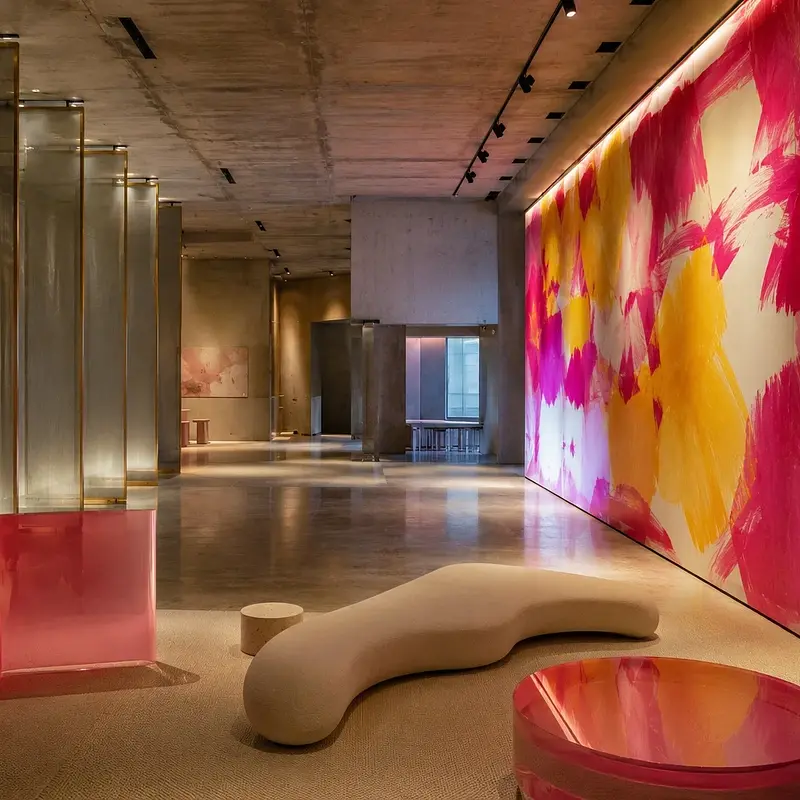
When artist concept, artisan craft, and cultural innovator edge come together, the output exceeds what any single discipline could produce. AI-generated.
The Mistake That Costs Brands the Most
The most common — and most damaging — error in cultural collaboration is treating all three types as interchangeable. Brands that think in terms of "we need a creative" rather than "we need a specific type of cultural collaborator for a specific function" consistently make the same mistakes.
They bring an artist in at the production stage and then complain that deliverables are unclear. They commission an artisan to provide creative direction and then wonder why the concept feels generic. They hire a cultural innovator as a trend consultant and are surprised when the advice feels thin.
Each of these failures has the same root cause: conflating cultural collaborator types based on surface-level similarity — all three make things, therefore all three are interchangeable. They are not.
The cost is not just budget. It is authenticity. Work produced by the wrong collaborator in the wrong role fails to connect — not because it is technically poor, but because it lacks the specific quality that only the right person, in the right role, at the right stage, can bring.
This is how campaigns end up feeling like marketing rather than culture — technically competent, creatively hollow, and instantly forgettable.
The projects that earn genuine cultural authority are rarely the ones with the biggest names attached. They are the ones where the right person is in the right role — where concept, craft, and cultural legitimacy are all present and working together. That precision doesn't happen by accident. It starts with knowing what you're actually looking for before the brief is written and the names are on the table — and it's the distinction Basa Studio brings to every collaboration. For brands ready to build at that level, cultural brand building starts here.
Related creative stories
Browse through other features, interviews and guides to discover creative brand collaborations, meet innovative artists and creators, find out how new artforms are energizing advertising, & more.
We're excited to hear from you! If you're looking for artistic solutions for your next creative marketing campaign, send us your briefing. We can also help create a killer concept if you're in an early ideation phase. Check out our services for more.
Send your briefing
About you
THANK YOU
Your inquiry has been sent
We have received your inquiry. We'll get back to you within 24-48 hours to discuss your project. If you need urgent assistance, reach us on WhatsApp: +49 176 432 64506. In the meantime, we invite you to explore our insights, case studies, and lessons from building culturally grounded brand experiences.
Please contact us by phone if you're not able to reach us via this form.
THANK YOU
We have received your inquiry. We'll get back to you within 24-48 hours to discuss your project. If you need urgent assistance, reach us on WhatsApp: +49 176 432 64506. In the meantime, we invite you to explore our insights, case studies, and lessons from building culturally grounded brand experiences.
We use cookies to help empower our artists and make them accessible to clients. Check out our Privacy Policy and Terms of Service to see how your data can make a difference.