Product brand experience starts before a word is read. The object is one of the most powerful brand encounters available — and the most underused.
The Most Intimate Touchpoint You're Probably Underusing
A screen keeps the brand at arm's length. An object does not.
When someone holds a beautifully made thing — weighs it in their hand, feels the texture of the paper, hears the click of a lid closing properly — they are experiencing your brand through their body. That encounter is more persuasive than any campaign because it is not mediated. It is not a representation of your brand. It is your brand, in physical form, at that moment.
For premium and luxury brands, product and packaging design represents one of the highest-leverage cultural touchpoints available. Yet most brands still treat it as a category management task: brief the packaging studio, approve the renders, hit the production deadline. The cultural dimension — what the object communicates about who made it, why, and with what values — rarely enters the room.
That gap is both a problem and an opportunity.
What Cultural Product Design Actually Means
Approaching product or packaging design through a cultural lens is not the same as hiring a talented designer. A skilled designer solves a visual and functional problem. Cultural product design solves a positioning problem: it asks what the object should say about the brand's place in culture — and then makes that legible through material choices, craft processes, and the collaborators involved in making it.
The difference shows up in the brief. A standard packaging brief specifies dimensions, print specifications, sustainability requirements, and brand guidelines. A culturally framed brief asks additional questions: What tradition of making does this object want to belong to? What does the material communicate before the consumer reads a single word? Which kind of maker — an artisan, an artist, a cultural craftsperson — should have a hand in this, and why?
Those questions change the output. They also change what the output can do commercially.
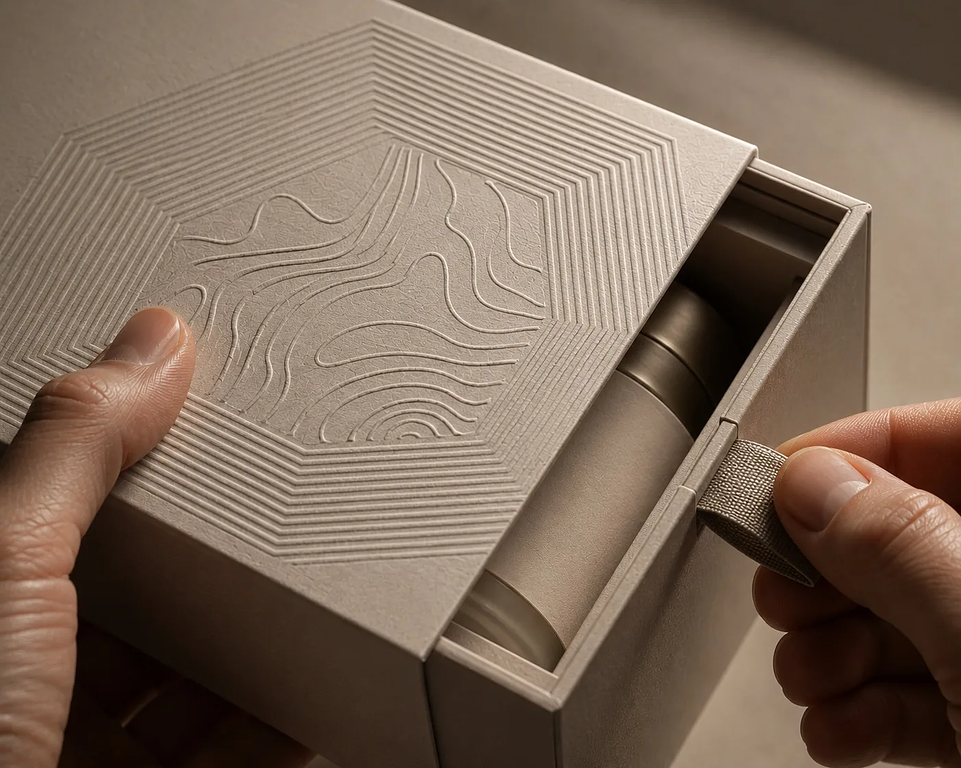
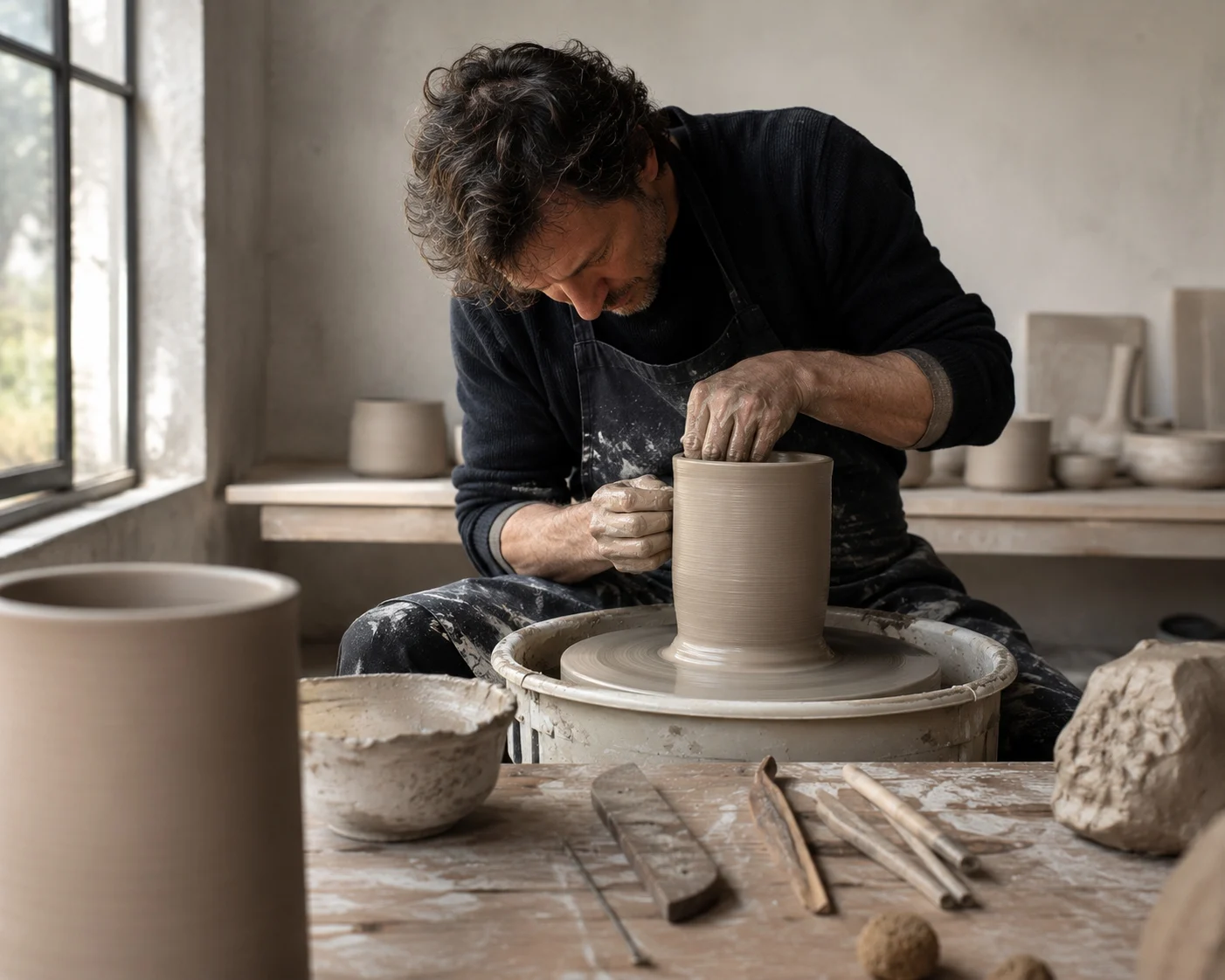
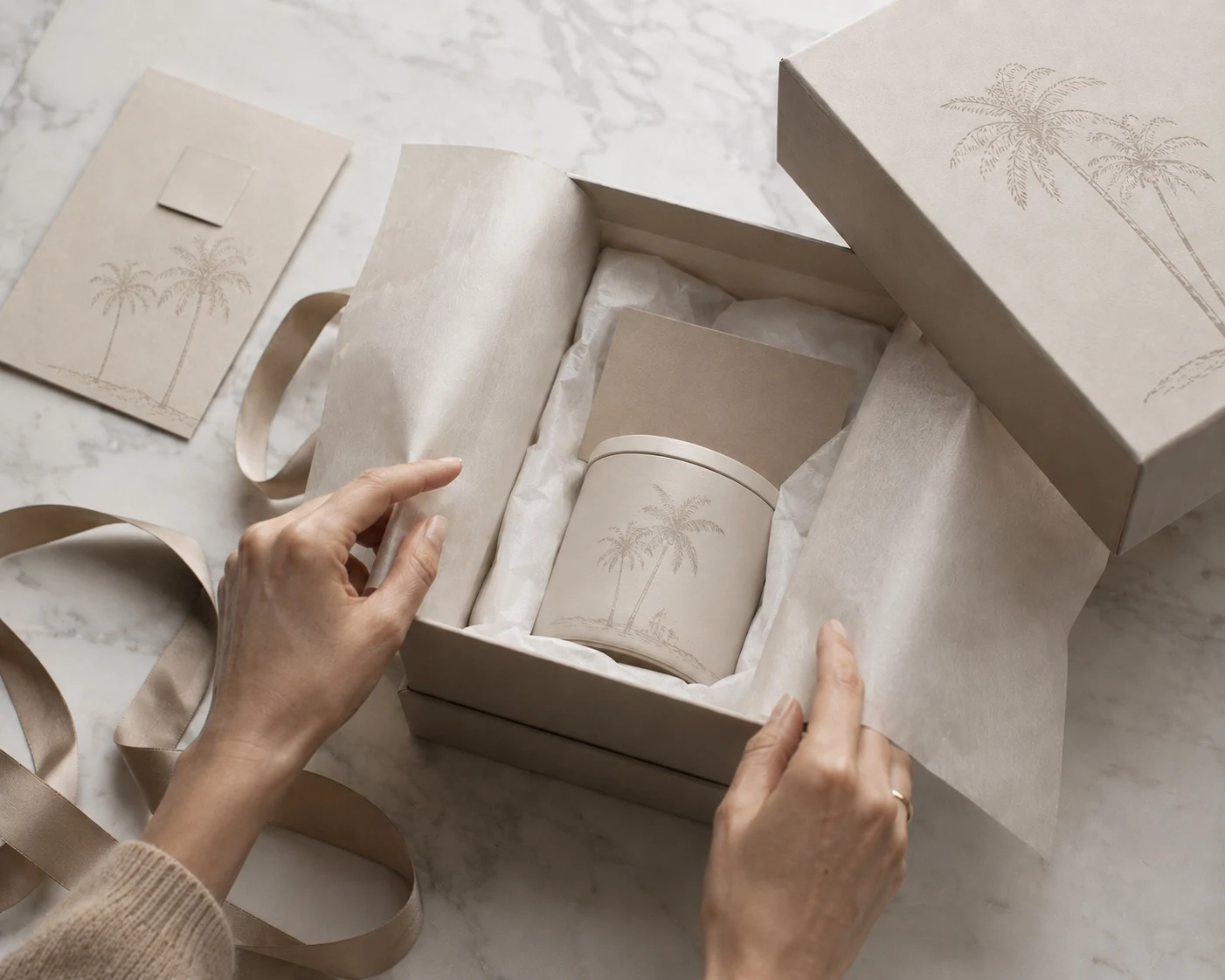
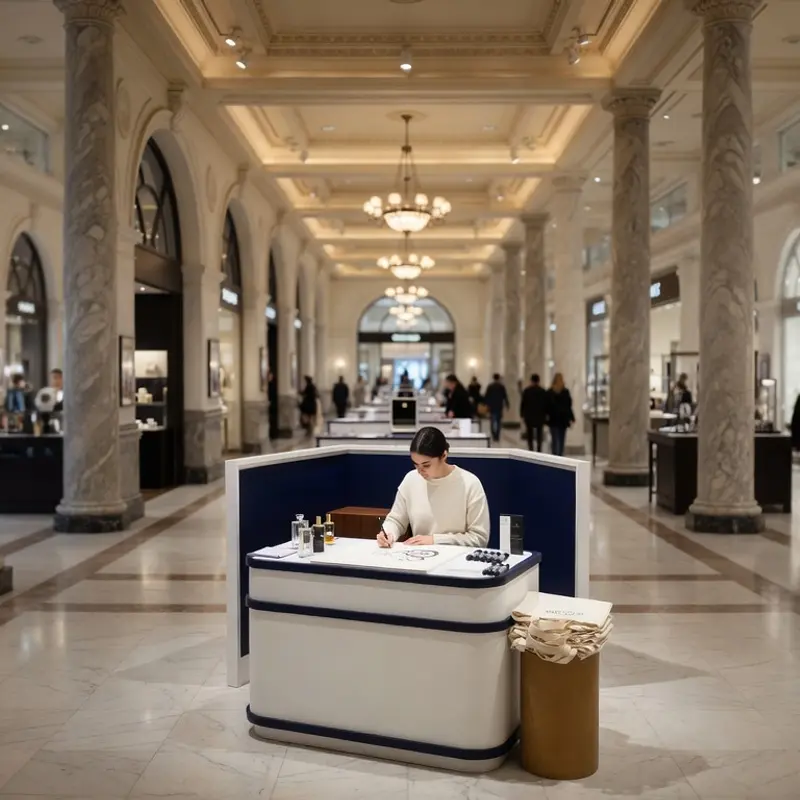
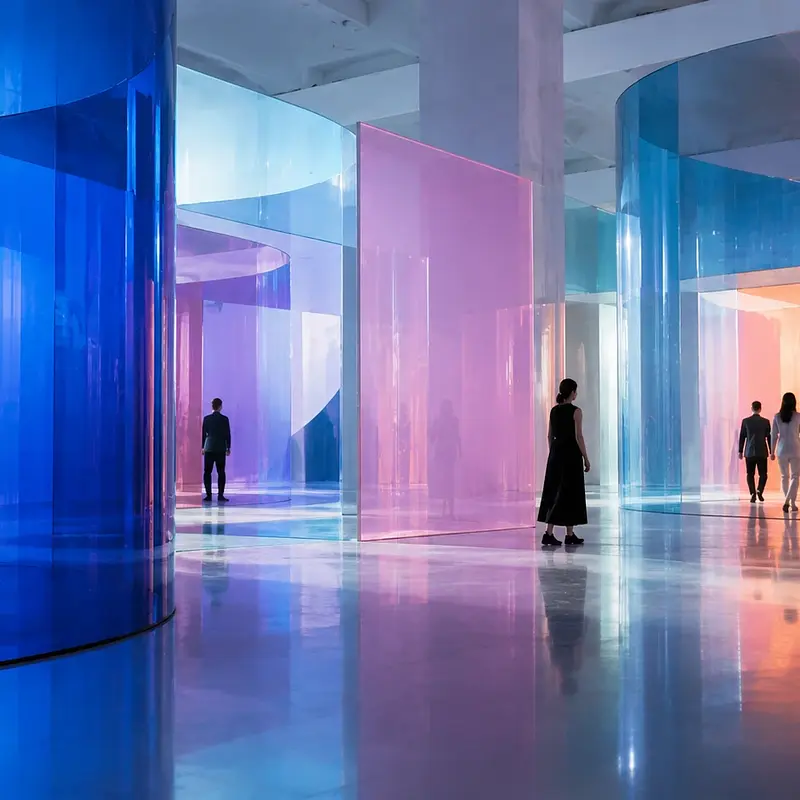
Cultural product design is felt before it is read. Material choices and craft finishes communicate brand values before a consumer processes a single word of copy. AI-generated.
The Product as Cultural Artifact
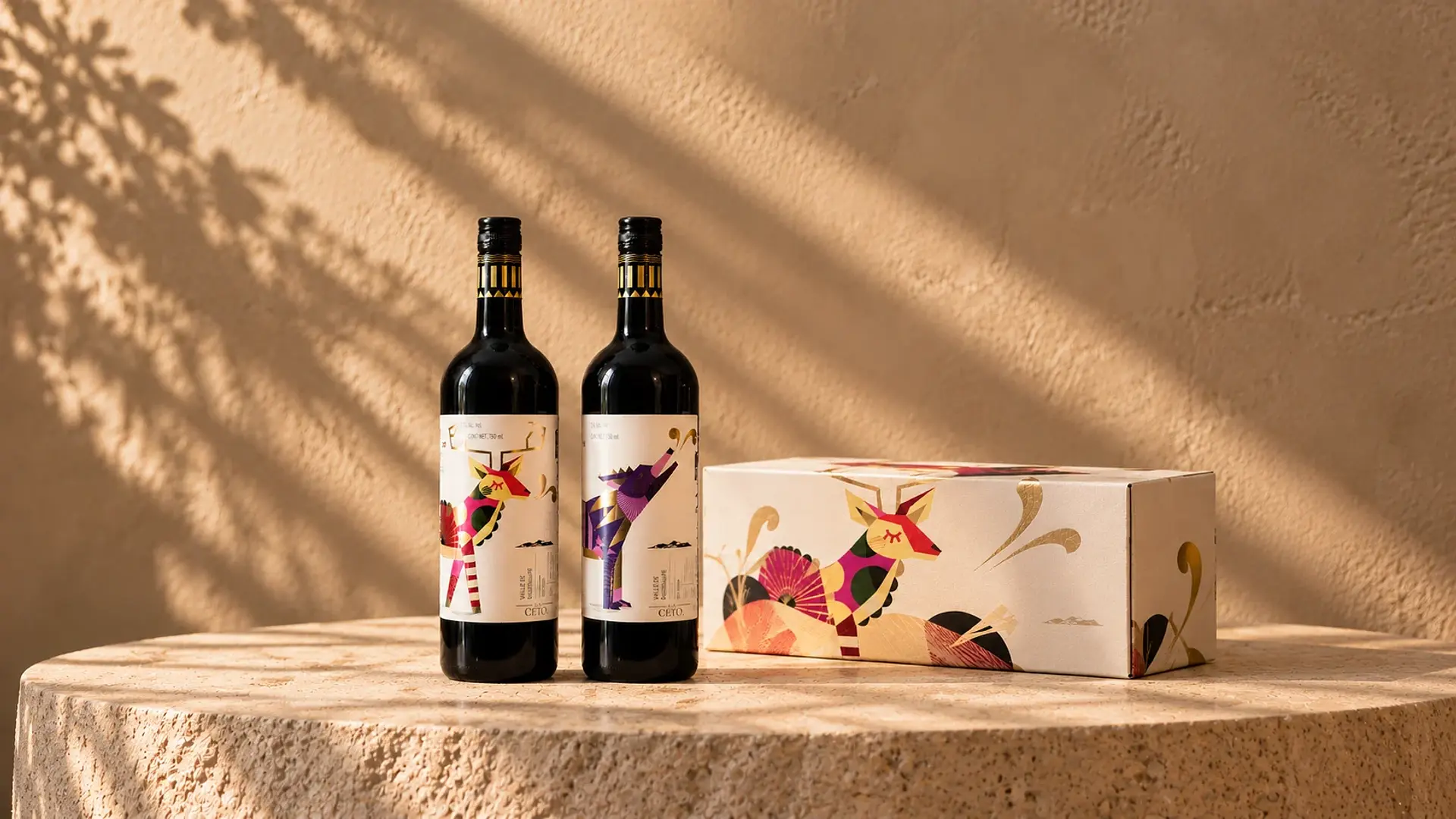
Certain objects outlive their function. A bottle of Champagne is consumed; the bottle is sometimes kept. A limited edition sneaker is worn; it is also displayed. A perfume flacon from a house with genuine heritage sits on a dressing table for years after the scent runs out.
These objects become cultural artifacts — things that signal taste, belonging, and values to anyone who sees them in a home, an office, a photograph. For brands operating in premium categories, this is not a secondary benefit. It is one of the primary mechanisms through which brand culture propagates.
The product brand experience, in this context, is not a marketing event. It is an ongoing presence in the consumer's life. The brand that understands this designs objects worth keeping. The brand that doesn't designs objects worth discarding — and with them, discards the brand encounter entirely.
Artist and Artisan Collaborations: What Works and What Doesn't
The Louis Vuitton monogram has been reimagined by Takashi Murakami, Stephen Sprouse, and Yayoi Kusama, among others. Each collaboration generated significant commercial returns — the Murakami Monogram Multicolore collection alone generated over $300 million in its first year, according to WWD — but more importantly, each one repositioned the house as a living cultural institution. What made those collaborations work was not the artists' fame. It was the credibility of the partnership.
Kusama's dot obsession connects to a specific philosophical position: her dots encapsulate infinity, a speculation towards the cosmos, as Artnet News has documented. That internal logic — obsessive, cosmological, non-decorative — sits coherently alongside a luxury house's relationship to desire and aspiration. The collaboration had cultural content. It wasn't decoration applied to a surface. Louis Vuitton's production teams spent considerable effort reproducing the dots Kusama once hand-painted on a trunk — after countless trials, achieving an effect where the dots appear to float on the leather, as if the paint were still wet, as reported by WWD. The result was a genuine dialogue between two cultural positions, not a licensing arrangement.
This distinction matters enormously for brands considering artist or artisan involvement in product design. The question is not: who has the most followers? The question is: does this maker's world of reference connect meaningfully to what we want the product to say?
A ceramicist with a rigorous practice around material minimalism and local clay sourcing can add profound cultural depth to a wellness brand's packaging — and almost nothing to a fast fashion brand's seasonal collection, where the same collaboration reads as cynical. Authenticity here is not an abstract virtue. It is the mechanism by which the collaboration either generates or destroys brand equity.
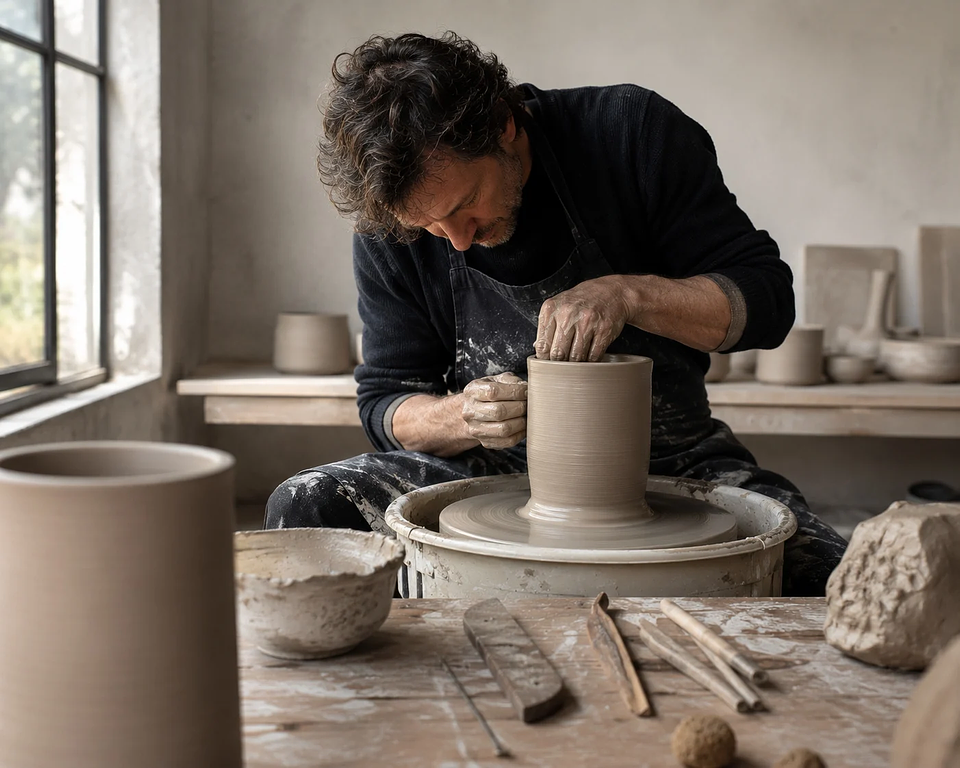
Artisan involvement in product design introduces material integrity that industrial processes cannot replicate — and that consumers recognise at the point of touch. AI-generated.
Artisan Packaging: The Sensory Case for Handcraft
There is a specific category of brand collaboration packaging that sits beneath the prestige of the artist collab but delivers equal or greater value per unit: the artisan-made or artisan-finished package.
Where an artist collaboration adds a cultural narrative and visual signature, artisan packaging adds something more immediate: a sensory encounter that communicates quality before any rational evaluation occurs. The weight of a glass bottle. A paper that has visible texture and slight variations — because it was made by hand. A wax seal applied individually. A ribbon that sits slightly differently on each package because a person, not a machine, tied it.
These details do not say this is expensive. They say someone cared. And in a market where most packaging communicates the opposite — speed, standardisation, efficient logistics — that message lands with unusual force.
For brands in beauty, spirits, gourmet food, or premium homewares, artisan product design at the packaging level is one of the most cost-effective premium signals available. The per-unit cost increment is often modest. The brand perception shift is not.
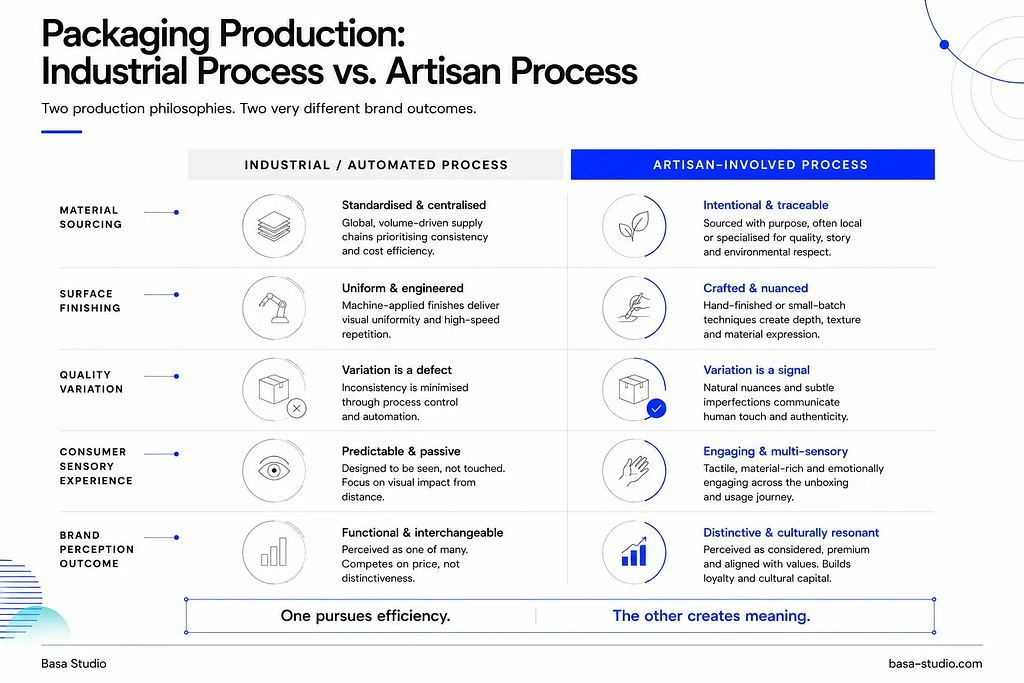
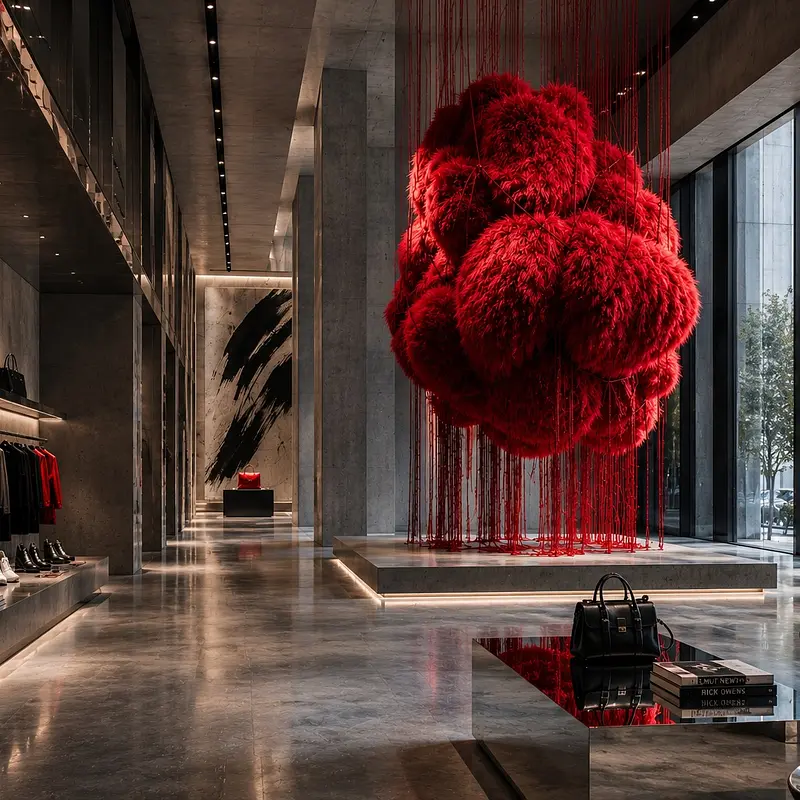
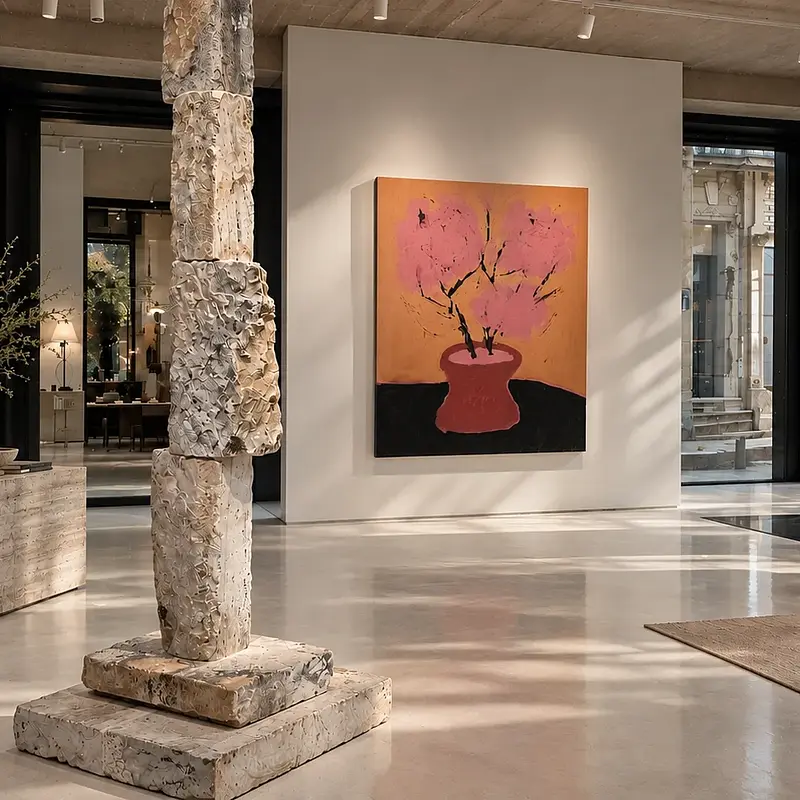
Industrial efficiency vs. artisan meaning.
Limited Editions as Cultural Events
A limited edition product collaboration done well is not a scarcity tactic. It is a cultural event — a bounded moment in which a brand makes a specific, legible statement about where it stands in culture, and invites its audience to be part of that statement.
The 2022 Cass x Prada collaboration makes the point precisely. Prada asked artist Cassius Hirst — whose practice is built on hand-painting sneakers as sculptural objects — to reimagine the brand's America's Cup sneaker, originally designed for Prada's Luna Rossa sailing crew in 1997. The brief wasn't to put Hirst's name on the shoe. It was to let his process into the object. The result was a capsule of four styles in 22 variables, each pair hand-worked in Prada's Italian ateliers — no two pairs exactly alike — limited to 3,000 units globally, as documented by Hypebeast. Even the packaging carried cultural content: each pair came in a co-branded box bearing a scan of Hirst's brain — an image with a stated meaning, not a graphic exercise. "The brain is where the thoughts happen," Hirst told Dazed. What Hirst described as the best part of the collaboration was the dialogue with Prada's artisans — the realisation that they were hand-painting the shoes in the factory, doing what he does. The collaboration had internal logic at every level: the artist, the object, the process, and the box it came in.
The brands that treat a limited edition as a product line variant — same format, new colourway, famous name on the label — miss this entirely. The celebrity's name may drive an initial spike. The absence of genuine cultural content means the edition adds nothing to the brand's long-term cultural position, and may actively cheapen it if the name's associations drift.
Cultural credibility in limited edition product design comes from the specificity of the idea and the authenticity of the collaboration. A craft distillery working with a cooperage that has used the same barrel-making techniques for six generations is a more credible limited edition than a spirits brand putting a musician's name on a standard bottle. The first has a story with material integrity. The second has a licensing arrangement.
The Unboxing Moment as Brand Encounter
There is a specific moment — increasingly well documented, increasingly underused by the brands that should care most — when the product brand experience reaches its peak intensity: the unboxing.
The first physical encounter with a premium product is not the product itself. It is the packaging. Before a consumer sees what they bought, they feel how the brand chose to deliver it. The resistance of a well-constructed box lid. The reveal sequence built into a tiered interior. The tissue paper, the ribbon, the insert card — or their absence.
Most brands throw this moment away on generic brown cardboard, because the packaging that reaches the end consumer is treated as a logistics problem rather than a brand encounter. This is a strategic error with a measurable consequence: the unboxing moment, for premium brands, is now one of the most shared, photographed, and discussed brand experiences available — and it costs nothing to produce it, because the consumer does the sharing.
The brands that treat packaging as brand collaboration packaging — as a designed cultural encounter, not a shipping solution — create unboxing moments that generate organic reach, reinforce premium perception, and extend the product brand experience far beyond the purchase itself.
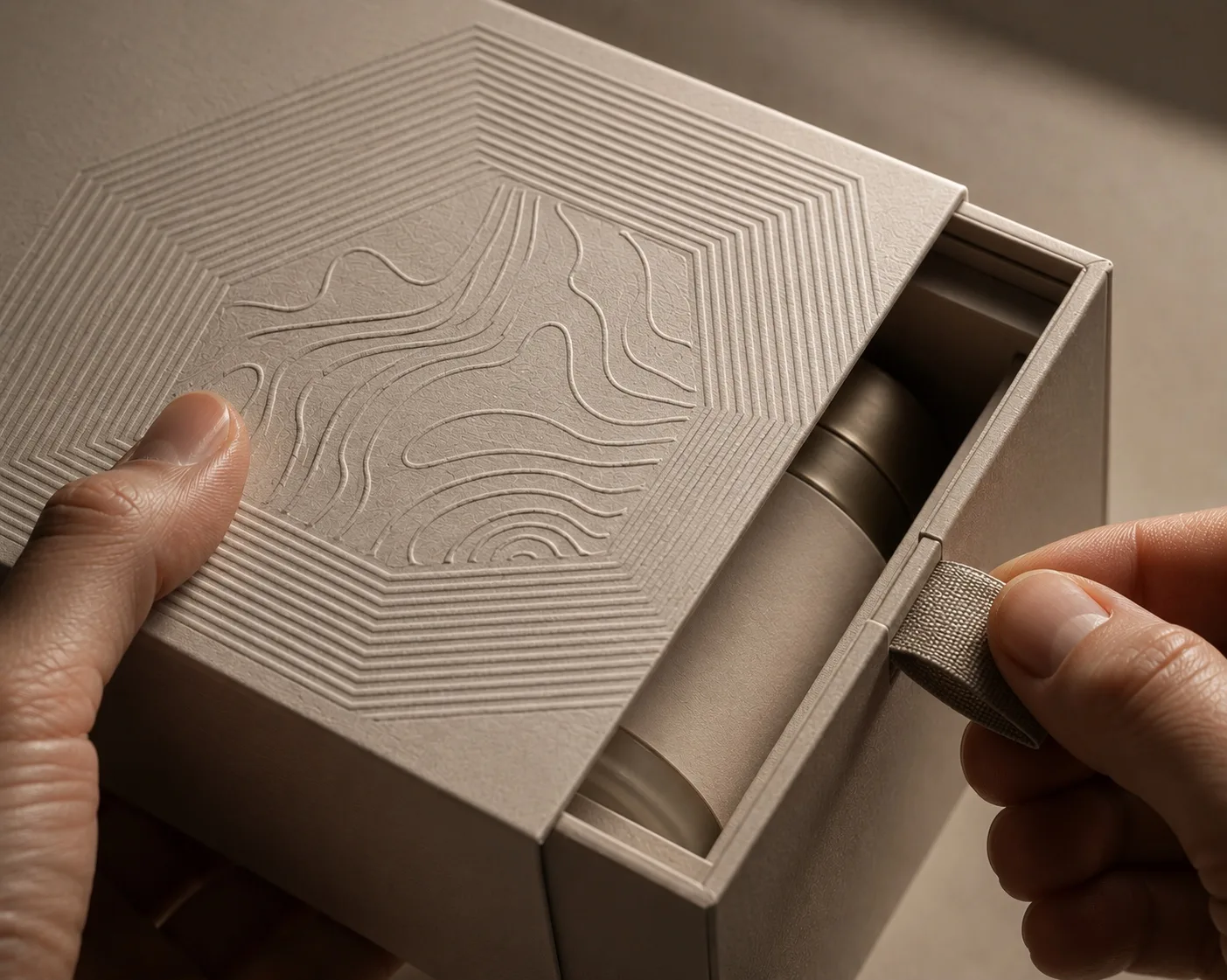
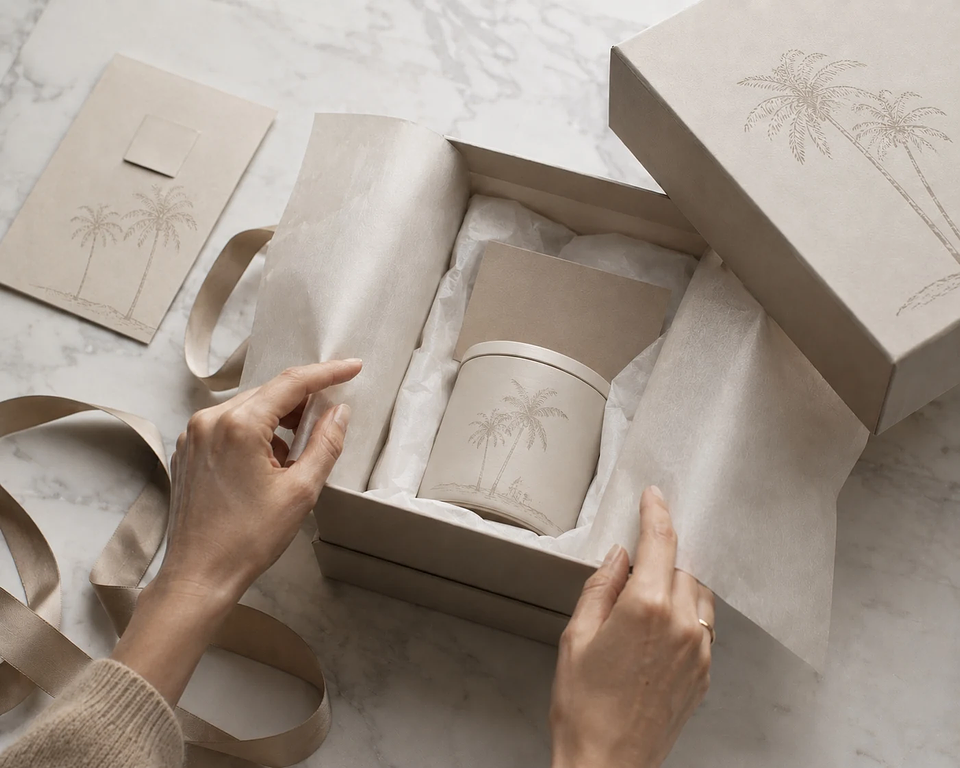
The unboxing moment is the first physical touchpoint of a cultural brand story. Most brands squander it. The ones that don't earn organic reach they never had to buy. AI-generated.
When This Approach Makes Sense — and When It Doesn't
Cultural product design is high-leverage for brands whose audience has the attention and the inclination to notice material quality. That typically means premium and luxury categories: beauty, spirits, fine food, fashion, automotive accessories, homewares, cultural institutions.
It makes less sense when the brand's fundamental proposition is value or convenience — where premium packaging signals create a cognitive dissonance with the price point, or where the consumer encounter with the product is so brief or functional that craft investment doesn't register.
The question to ask is not can we afford to do this? but will our audience notice, and will it change how they feel about us? For a premium skincare brand, the answer is almost certainly yes. For a budget cleaning product, the investment is better placed elsewhere.
Where to Start
The brands that treat product and packaging design as a cultural touchpoint share a common starting point: they ask what the object should say before they ask what it should look like.
That means grounding the brief in a cultural position. Which tradition of making is relevant here? What does the choice of material communicate before anyone reads the label? Is there an artisan, a craft community, or an artist whose world of reference connects genuinely to what the brand needs to express?
Those questions belong at the beginning of the process — before the packaging studio has delivered renders, before the limited edition calendar is set. The cultural frame has to precede the design brief, or the design brief quietly defaults to aesthetics. A beautiful object with no cultural content is still just packaging.
This is where Basa Studio operates — at that earlier stage, where the strategic and cultural questions are still open. The object that results earns its premium position. It doesn't just claim it. Ready to approach product design as cultural strategy? Talk to us.
Related creative stories
Browse through other features, interviews and guides to discover creative brand collaborations, meet innovative artists and creators, find out how new artforms are energizing advertising, & more.
We're excited to hear from you! If you're looking for artistic solutions for your next creative marketing campaign, send us your briefing. We can also help create a killer concept if you're in an early ideation phase. Check out our services for more.
Send your briefing
About you
THANK YOU
Your inquiry has been sent
We have received your inquiry. We'll get back to you within 24-48 hours to discuss your project. If you need urgent assistance, reach us on WhatsApp: +49 176 432 64506. In the meantime, we invite you to explore our insights, case studies, and lessons from building culturally grounded brand experiences.
Please contact us by phone if you're not able to reach us via this form.
THANK YOU
We have received your inquiry. We'll get back to you within 24-48 hours to discuss your project. If you need urgent assistance, reach us on WhatsApp: +49 176 432 64506. In the meantime, we invite you to explore our insights, case studies, and lessons from building culturally grounded brand experiences.
We use cookies to help empower our artists and make them accessible to clients. Check out our Privacy Policy and Terms of Service to see how your data can make a difference.