It is a wider gap than it looks. The difference between a campaign that earns cultural attention and one that merely rents it for thirty seconds is not budget, production value, or the size of the talent attached to it. It is whether the brand had something genuine to say before it had a campaign to say it in.
What follows is not a best-of list. It is a strategic interrogation of five cultural marketing campaign examples, chosen because each one earns a closer look rather than just a headline — and because each illustrates a distinct principle that separates culturally deep brand work from culturally decorated marketing.
What "Cultural Depth" Actually Means
Before the examples, a necessary distinction: cultural aesthetics and cultural depth are not the same thing.
Cultural aesthetics is the borrowing of cultural signifiers — street art references, subcultural visual codes, locally resonant imagery — applied to a campaign without the brand having earned the right to use them. It looks right. It feels current. And it tends to collapse quickly under scrutiny, because the surface has nothing beneath it.
Cultural depth is what happens when a brand's position in culture is genuinely held — when the campaign is the expression of a conviction that existed before the brief, not a conviction invented to fill one. The most effective cultural advertisements are almost indistinguishable from brand behaviour. They don't feel like marketing. They feel like a company revealing what it actually thinks.
That is the standard against which the following five examples are measured.
Cultural depth is not a visual style. It is the difference between a brand that has something to say and one that has something to sell.
01 — Patagonia, "Don't Buy This Jacket" (USA, 2011)
Lesson: Conviction is the campaign
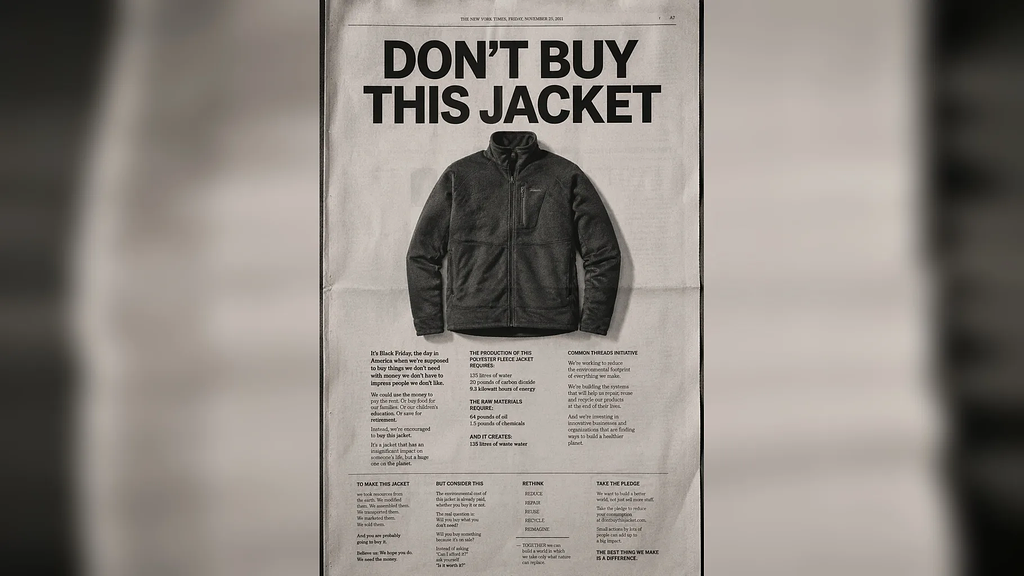
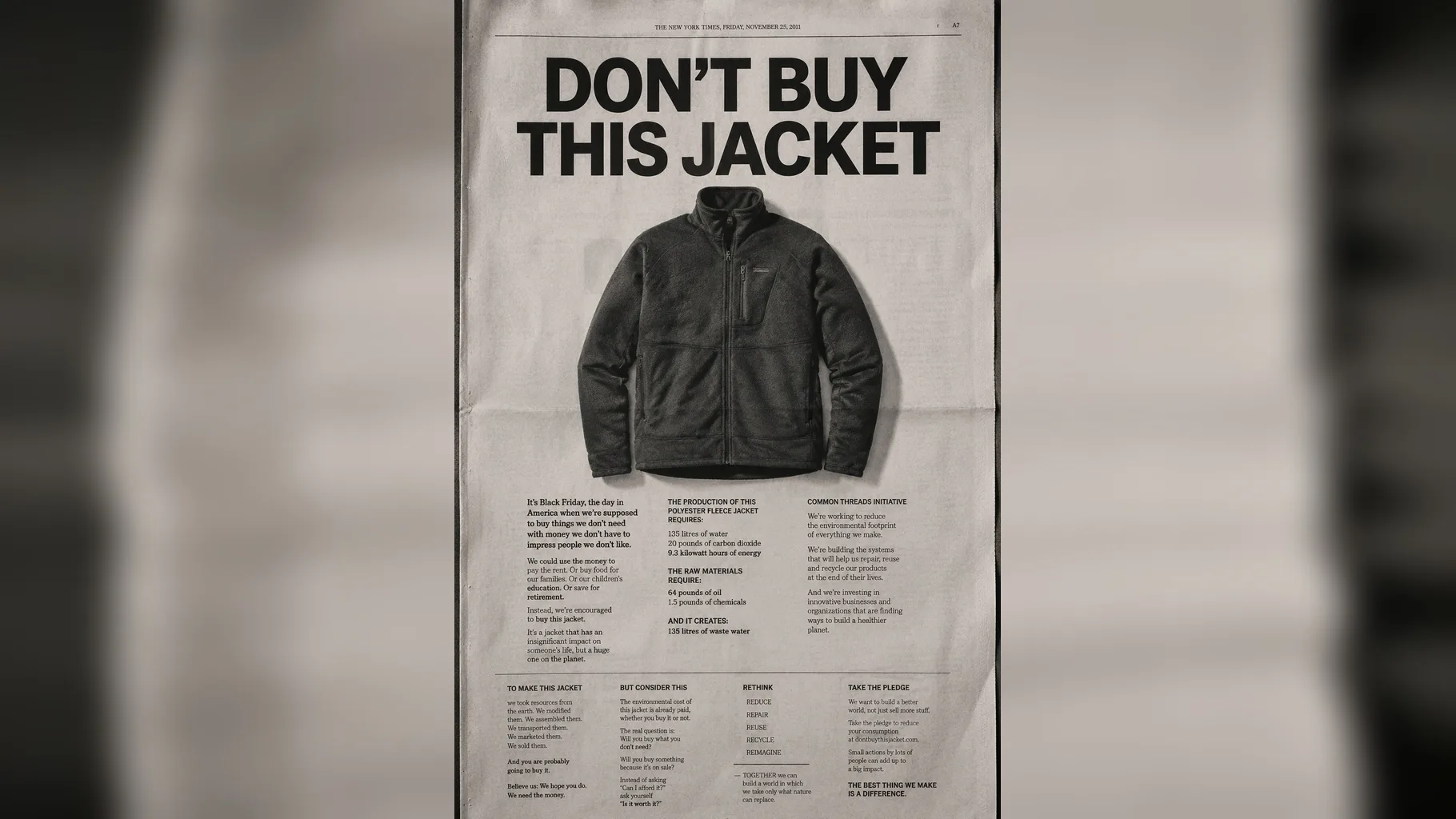
On Black Friday 2011 — the single highest-spending retail day in the American calendar — Patagonia took a full-page advertisement in The New York Times and told readers not to buy their jacket.
The copy was specific. It detailed the environmental cost of producing a single R2 fleece: 135 litres of water, 20 pounds of carbon dioxide emissions — figures Patagonia published in the ad itself. It wasn't a provocation designed in a boardroom. It was a company value made visible, at the most commercially inconvenient moment possible.
The result confounded conventional logic. In 2012, Patagonia's sales increased by nearly a third to $543 million, and the company opened 14 new stores — the campaign contributed to $158 million in new apparel sales over two years, according to Bloomberg Businessweek.
The instinct is to read this as paradox. It isn't. The campaign worked because it was honest about the contradiction at the heart of any outdoor gear company: you cannot claim environmental values and then run a Black Friday sale. Patagonia chose not to resolve that contradiction by ignoring it. They surfaced it. And in doing so, they handed their customers a reason to trust them that no promotion could have manufactured.
In 2022, the commitment went further still. Founder Yvon Chouinard transferred ownership of the company to a trust structured so that future profits — approximately $100 million annually — would go toward fighting climate change, as reported by CNBC. The 2011 advertisement was not a campaign. It was an early signal of what the company actually was.
The strategic lesson: When a brand's cultural position is genuinely held, the marketing almost writes itself. The discomfort the Patagonia advertisement created was the point — because discomfort is what conviction looks like from the outside. When the position isn't genuinely held, no amount of creative execution fixes it. Audiences have become expert at sensing the difference.
Patagonia ran "Don't Buy This Jacket" on Black Friday 2011. Sales grew nearly 30% the following year. Conviction, it turns out, is commercially durable.
02 — Netflix × Basa Studio × Chemical X, How to Sell Drugs Online (Fast) (Berlin, 2021)
Lesson: Context is the medium
Netflix needed to launch Season 2 of How to Sell Drugs Online (Fast) in a way that matched the show's tone — irreverent, subcultural, Berlin-native — without retreating into safe promotional formats. The brief was specific: earn attention in public space rather than demand it.
The solution was not a media buy. It was a commission.
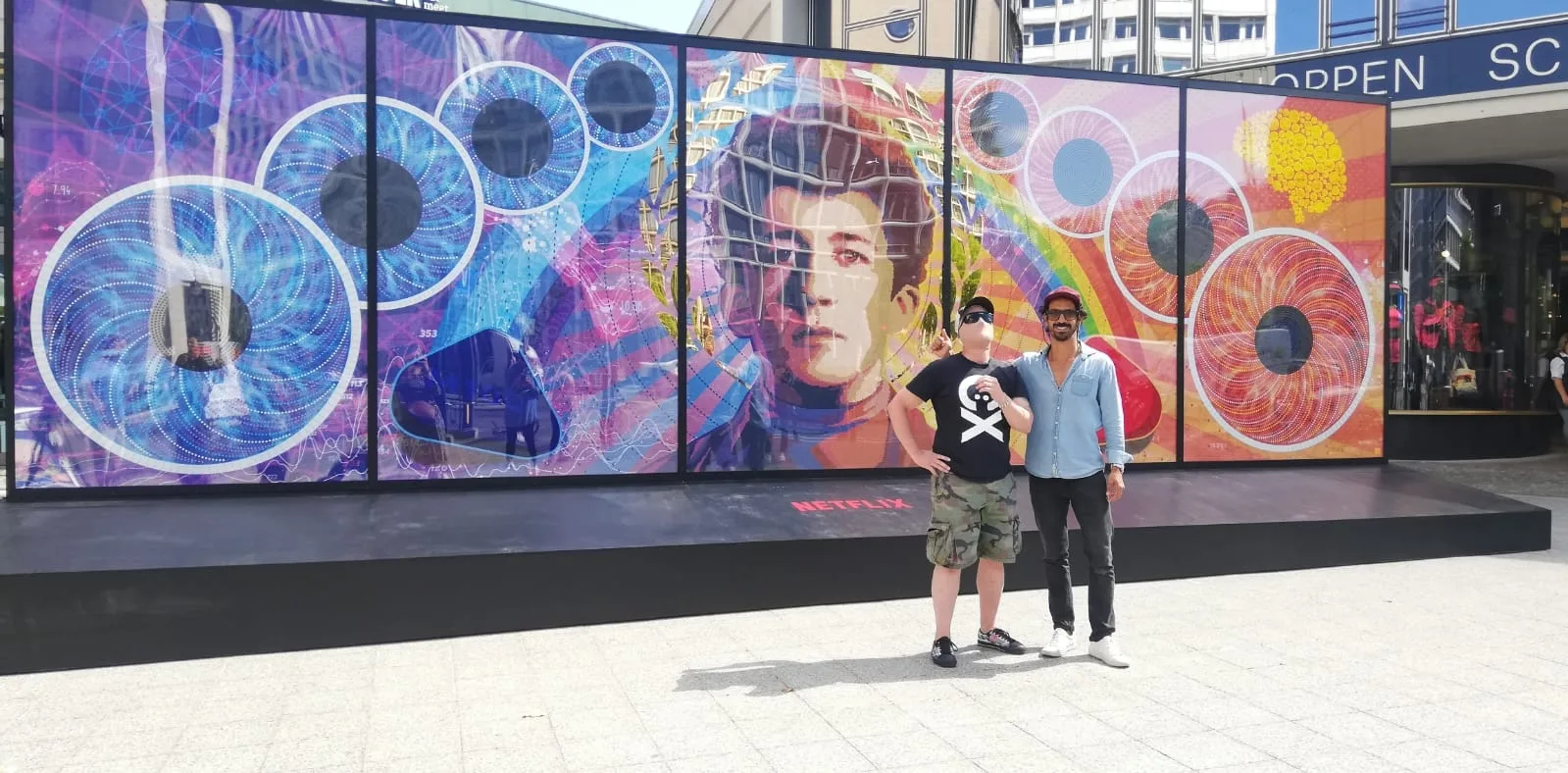
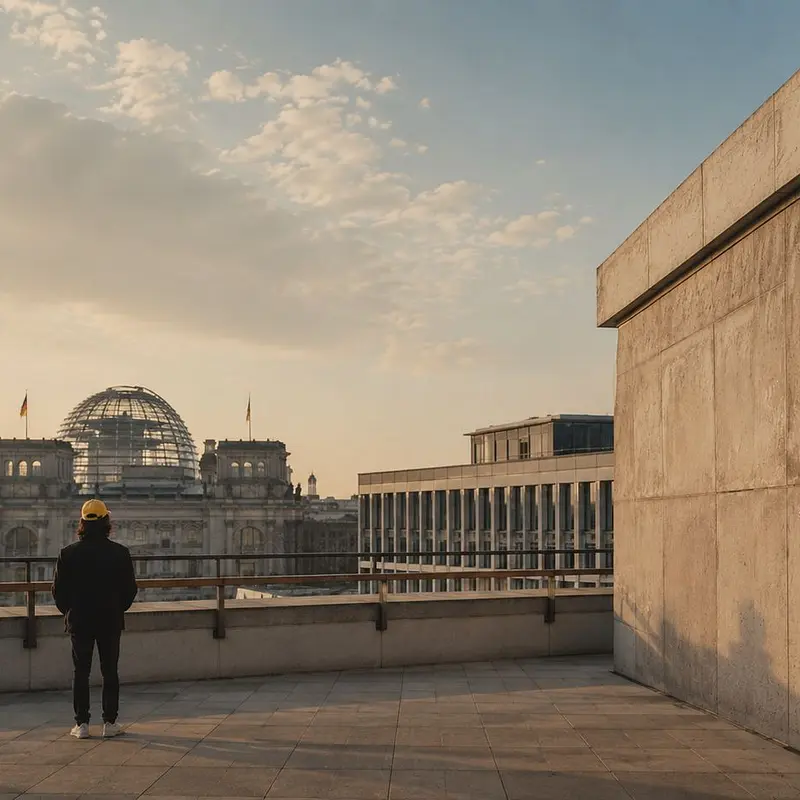
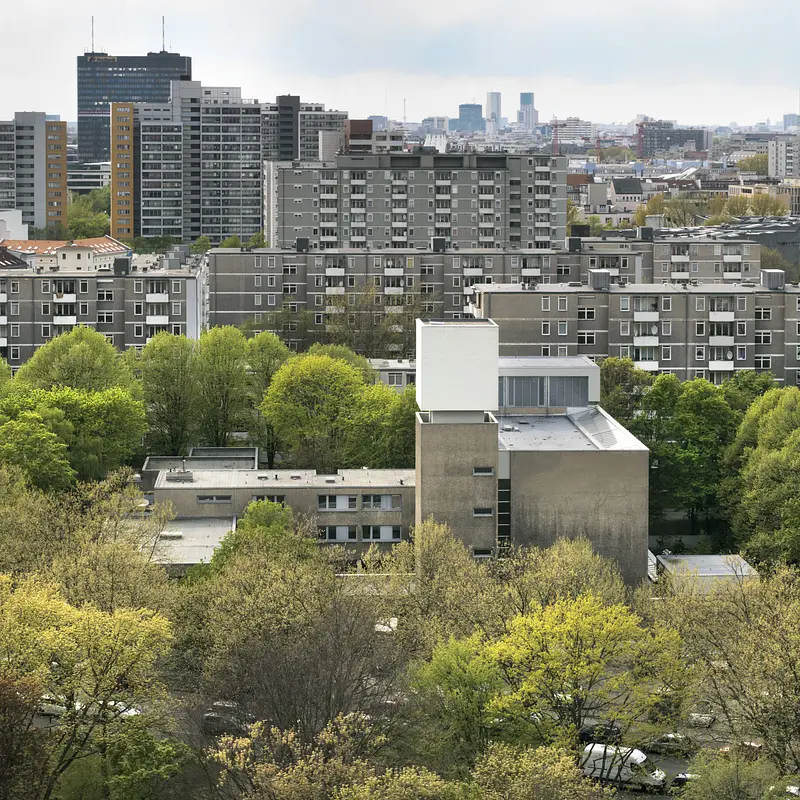
Working with Basa Studio, Netflix brought in Chemical X — a globally recognised artist known for boundary-pushing public work — to create an original installation at Bikini Berlin, one of the city's most trafficked commercial plazas. The result was a three-metre portrait of the show's protagonist Moritz Zimmermann rendered in Chemical X's signature style: part Julius Caesar, part contemporary anti-hero, his pupils expanding outward across the mural's surface.
The medium was the message. The mosaic was constructed from 130,000 fake ecstasy pills — each hand-placed into a precision-engineered aluminium and acrylic frame — weighing one tonne in total. Legal art mimicking illegal substances, displayed at street level in the city where the show is set.
The production detail was not incidental. The pills were fabricated by Rock & Roll Bonbonmanufaktur Ehrenfeld — the show's on-screen candy maker, now its real-world material supplier. Colour matching across 20 specific shades required 35 kilos of pigment. Every production decision reinforced the cultural logic of what it was promoting.
The installation did not ask Berlin to pay attention to Netflix. It gave Berlin something worth paying attention to — something rooted in the city's own visual culture and subcultural codes — and let the show's audience find it.
The strategic lesson: The most effective cultural marketing campaigns do not simply reach the right audience. They reach them inside the cultural context that makes the message land differently. When brand work is placed where culture is already happening — and when the work itself is made with the specificity that culture demands — the environment does half the job. What Basa Studio built for Netflix was not an advertisement that referenced art. It was art that happened to be an advertisement. That distinction is the whole argument.
03 — Oatly, Paris OOH Campaign (France, 2023)
Lesson: Cultural credentials don't travel automatically
In late 2023, Oatly launched in Paris. The outdoor campaign it built to mark the occasion became one of that year's most discussed pieces of advertising — for reasons the brand didn't fully anticipate.
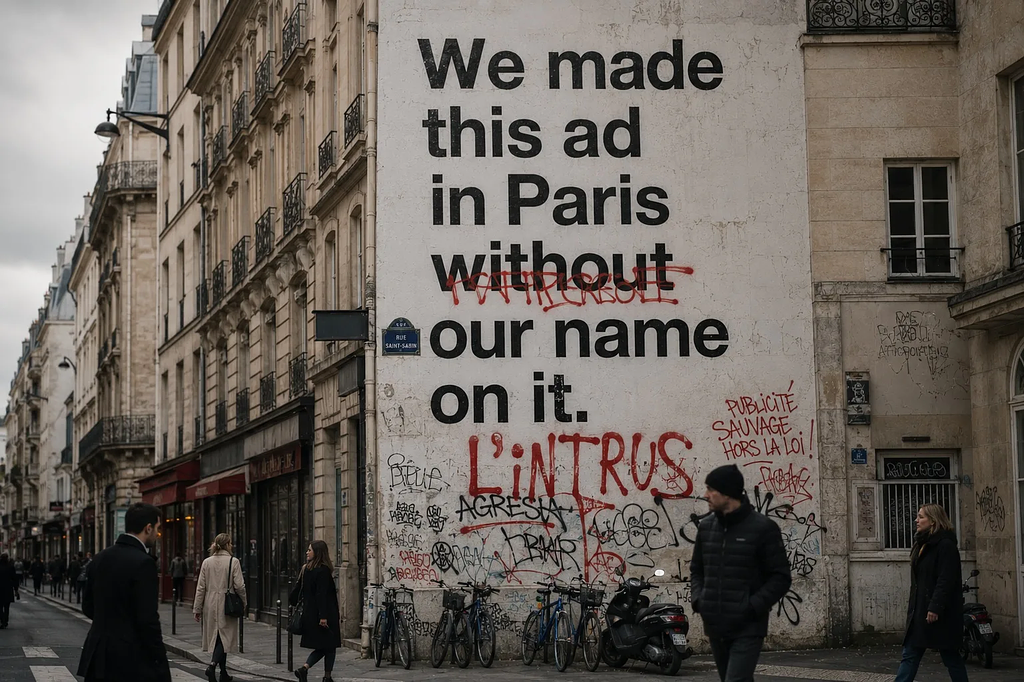
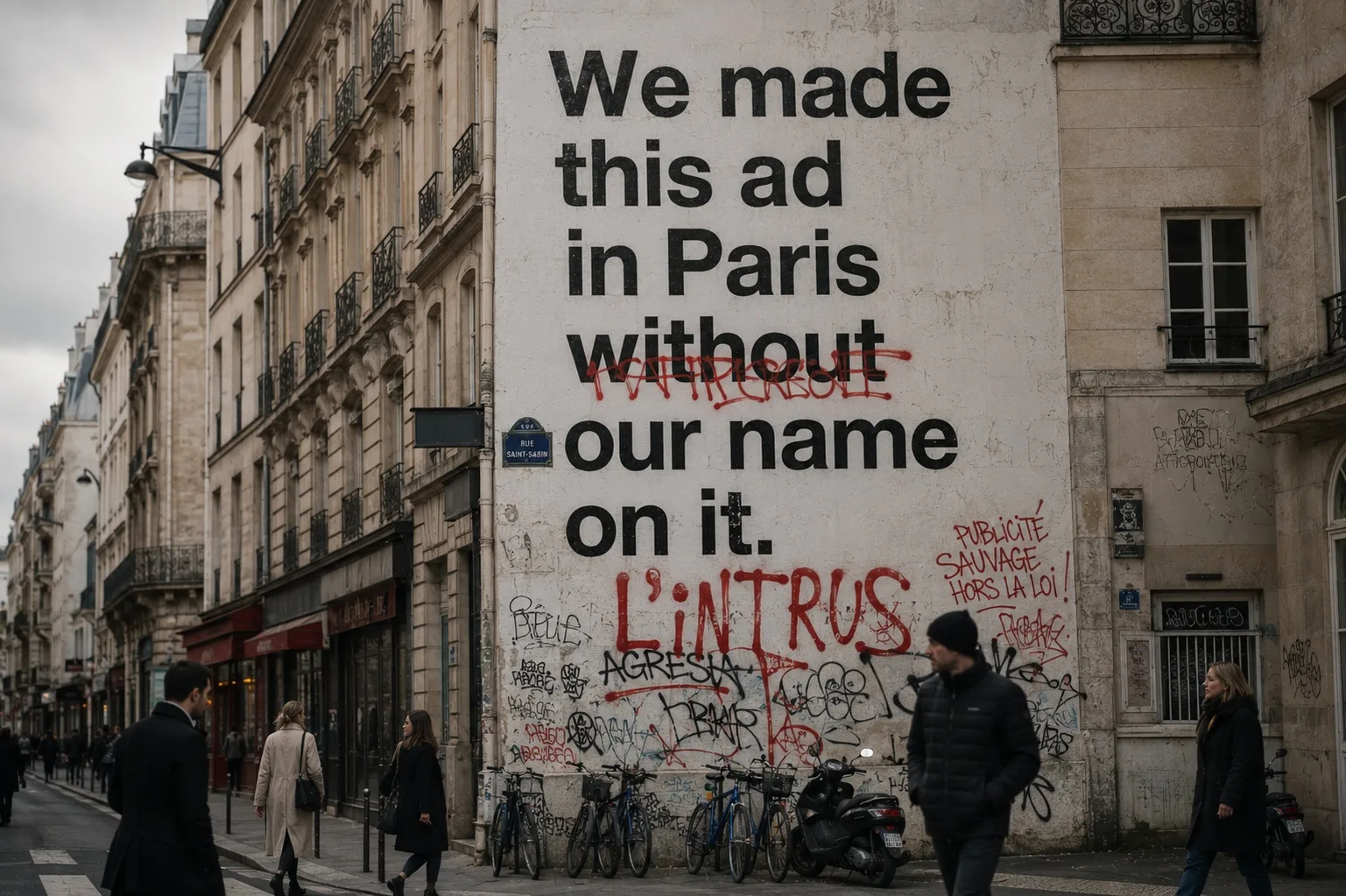
The campaign was built around a specific local constraint: Paris prohibits commercial wall murals from displaying brand logos or product images. Oatly's workaround was clever — paint murals with text-only copy, then film delivery drivers placing products in front of the walls to create a forced-perspective effect, the product appearing to complete the image only when viewed from a specific angle. Conceived entirely in-house, creative director Oskar Pernefeldt framed the intent as wanting to honour Paris's relationship to art and advertising simultaneously, and have some fun doing it.
The campaign went viral. Advertising industry commentators praised its ingenuity. By the metrics of earned media, it performed.
But something else also happened.
The murals were tagged from top to bottom by locals within days. A widely shared TikTok by creator Ashley Rutstein pointed out that Paris's restrictions on commercial murals exist for a reason: to protect inhabitants from precisely the kind of brand incursion Oatly had engineered. Among the 600-plus commenters were observers who questioned why the copy ran entirely in English — without a French version, apparently in breach of French advertising regulations — and why a brand positioning itself as culturally progressive hadn't anticipated the reaction of a city with a deeply held relationship to both language and public space.
This is the instructive tension. Oatly had strong cultural credentials globally — irreverent, anti-corporate, sustainability-forward. But cultural credentials earned in one context do not transfer automatically to another. Paris is a city with a specific and deeply held relationship to language, to public space, and to the question of who gets to speak on its streets and in what register.
The reaction was not irrational. It was the city telling a brand: you don't know us yet.
The strategic lesson: Cultural sensitivity in advertising is not a legal checkbox. It is the discipline of understanding that every market has a relationship with language, with public space, with the question of who gets to speak and in what register. A brand can be progressive and culturally literate in its home market and still be tone-deaf abroad. The work of cultural intelligence is local — it cannot be centralised, and it cannot be outsourced to creative confidence alone.
Oatly's Paris murals were tagged within days of going up. The reaction wasn't vandalism. It was a cultural response to a brand that hadn't done its homework.
The Sensitivity Thread
The Oatly example is not an isolated misread. It opens a structural question that runs through every cultural marketing campaign: what does cultural sensitivity actually require?
It requires more than avoiding offense. It requires understanding language politics — who decides what language is spoken in public space, and why. It requires understanding community ownership of cultural symbols: who has the right to reference them, and under what conditions. It requires understanding the difference between cultural appreciation and cultural appropriation — a line that is not always clear, but that is always felt by the people whose culture is being referenced.
Cultural advertisements that earn sustained attention across markets are not culturally neutral. They are culturally specific — and that specificity is earned through genuine presence, genuine research, and sometimes genuine humility about what a brand doesn't yet understand about a place.
04 — Loewe, The Foundation Craft Prize (Europe / Global, 2016–present)
Lesson: Cultural authority is built, not borrowed — and it compounds
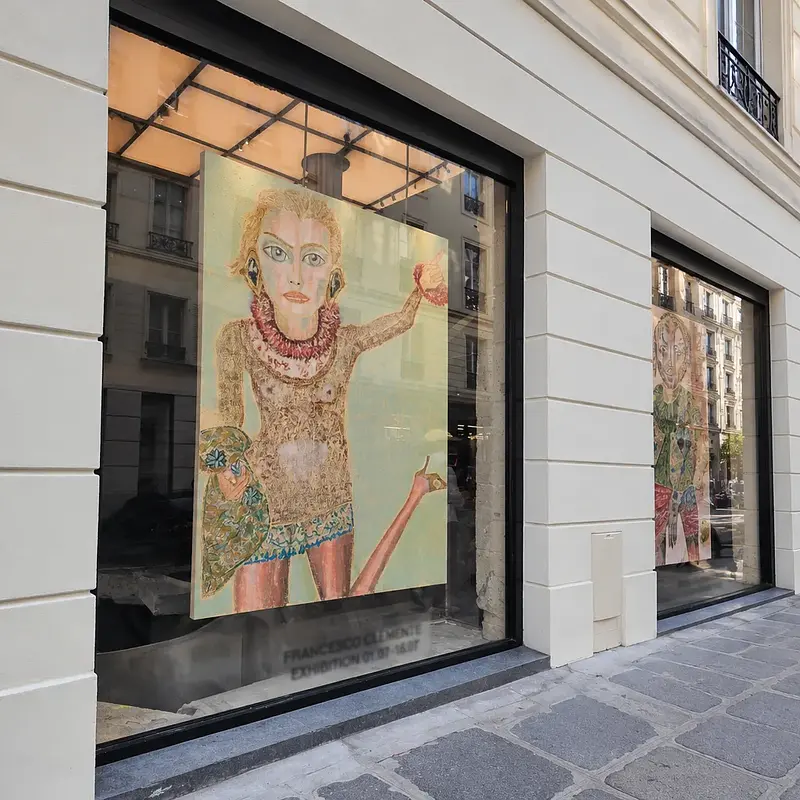
When Jonathan Anderson arrived at Loewe in 2013, the brand was well-regarded but marginal — €230 million in revenue, per Vogue Scandinavia, and largely unknown outside Spain. His stated ambition from week one was explicit — telling AnOther Magazine: "Luxury is dead. I want to build a cultural brand." The Loewe Foundation Craft Prize, launched in 2016, was the structural expression of that conviction — an annual award recognising excellence, artistic merit, and innovation in contemporary craftsmanship, conceived as a tribute to Loewe's origins as a 19th-century collective craft workshop.
What earns the LOEWE Craft Prize its place in any analysis of cultural marketing campaign examples is what it is not. It is not a campaign. It is not a seasonal activation. It is not a collaboration announced with a press release. It is a permanent institution — one that by 2026 was drawing more than 5,100 entries from 133 territories worldwide, according to Wallpaper*, with a jury that includes international architects, museum directors, and ceramicists of global standing.
The cultural logic is precise. As Felix Burrichter, creative director of design magazine Pin-Up, told W Magazine: "The Craft Prize honours craft, which is part of Loewe's heritage — but it also signals to people who may not be interested in fashion that Loewe appreciates other beautiful things of value. If you're interested in these other beautiful things, then Loewe might be a brand that understands you." That is not brand communication. That is cultural positioning — and it works in a register that no advertisement can replicate, because it is earned through genuine institutional commitment rather than creative execution.
The business results are verifiable. Under Anderson's eleven-year tenure, Loewe's revenue grew from approximately €230 million to over €885 million by 2024, according to FashionUnited — with market estimates suggesting the brand approached the €2 billion threshold by the end of his time there, according to WWD. The Craft Prize did not cause this growth directly; the relationship between cultural authority and commercial performance is never that clean. What it did was build the kind of brand permission that makes everything else possible: the Studio Ghibli collaborations that crashed the website, the iconoclastic collections that earned sustained press, the community of artists and collectors who chose to associate themselves with Loewe because the brand had demonstrated it understood what they valued.
The Loewe Craft Prize drew 5,100 entries from 133 territories in 2026. It began as a brand conviction in 2016. That is what cultural authority looks like when it compounds.
Anderson departed Loewe for Dior in 2025. The Craft Prize continues under new creative directors Jack McCollough and Lazaro Hernandez. Whether the cultural authority Anderson built survives the transition intact is a live question — and a useful one for any CMO to sit with. Cultural depth built around a single personality is more fragile than cultural depth built into institutional structure. The Craft Prize was always both. The decade ahead will show which one it actually is.
The strategic lesson: The most durable cultural marketing is not marketing at all. It is a long-term structural commitment that builds cultural authority the way interest builds capital — slowly, invisibly, and then all at once. Brands that approach cultural depth as a campaign format will always be outcompeted by brands that approach it as an operating principle. Loewe under Anderson did not run cultural campaigns. It became a cultural institution. The distinction is commercial as well as philosophical.
05 — Bottega Veneta, "The Square" (Dubai / Tokyo / São Paulo, 2022–present)
Lesson: The brand that creates open cultural space earns something no media buy can replicate
In 2022, under the creative direction of Matthieu Blazy, Bottega Veneta launched a programme called The Square — a series of site-specific cultural events that travelled to cities including Dubai, Tokyo, and São Paulo, activating architecturally significant spaces with multi-day programming spanning music, art, poetry, cuisine, and conversation. Entry was free and open to the public. The brand's products were not the point. In many cases, they were barely present.
Blazy's framing of the programme was direct, telling WWD: "The Square format gives us total freedom — it gives us the possibility to think without a product. And the good thing about anywhere is that culture is everywhere and there will always be something we can connect to."
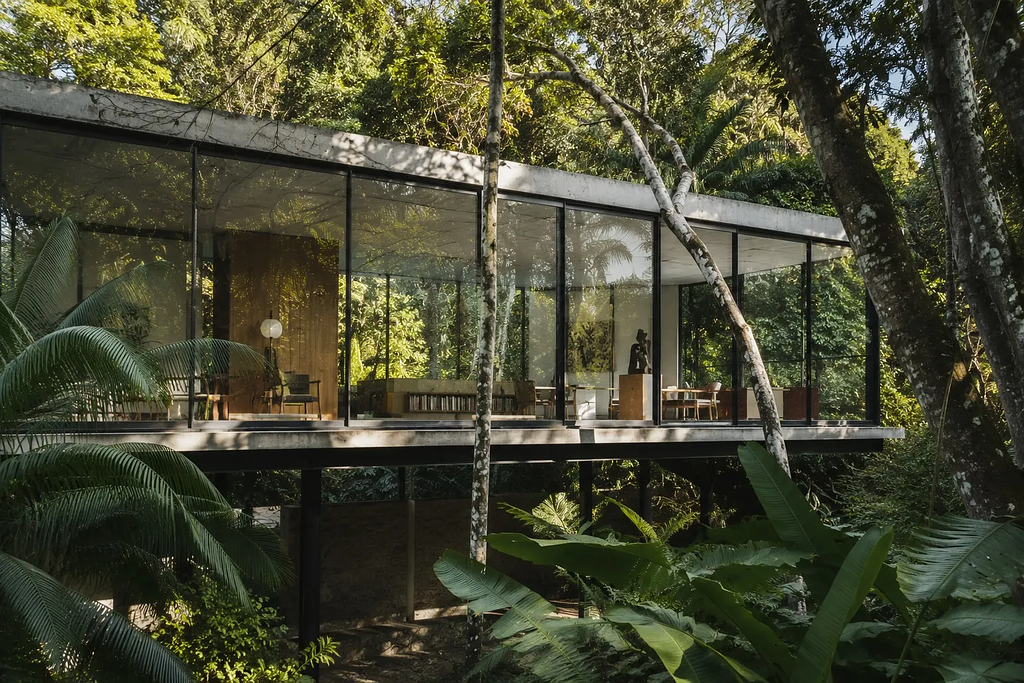
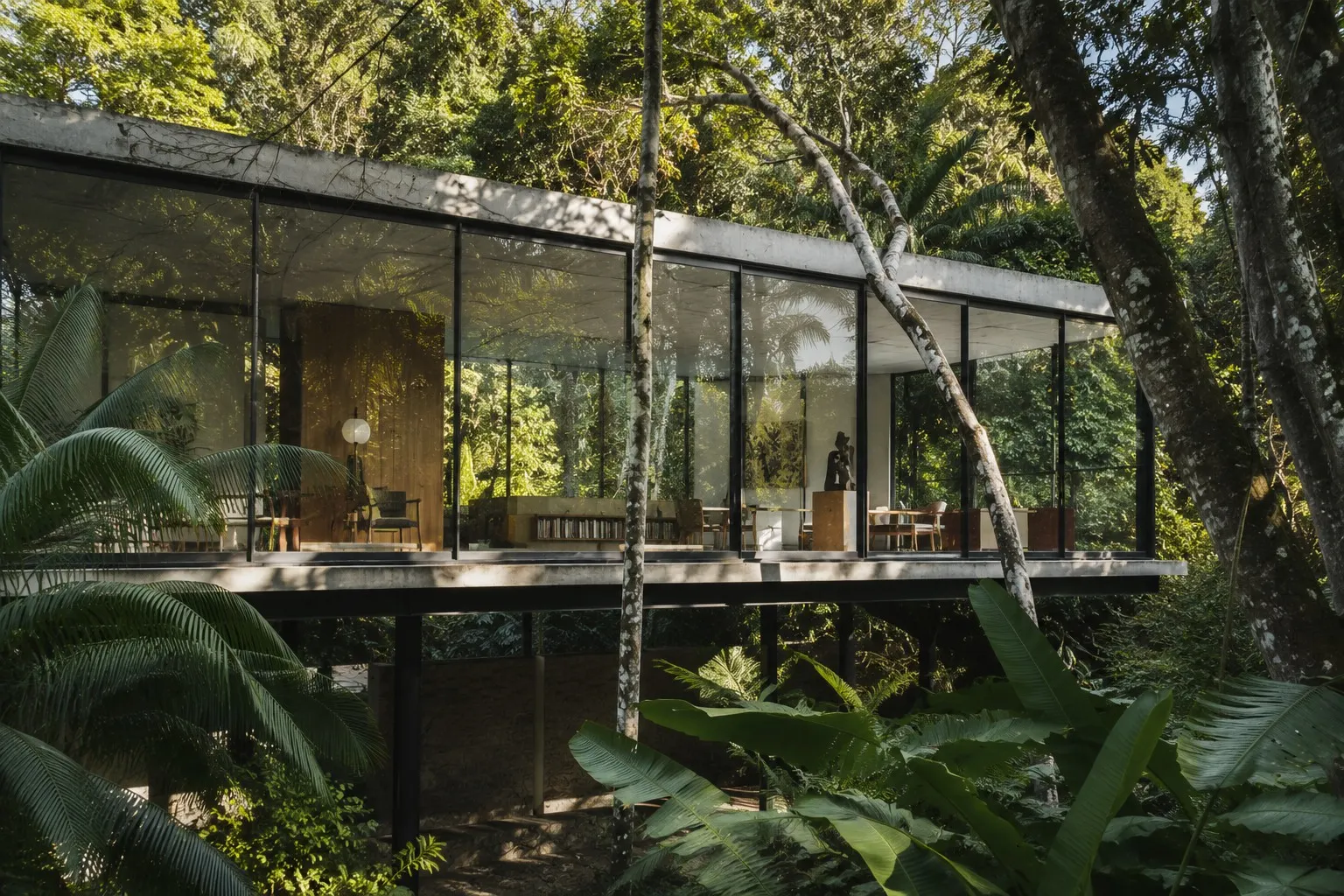
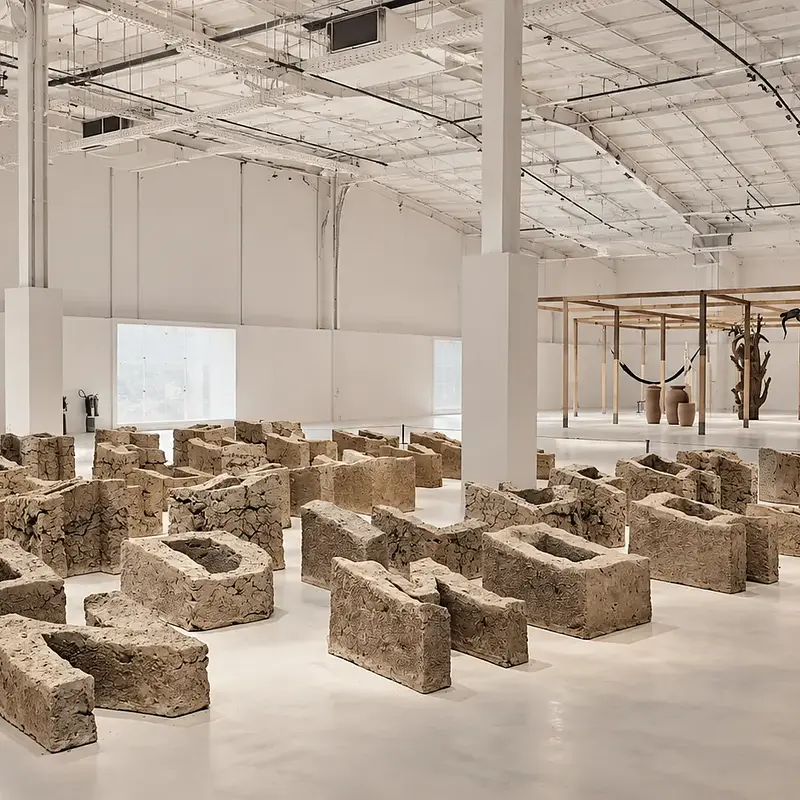
The São Paulo edition is the sharpest illustration of what The Square actually does. Held at Casa de Vidro — the landmark modernist home designed by Italian-born Brazilian architect Lina Bo Bardi — the eleven-day programme explored four thematic pathways through Brazilian culture: geometry, spirituality, counterculture, and the roots of Bossa Nova. The artists, musicians, and thinkers brought together were local. The curator was local. The building was not a venue hired for the occasion; it was a building whose cultural meaning was inseparable from the conversation the programme wanted to have. Bottega Veneta's role was to create the conditions for something to happen — not to produce the thing itself.
The Square São Paulo took place at Casa de Vidro — Lina Bo Bardi's landmark modernist house. The venue was not incidental. It was the argument.
The Dubai edition was structured around the concept of the majlis — the Arabic form of communal gathering — working with local architects, chefs, and artists whose practice was rooted in the city. The brand arrived in a place with its own deep cultural codes and chose to organise around those codes rather than overlay its own.
This is not what most brands do when they enter a new market. Most brands arrive with their visual identity, their campaign toolkit, and their global positioning — and ask the local market to receive it. The Square inverted that logic. It asked what a city had to say, and built a container for it to say it in, with Bottega Veneta's name attached not as an assertion but as an invitation.
Blazy has since moved to Chanel. Whether The Square continues at the same level of cultural ambition under the new creative direction is an open question — and, like the equivalent question at Loewe, a structurally important one. Cultural programmes built around a single creative director's vision are programmes with a single point of failure. The most durable cultural brand work eventually becomes independent of the individual who initiated it.
The strategic lesson: There is a meaningful difference between a brand that produces cultural content and a brand that creates cultural space. Content can be switched off. Space, once opened, invites a kind of participation that changes the relationship between brand and audience permanently. When Bottega Veneta arrived in São Paulo and said, in effect, tell us about Lina Bo Bardi, they were not promoting a product. They were demonstrating that they understood what the city valued. That kind of attention cannot be bought. It has to be paid — in time, in genuine curiosity, and in the willingness to let culture lead rather than follow.
The Pattern That Connects Them
Look across all five examples and the same shape emerges, regardless of industry, geography, or format.
The cultural marketing campaign examples that earn sustained attention are not the ones with the boldest creative. They are the ones where the brand had a clear point of view before it had a campaign — and found the cultural context in which that point of view could land with specificity.
Patagonia did not invent environmental conviction for a Black Friday headline. The conviction existed for decades. The campaign was the moment it became visible to people who hadn't been paying attention.
Netflix and Basa Studio did not put a billboard in Berlin. They placed a specific object — made by a specific artist, from a specific material, connected to the specific world of the show — in a city whose visual culture made it legible in a way no other city could have.
Oatly is the same argument from the other direction. Strong cultural credentials, built over years in markets that understood the brand's register. Insufficient cultural intelligence about the specific city, language politics, and community ownership of public space it was entering. The gap between those two things is not creative. It is structural.
Loewe did not run a cultural campaign. It built a cultural institution — one that now outlasts the creative director who designed it, continues to attract thousands of applicants annually, and has become a signal to an entire community of artists, collectors, and culturally literate consumers that Loewe is a brand that understands what they value.
Bottega Veneta asked a city what it had to say, built a space for it to say it, and attached their name not as a declaration but as an invitation.
What these campaigns share — including the one that misread its context — is that they were not built around a product, a campaign moment, or a target audience demographic. They were built around a genuine cultural point of view, executed with the specificity that earns attention rather than demanding it.
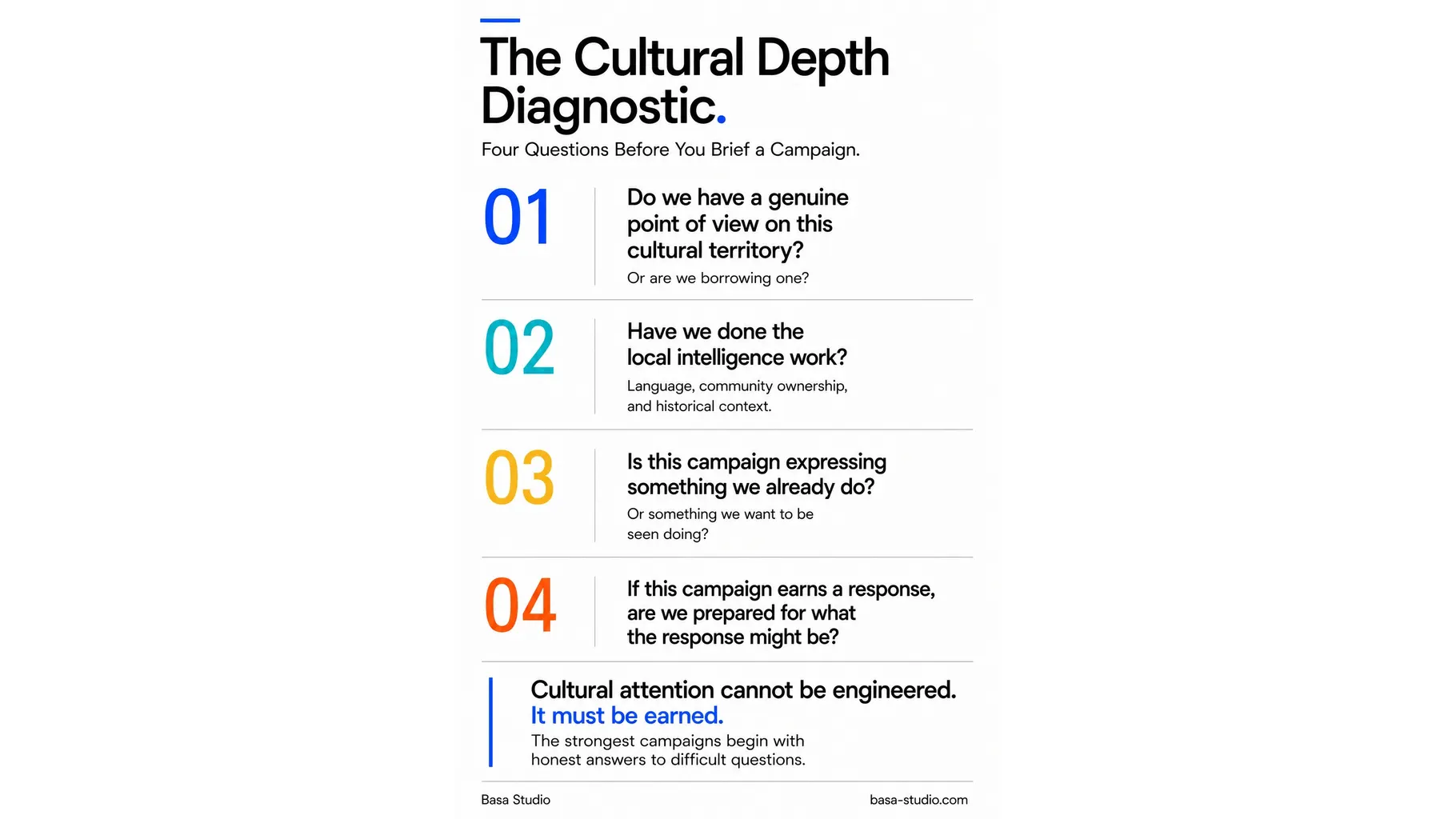
Before the brief, four questions. The brands that earn cultural attention tend to have honest answers to all of them.
Where Cultural Campaigns Begin
There is a persistent misunderstanding in how senior brand teams approach cultural marketing campaigns. The misunderstanding is that they begin with a campaign brief.
They don't.
The most effective ones begin much earlier — with a brand deciding what it actually stands for. Not what it wants to be associated with. Not which cultural codes it wants to borrow. What it actually believes, what it is genuinely willing to commit to, and what cultural territory it has already earned the right to occupy.
That is not a creative brief. It is a strategic one. And it requires a different kind of partner — one that understands culture not as a medium to be bought, but as a context to be earned. One that can move from that strategic foundation through to execution without losing the cultural specificity that made the idea worth doing in the first place. Basa Studio works with premium brands to build cultural depth — from strategy through execution. See how we work.
Related creative stories
Browse through other features, interviews and guides to discover creative brand collaborations, meet innovative artists and creators, find out how new artforms are energizing advertising, & more.
We're excited to hear from you! If you're looking for artistic solutions for your next creative marketing campaign, send us your briefing. We can also help create a killer concept if you're in an early ideation phase. Check out our services for more.
Send your briefing
About you
THANK YOU
Your inquiry has been sent
We have received your inquiry. We'll get back to you within 24-48 hours to discuss your project. If you need urgent assistance, reach us on WhatsApp: +49 176 432 64506. In the meantime, we invite you to explore our insights, case studies, and lessons from building culturally grounded brand experiences.
Please contact us by phone if you're not able to reach us via this form.
THANK YOU
We have received your inquiry. We'll get back to you within 24-48 hours to discuss your project. If you need urgent assistance, reach us on WhatsApp: +49 176 432 64506. In the meantime, we invite you to explore our insights, case studies, and lessons from building culturally grounded brand experiences.
We use cookies to help empower our artists and make them accessible to clients. Check out our Privacy Policy and Terms of Service to see how your data can make a difference.