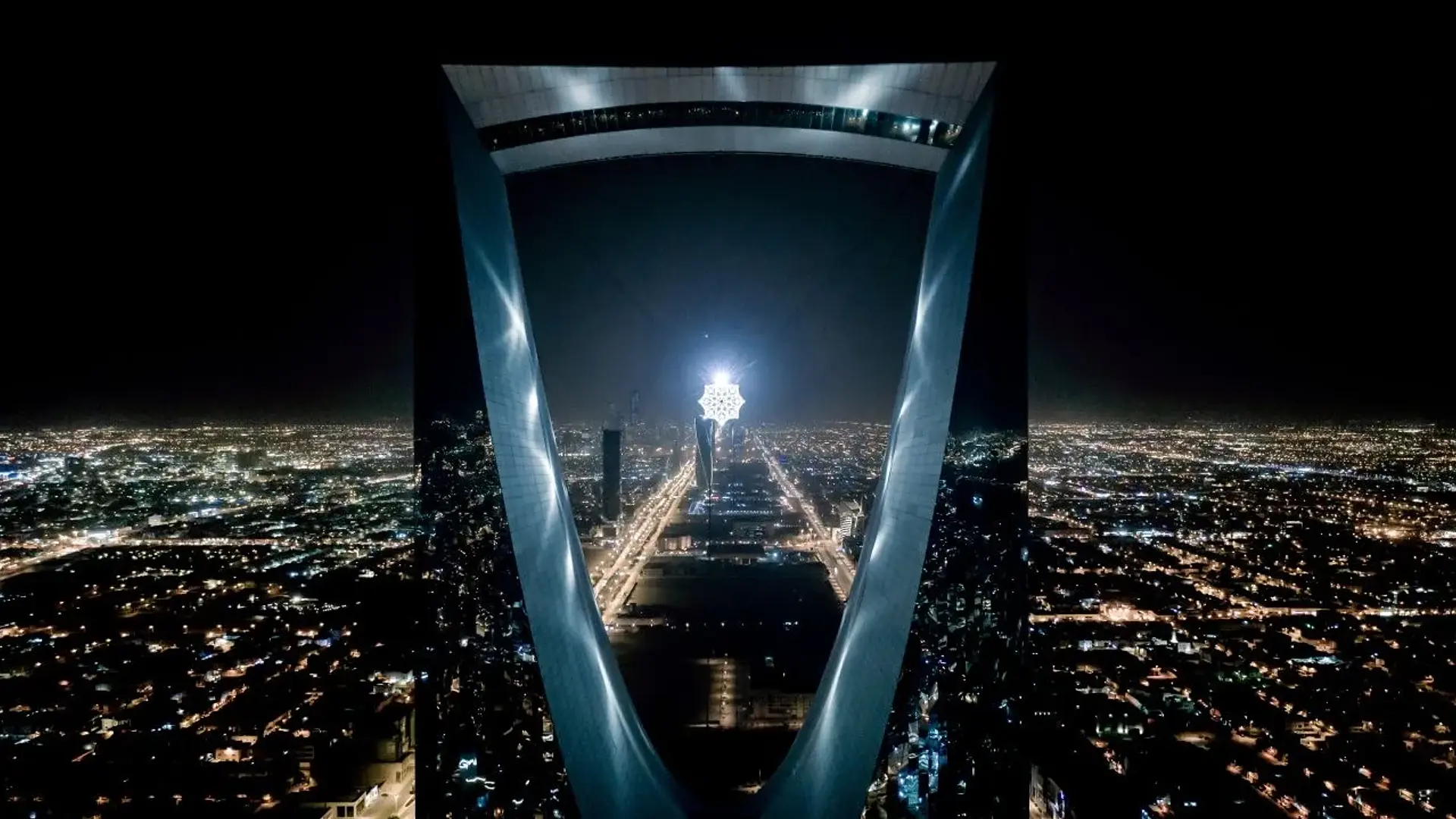
When Noor Riyadh launched in March 2021, it placed 33 light art installations in locations across the city, from the financial district to a historic palace. Rather than asking people to come to the art, the festival brought the art to them.
Miguel Blanco-Carrasco joined the festival in 2019 as its founding executive director, having previously led cultural diplomacy projects at Qatar Museums. In 2022, during his tenure, Noor Riyadh set six Guinness World Records, including the title for the world's largest light art festival.
He helped shape how the festival met the city: where the works would sit, who they were for and how the audience would be heard. We spoke with him about what makes a public art installation belong to a place, what cultural programming can do for city branding, and how he sees brand partnerships in culture changing.
How Did Noor Riyadh Rethink the Light Art Festival?
Blanco-Carrasco's background is in strategy and law. At Qatar Museums, he moved from the strategy team into cultural diplomacy and worked on Years of Culture, which he describes as "a bilateral, annual program of cultural collaboration between Qatar and another nation." It was also at Qatar Museums that he began working in public art, including, he recalls, with Richard Serra on 7, the artist's large-scale sculpture in Doha.
At Noor Riyadh, his aim was to move the festival away from light festivals built mainly as entertainment and to treat light as a serious artistic medium, in the tradition of artists such as Lucio Fontana, Julio Le Parc, James Turrell and Robert Irwin.
The first edition reflected that ambition. Alongside the citywide program, he recalls, it included an indoor retrospective of light art, with artists ranging from Yayoi Kusama to Daniel Buren.
What Makes a Public Art Installation Belong to a City?
Before designing anything, Blanco-Carrasco and his team visited established light festivals in Lyon, Berlin, Madrid, Amsterdam and Eindhoven. Beyond what made each one good, he wanted to understand "what are the characteristics that make them belong in their particular cities."
Many of those festivals, he observed, are built around walkable historic centers, with facades to project on and public transport linking them. He describes Riyadh as the opposite: a vast city where most people drive.
That called for a different model. "We chose to delocalize the different artworks and to create some hubs with more works in the areas that are more pedestrian."
Beyond these hubs, he says, the festival placed works where people already spend time: the King Abdullah Financial District, where many people work, and the wadis, the riverbeds where families gather for picnics. The aim was to reach people "who will not traditionally come to a contemporary art exhibition in a four-walls space," by bringing the art into their routines.
For Blanco-Carrasco, this fit is the core of the work. "To create a festival that is specifically made for the city that you are in and that takes into account their singularities and the idea of syncretism and the identity of the city, I think is the most important thing you can do." At Noor Riyadh, that meant making the art accessible "from an intellectual point of view and from a geographical point of view."
How Can Public Art Reach Audiences Beyond the Art World?
The first edition is the one Blanco-Carrasco treasures most, because no one yet knew what the festival would look like. He recalls bringing in artists who had never been to Saudi Arabia while COVID-19 restrictions were still in place. More than 300,000 people attended, according to Arab News.
He attributes the response partly to residents' appetite for art and partly to the medium itself. Light, he notes, is easy to understand and easy to share on social media.
Some works were designed to reward a second look. He cites Daniel Canogar's installation on a Riyadh building, which he describes as drawing on live data from electrical storms. "You can just admire them just for what they look like, but then many of them, if you also want to peel the layers, they had a lot more depth." That layering mattered because much of the audience, he says, were children or people not particularly interested in contemporary art, who came across the works in their own neighborhoods.
The festival also surveyed visitors daily across its locations, he says, gathering satisfaction scores, demographic data and practical requests. "To have that pulse on our audience, it was very important because then it allowed us to iterate and to improve."
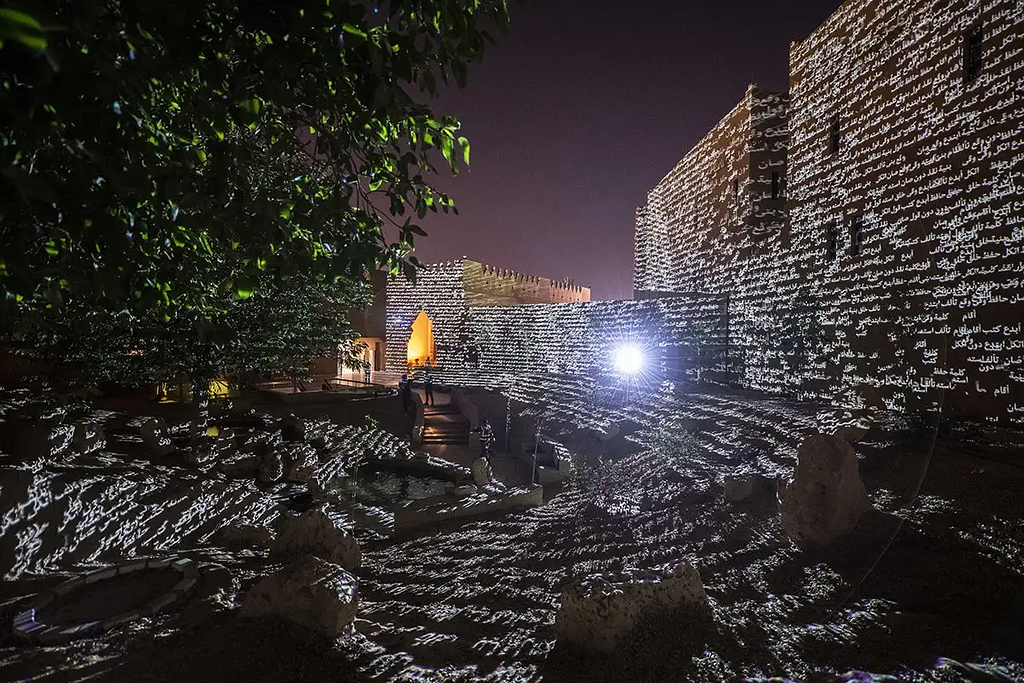
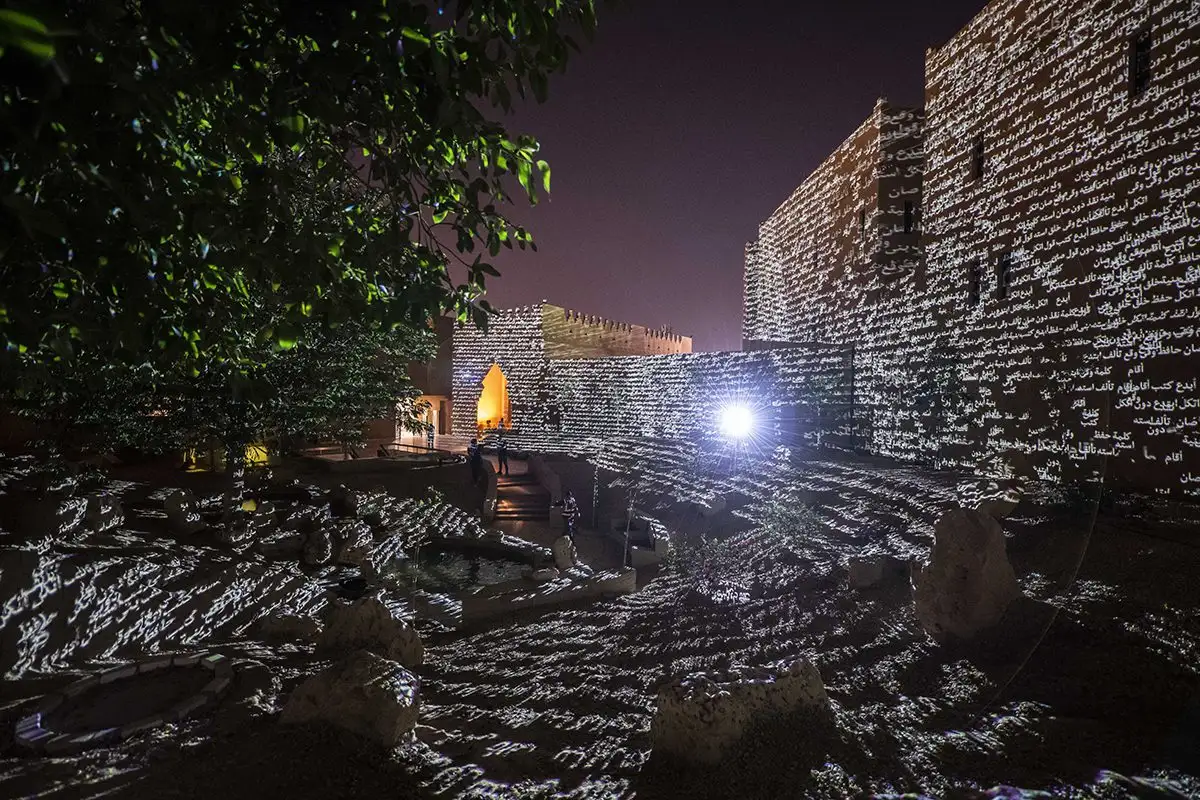
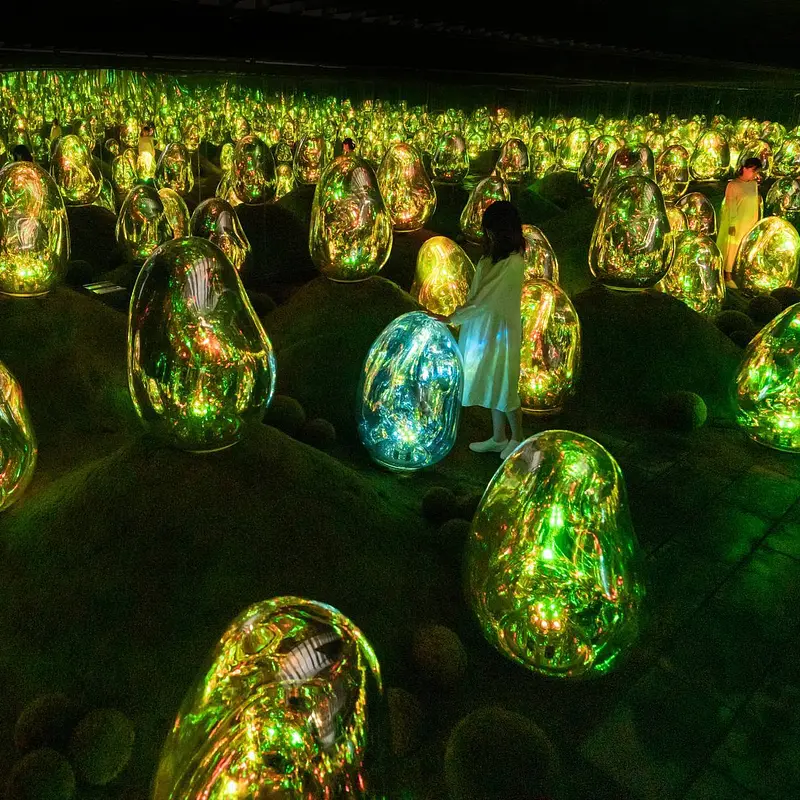
Noor Riyadh 2022. Charles Sandison, The Garden of Light, 2022. Commissioned for Noor Riyadh 2022. Image courtesy of Riyadh Art.
How Do You Measure the City Branding Impact of Public Art?
Every shared photo of Noor Riyadh also puts Riyadh in the frame. But, as Blanco-Carrasco acknowledges, visibility is not the same as measurable impact. The effect on city branding, he says, is "slightly more intangible and qualitative than quantitative."
Press coverage and social media reach offer an early indication. The deeper measure, city pride, takes longer: he argues it needs sustained study, ideally led by the city itself.
Other signals land more quickly, though how they land depends on who is looking. Take the festival's Guinness World Records titles. In the contemporary art world, Blanco-Carrasco acknowledges, such records carry little weight. "Nobody cares about your Guinness World Records," he says, "and that makes complete sense."
For a wider audience, the same titles mean something. He sees them as a way to reach residents with no particular interest in contemporary art, for whom that kind of recognition is familiar, and as a marketing tool for the festival. "In terms of city pride, those sort of awards are very important."
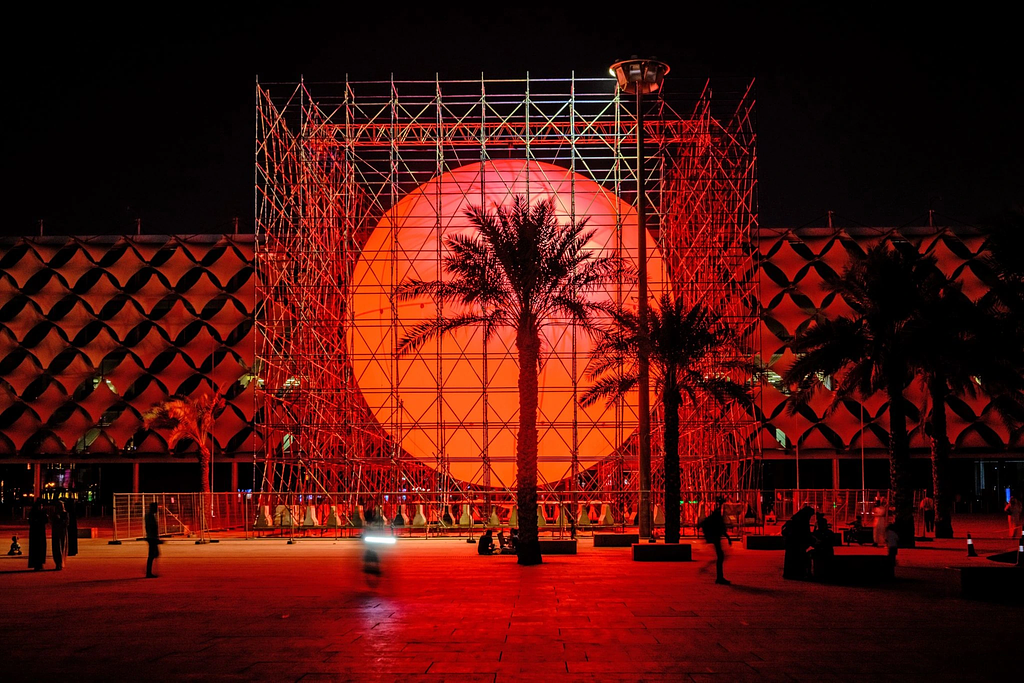
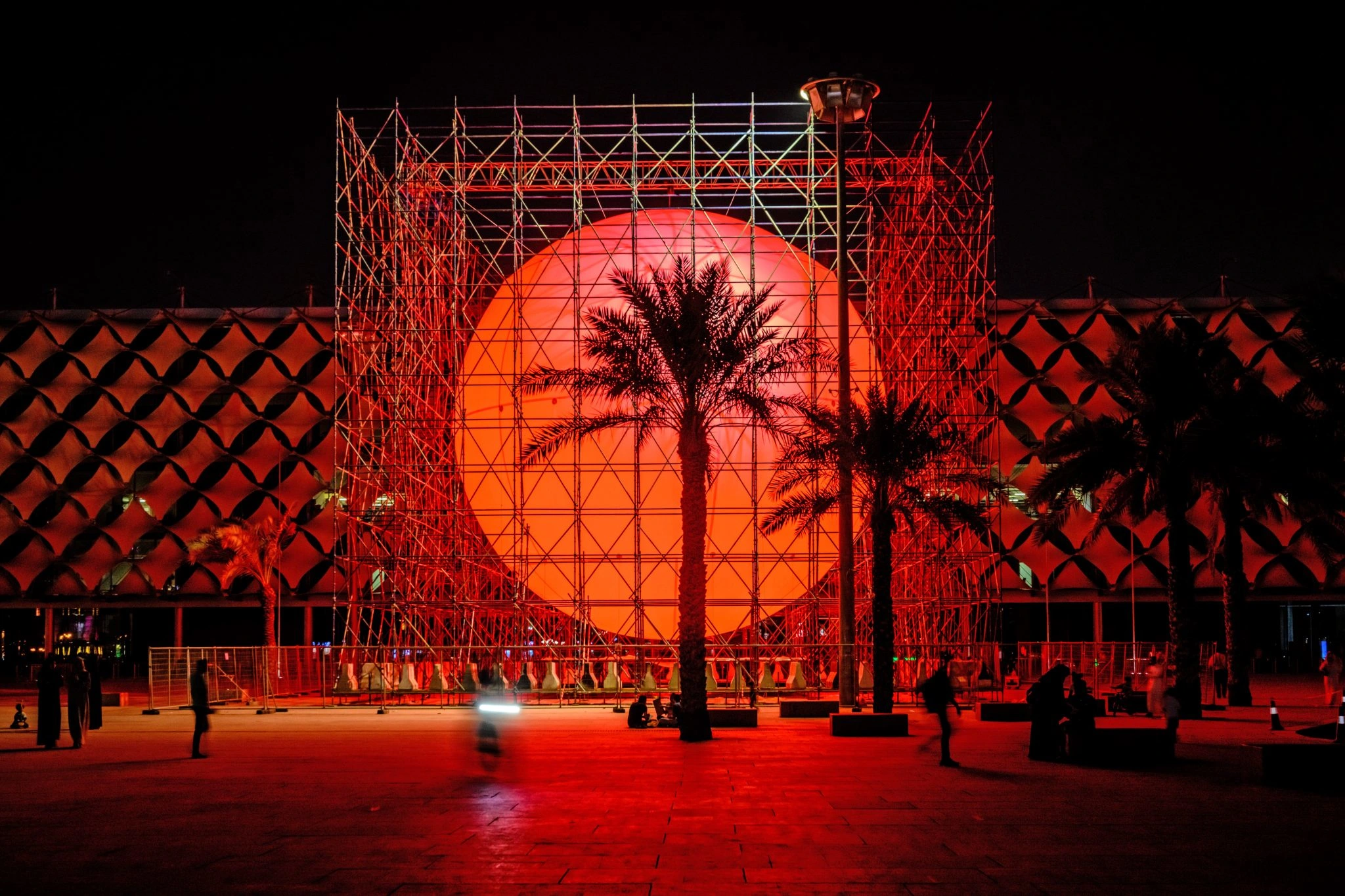
Earth by SpY. SpY, Earth, 2021. Presented at Noor Riyadh 2022. Image courtesy of Riyadh Art.
How Are Artists Selected for a Public Art Festival?
At Noor Riyadh, public procurement rules shaped the artist-selection process from the outset. As Blanco-Carrasco describes it, large event companies bid to deliver the festival, each proposing curatorial themes and a list of artists and artworks. The Noor Riyadh team evaluated the tenders and appointed a vendor.
Selection did not stop there. His team, he says, already knew much of the artist landscape and traveled to see who else could take part. Once a vendor was appointed, they worked closely with its curators and pushed back on any public art installation they felt would not suit its site.
The reasons ranged from cultural sensitivities to location. The local team knew the city well enough to advise on "which artworks work better in the wadis versus which artworks work better in an urban setting, like KAFD, the King Abdullah Financial District." Some works were dropped, others added, and the two teams agreed the final selection together.
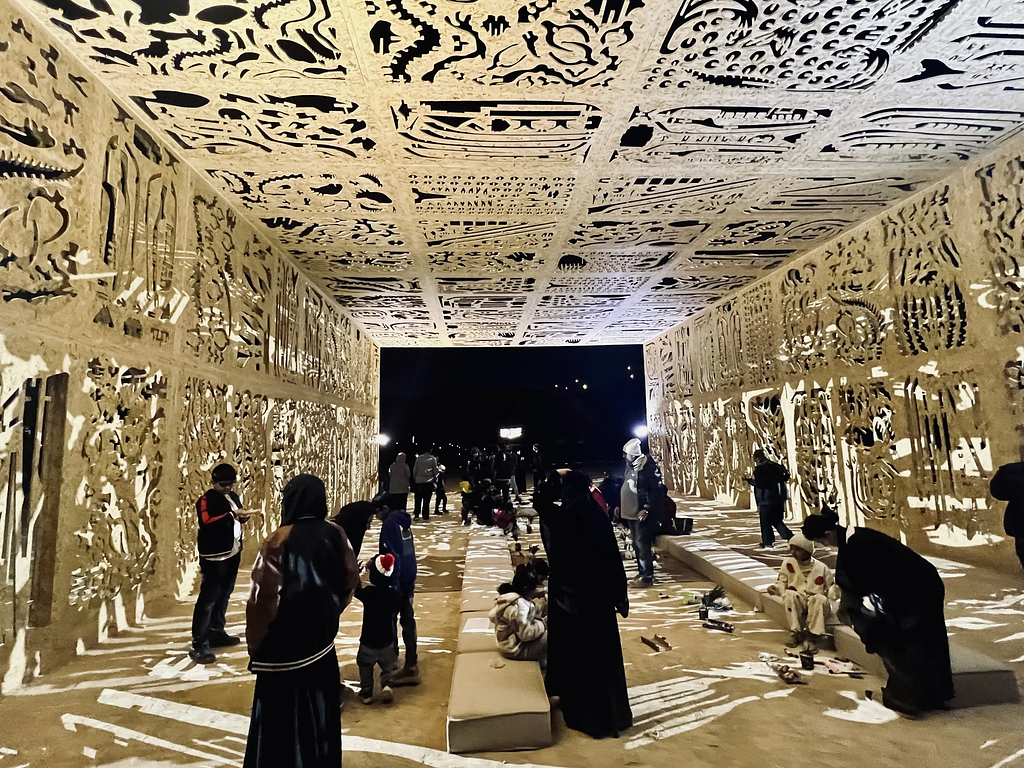
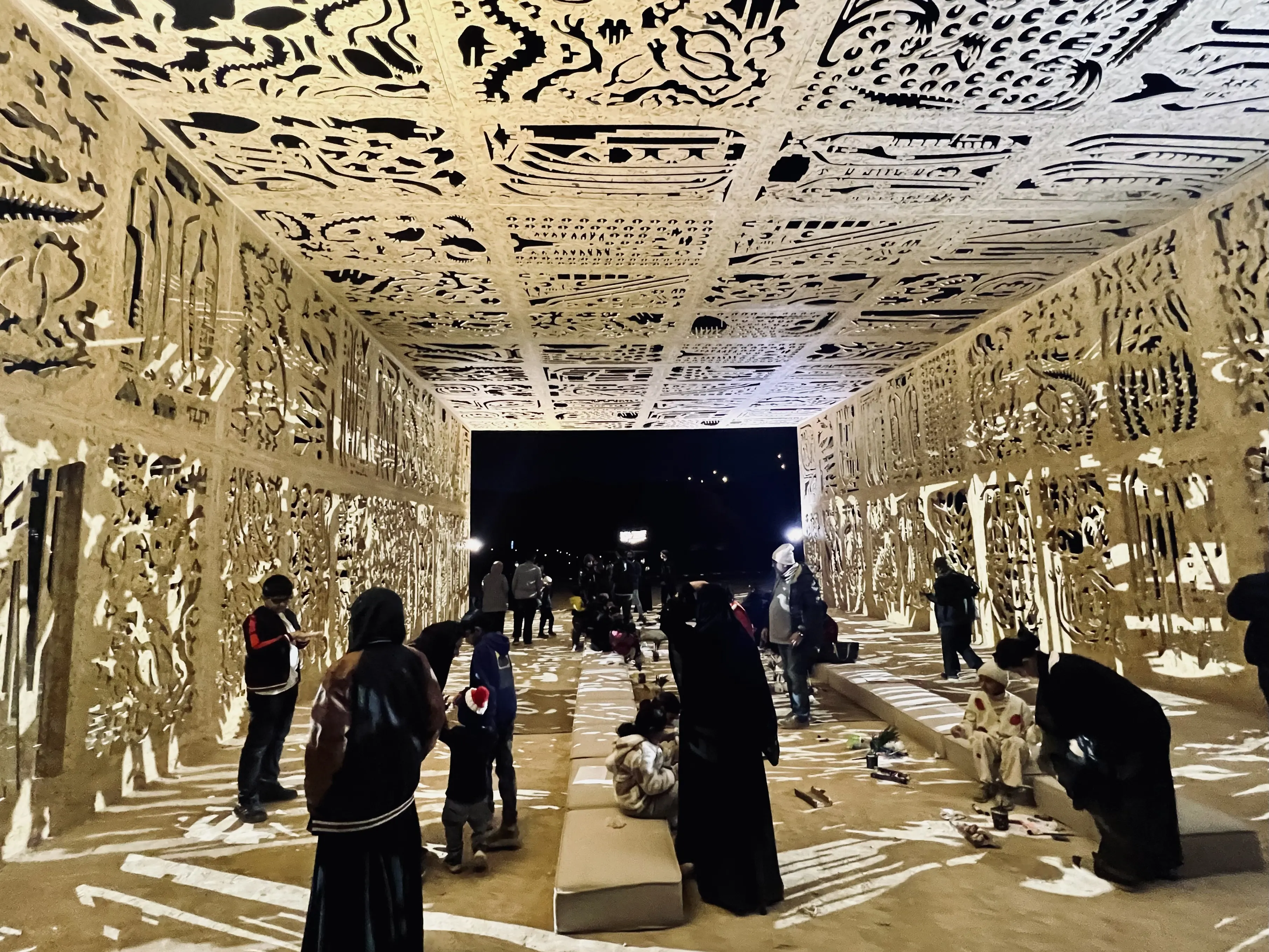
Tree House. Ayman Yossri Daydban, Tree House, 2023. Commissioned for Noor Riyadh 2023. Image courtesy of Riyadh Art.
What Does a City Gain From Long-Term Cultural Programming?
Blanco-Carrasco sees Noor Riyadh's value in what it leaves behind between editions. The first effect he names is social: "it opens opportunities to a lot of students and young professionals to enter the creative sector," through internships, apprenticeships and first jobs across the festival and its suppliers.
The second is economic. "When we started, we had to import a lot of the, let's say, AV, so projectors or lighting equipment or cables or generators." In his view, demand from the events sector has since helped local small and medium enterprises supply that equipment. "So everything becomes cheaper, easier to access, also creates jobs in the local economy."
The third is reputation. "Then you can look into what is the impact in terms of city branding and how many people will visit the city," he says, whether from elsewhere in Saudi Arabia, the wider region or further afield.
The hardest layer to measure is quality of life. "Am I happier to live in Riyadh now that I know I can go to a public art event like Noor Riyadh, which is world-class, on these weekends," he asks, if it "makes my living in the city more interesting, more fun."
Taken together, these effects suggest that cultural programming can function as a form of urban infrastructure, rather than simply as a recurring event.
What Makes a Brand a Partner Rather Than a Sponsor?
Blanco-Carrasco sees sponsorship becoming more sophisticated. "Years ago ... things used to be a bit more transactional, in which you pay some money and then we give you some benefits and we put your logo, and that's about it."
At Noor Riyadh, many partners contributed as venues: "organizations that actually lend their spaces and their staff and their team for the festival." The festival brought the artwork, and the venue handled much of what surrounded it. Others came from food and beverage, hotels and airlines, a fit he describes as one that "obviously makes a lot of sense when you're flying and hosting people around."
He acknowledges that Noor Riyadh has room to grow here, particularly with luxury, telecom and banking brands, and points to the Diriyah Biennale Foundation as one institution in the kingdom that has gone further. He also expects demand to rise, because "the public sector is definitely looking at the private sector to contribute more and more as part of the percentage of the investment of these programs."
What Can Experiential Marketing Learn From Noor Riyadh?
Noor Riyadh is a city festival, not a brand campaign. But the questions Blanco-Carrasco worked through are the same ones CMOs face whenever a brand enters public space or commissions cultural work. In our view, his experience points to five lessons.
Design for the place, not the format. Noor Riyadh studied what tied other festivals to their cities, then built a model for Riyadh, working with curators to find the right fit for each site. A brand touchpoint earns its place the same way.
Go where your audience already is. Placing works in the financial district and the wadis was meant to reach people who would not visit an exhibition. For brands, that means meeting people inside their routines, not asking them to make the trip.
Build depth beyond the first photo. Light made the works easy to share, but many, he says, also rewarded a closer look. An experience built only for a single image gives people little reason to look again.
Know which signals matter to which audience. A Guinness World Records title carries little weight in the contemporary art world, but in his view it mattered for city pride. Brands face the same question when they speak to more than one audience. What earns respect from artists and critics is not always what impresses customers, so the proof points a brand leads with should depend on who it is talking to.
Contribute, don't just sponsor. The partners he describes brought space, staff and hospitality, not only a logo. That is the difference between buying visibility and becoming part of the experience.
Noor Riyadh offers one model of what earns attention at city scale: work made for a specific place, set inside people's routines, with depth for those who look closer. For experiential marketing, scale alone does not make an experience meaningful.
Basa Studio works with brands from strategy through execution to create public art installations and cultural experiences with this kind of depth. To explore what that could look like for your brand, talk to us.
Related creative stories
Browse through other features, interviews and guides to discover creative brand collaborations, meet innovative artists and creators, find out how new artforms are energizing advertising, & more.
We're excited to hear from you! If you're looking for artistic solutions for your next creative marketing campaign, send us your briefing. We can also help create a killer concept if you're in an early ideation phase. Check out our services for more.
Send your briefing
About you
THANK YOU
Your inquiry has been sent
We have received your inquiry. We'll get back to you within 24-48 hours to discuss your project. If you need urgent assistance, reach us on WhatsApp: +49 176 432 64506. In the meantime, we invite you to explore our insights, case studies, and lessons from building culturally grounded brand experiences.
Please contact us by phone if you're not able to reach us via this form.
THANK YOU
We have received your inquiry. We'll get back to you within 24-48 hours to discuss your project. If you need urgent assistance, reach us on WhatsApp: +49 176 432 64506. In the meantime, we invite you to explore our insights, case studies, and lessons from building culturally grounded brand experiences.
We use cookies to help empower our artists and make them accessible to clients. Check out our Privacy Policy and Terms of Service to see how your data can make a difference.