Trade show brand design decides whether your fair presence earns attention or disappears into the hall.
The Problem With Most Fair Stands
Walk any major trade fair — Salone del Mobile, BAU, Eurobike, Art Basel's satellite fairs — and you will notice something: most stands are competently executed and immediately forgettable. The lighting is correct. The brand colours are present. The product is displayed. And within thirty seconds of walking past, you cannot remember which company it was.
This is not a budget problem. Many of the forgettable stands cost as much as the memorable ones. It is a framing problem. Most brands approach fair participation as an obligation — a cost of showing up in their category — rather than as a strategic opportunity to define how the industry perceives them. The result is a hall full of stands that compete on the same visual vocabulary: backlit panels, modular systems, reception counters, and branded literature. Each one individually coherent; collectively, indistinguishable.
The cost is not just aesthetics. In a room where your entire target audience has assembled in one place — buyers, press, competitors, collaborators — the failure to create a distinctive brand presence is a commercial decision. Visitors remember what stopped them. They photograph what surprised them. They write about, post about, and return to what felt genuinely different. A forgettable stand does not just miss an opportunity. It actively confirms that your brand has nothing unexpected to offer.
Why Exhibition Design Gets Defaulted to the Exhibition Contractor
Part of the problem is structural. Most brands brief their trade show participation to exhibition contractors — specialists in modular systems, logistics, and fair regulations. Those contractors are excellent at what they do. But their expertise is execution, not cultural positioning. They build what they are briefed to build, and most briefs describe a stand in terms of square metres, product display requirements, and brand guidelines — not in terms of what the brand should feel like, what story it should tell, or what a visitor should carry away in their memory.
The cultural brief — the question of what this stand should mean — is rarely written. And when it is not written, the exhibition contractor fills the gap with what they know: tested formats, safe configurations, visual competence.
The brands that break through at fairs are the ones who write that cultural brief first and treat the stand as a designed environment with a point of view — not a product display with better lighting.
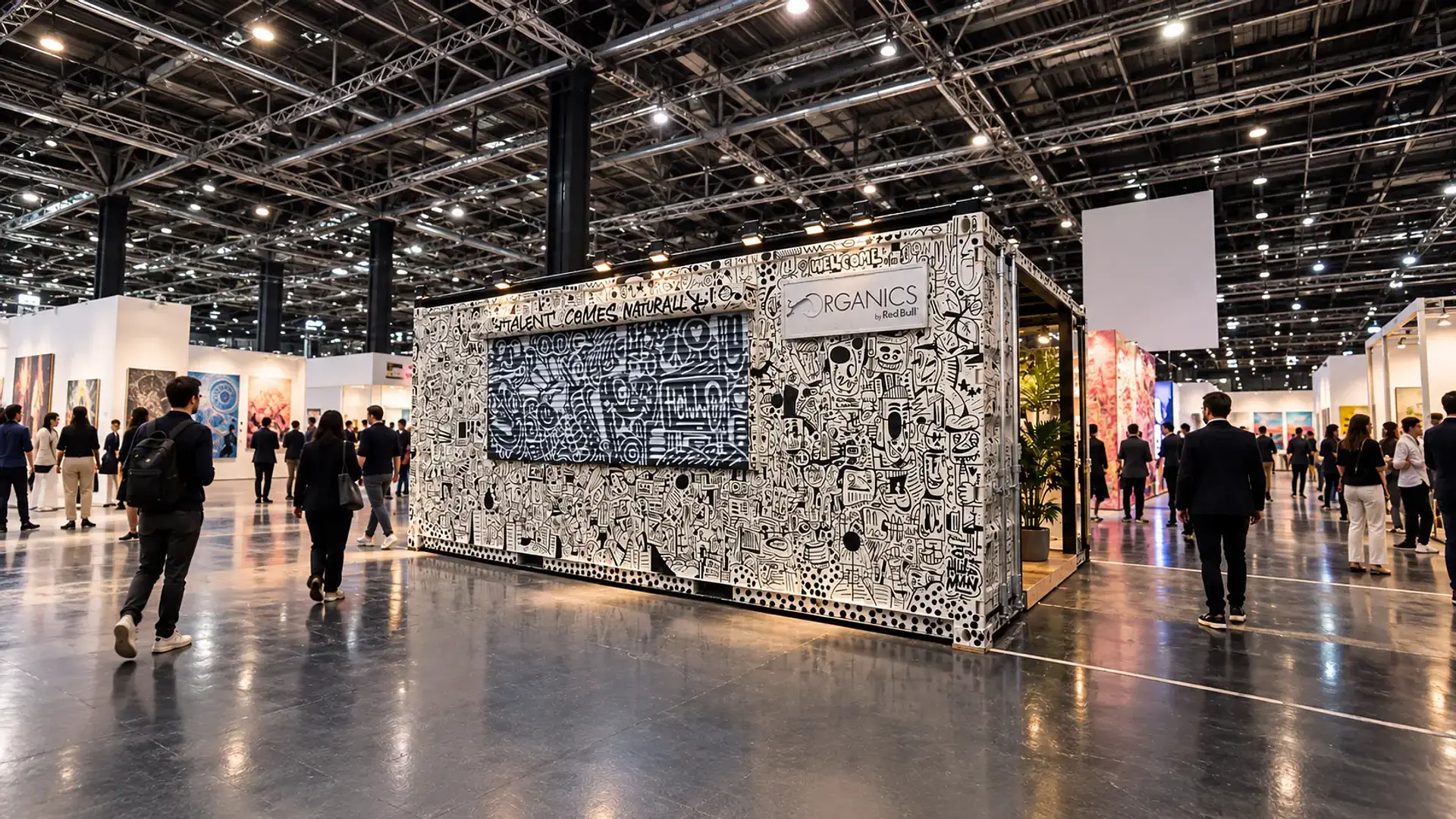
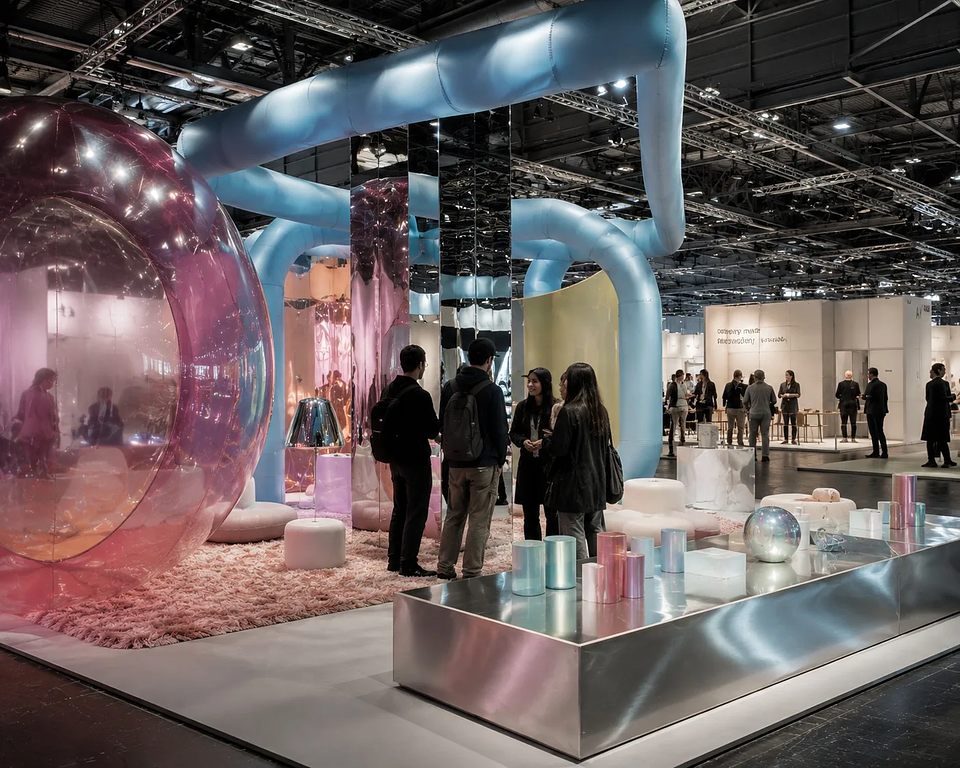
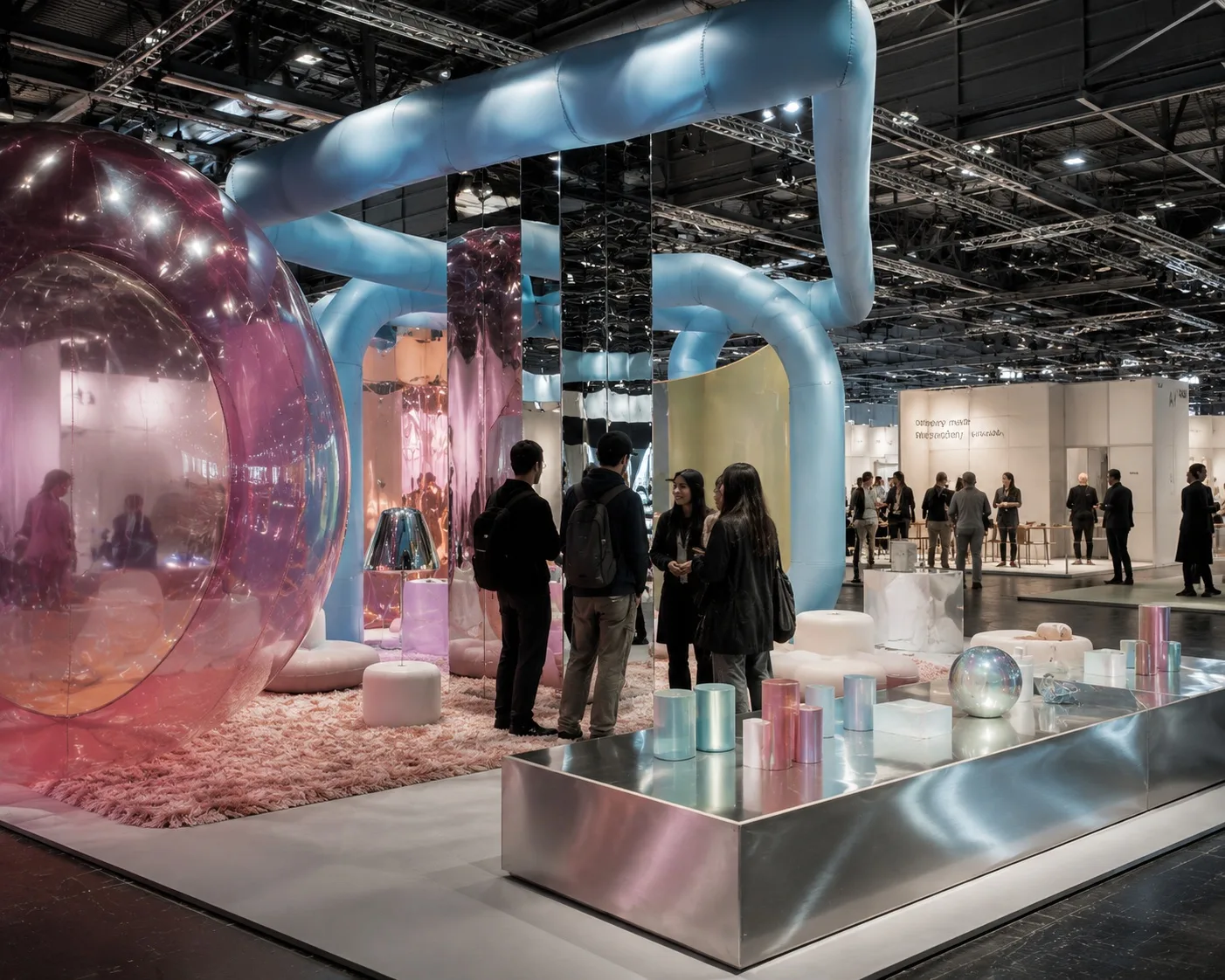
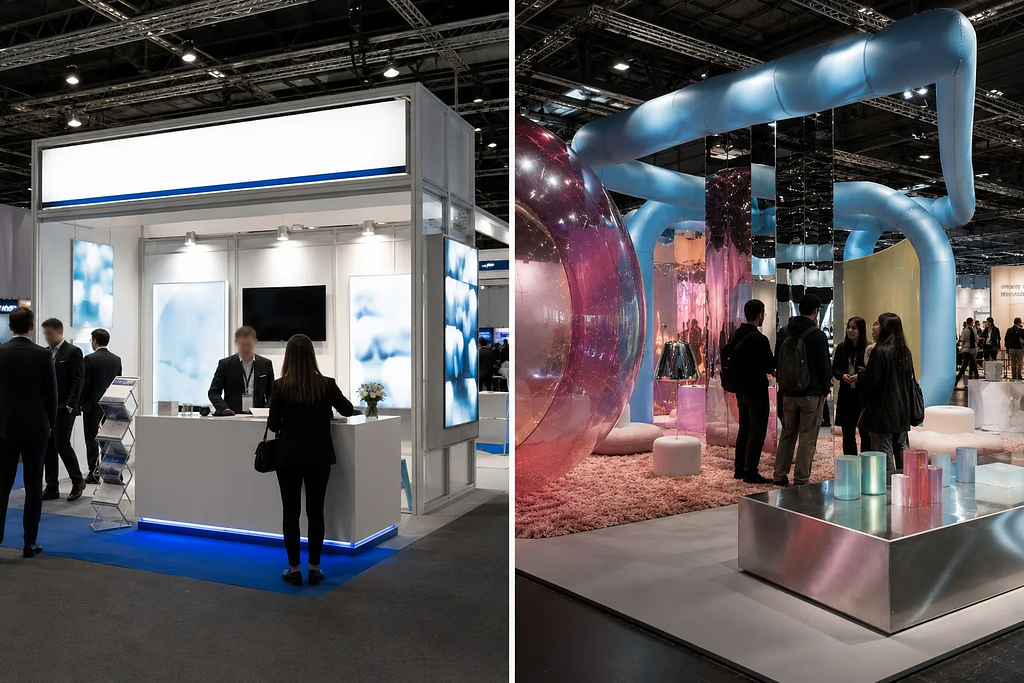
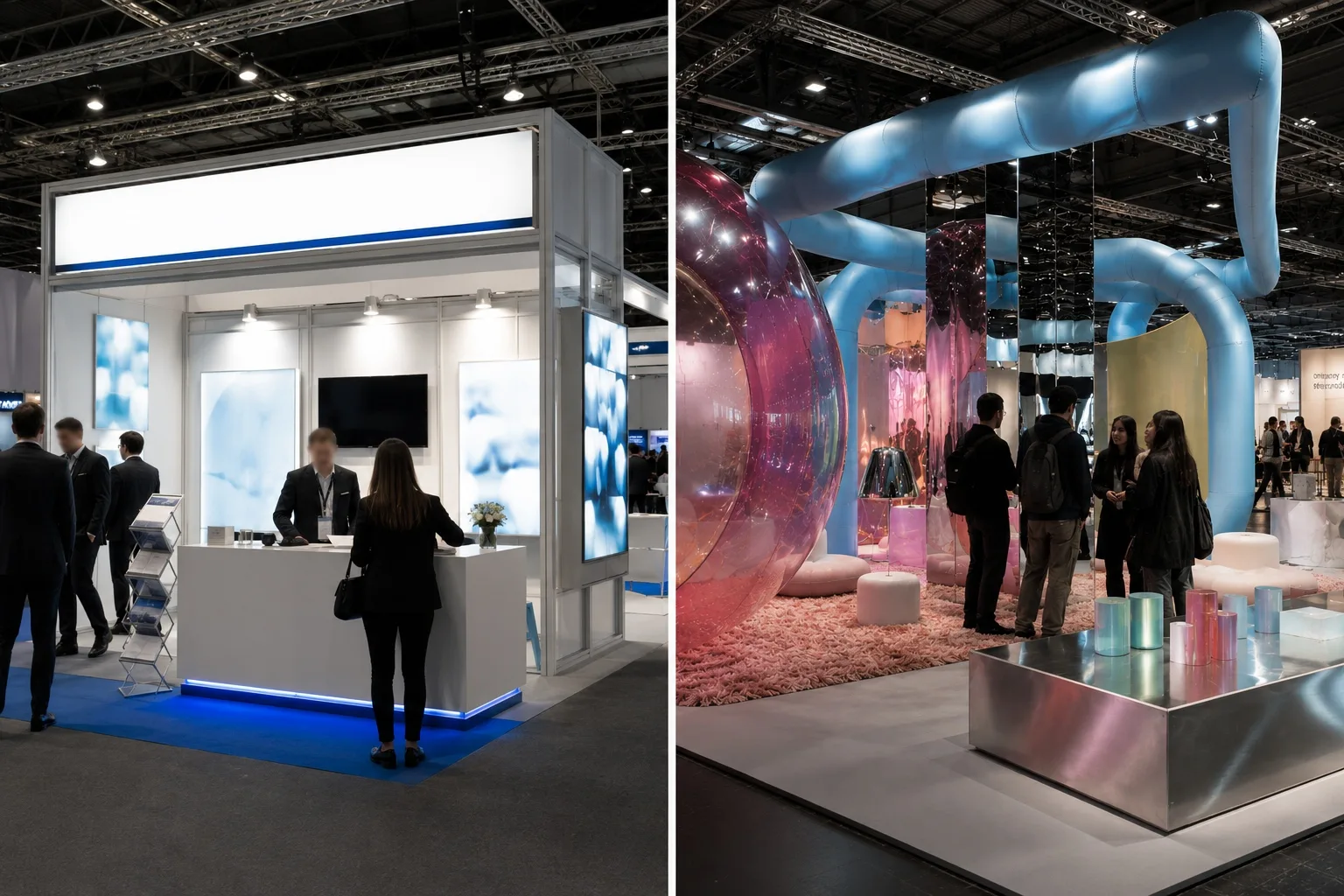
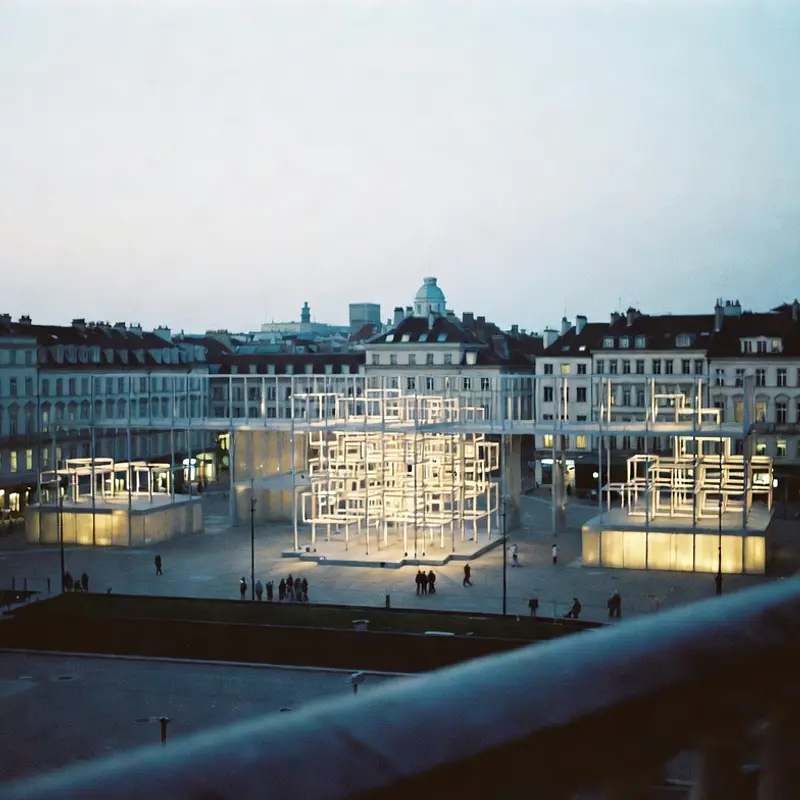
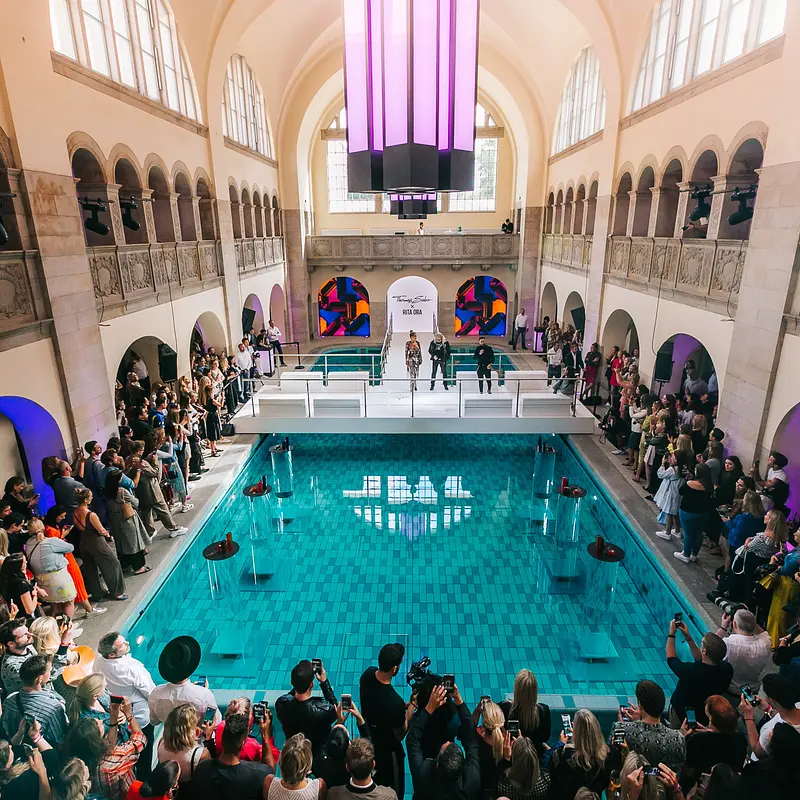
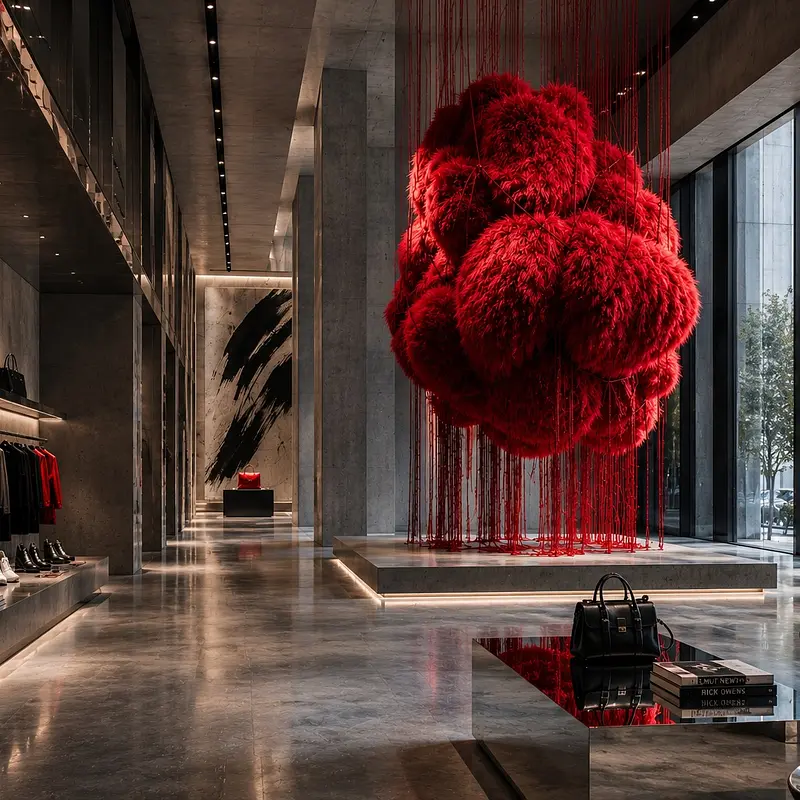
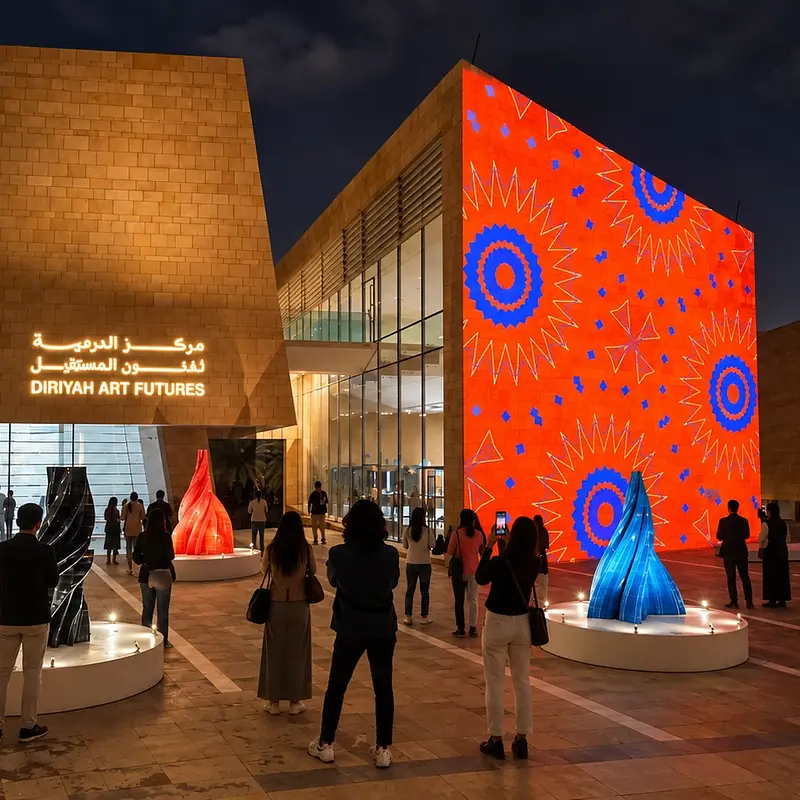
A fair stand designed as a cultural environment — not a branded enclosure. The contrast with adjacent conventional stands is immediate. AI-generated.
Exhibition Design as Cultural Positioning
The brands that are consistently remembered at fairs share a characteristic: they treat their stand as a cultural statement about what they believe, not an advertisement for what they sell.
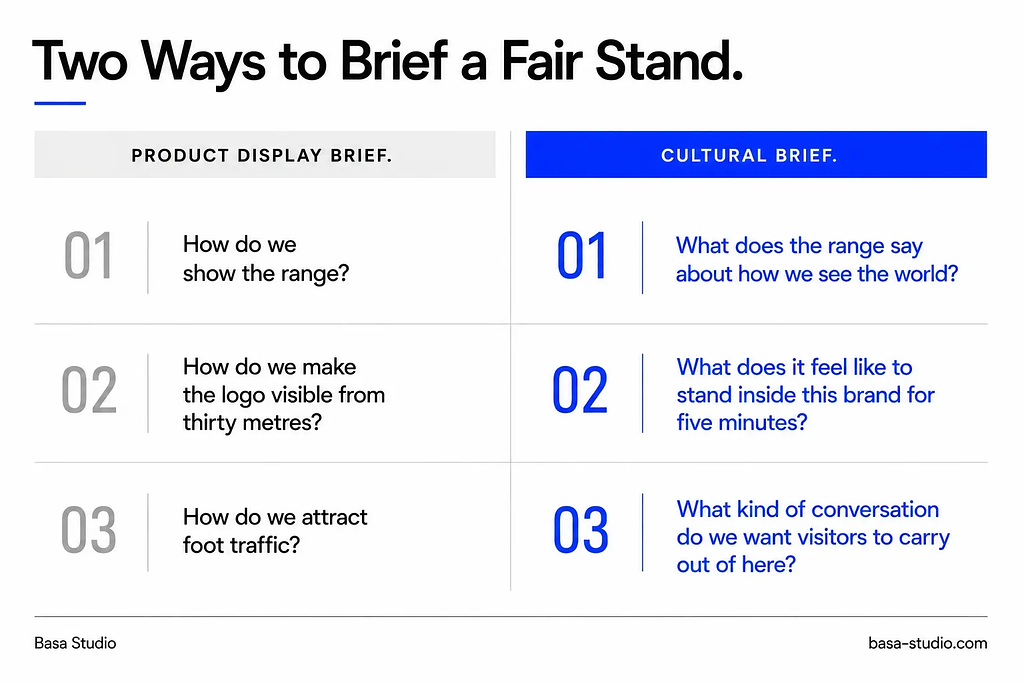
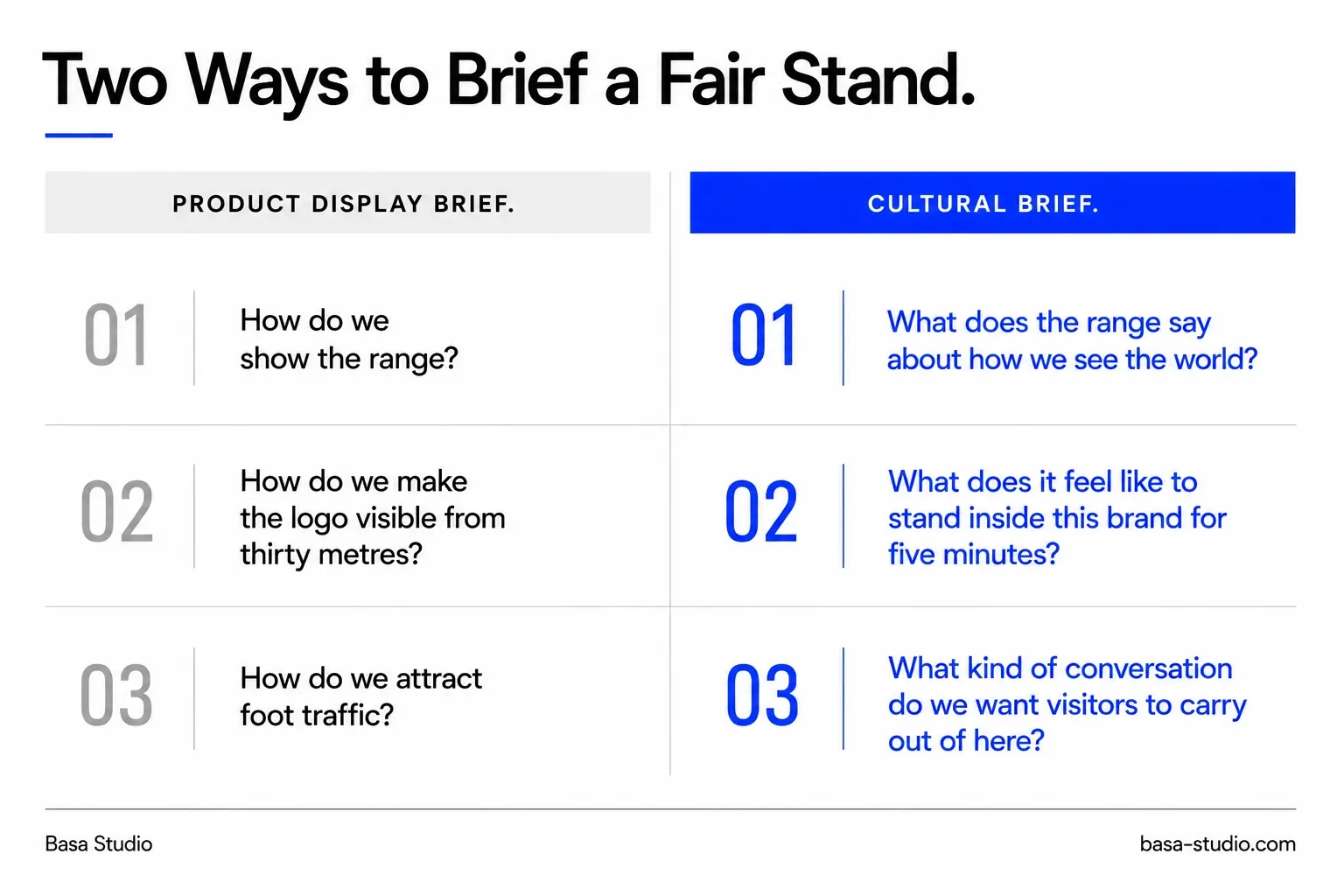
This distinction changes every design decision. A cultural brief asks different questions than a product display brief. Not how do we show the range? but what does the range say about how we see the world? Not how do we make the logo visible from thirty metres? but what does it feel like to stand inside this brand for five minutes? Not how do we attract foot traffic? but what kind of conversation do we want visitors to carry out of here?
Product display vs. cultural brief in trade show design.
At Salone del Mobile, this approach is most visible among the brands that have built lasting industry authority — not through the loudest stands, but through the most considered ones. Over the last five years, an increasing number of luxury brands have begun treating Salone as something closer to a cultural platform than a product fair — a shift W Magazine's 2026 fair coverage captures well. The stands that stop visitors, that draw comparisons to Art Basel in terms of how they generate cultural conversation, are built on exactly this logic.
What Artists and Artisans Add That Exhibition Designers Cannot
Standard exhibition design operates within a fixed visual vocabulary: systems, panels, lighting rigs, branded surfaces. That vocabulary is legible and efficient. It is also shared by every other exhibitor in the hall.
Artists and artisans introduce something that the exhibition system cannot: cultural specificity. A ceramic artist brought in to produce objects for a stand is not decorating a space. They are encoding a claim about material, process, and attention to detail that visitors read — often without consciously analysing it — as evidence of brand character. The objects carry an authority that branded merchandise does not. The imperfection of a hand-thrown form communicates more about craft commitment than a paragraph of copy could.
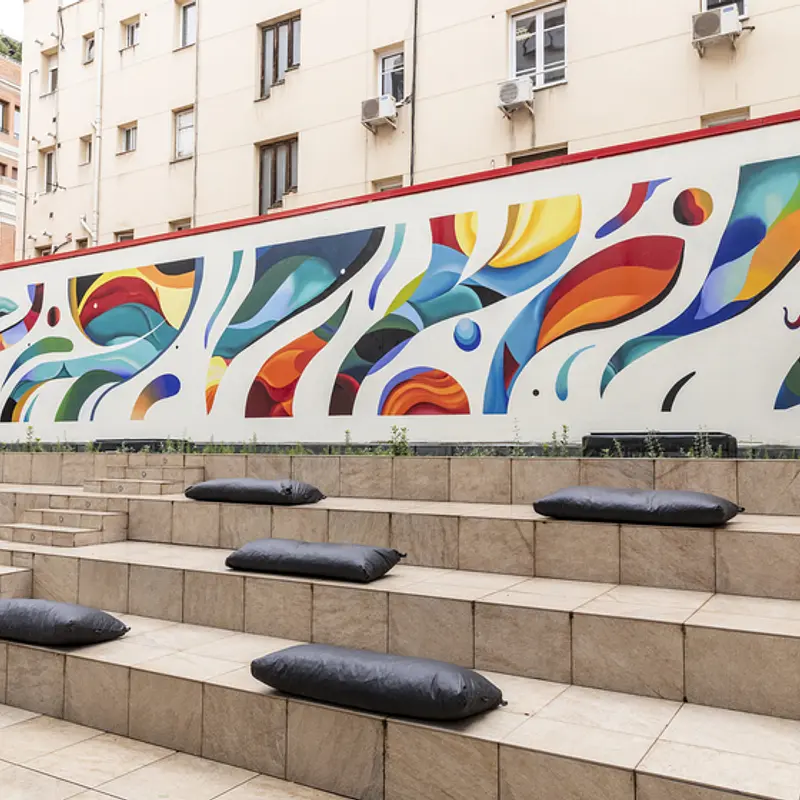
The same logic applies to spatial decisions: a textile artist who patterns a wall surface, a furniture maker who produces the stand's sole seating piece, a muralist who responds to the brand's history in a work that exists only for the fair's duration. Each of these is a cultural act — one that creates something that cannot be replicated in the next hall, and cannot be downloaded from a brand guidelines deck.
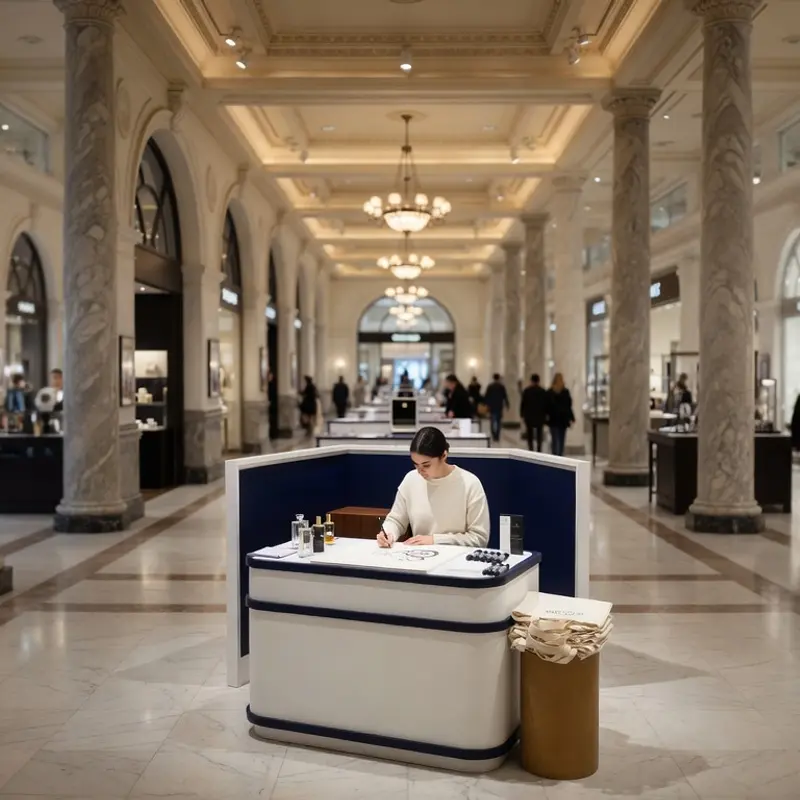
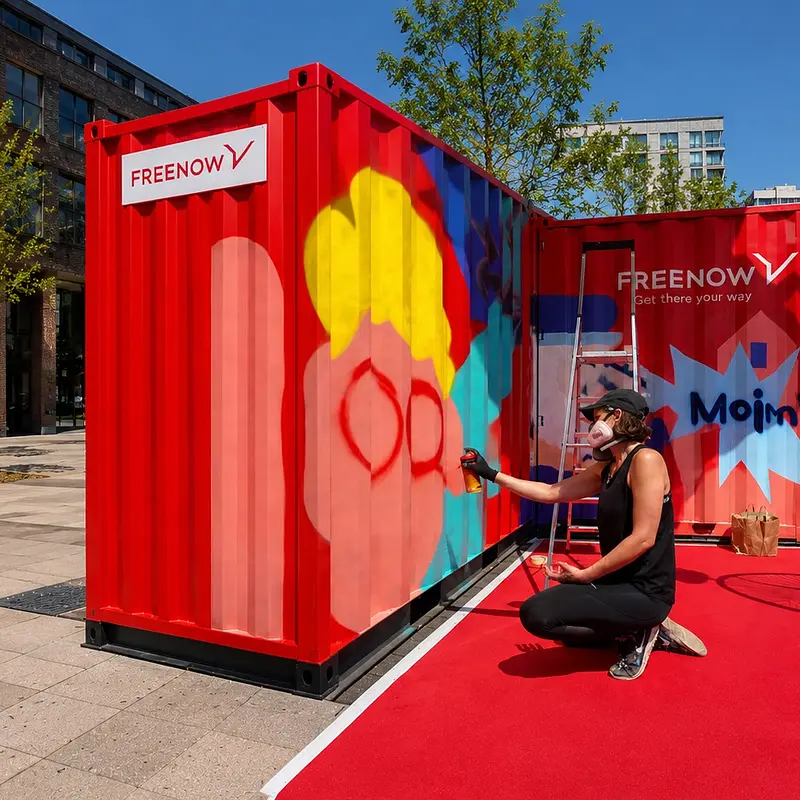
This extends to what happens during the fair itself. A live artist working at a stand — producing something in front of visitors, responding to the brand's brief in real time — creates a fundamentally different quality of encounter than a static display. The visitor becomes a witness rather than a browser. Basa Studio's Biotherm live sketching activation, though executed in a retail context, demonstrates the mechanics of exactly this dynamic: what changes commercially and experientially when an artist makes something in front of someone.
From a commercial perspective, the effect is measurable in visitor behaviour. Stands with a genuine artistic or artisan element stop people differently. Visitors slow down. They photograph. They ask questions. The conversation that starts at a stand with cultural depth is a different quality of conversation than the one that starts at a product display.
The Earned Media Lifecycle of a Culturally-Led Stand
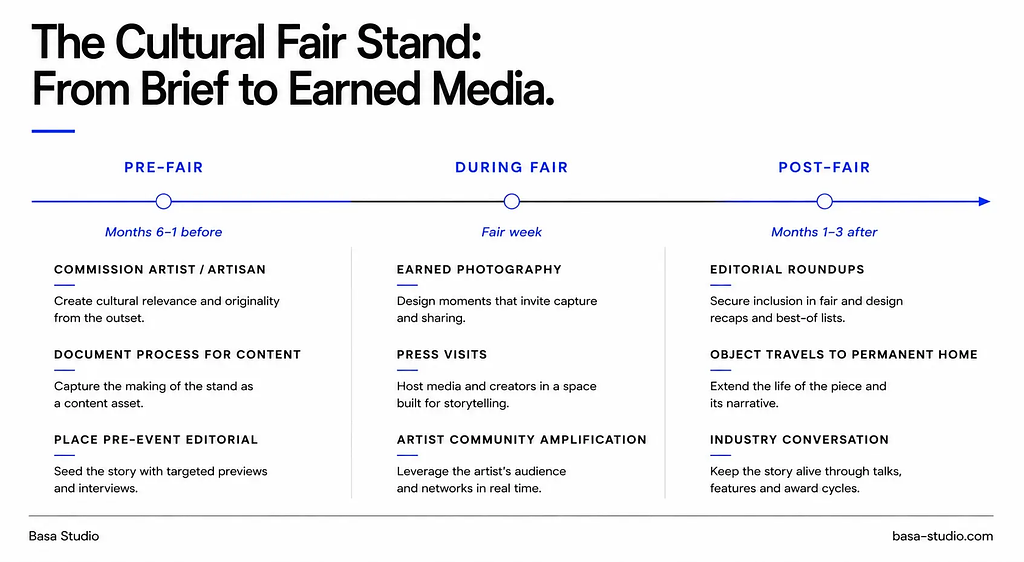
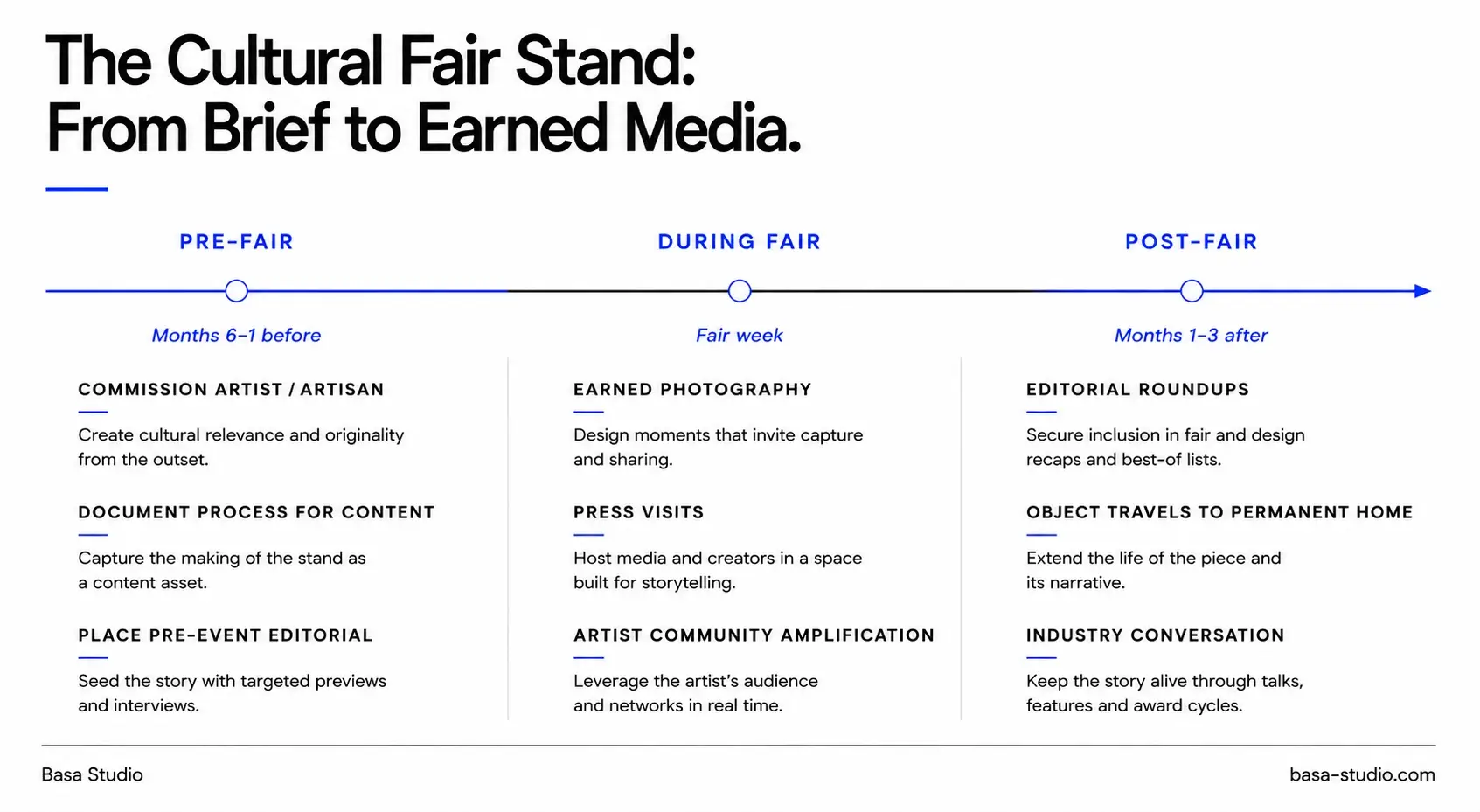
A well-designed fair stand does not perform only during the fair. It generates value across three phases — and most brands capture only one of them.
Before the fair: A culturally distinctive brief creates genuine pre-event content. The commissioning of an artist or artisan for the stand is a story in itself — one that design press, industry media, and cultural publications will cover if pitched correctly. The process documentation (material selection, studio visits, work in progress) creates content that builds anticipation without disclosing the final result. Brands that announce a commissioned work before the fair arrive at the stand with a pre-qualified audience.
During the fair: Distinctive stands get photographed — by visitors, by press, by industry photographers, and by the artists' own communities. This is structurally different from what happens at a standard stand, where the only photography is the exhibitor's own documentation. Cultural exhibition design generates earned photography that reaches audiences the brand would otherwise have to pay to access. Salone del Mobile's own post-fair numbers tell part of the story: over 6,000 press and media attendances at the 2026 edition, more than half from international outlets — a reminder of the editorial scale available to brands whose stands give journalists something worth publishing.
After the fair: The stand lives on in editorial. Design media publish fair roundups that feature the stands worth remembering. Industry publications write about the brands that made a cultural statement. The commissioned work may travel — to a gallery, a permanent installation, or the brand's own spaces. The fair becomes an episode in a longer cultural narrative rather than a closed event.
The cultural fair stand lifecycle: from artist commissioning to earned media.
Named Brands Worth Studying
Several brands have built recognised reputations for their fair presence — illustrating what cultural exhibition design looks like when it becomes a consistent strategy rather than a one-off experiment.
Hermès at Salone del Mobile has, across multiple editions, commissioned architects and designers to create environments rather than booths. At Milan Design Week 2024, Hermès centred its La Pelota presentation on an installation exploring the materiality of earth — new collection objects alongside archival pieces dating to the 1930s, per Wallpaper* — the stand as a material argument about the brand's relationship to craft over time, not a display of the current season.
Vitra at Salone del Mobile applies the same logic at a structural level. For its 2018 Salone presence, Vitra commissioned Robert Stadler to curate an installation grouping some 200 objects — icons, prototypes, rejects — into nine anthropological tribes. Wallpaper* covered it as exactly what it was: furniture used to explore its social role, not demonstrate range.
BMW's partnership with Art Basel demonstrates that cultural exhibition design is not limited to the design fair context. BMW Group's cultural engagement, documented across more than 50 years of press records, began in 1971 with a commission from Gerhard Richter and has since grown to over 100 long-term initiatives across art, music, architecture, and design. At Art Basel Miami Beach 2025, the brand presented a sculptural installation by artist Kennedy Yanko — a direct dialogue between the artist's material practice and the brand's design ethos, built around shared values of experimentation and craft rather than product placement, per BMW's own press release.
The difference between a branded stand and a cultural stand is visible in visitor behaviour. One is walked past. The other is walked into.
Trade Show Brand Design: Working Within the Constraints
Cultural ambition at a fair does not require ignoring practical reality. Footprint limits, fair regulations, loading restrictions, and compressed timelines are real — and a well-written trade show brand design brief works within them from the start, not around them.
How Much Lead Time Does Exhibition Stand Design Require?
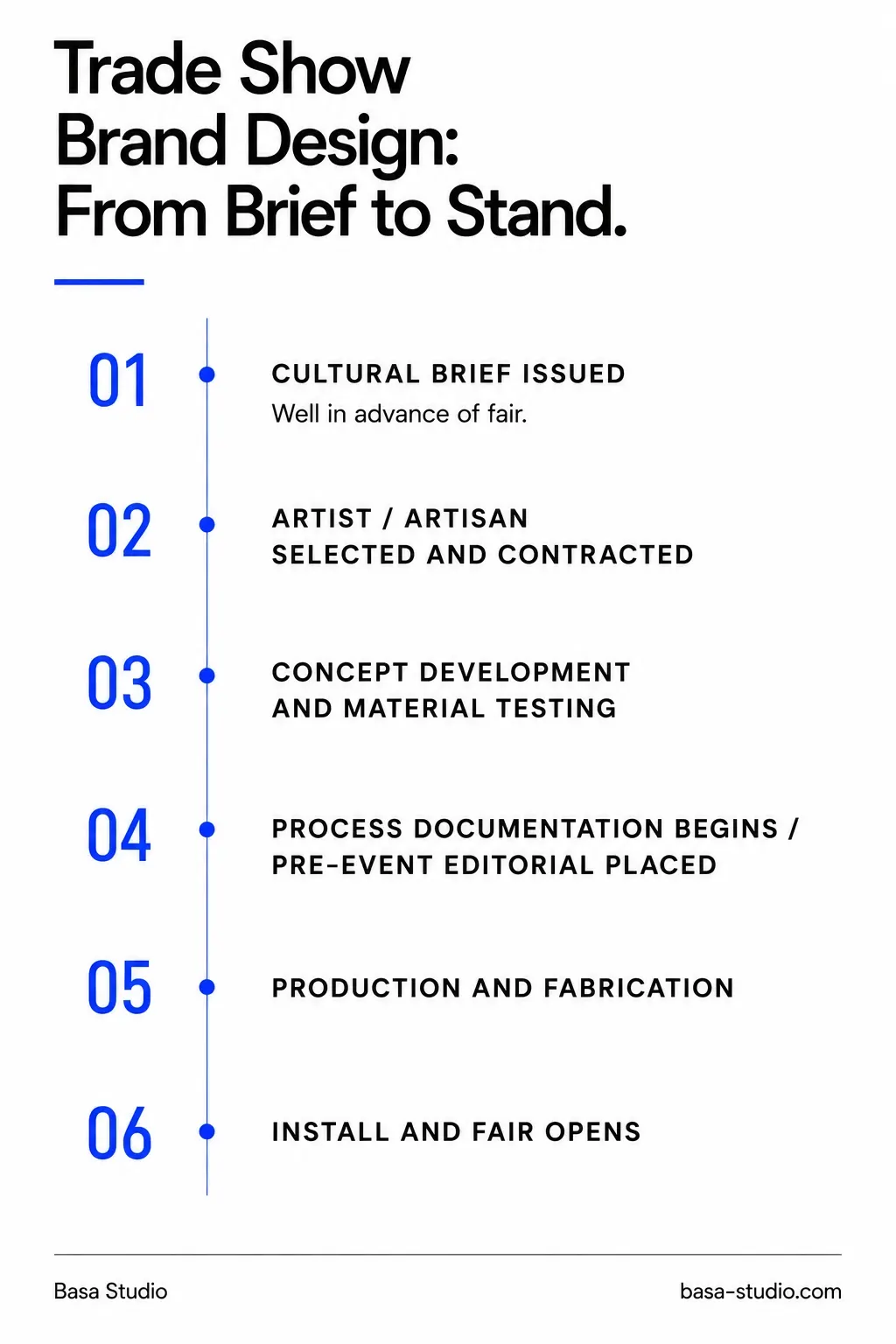
A culturally ambitious brief needs to be issued significantly earlier than most brands plan for — commissioning an artist or artisan, developing a concept, and producing bespoke work takes time that a modular stand system simply doesn't require. Brands that treat exhibition participation as a last-minute logistics task will always end up with a logistics outcome.
What Fair Regulations Mean for Cultural Exhibition Design
Height restrictions, material specifications on finishes, and sightline rules governing neighbouring stands are consistent across most major fairs. They are constraints, not barriers. A skilled cultural brief designs within them — a smaller footprint demands more concentrated cultural intensity, not a scaled-down version of a large-stand idea. The most distinctive stands at any major fair are often among the most restrained in scale.
How to Structure a Cultural Brief for Brand Presence at Fairs
Not every element of a stand can carry cultural depth, nor should it. The most effective culturally-led stands identify one focal point — a commissioned object, a material surface, a spatial decision — and invest in it without compromise. The rest of the stand recedes. The focal point carries the claim. Trying to make every element culturally significant typically results in none of them landing.
Why Process Documentation Is a Strategy Asset
The production of a culturally ambitious fair stand generates content at every stage — material selection, studio visits, fabrication, installation. Brands that treat this documentation as a content asset rather than an internal record arrive at the fair with a story already in circulation. The stand opens to an audience that already knows what to look for.
The key stages of trade show brand design, from cultural brief to installation.
What a Culturally Designed Fair Stand Actually Delivers
Reframed: a trade fair is one of the most concentrated brand touchpoint opportunities in the calendar. The audience has self-selected. They are in the hall specifically because they care about your category. They are comparing you — consciously or not — against every other brand in the room. The question is not whether to participate. It is whether to participate as wallpaper or as something worth remembering.
Trade show brand design that treats the stand as a cultural touchpoint — with a genuine brief, a genuine cultural collaborator, and a genuine point of view — does not just perform better during the fair. It generates commercial and reputational value across the weeks before it and the months after it. That is a return on investment that a modular stand system, however competently executed, cannot produce. Basa Studio partners with premium brands to build fair presences with genuine cultural depth — from brief and collaborator curation to production and post-fair editorial. Start a conversation →
Related creative stories
Browse through other features, interviews and guides to discover creative brand collaborations, meet innovative artists and creators, find out how new artforms are energizing advertising, & more.
We're excited to hear from you! If you're looking for artistic solutions for your next creative marketing campaign, send us your briefing. We can also help create a killer concept if you're in an early ideation phase. Check out our services for more.
Send your briefing
About you
THANK YOU
Your inquiry has been sent
We have received your inquiry. We'll get back to you within 24-48 hours to discuss your project. If you need urgent assistance, reach us on WhatsApp: +49 176 432 64506. In the meantime, we invite you to explore our insights, case studies, and lessons from building culturally grounded brand experiences.
Please contact us by phone if you're not able to reach us via this form.
THANK YOU
We have received your inquiry. We'll get back to you within 24-48 hours to discuss your project. If you need urgent assistance, reach us on WhatsApp: +49 176 432 64506. In the meantime, we invite you to explore our insights, case studies, and lessons from building culturally grounded brand experiences.
We use cookies to help empower our artists and make them accessible to clients. Check out our Privacy Policy and Terms of Service to see how your data can make a difference.