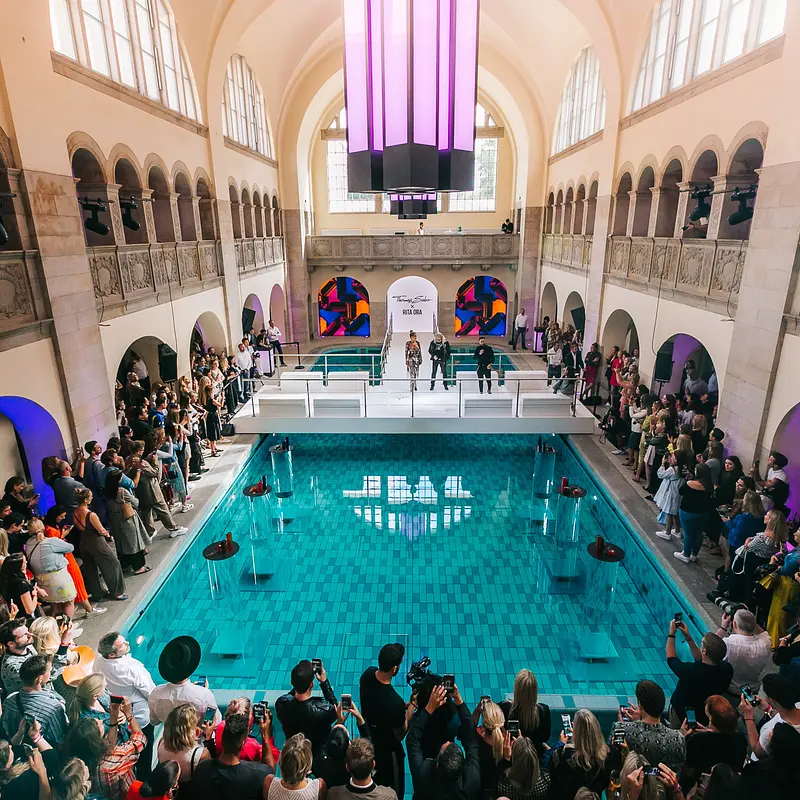
When YSL launched LOVESHINE — its new lipstick line with Dua Lipa as the campaign face — the brief went beyond a standard OOH product launch. The goal was cultural presence: a campaign that didn't just run across media placements but physically occupied the cities where YSL's audience lives. The result was a multi-format, multi-city campaign that Basa Studio executed across six cities — a permanent hyperrealistic mural in Berlin anchoring a guerrilla roadshow of projection mapping and chalk stencils across Frankfurt, Düsseldorf, Berlin, Geneva, Zurich, and Vienna — delivered in partnership with campaign orchestrators mStudio. Together, they gave LOVESHINE a cultural footprint that no media plan alone could buy.
The Strategic Logic: Depth in One City, Reach Across Six
The format mix was not accidental. Each element served a distinct strategic function.
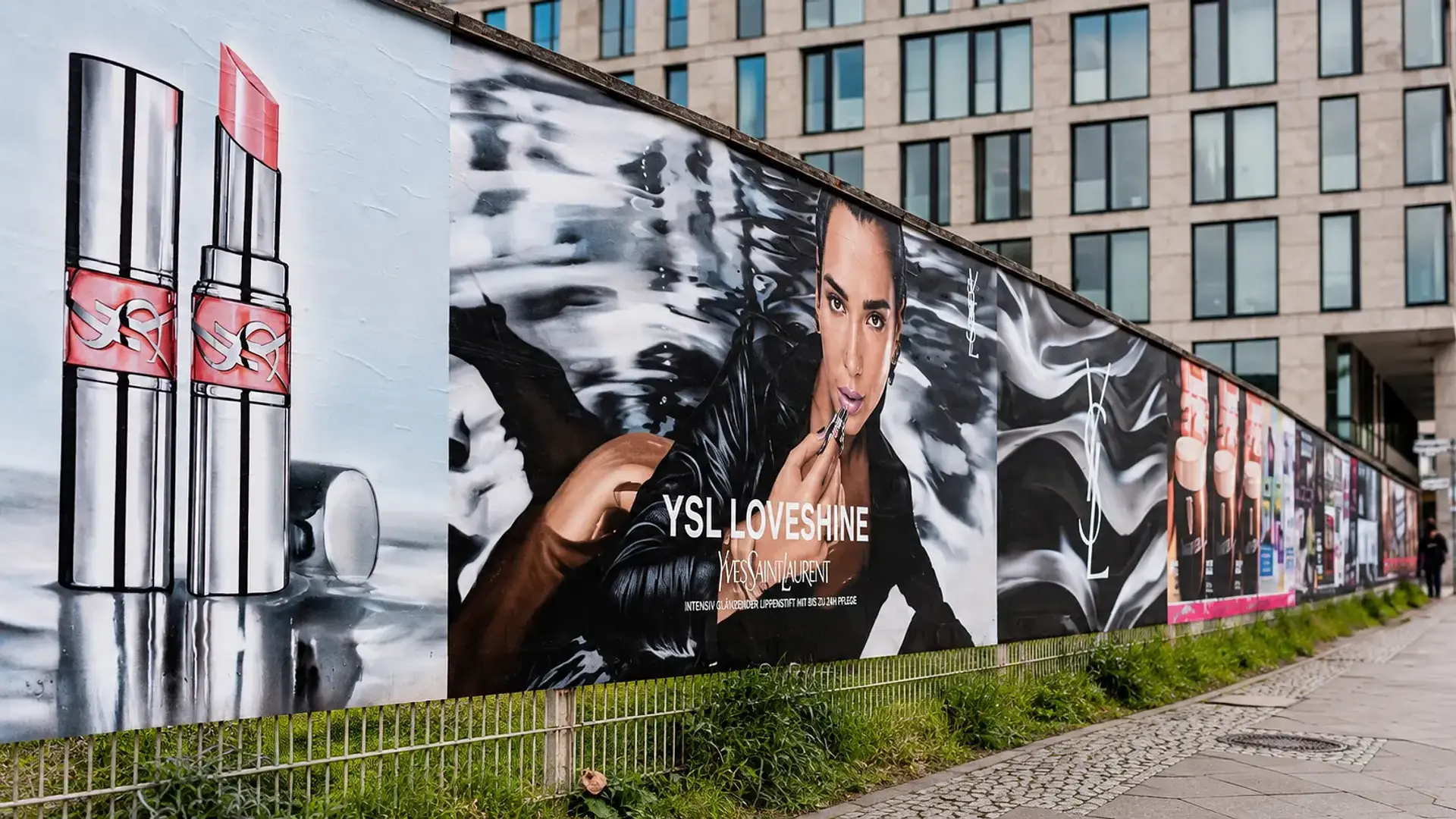
The Berlin mural was the campaign anchor — a permanent, high-craft installation that established cultural depth. One city, one wall, maximum artistic investment. The guerrilla roadshow — projection mapping and chalk stencils — was the reach mechanism, extending the campaign's momentum sequentially, city by city, across the DACH region and into Geneva and Zurich.
This combination solved a problem that large-format OOH campaigns routinely fail to address: how to create genuine presence in multiple cities without diluting the cultural quality of each activation. Renting large facades across six cities at once is expensive, logistically complex, and produces the same flattened result everywhere — a printed media buy at scale, not a cultural moment. By concentrating the highest-craft execution in a single location and using projection mapping advertising and chalk stencils as guerrilla formats for the roadshow, the campaign achieved both depth and reach without the budget of a major media corporation.
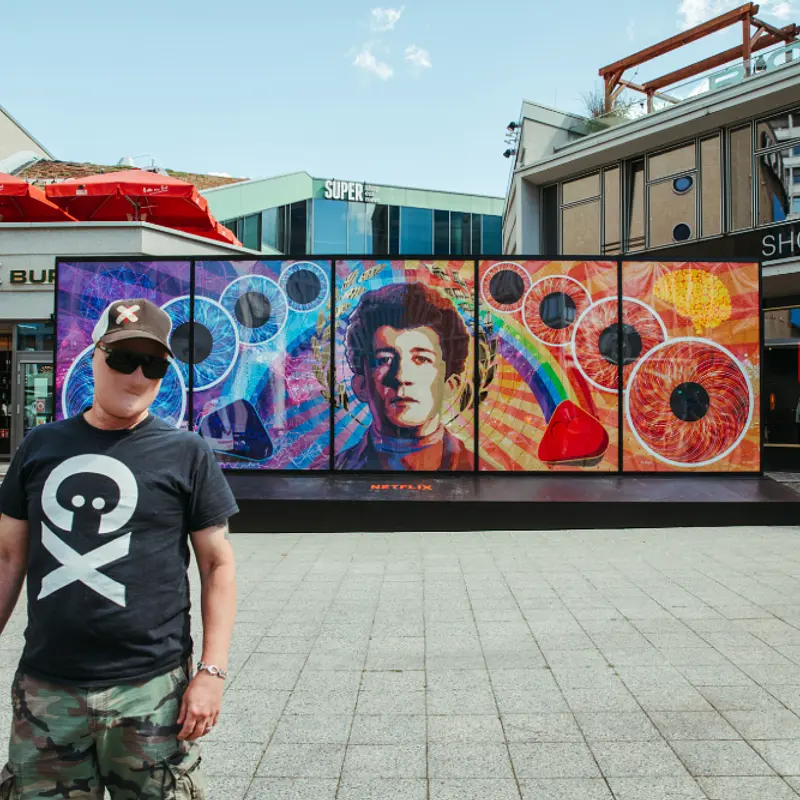
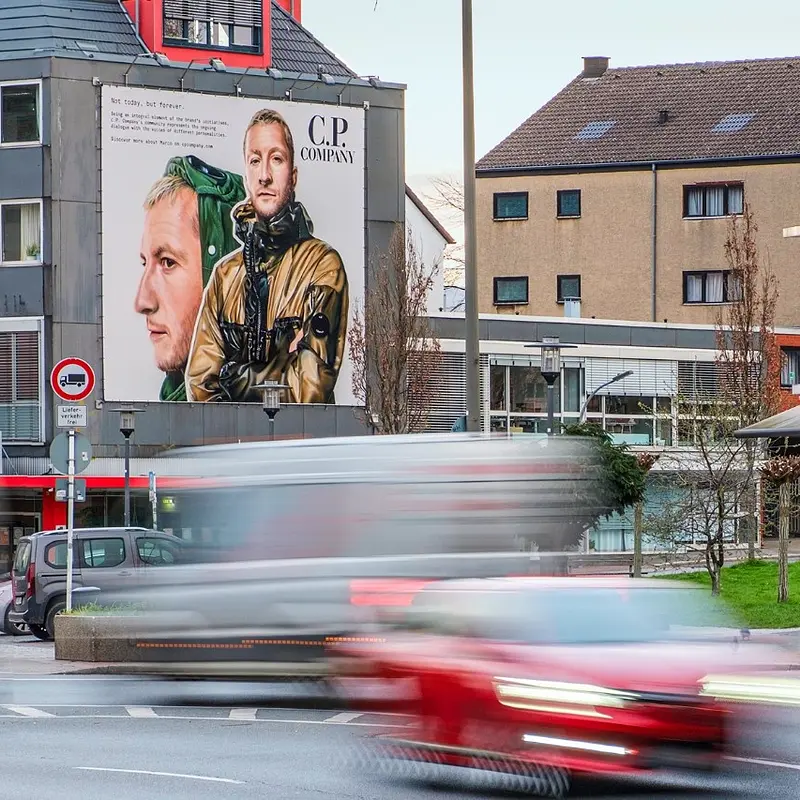
A street-level activation that brings the brand into everyday urban spaces.
The Eye-Level Decision: Why Scale Isn't Always the Answer
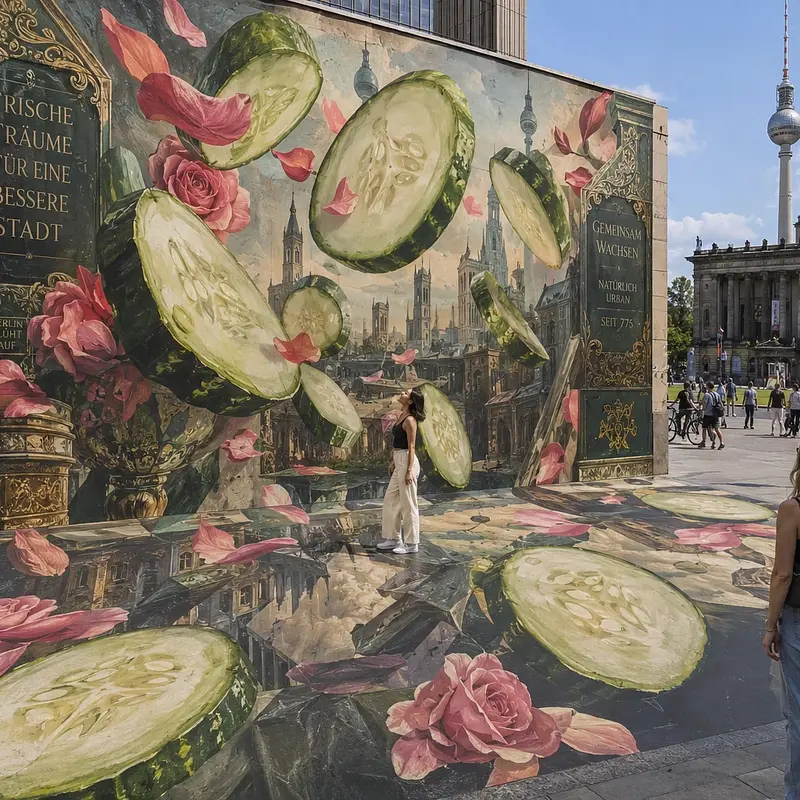
The Berlin mural ran at eye level. Not on a large facade, not elevated behind scaffolding — at the height at which a person walking past could stop, approach, and examine the surface up close. That decision shaped everything about what the mural delivered.
The practical case for eye level is straightforward: no scaffolding, no lift hire, significantly lower media costs for the wall space itself. In a campaign that required activations across six cities, the budget savings on the Berlin mural freed spend for the roadshow. Strategic efficiency isn't a compromise — it's a design constraint that, handled well, produces better outcomes than an uncapped budget.
But the creative case for eye level is the more important one. A large facade read from a distance is a media placement. A mural at human scale is an encounter. The difference in what each produces — in attention, in organic documentation, in social reach — is not marginal.
AKUT and the Craft That Made People Stop
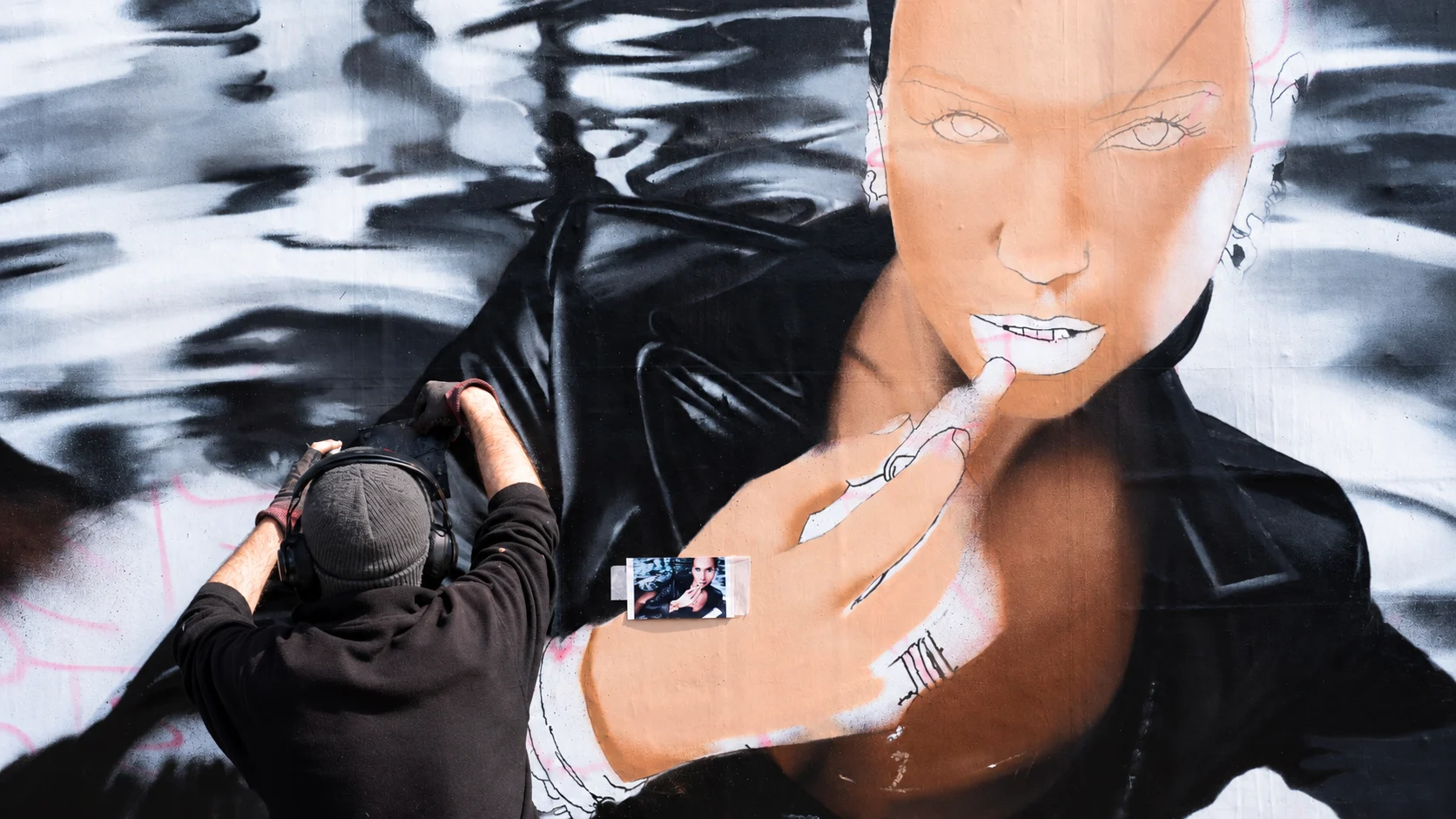
For the Berlin mural, Basa Studio enlisted AKUT — one of Germany's most accomplished hyperrealistic painters — assisted by DEMUT, with mr.bacon handling the precise rendering of logos and typography. The mural, ten metres wide, was completed in a matter of days.
AKUT's technique produces images that operate at the threshold of perception: at a glance, what you are looking at appears to be a photograph. The LOVESHINE campaign visuals — glossy, modern, the sharp precision of a studio cosmetics shot — were exactly the kind of source material that hyperrealistic painting transforms into something uncanny. The mural didn't reproduce the campaign image. It recreated it in a medium that made viewers question whether what they were seeing was paint or print, photograph or artwork.
That perceptual confusion is not a gimmick. It is the mechanism through which the mural earned organic attention. Passersby stopped during the painting process — while AKUT was still working — to photograph what they were seeing. Not because they knew a campaign was launching. Because they couldn't determine what was on the wall in front of them.
That pre-launch organic documentation — people photographing a mural before the product is even in stores — is one of the hardest outcomes to engineer through paid media. It cannot be scheduled or bought. It requires the craft to be genuinely remarkable.
The visual itself carried the campaign's identity: glossy, sleek, with the sophisticated shine that defined LOVESHINE as a product. The mural didn't describe the product — it embodied it.
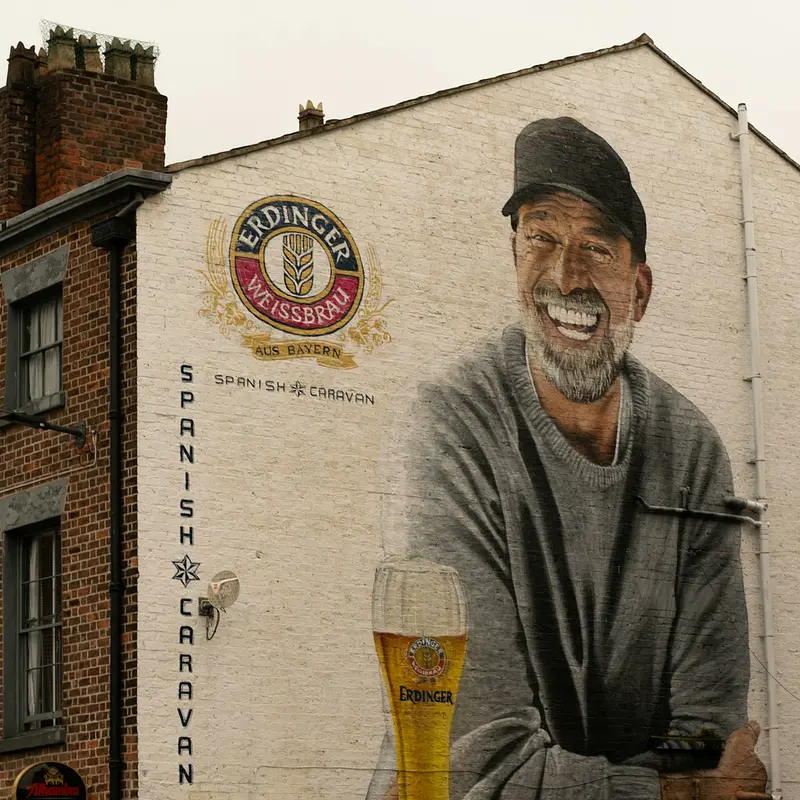
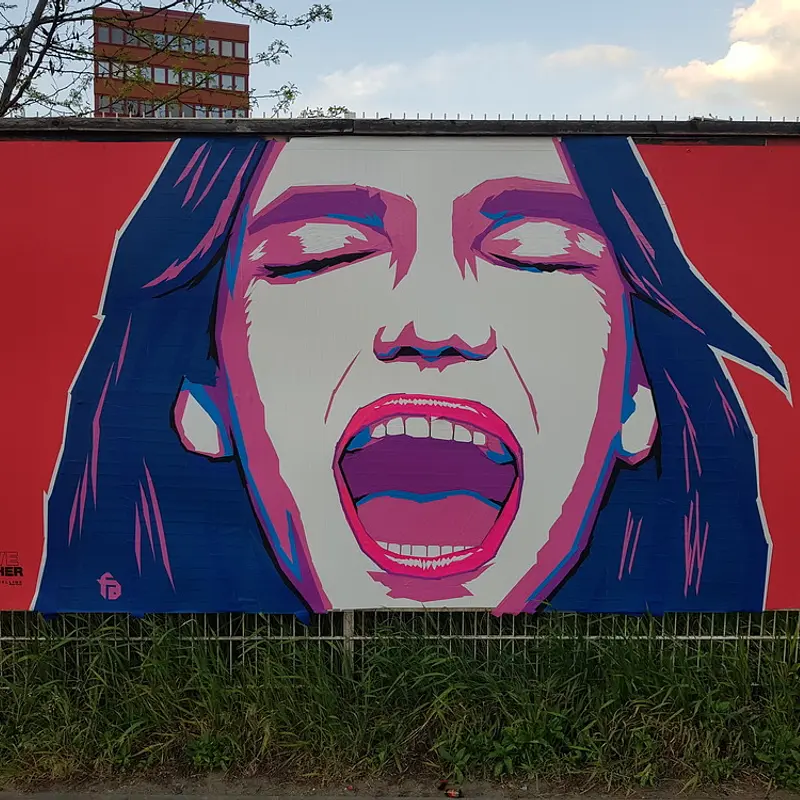
AKUT brings the LOVESHINE campaign to life through hyperrealistic mural art.
The Roadshow: Projection Mapping and Chalk Stencils Across Six Cities
While the Berlin mural established depth, the roadshow created momentum.
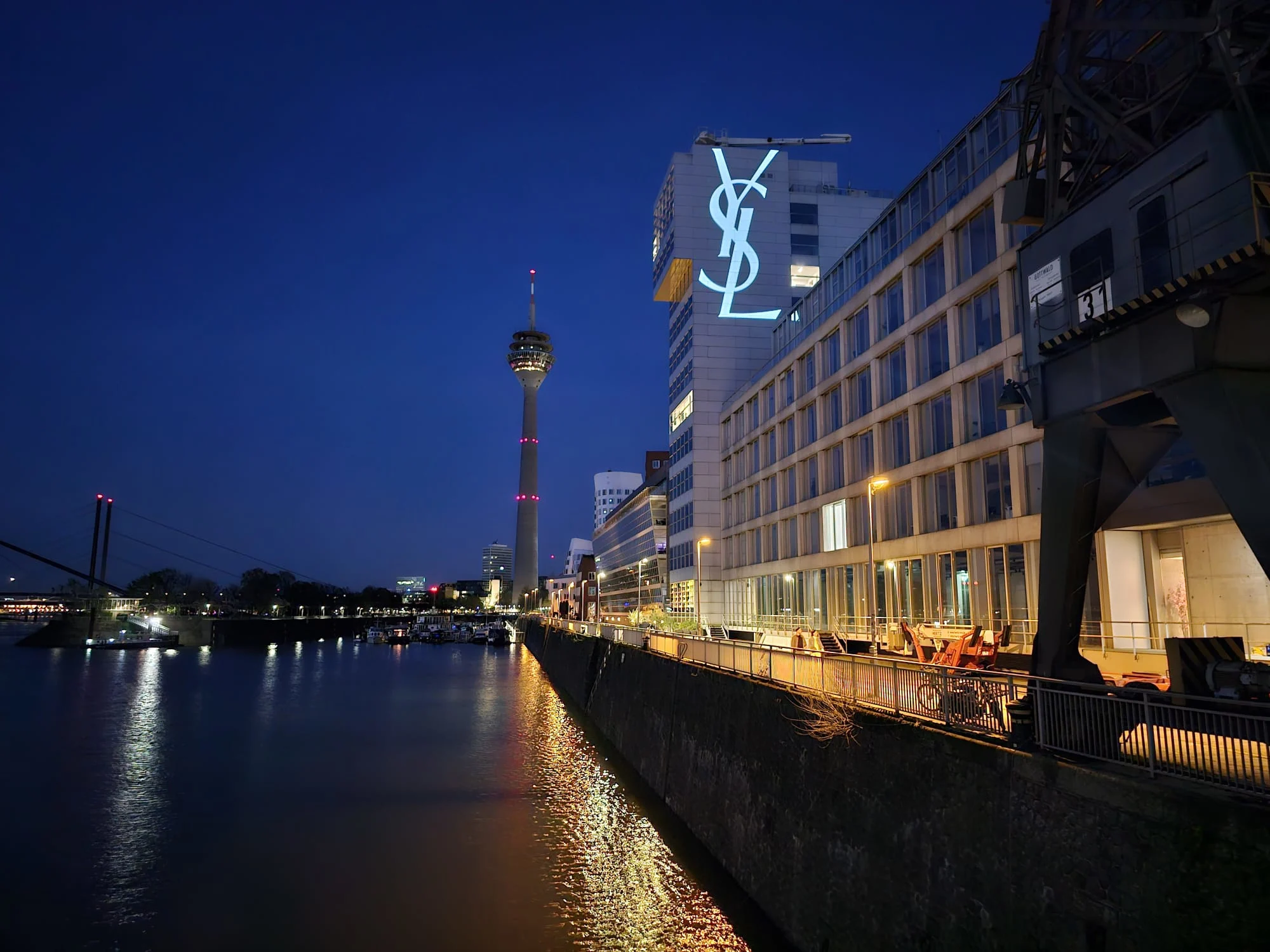
Across Frankfurt, Düsseldorf, Berlin, Geneva, Zurich, and Vienna, Basa Studio deployed projection mapping advertising and chalk stencils — guerrilla formats that operate without the permissions, lead times, and costs of fixed media placements. The roadshow moved city by city, which meant each activation landed as a local event: something happening now, in this city, documentable by local audiences and local press on their own terms.
The projection mapping worked particularly well because the campaign assets were already exceptional. The LOVESHINE campaign video — with Dua Lipa, with its layers of visual quality — contained exactly the kind of material that translates powerfully onto buildings and facades. Clips, stills, and layered compositions were projected across walls in different formats and combinations, adapted to the architecture of each location. The result wasn't a standard projection of a static image — it was the campaign itself, animated on the city.
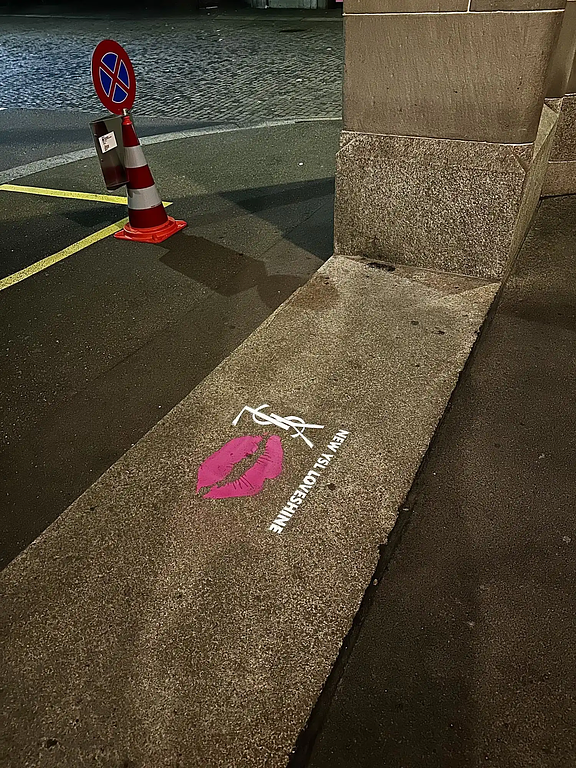
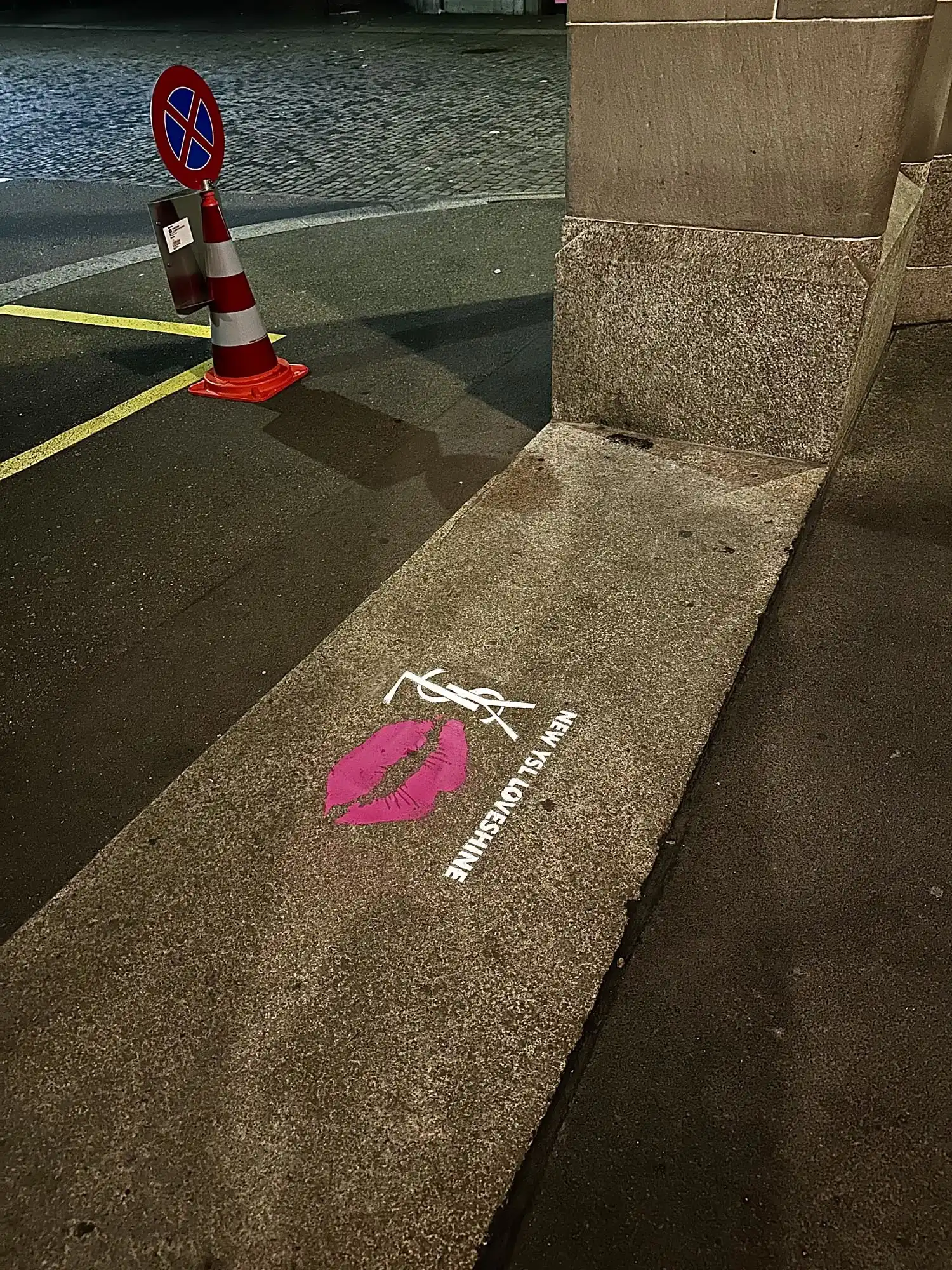
Chalk stencils extended the campaign's reach into street-level touchpoints, creating a physical residue of the activation across city surfaces. Where projection mapping created spectacle, chalk stencils created discovery — a different register of encounter, and one that rewards the pedestrian who happens upon it rather than the crowd gathered for an event.
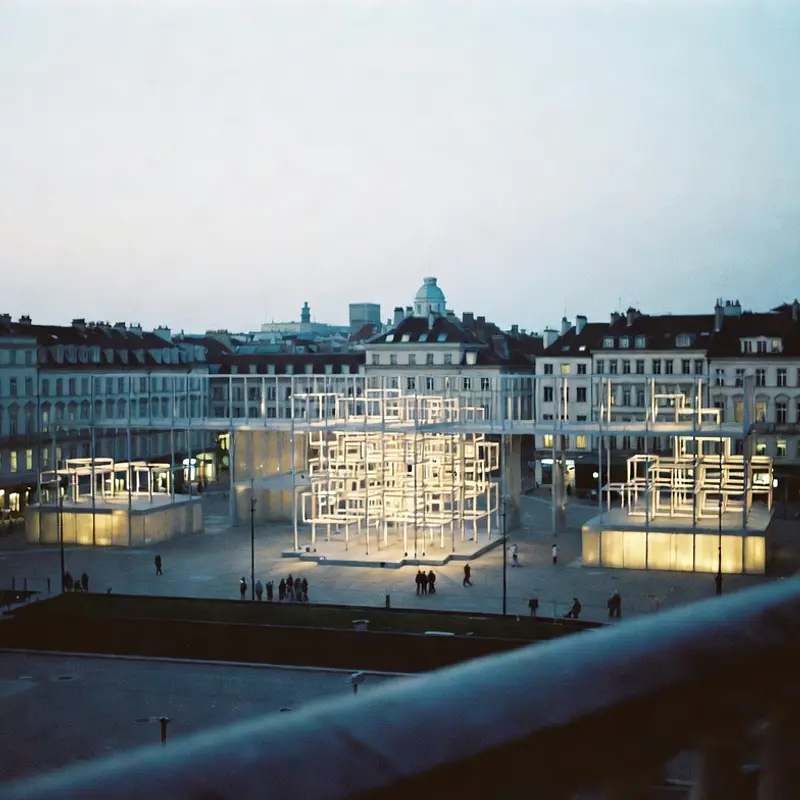
YSL LOVESHINE projection mapping transforms Düsseldorf’s urban skyline into a campaign touchpoint.
Earned Media Starts Before Launch
The most consequential outcome of a culturally executed product launch campaign is often the hardest to plan for: organic documentation that begins before the official launch moment.
On a standard OOH product launch, earned media follows the campaign. Press covers the activation after it goes live. Social posts appear once the brand publishes. The audience arrives after the fact.
With the LOVESHINE mural, organic documentation began during production. Passersby who had no knowledge of the campaign, no brand relationship with YSL, and no reason to engage stopped to photograph what was happening on the wall. The craft was the draw — the painting was remarkable enough that people wanted to record it before they understood what it was.
That pre-launch organic reach is structurally different from anything a media plan produces. It is not an impression delivered to a targeted audience. It is genuine, unsolicited attention from people who encountered something they found worth sharing. It cannot be manufactured by increasing media spend. It requires the execution to be substantive enough to earn it.
For brands running product launch campaigns at scale, this is the argument for cultural execution over media amplification: not that earned media is cheaper than paid (it isn't, when you account for the craft required to generate it), but that it produces a different quality of attention — one that persists after the spend stops and that no competitor can replicate by buying the same placements.
What the LOVESHINE Launch Demonstrates
The LOVESHINE campaign across DACH was not an art project with a brand attached. It was a strategically structured product launch campaign that used cultural execution — a permanent mural, a travelling roadshow, three distinct formats — to achieve what paid media alone cannot: physical presence in the cultural landscape of the cities where the audience lives.
The format decisions were strategic: eye-level over large facade, permanent anchor plus mobile roadshow, spectacle plus discovery. The craft decisions were intentional: a hyperrealistic technique that made people question what they were seeing, campaign assets strong enough to carry projection mapping across six cities. And the outcome — organic attention during production, local documentation city by city, a campaign that continued to generate reach after the spend ended — was the direct result of those decisions.
A product launch campaign earns attention or it buys it. The LOVESHINE launch did both — and the earned attention outlasted the paid. If you're planning a product launch campaign that needs to do more than occupy media space — get in touch with Basa Studio. We work with premium brands across Europe to design and execute cultural activations that earn attention, create physical presence, and outlast the campaign spend.
Related creative stories
Browse through other features, interviews and guides to discover creative brand collaborations, meet innovative artists and creators, find out how new artforms are energizing advertising, & more.
We're excited to hear from you! If you're looking for artistic solutions for your next creative marketing campaign, send us your briefing. We can also help create a killer concept if you're in an early ideation phase. Check out our services for more.
Send your briefing
About you
THANK YOU
Your inquiry has been sent
We have received your inquiry. We'll get back to you within 24-48 hours to discuss your project. If you need urgent assistance, reach us on WhatsApp: +49 176 432 64506. In the meantime, we invite you to explore our insights, case studies, and lessons from building culturally grounded brand experiences.
Please contact us by phone if you're not able to reach us via this form.
THANK YOU
We have received your inquiry. We'll get back to you within 24-48 hours to discuss your project. If you need urgent assistance, reach us on WhatsApp: +49 176 432 64506. In the meantime, we invite you to explore our insights, case studies, and lessons from building culturally grounded brand experiences.
We use cookies to help empower our artists and make them accessible to clients. Check out our Privacy Policy and Terms of Service to see how your data can make a difference.