How does a global brand work with artists without taking away what makes their work distinctive? Lauren Schleider draws on her experience as an artist, curator, and Global Art & Graphics Director to consider what makes these collaborations work.
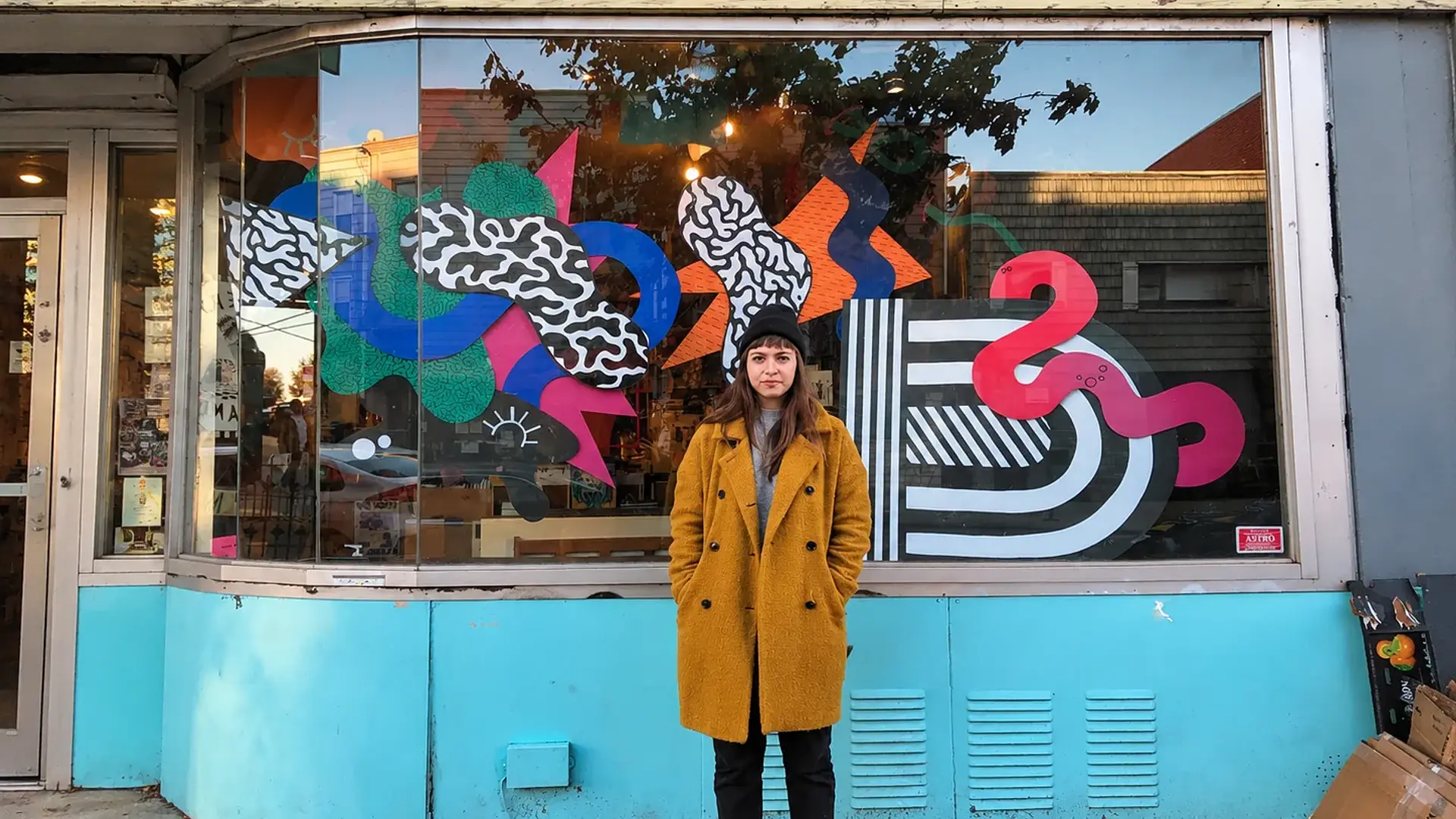
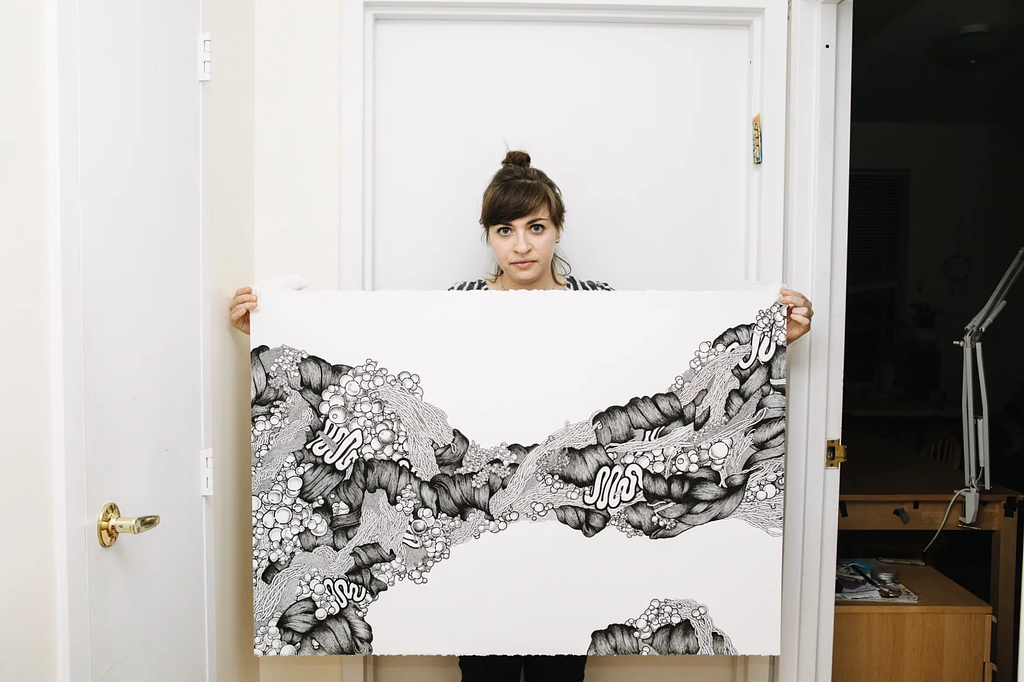
Lauren Schleider is a creative director, curator, and artist, as well as Global Art & Graphics Director at WeWork, where she oversees art, graphics and 3D visualization within the company's global design studio. Her own creative practice continues alongside that role, through freelance projects and a career-long interest in bringing art to wider audiences.
That combination gives her a particularly useful perspective on brand and artist collaboration. She understands what it means to receive direction as an artist, but also what it takes to translate a client's or design team's needs into a brief that an artist can genuinely respond to.
We spoke with Schleider about why she moved away from pursuing a traditional gallery career, how she approaches creative briefs, and how global brands can maintain a recognizable identity while still responding to the places they operate in.
Between two worlds.
From the gallery world to commercial and public-facing art
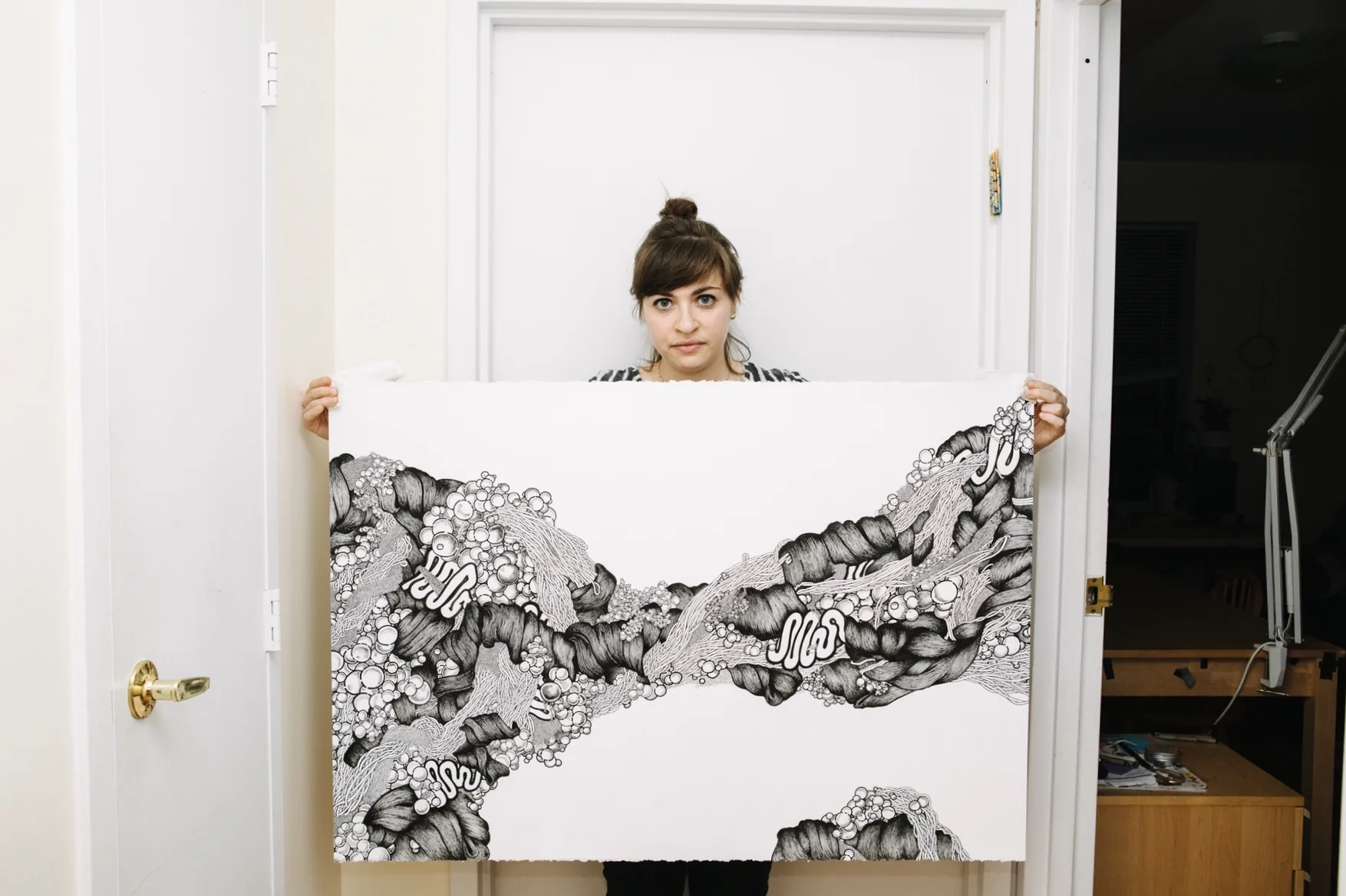
Schleider trained as a studio artist and spent her early twenties pursuing a career as an artist in New York, where she began exhibiting her work.
While she was showing a piece in SoHo, an established artist approached her after the opening and invited her to his studio. There, she received what she describes as "the most profound critique of my work that I've ever had." The advice that followed, however, stayed with her for a different reason:
"In the gallery world, it doesn't matter that much what your art looks like. It matters who you know."
The encounter helped clarify the kind of practice she wanted to build, and the kind of career she did not. As she put it, the experience "started drawing a line in the sand" and made her reconsider her goals as an artist.
That reconsideration led her toward the commercial side of art. What appealed to her was the possibility of reaching people beyond an audience already invested in the art world.
Schleider rejects the idea that people are either "art people" or not.
"I think there's this perception that we have, that you're either an art person or you're not an art person. And I don't think that's true."
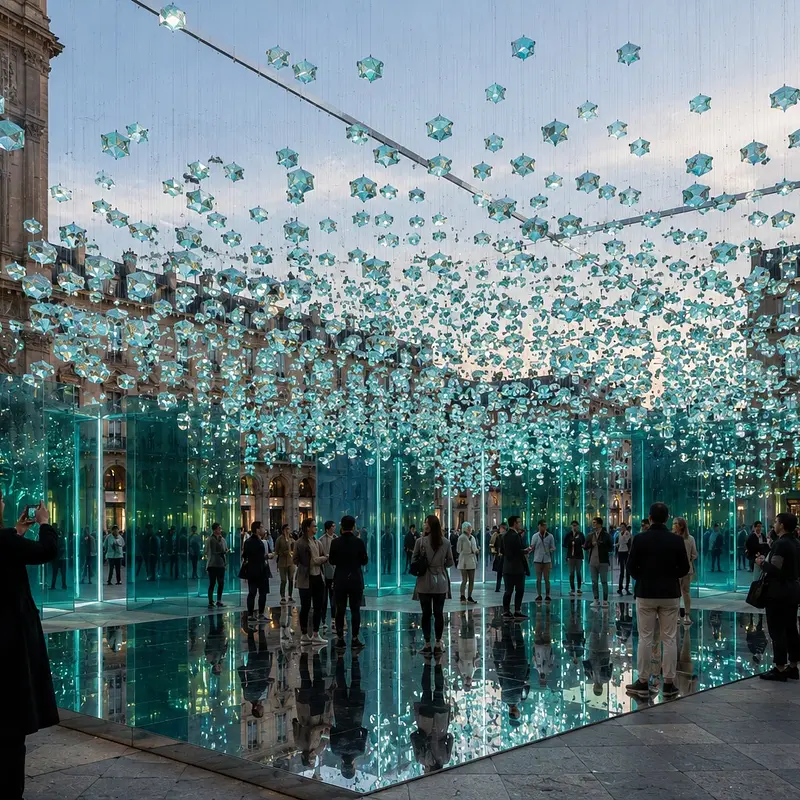
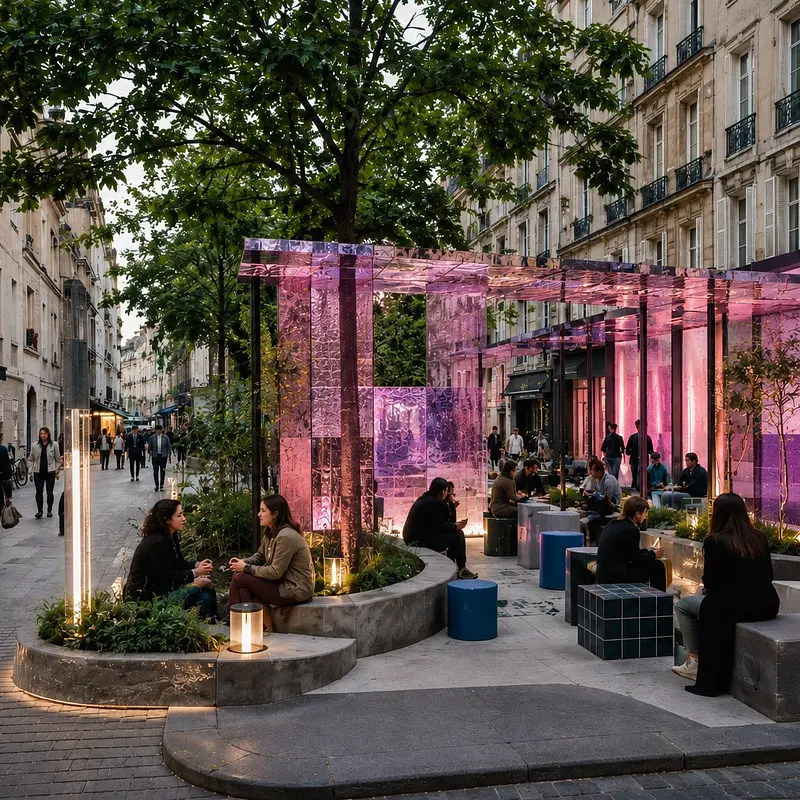
That is part of what makes public art so interesting to her. At its most effective, it becomes part of its surroundings rather than demanding attention. Its success may lie precisely in the fact that people experience it without necessarily identifying it as art.
Her own goal is to make that everyday presence "a little bit louder": not to separate art from people's lives, but to help them recognize how much of it they are already encountering.
That same artist's-eye view carries into how she thinks about creative briefs.
"I like to think about it from the artist's perspective first: what would I want to receive?"
What makes a good creative brief for artists?
Her background as an artist, she says, helps her translate between the language of a client or designer and what she calls "artist speak": a way of communicating what something needs to feel or sound like without closing down the artist's creative possibilities. That translation matters because artists want to feel like they're contributing their own direction, not simply executing someone else's.
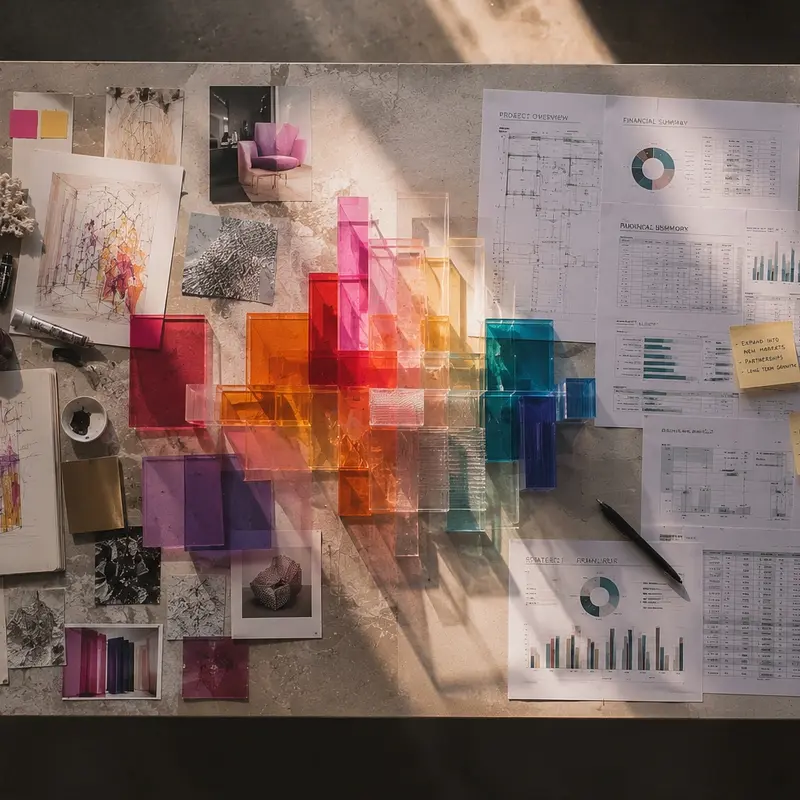
The practical details matter too. Budget, intended use, licensing terms, dimensions and timeline may not be the most creatively exciting parts of a creative brief for artists, but establishing them early can determine whether an artist is able — or willing — to take on the project.
The creative side of the brief is where Schleider sees the greater opportunity. Brands should understand why they're hiring a particular artist in the first place: their distinctive style and ability, rather than a generic capability. That means giving the artist creative license within the project's necessary constraints, rather than asking them to deliver a predetermined idea of what the work should be. At its core, this is a question of creative agency: how much room an artist has to shape the work, rather than simply execute it.
For Schleider, this is not simply about making the process more enjoyable for the artist. It affects the quality of the final work. "The more excited the artist can be going into it, and feels like they can do their thing, the stronger the work is." She compares it to cooking something that carries personal meaning: when you're personally invested in what you're making, the result feels different. "Feeling good about something makes it better."
A stronger creative brief starts with the practical details
While Schleider's emphasis is ultimately on creative freedom, she also identifies several practical elements that should be established before a project gets underway:
Budget: What is available for the work?
Usage: How will the work be used, particularly if it is being delivered digitally?
Licensing: What are the relevant usage and licensing terms?
Dimensions: What are the physical requirements, such as wall size?
Timeline: When does the artist need to deliver?
These details don't necessarily make a brief more creatively exciting. But knowing them upfront helps an artist understand whether an opportunity is workable, and gives them what they need to say yes. The more important question is what happens around those constraints: whether the brief leaves enough space for the artist's own perspective to enter the work.
Balancing a global brand with local creative identity
That same question, how much space a brief leaves for the artist's own perspective, plays out on a much larger scale inside WeWork's own spaces, where global brand consistency has to coexist with something that feels genuinely local.
Schleider describes this as something the design studio embraces across art, architecture and interior design. There are established aesthetics, particular palettes, textures and materials, that create continuity from one space to another. At the same time, the team looks for ways to incorporate elements specific to the local context: a distinctive local timber, or a specific terrazzo, say. On the art side, that means combining catalog artwork with work curated from the local community.
For Schleider, that local sourcing has another value beyond aesthetics: "It's a really good opportunity for us to put some money and some opportunity back into the location we're building in."
The challenge is maintaining enough consistency that a space still feels recognizably like WeWork, while allowing the details to respond to where that space actually exists. She describes the brand identity as encompassing much more than artwork: the design, experience, programming and amenities, as well as things members register without consciously noticing.
Artwork comes later in the process, once the larger spatial vision has already been established. "It's the finish, the lipstick on it." That final layer creates room for a different kind of specificity: not a rejection of the brand's visual identity, but an opportunity to ask how that identity takes on "the flavor of something local."
Collaboration across the design process
That same balance of structure and space for individual perspective shapes how Schleider's own team works. Her team sits within a larger design studio of creative directors, interior designers, architects and 3D visualization specialists. Architects and designers typically establish the spatial vision first; artwork and finishing touches come later, once materials and layout are set.
The rhythm, she says, is uneven: a long lead time where many elements come together, followed by a much faster final stage. "It's like a slow burn and then a rapid run."
This reflects how the strongest brand experience work tends to come together more broadly: strategy and space established first, with cultural and creative layers built in as the project nears completion, not applied at the end as decoration.
A holistic approach to creative work
Even within a structured process, it's important not to reduce creative work to a fixed formula. What works for one collaboration, or one artist, won't necessarily work for the next.
Schleider also pushes back on a related pressure: the idea that artists and creatives need to constantly produce, as though any time not spent actively making something means the practice has stopped. But creative practice also includes the less visible activities that sustain it. For Schleider, that might mean working on her website, or cooking: using her hands, creating and plating something, and engaging her senses. "All of that for me informs my studio practice," she says.
Sometimes that means making something. Sometimes it means emails. "I think if we can learn to embrace some of these other elements of our lives, it's a fuller experience."
The same logic applies to creative collaboration more broadly. If there is no single way to sustain a creative practice, there is unlikely to be one right way to brief an artist, either. The strongest collaborations leave room for different ways of thinking and working, rather than expecting the same approach to produce the same result every time. For brands, that flexibility is not a concession to the artist; it is part of what turns a working relationship into a genuine creative partnership.
To explore what a genuine creative partnership could look like for your brand, reach out to Basa Studio.
Related creative stories
Browse through other features, interviews and guides to discover creative brand collaborations, meet innovative artists and creators, find out how new artforms are energizing advertising, & more.
We're excited to hear from you! If you're looking for artistic solutions for your next creative marketing campaign, send us your briefing. We can also help create a killer concept if you're in an early ideation phase. Check out our services for more.
Send your briefing
About you
THANK YOU
Your inquiry has been sent
We have received your inquiry. We'll get back to you within 24-48 hours to discuss your project. If you need urgent assistance, reach us on WhatsApp: +49 176 432 64506. In the meantime, we invite you to explore our insights, case studies, and lessons from building culturally grounded brand experiences.
Please contact us by phone if you're not able to reach us via this form.
THANK YOU
We have received your inquiry. We'll get back to you within 24-48 hours to discuss your project. If you need urgent assistance, reach us on WhatsApp: +49 176 432 64506. In the meantime, we invite you to explore our insights, case studies, and lessons from building culturally grounded brand experiences.
We use cookies to help empower our artists and make them accessible to clients. Check out our Privacy Policy and Terms of Service to see how your data can make a difference.