OOH advertising strategy for brands that want their outdoor work to earn attention, not just buy it.
What it looks like when it works
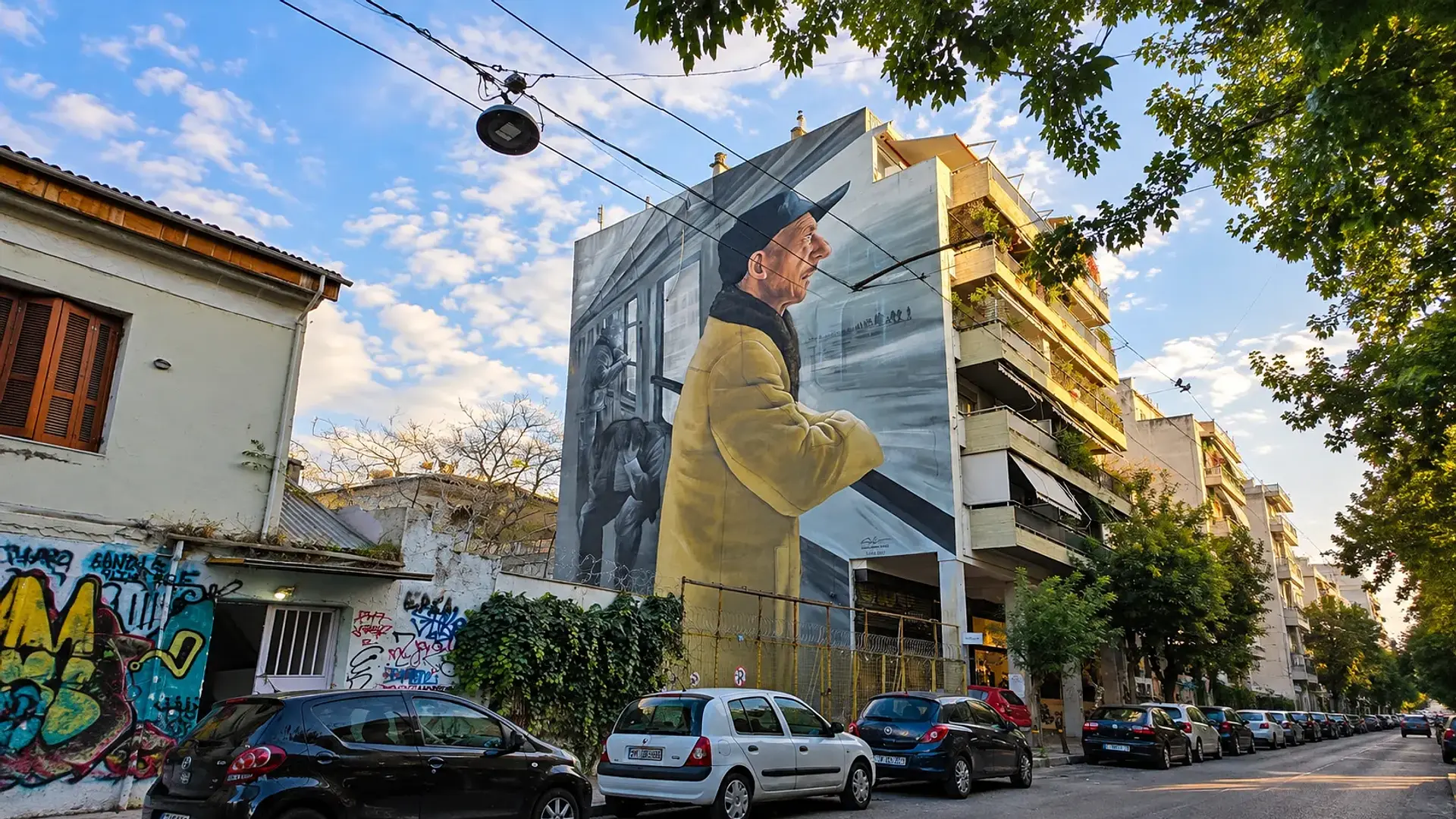
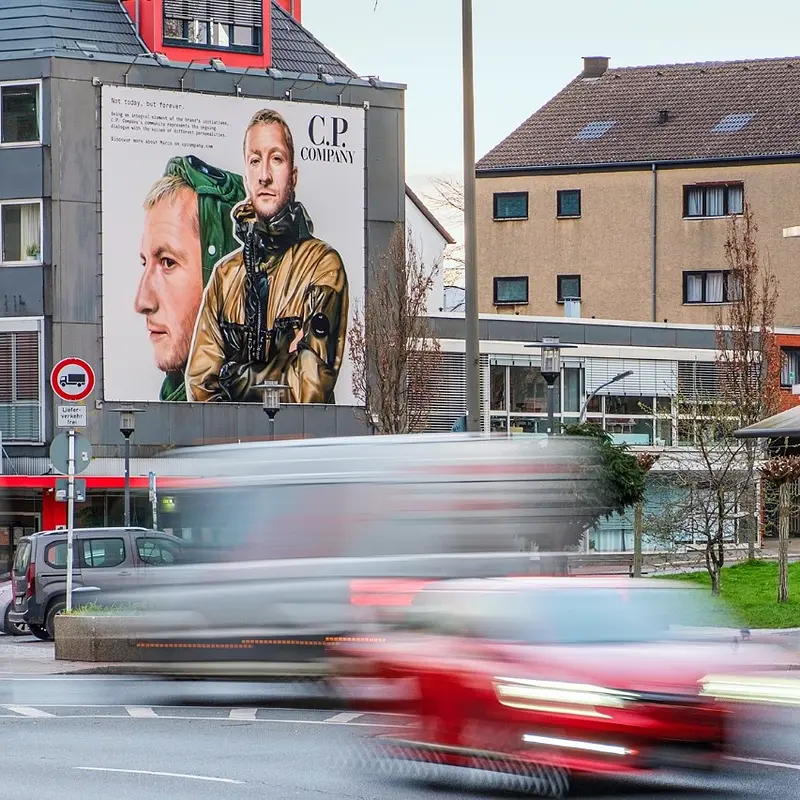
Five days. One hundred spray cans. Seventy square metres of wall at one of Dortmund's busiest intersections, steps from the DFB Museum and the central station.
That's what C.P. Company and Basa Studio put into a hand-painted portrait of Marco Reus for the Italian sportswear brand's campaign in Germany. By the time the artists finished, people were already photographing it — not because it was an advertisement, but because it was something worth stopping for. A landmark, not a placement.
That distinction — between something people glance at and something people seek out — is what a genuinely ambitious OOH advertising strategy is built around. And it starts with a different kind of brief.
OOH is one of the brand touchpoints where the gap between what most brands do and what's actually possible is widest. The infrastructure is there. The budgets are real. What's usually missing is the creative ambition to use them differently.
The brief that changes everything
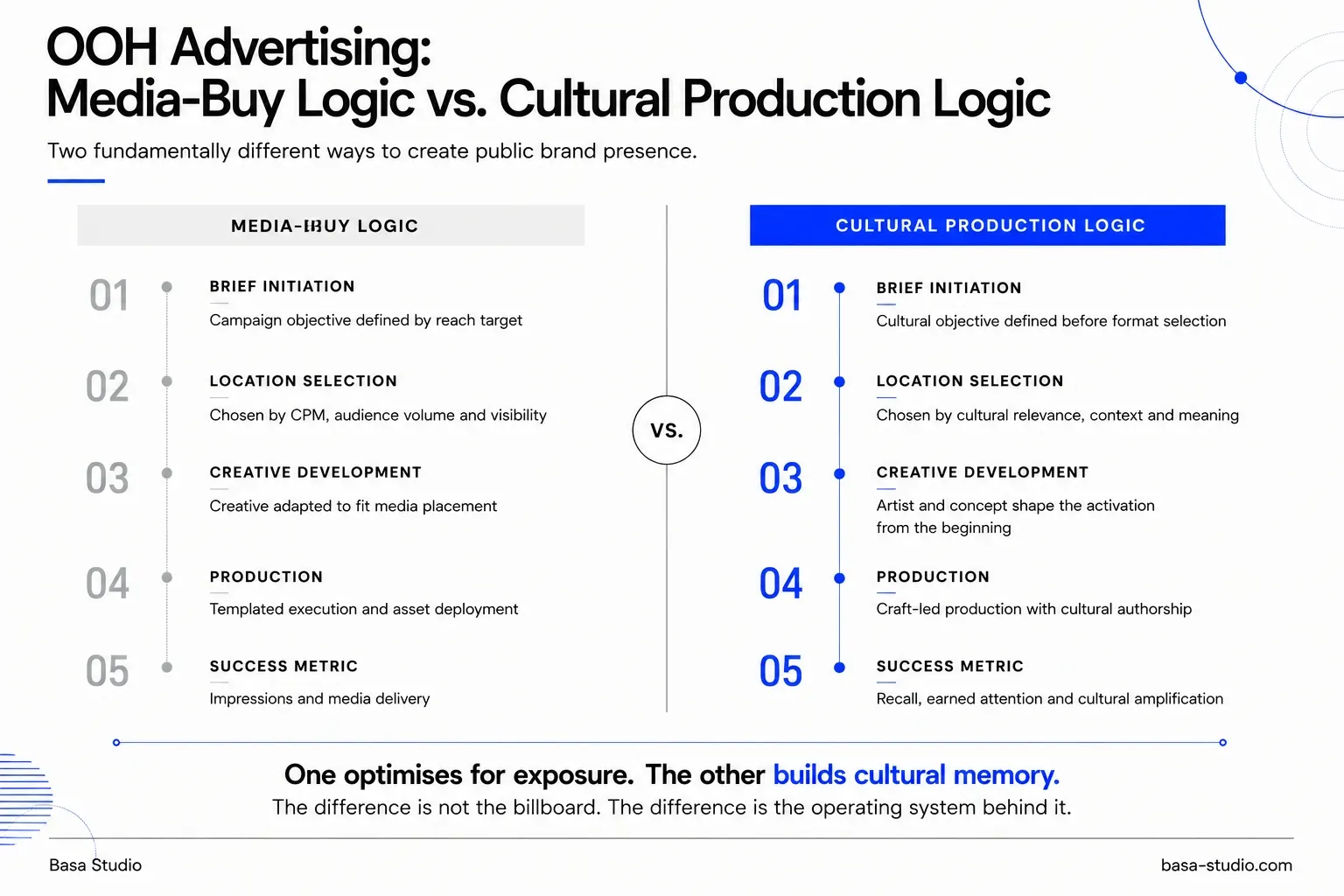
Out-of-home advertising is typically planned backwards: media first, creative last. Location is chosen by a media planner based on reach and CPM. The brief lands with a creative team as a production task, and the artwork is sized to fit the format. The output is technically correct and culturally inert.
A different approach starts with a different question. Not where should this run? but is this worth stopping for?
That reframe sounds simple. In practice it changes the entire workflow — when creative development begins, who is involved, what the location decision is actually based on, and how success gets measured. It means creative vision has to be present from the first conversation, not briefed in at the end once the media plan is locked.
For brands where cultural authority is a material asset — premium, luxury, lifestyle, automotive — this is not a minor adjustment. It's the difference between OOH that functions as media and OOH that functions as culture.
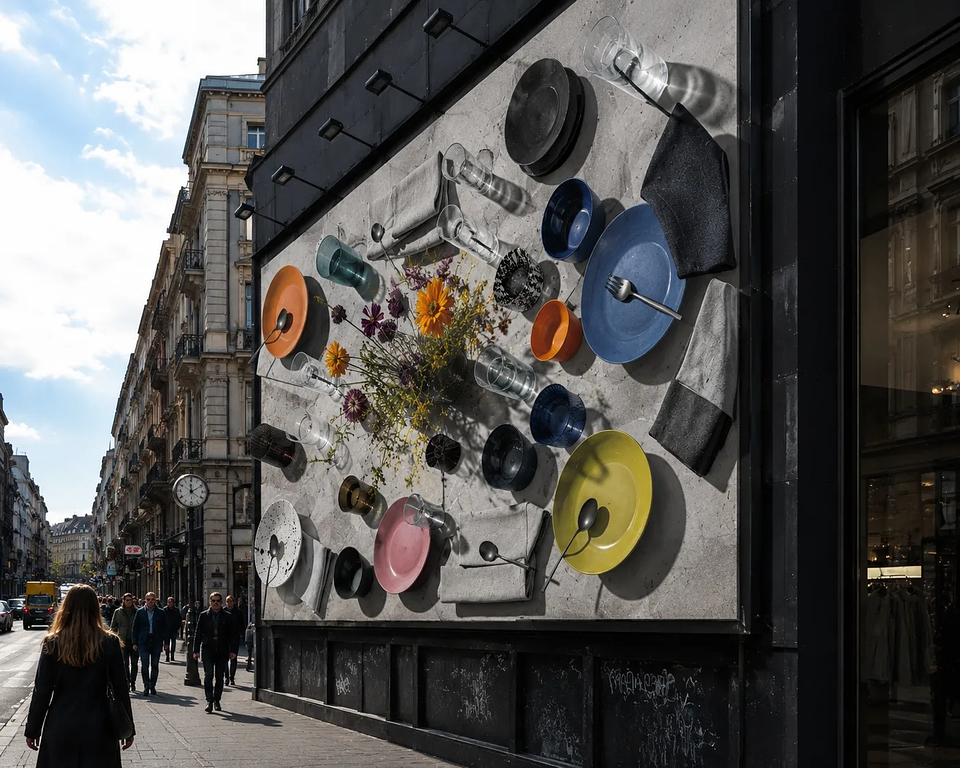
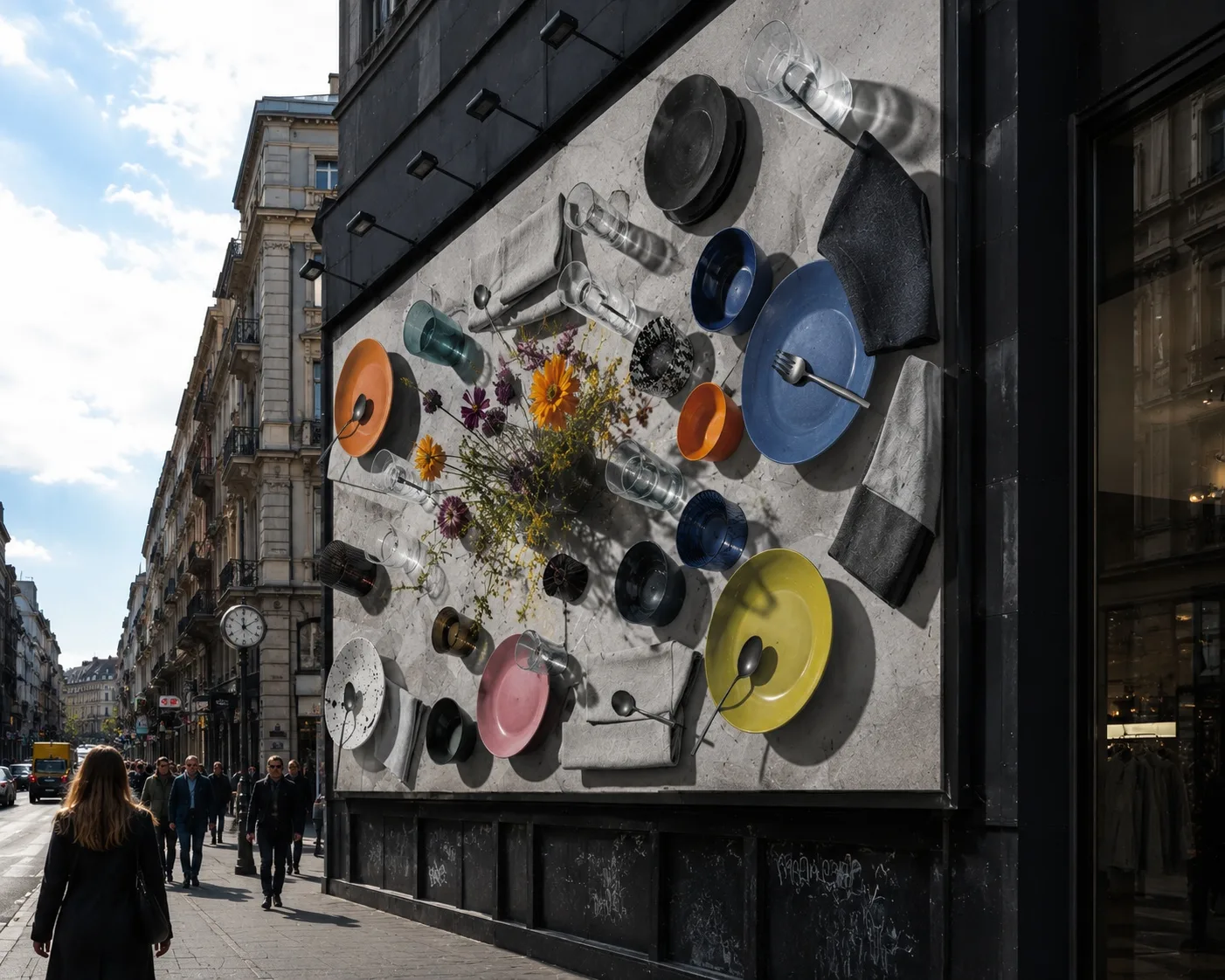
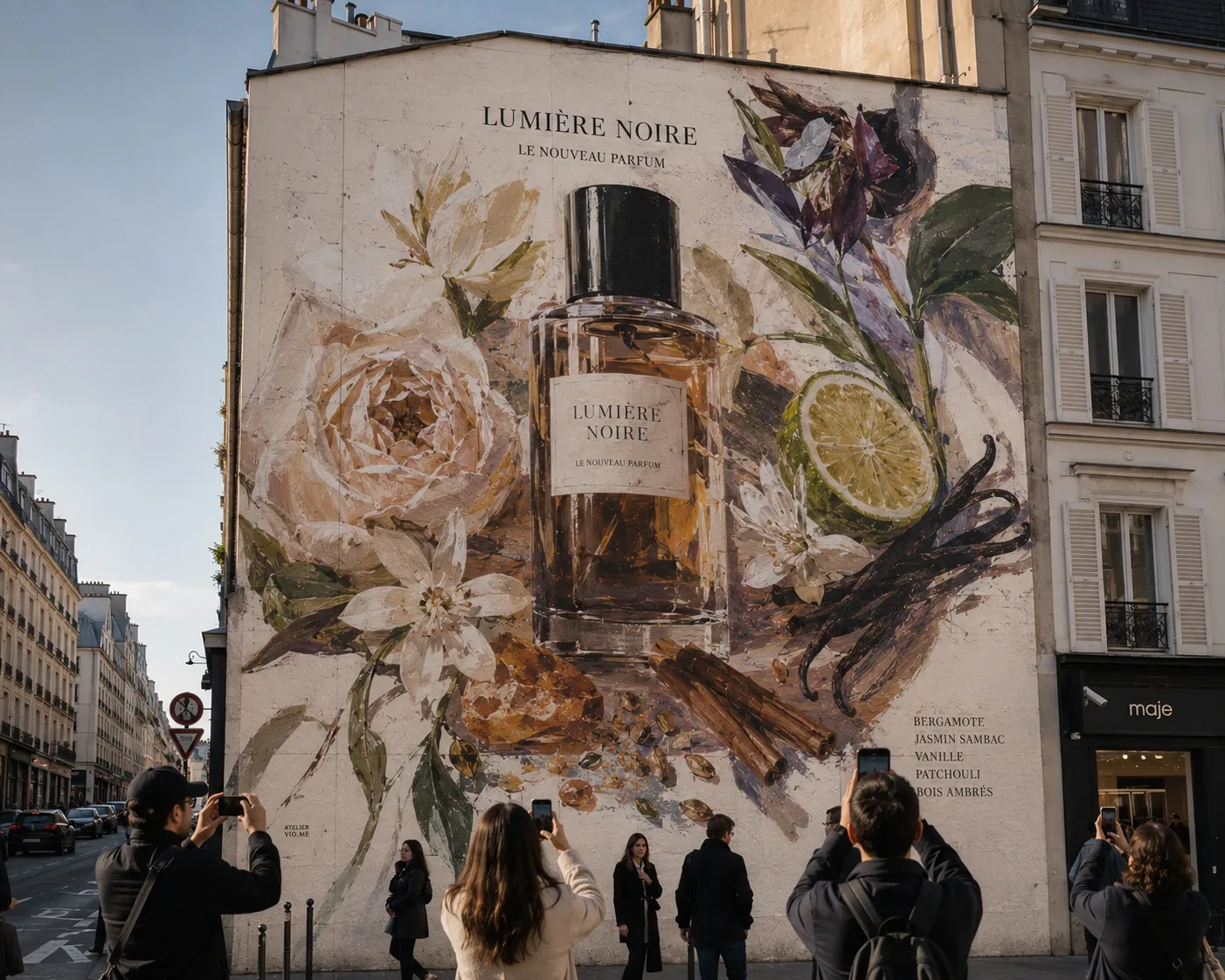
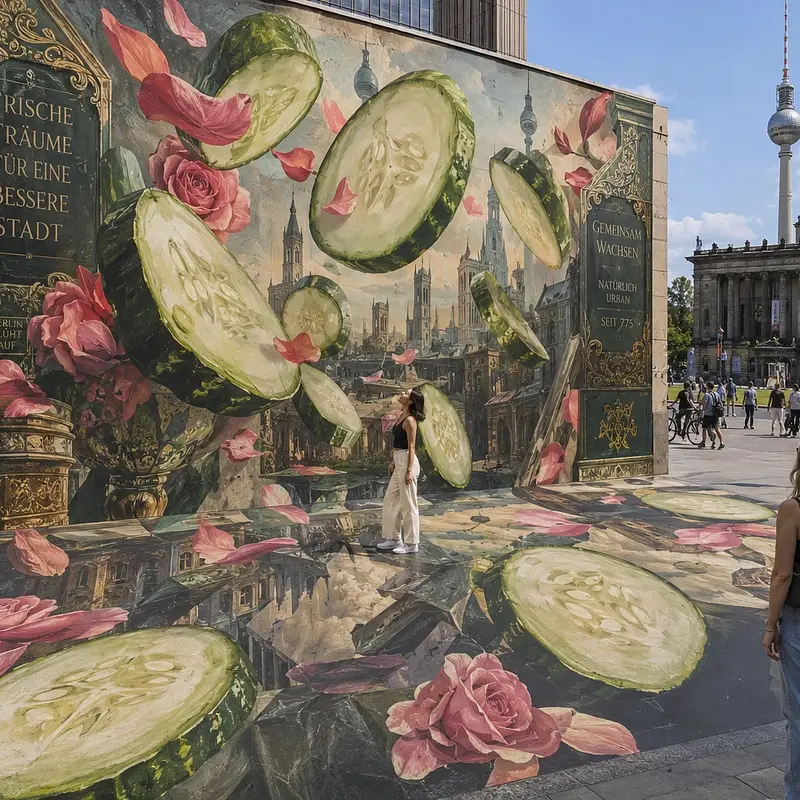
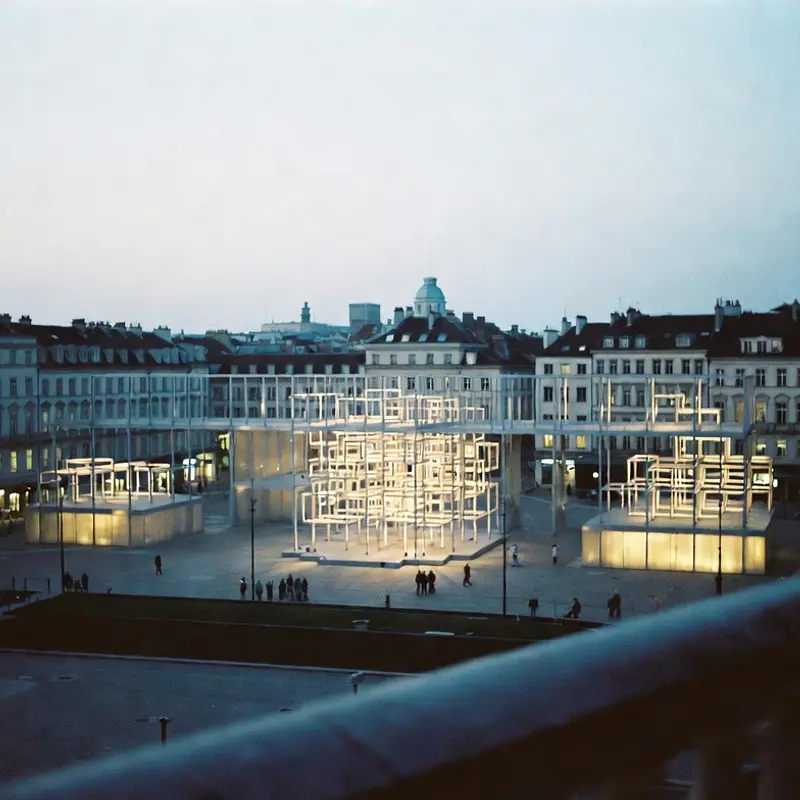
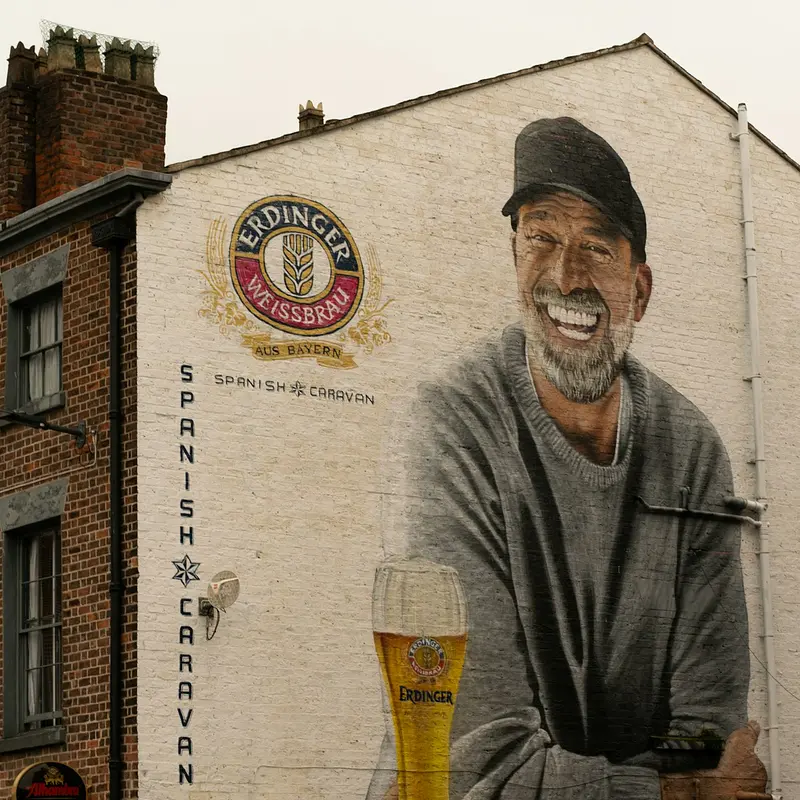
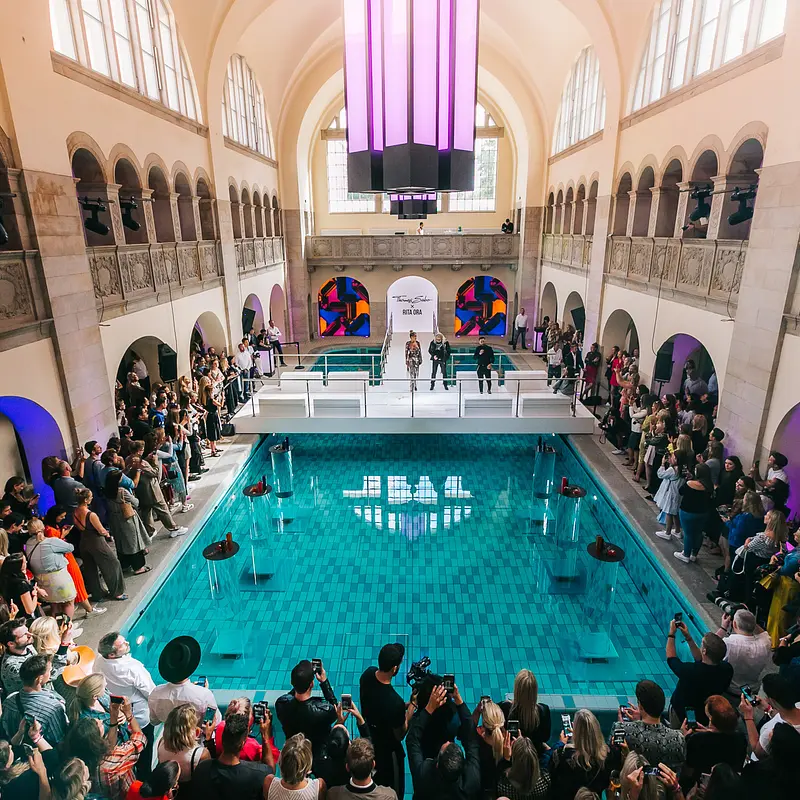
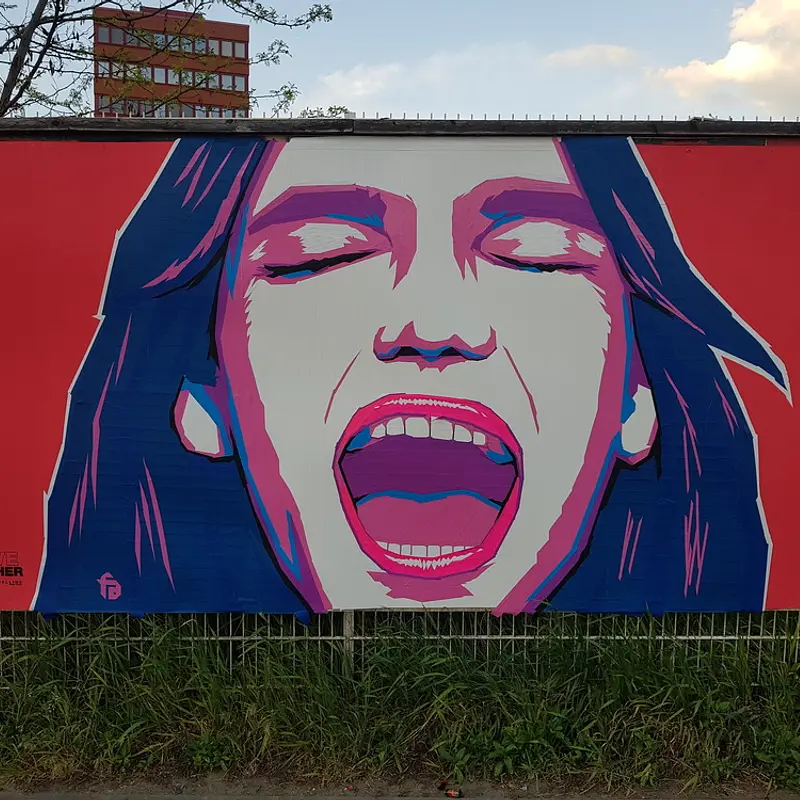
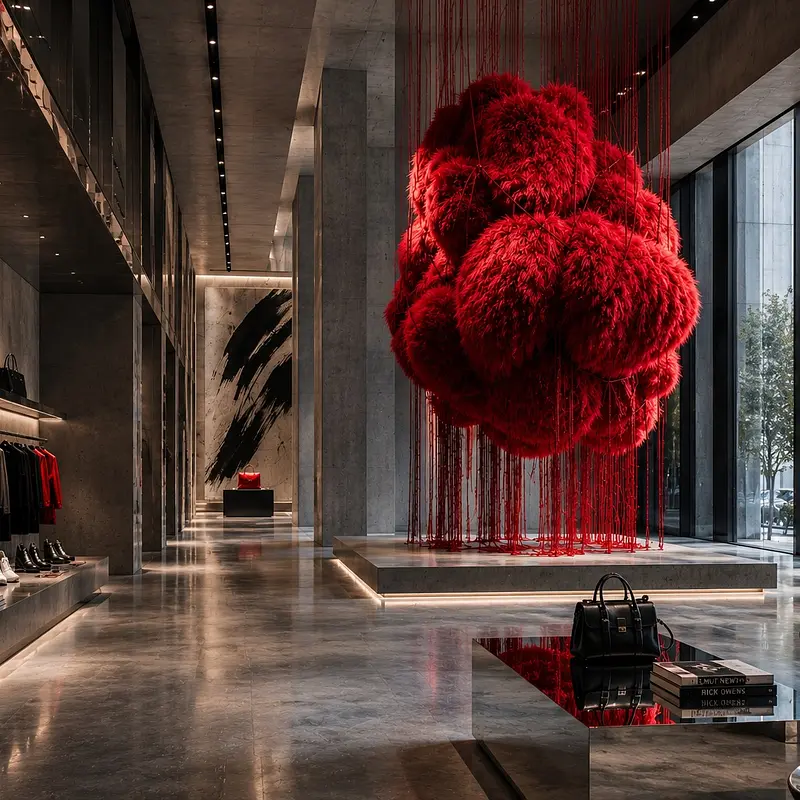
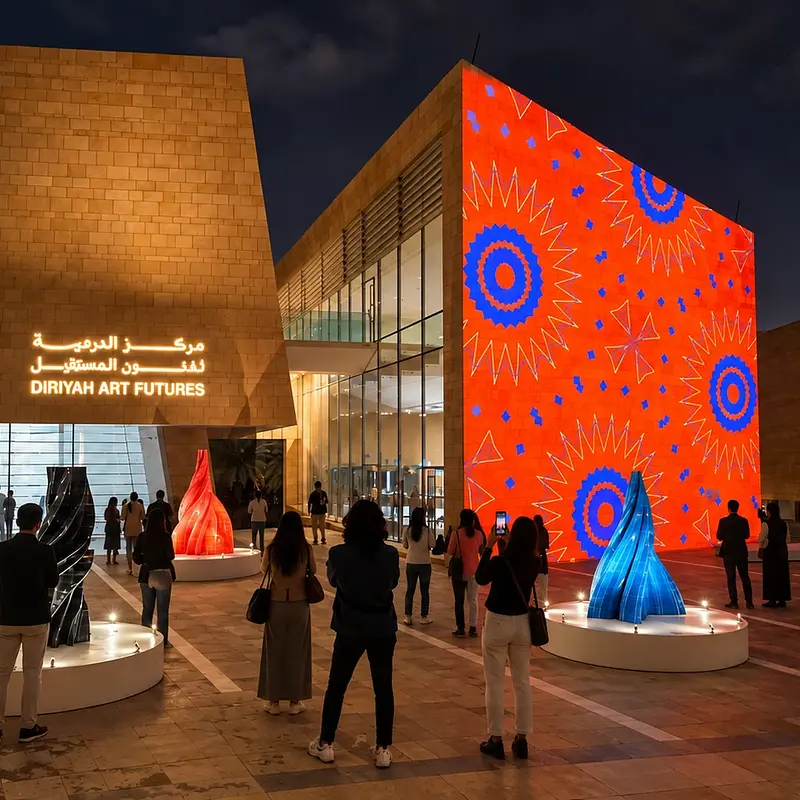
That ambition can take many forms. Some brands push OOH into physical territory entirely — 3D extensions that break the frame of the billboard, interactive elements that respond to the viewer, sensory details that make the work impossible to walk past. The format stops being a surface and becomes a structure. When the outdoor brand experience has that kind of physical presence, the work doesn't just occupy public space. It claims it.
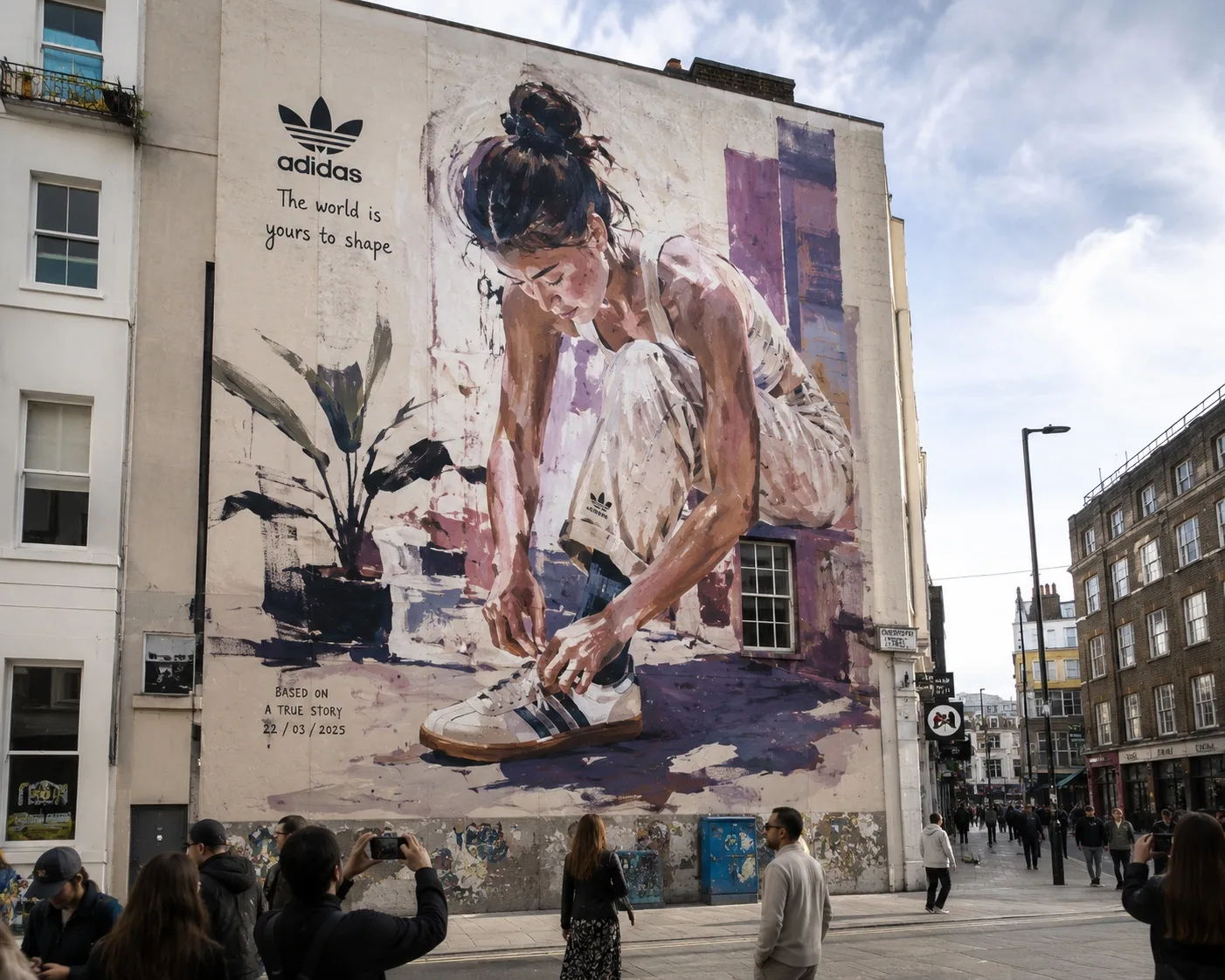
3D extensions, unconventional structures, and sensory elements push OOH beyond the billboard — transforming a media placement into a physical brand moment.
Out of home advertising art: a short history
The logic of commissioning serious artists for outdoor work is not new. It is, in fact, how outdoor advertising began.
Toulouse-Lautrec's poster for the Moulin Rouge — commissioned in 1891 by the venue's director to announce the new season — was not briefed as a production task. It was a commission given to an artist with a defined voice and genuine creative authority. The result became a cultural artefact that outlasted the campaign by over a century. Cassandre's 1935 poster for the Normandie did the same for ocean travel — the image communicated something about the experience of the liner that no copy line could have captured.
These were not accidents of talent. They were the result of briefs that began with what kind of work deserves to be here? rather than how do we fill this format?
Contemporary brands have largely moved away from this logic. The rise of digital OOH, programmatic placements, and templated production workflows has made outdoor advertising faster and more measurable — and considerably less worth anyone's attention. The countermovement among premium brands is not nostalgia. It is a recognition that the original logic was strategically correct, and that cultural OOH campaigns produce a fundamentally different category of result.
The history of outdoor advertising is a history of public art. The brands returning to that logic are finding audiences who respond accordingly.
What changes when an artist leads the OOH creative strategy
The conventional OOH workflow assigns creative to the end of the process. Artist-led OOH inverts it entirely — and the difference is visible in the work.
When creative vision originates from an artist with a defined body of work and genuine aesthetic authority, the output stops looking like advertising. It looks like something a brand made because it had something real to say — in this specific place, at this specific moment. Audiences can read that distinction, even when they can't articulate it.
Agency-led OOH typically produces work that is recognisably on-brand: the logo is prominent, the message is legible from thirty metres, the visual language is consistent with whatever else is running. It is coherent. It is also forgettable, because it is designed to be recognised rather than encountered.
The C.P. Company campaign in Dortmund is a precise illustration of what shifts. A hyperrealistic portrait of Marco Reus, painted over five days by artists selected for their mastery of that specific technique, at an intersection chosen not just for footfall but for its cultural resonance with German football and the brand's sportswear heritage. People stopped to watch the work being created. They photographed it before the campaign was formally announced. The work was already circulating before any media spend kicked in.
That's not a lucky outcome. It's what happens when the creative decision comes first.
The production process is part of the cultural story. Watching a 70-square-metre portrait come into being over five days is itself an audience experience.
Site specificity: location as creative decision
Location selection in conventional OOH is a media planning exercise. The question is where the most impressions occur at an acceptable CPM. Site specificity in cultural OOH is a different discipline entirely. The question is what this location means — and how placing this specific work here changes what it says.
Urban context carries meaning before a single word is read. A mural in a post-industrial neighbourhood carries different associations than the same image in a luxury retail district. An installation near a cultural institution reads differently from one at a transit hub. These distinctions are felt by audiences before any intellectual processing occurs — they register as signals of whether the brand belongs here, and whether it is present in good faith.
The C.P. Company placement was not chosen for footfall alone. The DFB Museum quarter is a cultural crossroads — a place where football heritage, local identity, and urban life converge. For a brand with genuine roots in sports culture and European football, this location was a statement of belonging. No campaign copy could have made that argument as clearly as the work itself, in that place.
This is what separates site specificity as a creative discipline from location strategy as a logistics exercise. The artist needs to understand the place. The place needs to be chosen with the work in mind. Both decisions happen together, at the start of the process — not sequentially, and not in different rooms.
When site specificity becomes foundational, OOH begins to function less like media and more like branded art installations — outdoor work with genuine cultural stakes in the places it occupies.
Earning social amplification, not engineering it
There is a version of the OOH social amplification argument that treats organic sharing as a bonus — something that happens when a campaign lands well, and is nice to have but hard to design for. That framing misidentifies the mechanism.
Culturally resonant OOH gets photographed and shared not because it is visually striking in a generic sense, but because it gives people something to say about themselves. When someone photographs a mural and posts it, they are not documenting an advertisement. They are affiliating — with the artist, the brand, the place, the cultural moment the work represents. The share is a statement of identity.
This means designing for shareability is not about making the work more Instagram-friendly. It is about making it genuinely worth affiliating with. The design decisions that drive organic sharing are the same ones that drive cultural resonance: specificity of place, authenticity of craft, clarity of intent. Work made carefully, for a specific location, by artists with genuine authority in that space, does not need to be engineered for amplification. It earns it.
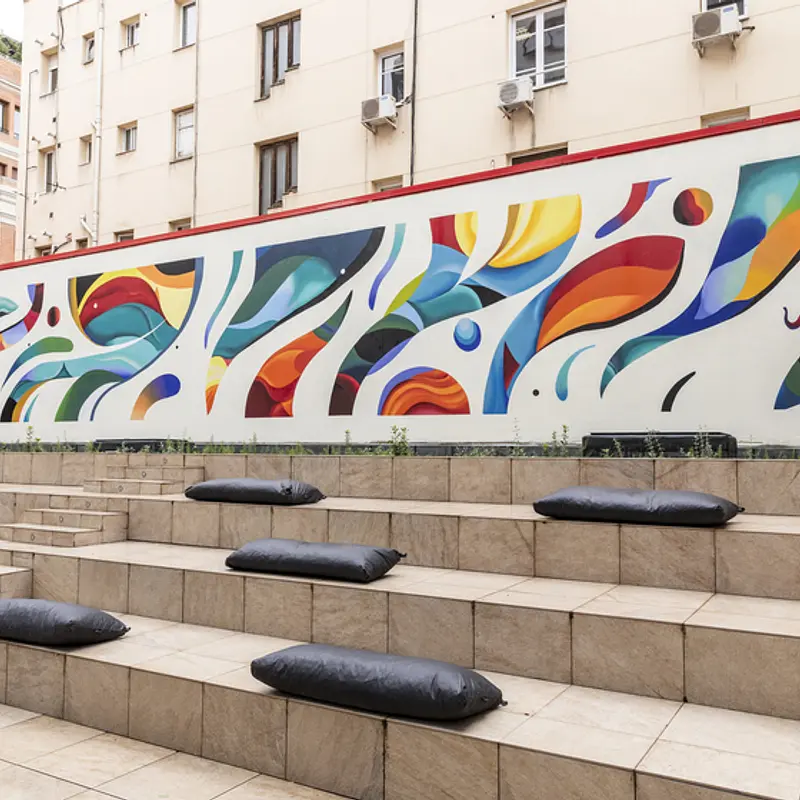
TheOatly Paris mural campaign — covered by Fast Company — is a sharper illustration of the same logic. Launching in France, Oatly discovered that Parisian regulations only permit commercial murals if they are executed artfully — without products or logos. Rather than retreat to a standard format, the brand leaned into the constraint. Text-only murals posed questions directly to the street: "Is this a piece of art or one of those oat drink ads?" Delivery drivers then lined up trucks and pallets in front of the walls, completing the image in forced perspective — a reveal designed to be filmed and shared. People who shared it were not amplifying an advertisement. They were participating in a cultural moment that happened to also be one.
What a culturally ambitious OOH brief actually contains
The brief is where the difference between media-buy logic and cultural production logic becomes concrete. A conventional OOH brief specifies format, location, campaign messaging, and brand guidelines. A culturally ambitious brief asks harder questions, earlier.
What is the cultural role this work should play in this place? Not what should it say, but what should it be in the urban environment it enters. Is it a gift to the neighbourhood? A statement of belonging? A commission that acknowledges the creative community already present in that space?
Who is the right creative voice? Not which artist fits the aesthetic direction of the campaign, but which artist has genuine authority in relation to this place, this brand, and this cultural moment. Artist selection is a strategic decision, not a production one.
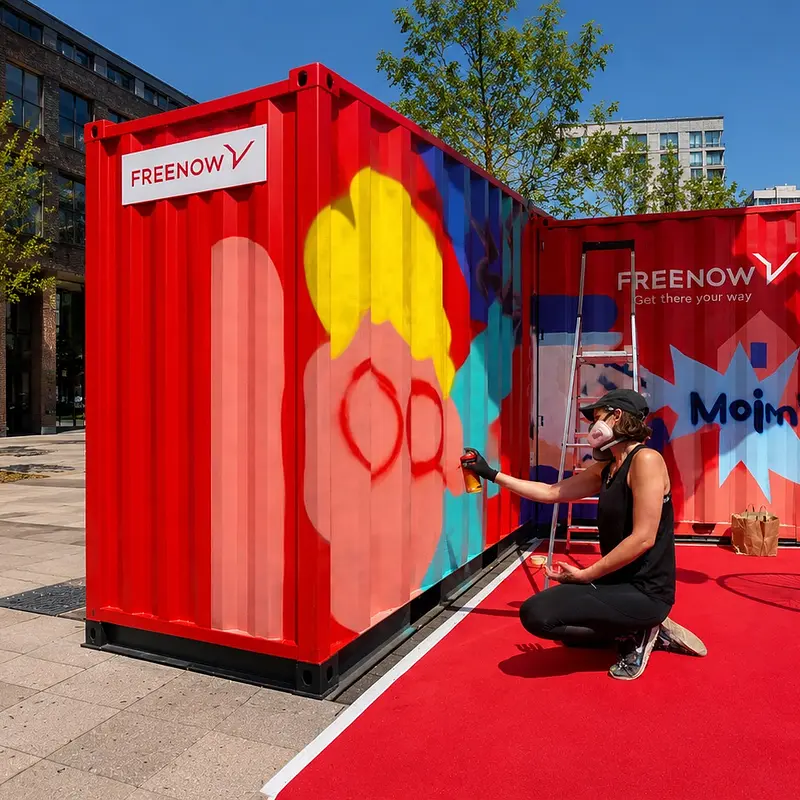
Does the execution itself tell a story? For hand-painted and artisanal OOH, the production process is part of the cultural value. Documenting it — inviting audiences to watch the work being made — creates content that amplifies the finished piece and demonstrates craft investment in a way the final image alone cannot.
What does success look like beyond impressions? Recall, organic amplification, press coverage, community response, longevity of the work — these are outcomes worth planning for, and they require a measurement framework that goes beyond CPM.
When the work earns its place in public space, audiences document it on their own terms — and the amplification follows.
The business case
The argument for cultural OOH is not against efficiency. It is against the assumption that an efficient media buy and a culturally effective campaign are the same thing.
A standard OOH placement produces standard results: impressions at a predictable CPM, recall rates in the single digits, creative that expires when the campaign does. A culturally ambitious OOH campaign can produce all of that — and also earned media coverage, organic social amplification, press attention, community goodwill, and work that continues to represent the brand long after the media buy ends. The C.P. Company mural in Dortmund did not stop generating attention when the campaign wrapped. It became a landmark — visited, photographed, and referenced on its own terms.
The investment required for a genuine outdoor brand experience is real. Artist commissioning, bespoke production, longer lead times, and genuine strategic development cost more than a templated workflow. The question is not whether the premium is worth paying in absolute terms — it is whether the additional outcomes justify the delta.
For brands where cultural brand building is a long-term strategic priority — not just a campaign objective — that case is not difficult to make. The brands that treat OOH as a media placement problem will keep getting media placement results. The ones that treat it as cultural production will occasionally get something different: work that earns attention, generates conversation, and changes how people feel about the brand in the places where they actually live.
That is what outdoor advertising was always capable of. Most of it just forgot.
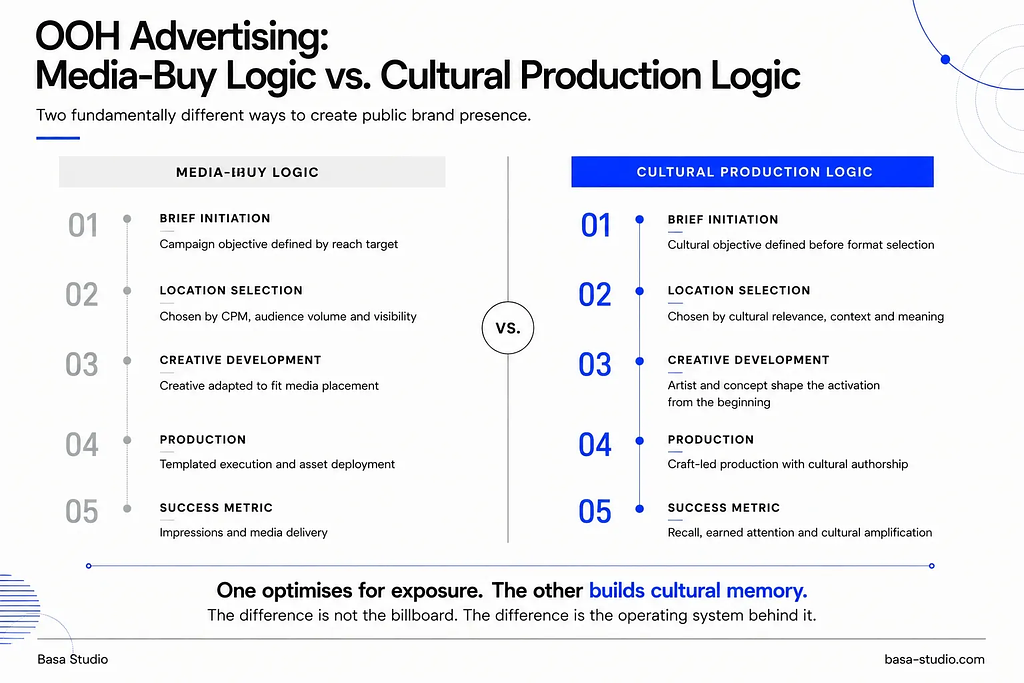
OOH Advertising: Media-Buy Logic vs. Cultural Production Logic
At Basa Studio, OOH advertising is one of the brand touchpoints where we bring cultural depth from strategy through execution — including artist selection, site strategy, and end-to-end production. If you are rethinking how your brand shows up in public space, reach out.
Related creative stories
Browse through other features, interviews and guides to discover creative brand collaborations, meet innovative artists and creators, find out how new artforms are energizing advertising, & more.
We're excited to hear from you! If you're looking for artistic solutions for your next creative marketing campaign, send us your briefing. We can also help create a killer concept if you're in an early ideation phase. Check out our services for more.
Send your briefing
About you
THANK YOU
Your inquiry has been sent
We have received your inquiry. We'll get back to you within 24-48 hours to discuss your project. If you need urgent assistance, reach us on WhatsApp: +49 176 432 64506. In the meantime, we invite you to explore our insights, case studies, and lessons from building culturally grounded brand experiences.
Please contact us by phone if you're not able to reach us via this form.
THANK YOU
We have received your inquiry. We'll get back to you within 24-48 hours to discuss your project. If you need urgent assistance, reach us on WhatsApp: +49 176 432 64506. In the meantime, we invite you to explore our insights, case studies, and lessons from building culturally grounded brand experiences.
We use cookies to help empower our artists and make them accessible to clients. Check out our Privacy Policy and Terms of Service to see how your data can make a difference.