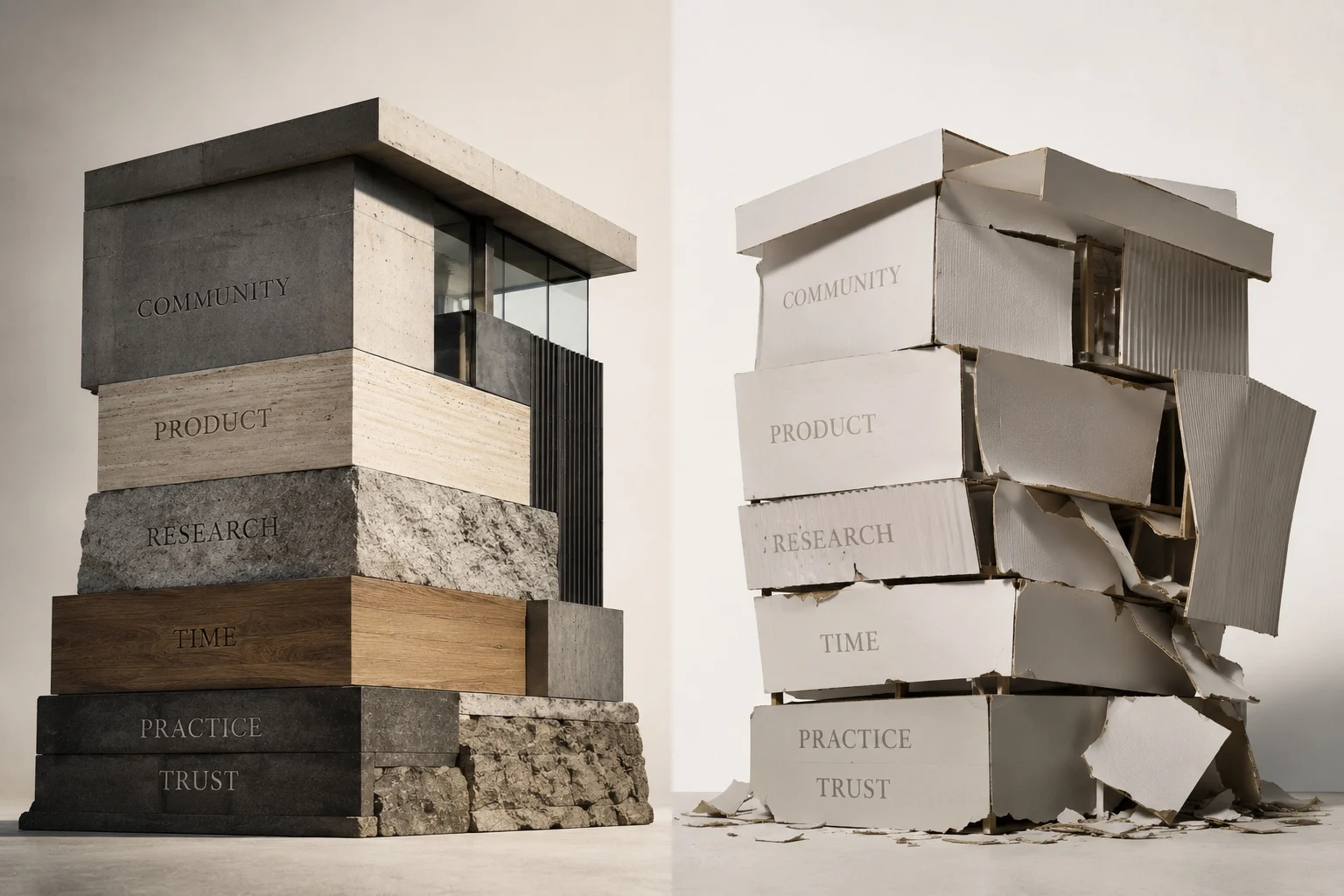
Most diversity campaigns fail not because brands don't care, but because they treat inclusion as a creative execution rather than a cultural commitment.
The brief that arrives on the creative director's desk looks reasonable enough: more representation, more faces, more stories. The resulting campaign looks the part. It runs, it gets coverage, and then it quietly disappears — leaving the communities it claimed to celebrate exactly where they were before. The power of culture and inclusion in marketing isn't unlocked by a campaign. It's built through structural decisions that accumulate over time until a campaign becomes an honest expression of something already true about the brand. When that structure isn't there, audiences — particularly the communities being represented — know immediately.
The question every brand should be asking before briefing an inclusive campaign is not "does this look right?" It is: have we earned the right to say this?
What follows is five diversity campaign examples interrogated through that question. The cases span product decisions, hiring structures, long-term positioning, and the absence of all three. The pattern that emerges is consistent: trust is built before the campaign brief is written.
1. Fenty Beauty: Inclusion as Product Architecture
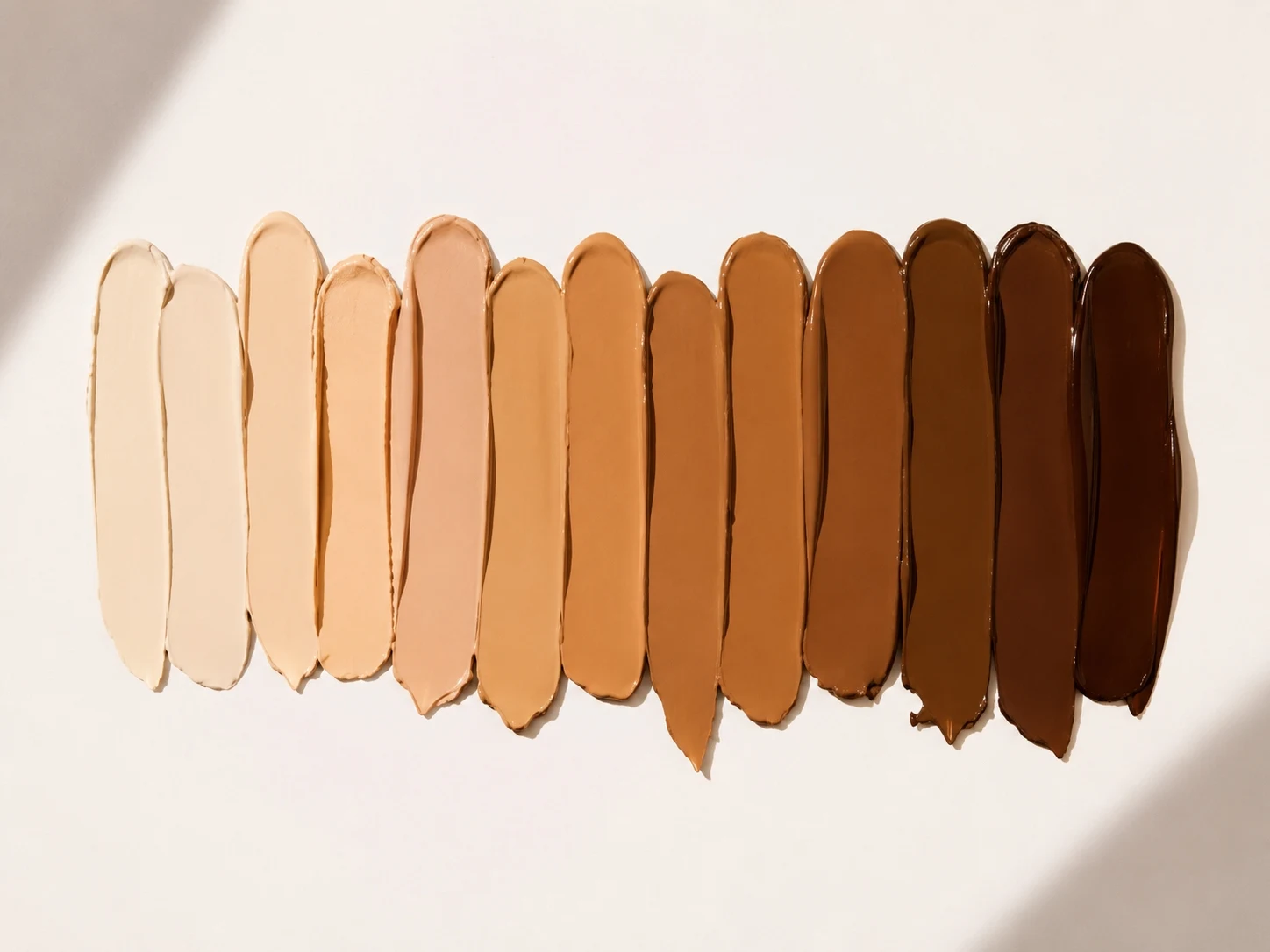
When Rihanna launched Fenty Beauty in September 2017, the beauty industry operated on a quiet agreement no one discussed publicly: foundation shade ranges topped out around 20 options, and women with deeper skin tones mixed products, settled for approximations, or accepted that the industry had not been designed for them. Fenty launched with 40 foundation shades — a number the industry had deemed unprofitable — and, as reported by Fortune, generated $100 million in revenue in its first 40 days. Time magazine named it one of the 25 best inventions of 2017.
The result was an industry-wide reckoning. As Business of Fashion reported, Fenty's 40 shades became a litmus test for the entire industry — with CoverGirl, Maybelline, and Too Faced among the brands that revised their shade ranges in direct response. The demand had always been there. The industry had chosen not to see it.
What made Fenty's inclusion credible wasn't the marketing. The brand never used the word "inclusive" in its launch campaign — the messaging was simply "Beauty For All." The product did the arguing. Every element of the brand — product range, visual merchandising, retail positioning — aligned around a single premise. As Rihanna stated on the brand's own launch page: "I wanted everyone to feel included. That's the real reason I made this line."
Why it earned the right: Inclusion was a product decision before it was a marketing decision. The campaign was evidence of something already structurally true about the brand.
The "Fenty Effect" reset the industry standard for shade ranges — and the expectation that inclusion starts with the product, not the campaign.
2. Dove Real Beauty: Twenty Years of Structural Consistency
Dove launched its Campaign for Real Beauty in 2004 with a premise that was, at the time, genuinely provocative: instead of aspirational models, it used real women — diverse in body type, age, and ethnicity — and challenged the industry to reconsider what beauty advertising could look like. Twenty years later, as PR Week reported on the campaign's 2024 anniversary, the platform is still running, making it one of the most sustained examples of purpose-driven brand positioning in consumer goods history.
The longevity is the argument. Most advertising campaigns are replaced or significantly revised within two to three years. Dove's commitment to the Real Beauty platform has outlasted the typical creative cycle by a factor of ten. That persistence has compounded into genuine cultural authority: the Dove Self-Esteem Project has reached over 82 million young people worldwide, according to Dove's own project page. In 2024, Dove became the first beauty brand to commit to never using AI-generated imagery to represent real women in its advertising — a pledge announced on its 20th anniversary.
But within the Dove brand itself, the structural commitment has been real: product decisions, long-form proprietary research, educational programming, and 20 years of consistent positioning that preceded each individual campaign execution. The campaigns were never doing the work alone.
Why it earned the right: Two decades of structural commitment built the cultural credibility that made each new execution credible. The campaign is evidence of the brand — not the other way around.
3. P&G "The Talk": Community-First Insight
In 2017, Procter & Gamble released a short film through its My Black is Beautiful platform that depicted a reality most mainstream advertising had never touched: the conversations Black parents are compelled to have with their children about racial bias. As the Shorty Awards recorded, "The Talk" generated over 1.4 billion earned impressions. It went on to win a Film Grand Prix at Cannes Lions 2018, as Campaign US reported in its full winners coverage.
What gave P&G the right to make this film was structural. My Black is Beautiful was founded at Procter & Gamble in 2007 by a group of Black women within the company, building over a decade of community engagement before the campaign brief existed. The insight that animated the film — that Black parents have conversations with their children that white parents do not — was not generated by a creative team in isolation. It came from within the community, through employee interviews with African American senior leaders at P&G that shaped both the research and the creative direction.
P&G followed "The Talk" with "The Look" in 2019, which examined the racial bias Black men navigate in everyday settings — deepening the narrative rather than abandoning it. As WWD reported, that same year the My Black Is Beautiful platform extended into product with the Golden Milk Collection, a five-piece haircare line designed specifically for Black women with curly and coily hair — film and product moving together.
Why it earned the right: The campaign originated from within the community it represented, built on a decade of community-level platform investment, and connected directly to product development for that audience.
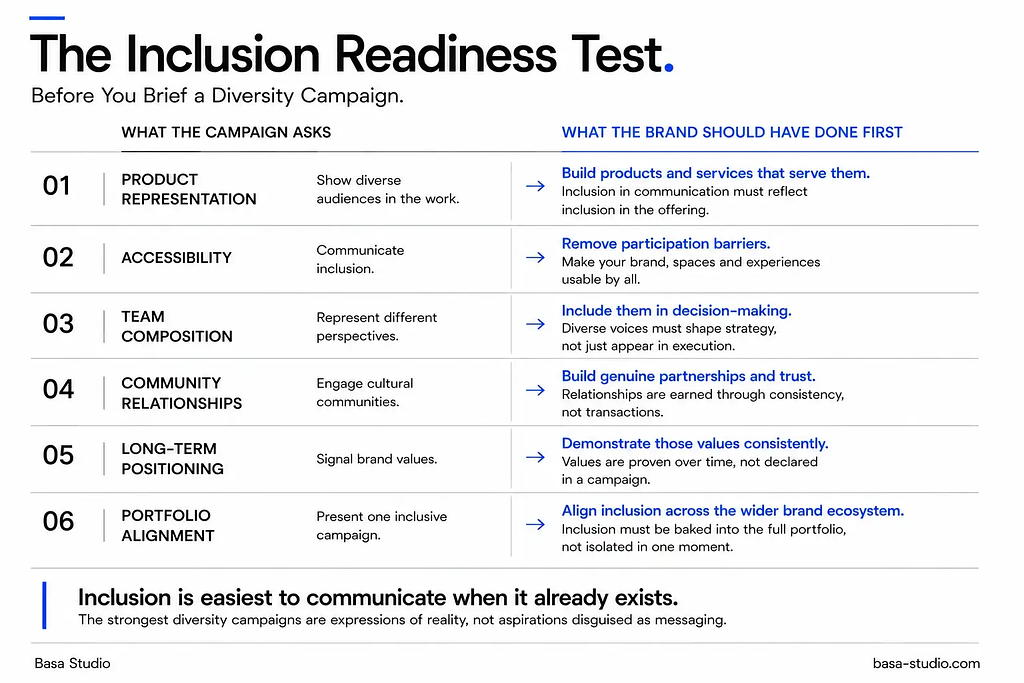
The Inclusion Readiness Test: six essential steps to building authentic, culturally grounded diversity campaigns.
4. Pepsi "Jump In": The Cost of Borrowing Cultural Weight
Few brands have a stronger record of cultural engagement than Pepsi. It essentially pioneered modern lifestyle marketing — building decades of pop culture relevance through music, sport, and global brand campaigns that made it a genuine cultural reference point, not just a beverage. That track record makes the "Jump In" episode instructive in a specific way: it shows that even a brand with deep cultural credentials can get this wrong when the structural foundation isn't there for a particular campaign.
In April 2017, Pepsi released a film depicting supermodel Kendall Jenner leaving a photoshoot to join a street protest, eventually defusing tension between demonstrators and police by handing an officer a can of Pepsi. As Campaign US reported, the ad was pulled within 24 hours amid global backlash. Pepsi's CEO, Indra Nooyi, later acknowledged publicly that the team which created and approved the commercial had failed to connect the imagery to the Black Lives Matter context it was clearly evoking.
The problem was not intent, and it was not a lack of brand sophistication. It was structure: the ad was produced entirely in-house by Pepsi's Creators League Studio, as Campaign US noted in its initial coverage, without the external perspective or community input that might have flagged the collision between a carbonated beverage and the lived experience of protest.
What Pepsi tried to borrow — the visual and emotional language of a movement — had been earned by people who had risked something to be in those streets. The ad treated that imagery as a creative asset rather than as cultural material with its own weight and history. That's the distinction that separated it from the P&G example that coincidentally launched the same year: one brand had spent a decade building the specific right to speak on racial bias. Pepsi had the cultural authority in general — but not here, and not in this way.
Why it failed the test: Strong brand cultural capital doesn't automatically transfer to campaigns on social justice. The structural foundation needed for this specific territory — community partnership, internal advocacy, long-term positioning on racial equity — wasn't there beneath the creative execution.
The difference between a brand that has earned the right to speak and one that hasn't is invisible in the brief — and obvious in the response.
5. Patagonia: When Inclusion Is Inseparable from Operational Logic
Patagonia doesn't run diversity campaigns in any conventional sense. What it runs is a company structured around values that make diversity campaigns unnecessary as a separate category of activity. Its DEI commitments are embedded in hiring policy — revised recruiting practices that prioritise skills like communication and willingness to learn over specific outdoor experience, explicitly designed to broaden the candidate pool beyond the historically white, affluent outdoor recreation demographic.
More significantly, Patagonia's framework connects inclusion to environmental justice, recognising that the communities most affected by environmental damage are often the communities least represented in the outdoor industry. This is not a campaign platform. It is a structural argument about who the outdoors is for, embedded into the company's philanthropic model, its product decisions, and its supply chain relationships.
In 2016, Patagonia announced it would donate 100 percent of its global Black Friday sales to grassroots environmental nonprofits. As Fortune reported, the company expected to reach $2 million in sales — it generated $10 million. The decision to run the initiative was made rapidly. That speed was possible because the values behind the decision were already built into how the company operates, as Patagonia's own account of the initiative confirms.
Five cases. Four that earned the right. One that didn't. The pattern is not subtle.
The brands that landed — Fenty, Dove, P&G, Patagonia — didn't arrive at inclusion through a campaign brief. They arrived at a campaign brief through a pre-existing structural commitment: product architecture, decade-long community platforms, internal advocacy, hiring reform. The campaign in each case was evidence of something already built. It was honest because it had to be — there was a structure behind it that audiences and communities could verify.
Pepsi arrived at the brief from the other direction: a creative concept in search of cultural authority it hadn't accumulated. The result was a campaign that asked audiences to accept borrowed weight as genuine.
The power of culture and inclusion in marketing is not activated by representation alone. Casting more diverse faces, running more inclusive copy — these are table stakes, and experienced audiences have learned to read them as signals of minimum effort. What moves the needle, what actually builds the kind of trust that compounds into brand equity, is the structural evidence that inclusion was a business decision long before it was a creative one.
For CMOs asking whether their brand has earned the right: the test isn't the campaign itself. It's everything that preceded the brief.
Inclusion as strategy starts before the campaign brief — in product decisions, hiring policy, and community relationships built over time.
Basa Studio works with premium brands to build brand experiences rooted in cultural depth — from strategy through execution. Talk to us.
Related creative stories
Browse through other features, interviews and guides to discover creative brand collaborations, meet innovative artists and creators, find out how new artforms are energizing advertising, & more.
We're excited to hear from you! If you're looking for artistic solutions for your next creative marketing campaign, send us your briefing. We can also help create a killer concept if you're in an early ideation phase. Check out our services for more.
Send your briefing
About you
THANK YOU
Your inquiry has been sent
We have received your inquiry. We'll get back to you within 24-48 hours to discuss your project. If you need urgent assistance, reach us on WhatsApp: +49 176 432 64506. In the meantime, we invite you to explore our insights, case studies, and lessons from building culturally grounded brand experiences.
Please contact us by phone if you're not able to reach us via this form.
THANK YOU
We have received your inquiry. We'll get back to you within 24-48 hours to discuss your project. If you need urgent assistance, reach us on WhatsApp: +49 176 432 64506. In the meantime, we invite you to explore our insights, case studies, and lessons from building culturally grounded brand experiences.
We use cookies to help empower our artists and make them accessible to clients. Check out our Privacy Policy and Terms of Service to see how your data can make a difference.