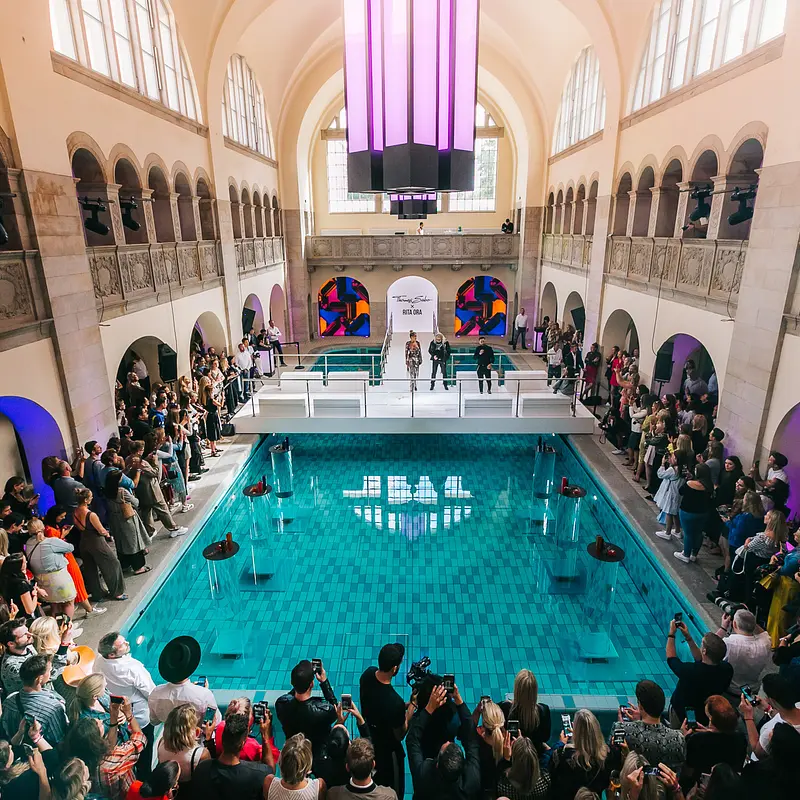
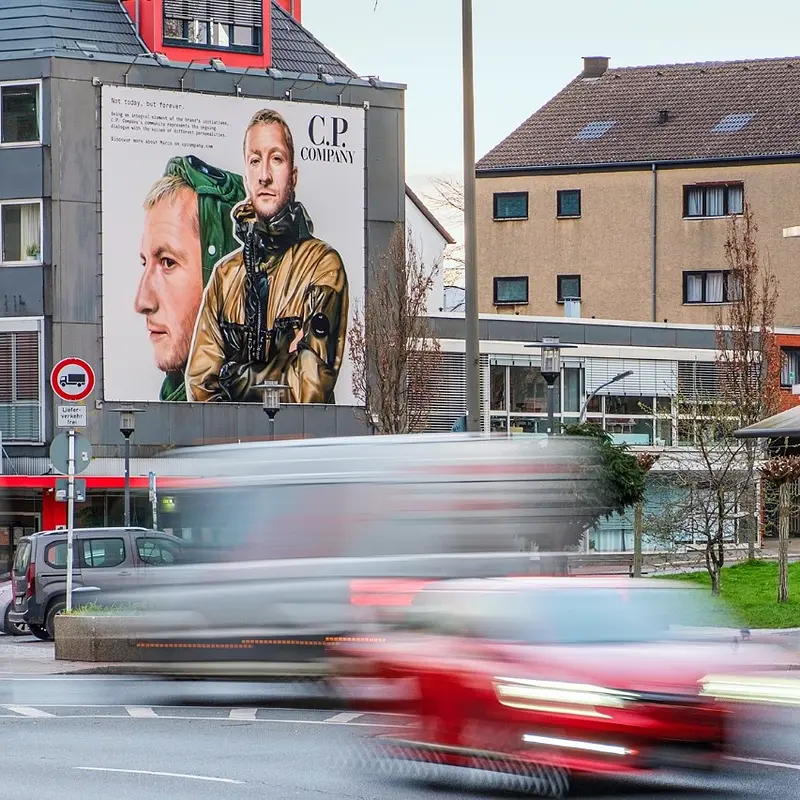
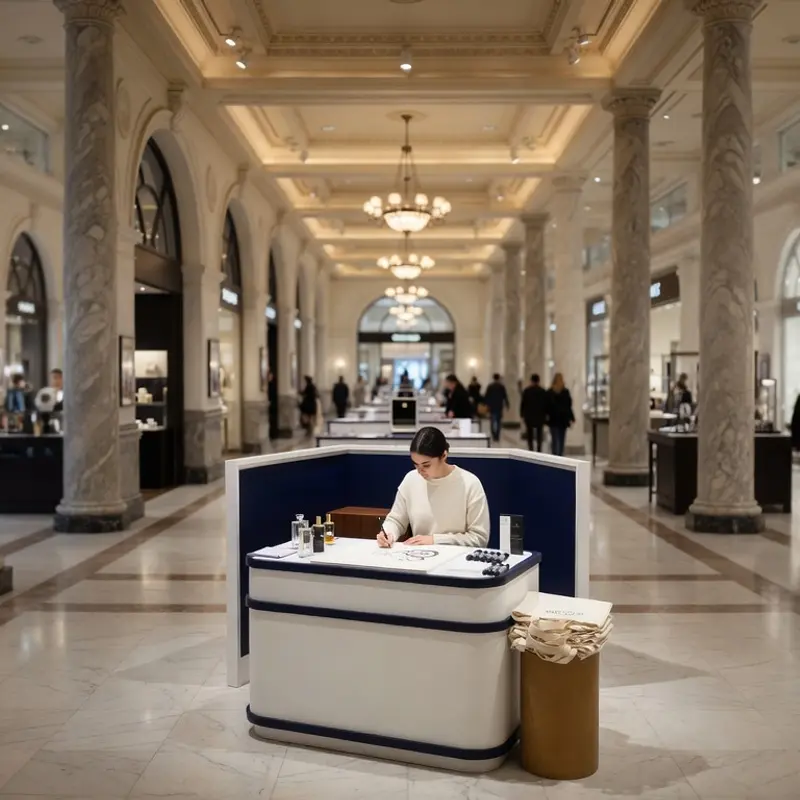
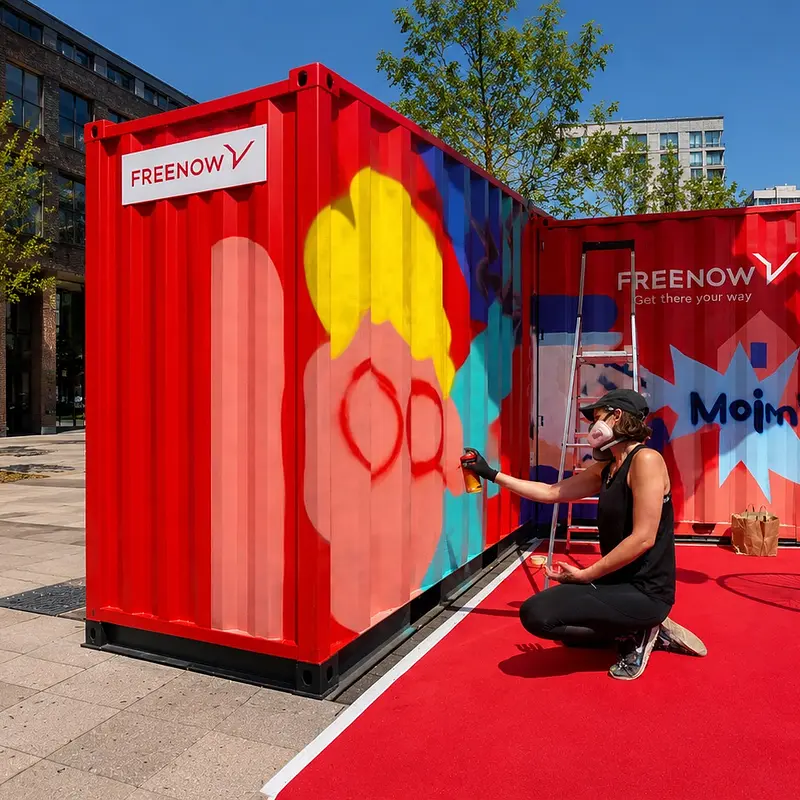
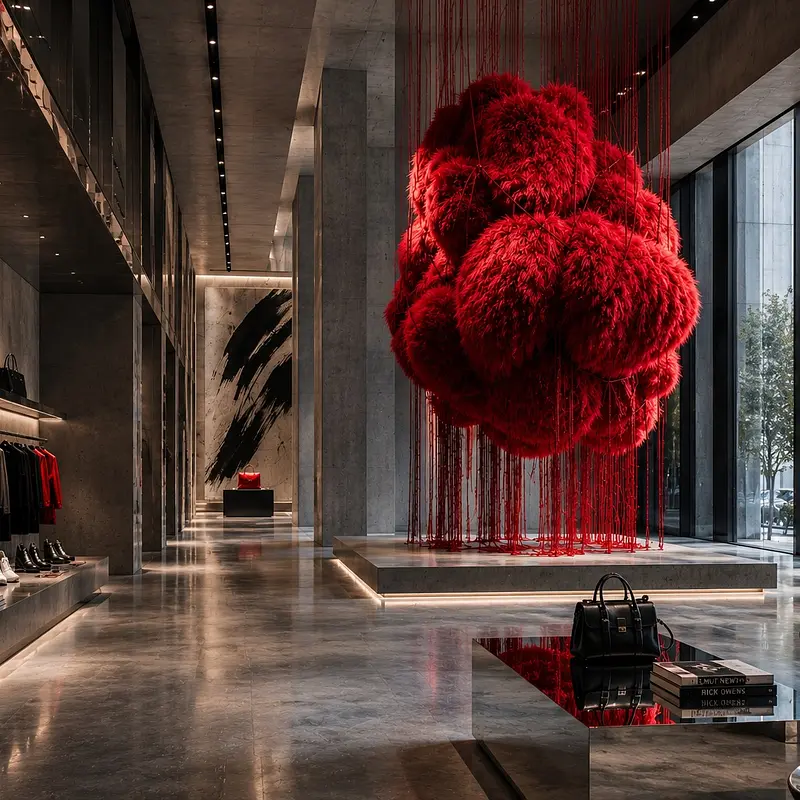
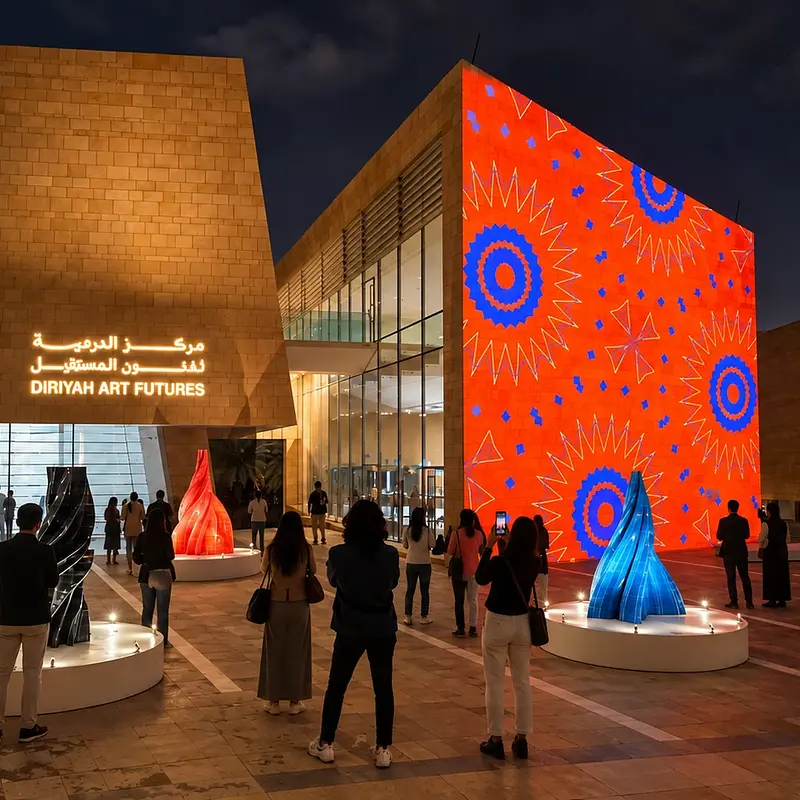
An immersive brand environment is more than a striking space — it's a world with its own logic, atmosphere, and cultural meaning.
Most brands understand that physical space matters — and how brands use it determines whether a touchpoint builds something lasting or disappears the moment the doors close.
Fewer understand why some spaces stop people in their tracks — and become the thing people talk about, photograph, and seek out again. The gap between a venue that hosts a programme and a world people want to inhabit isn't about budget or surface area. It's about whether the space has been designed with cultural depth, or merely with aesthetic ambition.
This is the strategic logic of spatial brand design — and it's one of the most underused levers in a senior marketer's toolkit.
A Venue Hosts. A World Holds.
The distinction sounds simple. In practice, it determines everything.
A venue is a container. It holds people, furniture, and a schedule. It has a programme and an exit. When the programme ends, it empties. A brand world, by contrast, has its own internal logic — an atmosphere, a set of sensory cues, a point of view. It makes you feel, almost immediately, that you've stepped into a place that has a position. You don't need the brand name on the wall to know whose world this is.
Hermès has built a repeatable model for this. Mystery at the Grooms' — first shown in Shanghai in 2023 and travelling globally since — transforms a warehouse into a fictional French estate organised around the brand's equestrian origins, which date to 1837. Six rooms, each with its own atmosphere, function simultaneously as stage sets and showcases: products from across the brand's sixteen categories are embedded in the environment as objects in a world, not items on display. The medium of communication is entirely material. Oak cabinetry, hand-painted tiles, and bespoke textiles carry the brand's sensibility without a word of copy to explain them. Clues are physical — a safe that yields only to the correct code, a panel that opens only when you find the right mechanism. The brand's values — craft mastery, material intelligence, a certain quality of attention — are nowhere stated. They are present in the weight and finish of every object in the room. That is the difference between a space that tells you what a brand stands for and one that makes you feel it.
This is not a one-off creative experiment. Carré Club — an earlier Hermès touring pop-up built around the brand's silk scarves — used the same logic. As Vogue reported, the concept was conceived by artistic director Bali Barret explicitly to "recreate the mood of an in-house creative studio": an 8,000-square-foot space where visitors could watch eight of the scarf designers at work, observe the process behind each hand-drawn design, and encounter silk as a medium of craft and cultural expression rather than a retail category. Different theme, same strategic architecture: one cultural idea, expressed completely across an entire environment, communicated through making and material rather than messaging.
That difference — stated versus demonstrated — is where most brand environments fall short. They invest in impressive architecture and striking visuals, then undermine both by plastering copy over them. When a space is genuinely immersive, the communication is environmental. The space is the message.
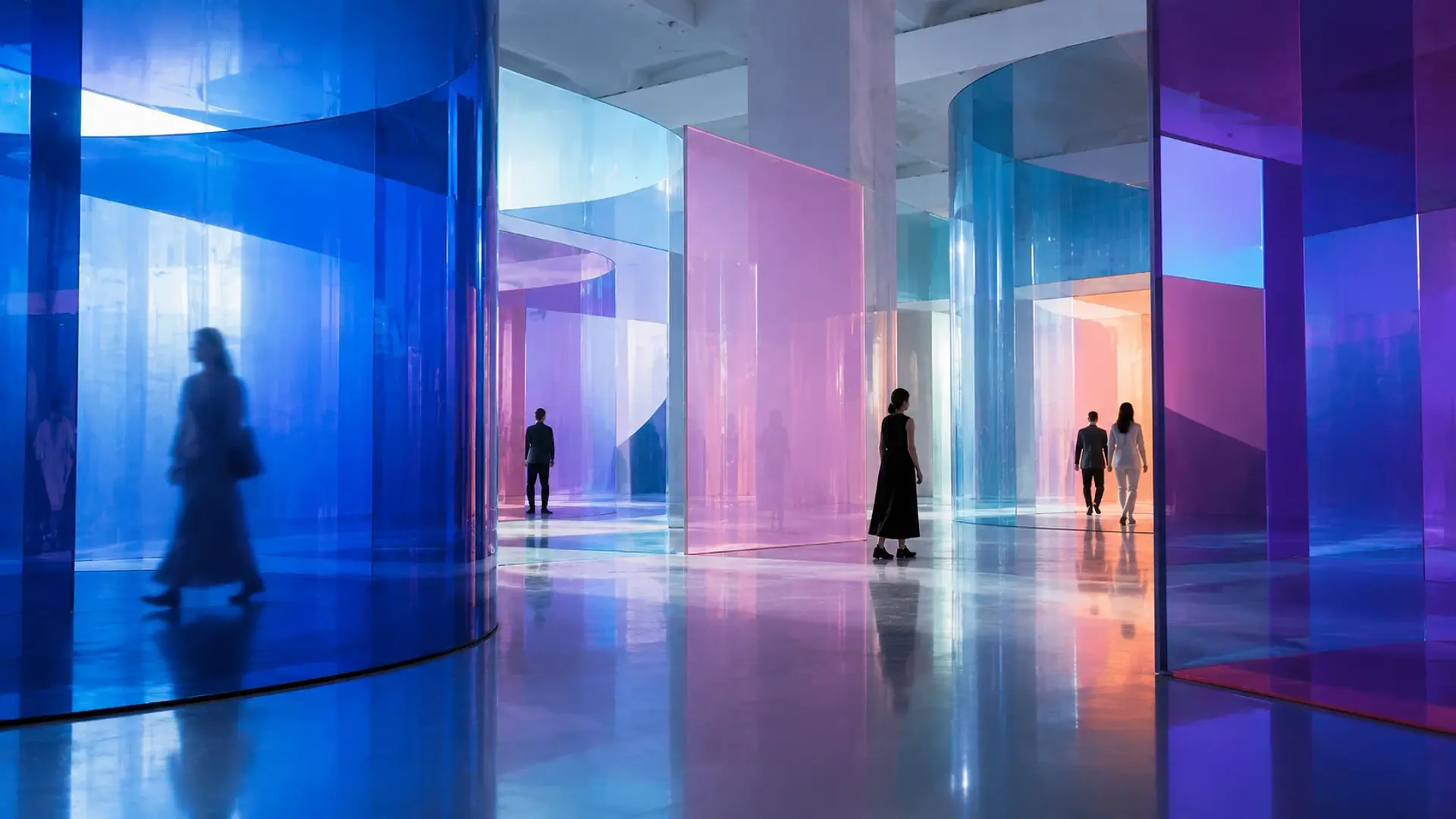
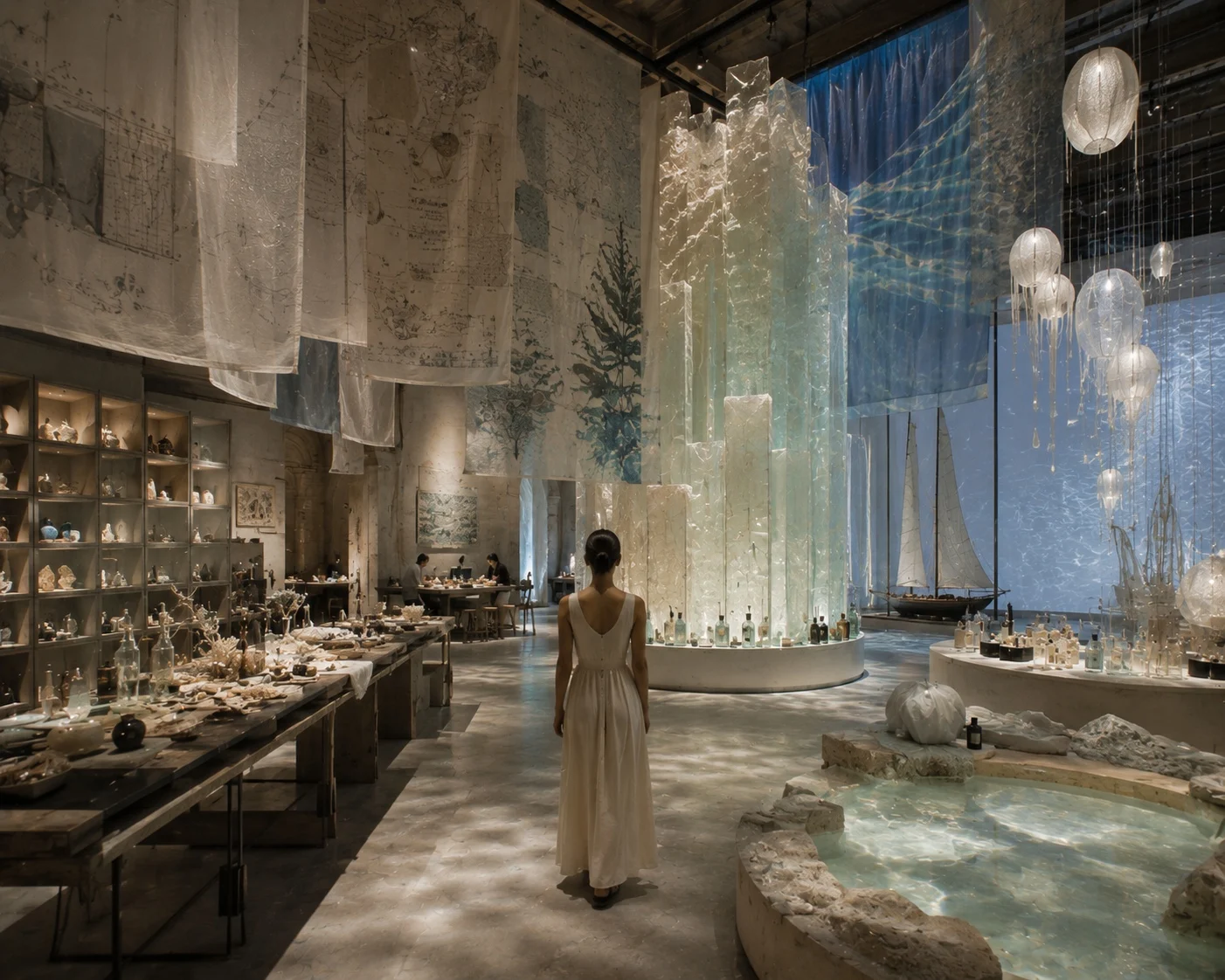
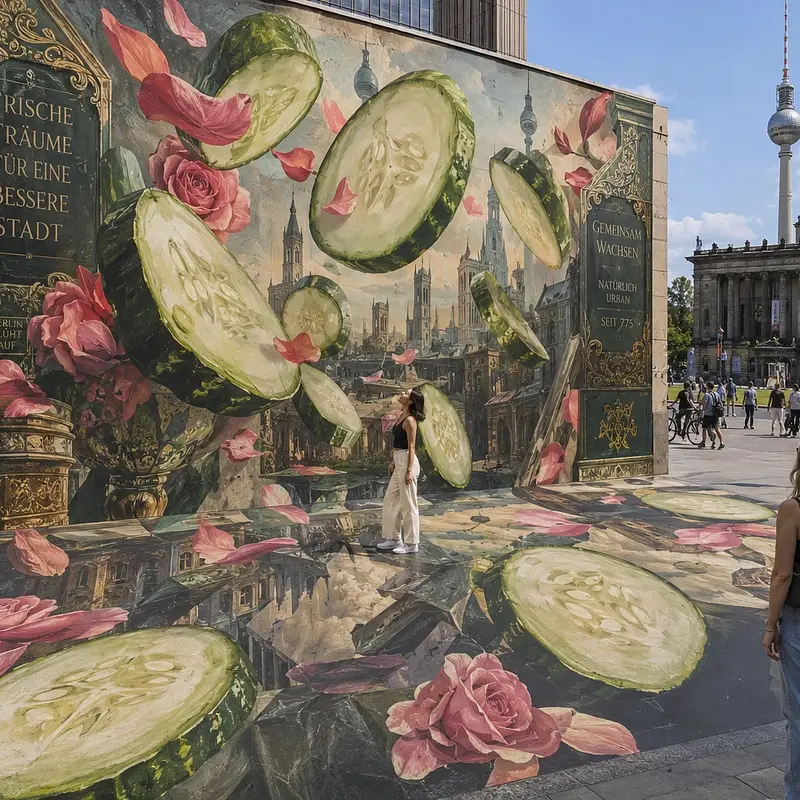
When a space is designed with cultural depth, the brand's values are communicated through material, light, and atmosphere. AI- generated.
What Spatial Storytelling Actually Means
"Spatial storytelling" has become one of those phrases that gets used without much scrutiny. It's worth being precise about what it means — and what work it actually requires.
Spatial storytelling is the practice of communicating a brand's identity, values, and cultural meaning through the physical elements of a space — architecture, material, light, sound, and movement — rather than through copy, signage, or conventional messaging.
In a genuinely immersive brand environment, the narrative is communicated through the full sensory register of the space: architecture shapes the journey, light directs attention and sets mood, material communicates quality and provenance, sound creates atmosphere and pacing, movement — of people, of objects, of light — creates rhythm and surprise. Together, these elements do the work that copy cannot.
Copy tells. Space shows.
A 100-word wall text can describe a brand's commitment to craftsmanship. Or a space can be built in collaboration with a master craftsperson whose work is embedded into the architecture — where visitors can see the joinery up close, feel the weight of the materials, understand through their hands what the brand means when it uses that word. One is a claim. The other is evidence.
This is why the medium of spatial brand design is not simply architecture or interior design, as impressive as those disciplines are. It requires a multidisciplinary team with a specific brief: communicate brand values without language. That brief demands different collaborators, working differently, than a standard design or construction project.
The Multidisciplinary Team — And Why Sequence Matters
Here is a mistake that brands and agencies make repeatedly: they commission the architecture and design first, then bring in artists or cultural collaborators to "add depth" once the structure is fixed. The result is spaces that look interesting but feel thin — where the artistic elements sit on top of the architecture rather than running through it.
Genuinely immersive brand environments are designed differently. The conceptual framework — what this space is about, what world it is building — comes first. Architects work within that framework, not before it. Experiential designers shape how people move through and experience the space. Artists and cultural collaborators bring conceptual depth and meaning that neither architects nor brand managers typically carry. The difference between these roles is not about execution sequence; it's about what each discipline contributes to the central idea.
At Basa Studio, the design team combines artists, architects, experiential designers, and cultural collaborators — ensuring every space is both functionally excellent and culturally resonant from concept through execution.
Critically, rather than bringing artists in at the end for execution, cultural authenticity is built into every concept from the strategy stage, not layered on afterward. The distinction is significant. When a cultural collaborator is involved from the strategy stage, they shape the brief. Their lived experience, their relationship to a material or a community or a visual language, becomes part of the conceptual foundation. When they are brought in at the end, they decorate a decision that has already been made.
Dwell Time: The Metric That Tells the Truth
Most brand environments are measured on footfall. It's the wrong metric.
Footfall tells you how many people passed through. Dwell time tells you how many people stayed. And the amount of time someone chooses to spend in a space — when they have no obligation to remain — is one of the most honest indicators available of whether the space is working culturally.
A space that drives high dwell time has created something compelling enough that people reorganise their time around it. They stay longer. They explore. They return. In a retail context, this has direct commercial translation. A Path Intelligence study examining a UK shopping centre found that a 1% increase in dwell time produces a 1.3% increase in sales — a relationship that holds across formats and has informed how premium retailers design their floor layouts ever since.
But the strategic significance goes beyond conversion. High dwell time means the brand environment is being experienced, not just visited. People are absorbing what it communicates.
The inverse is also instructive. A space with low dwell time — regardless of how much it cost, how impressive its visual identity is, or how many people walk through it — has failed as a brand environment. People have not found a reason to stay.
Designing for dwell time means designing for curiosity: spaces that reveal themselves gradually, where there is always something else to discover, where the environment rewards close attention. That is fundamentally a cultural design problem, not an architectural one.
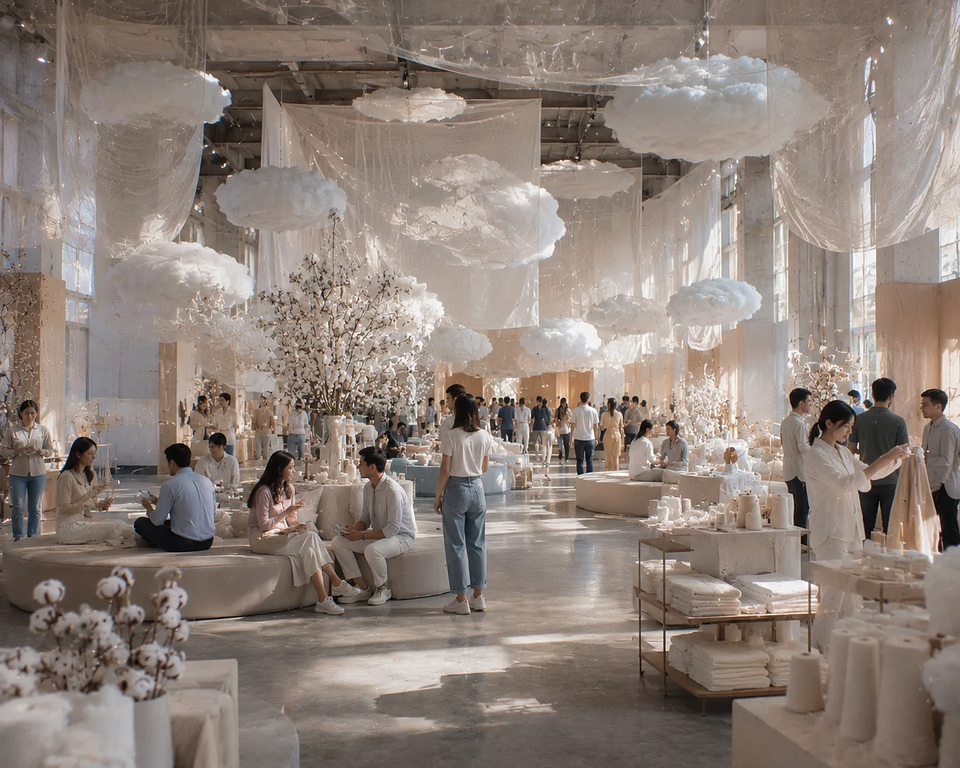
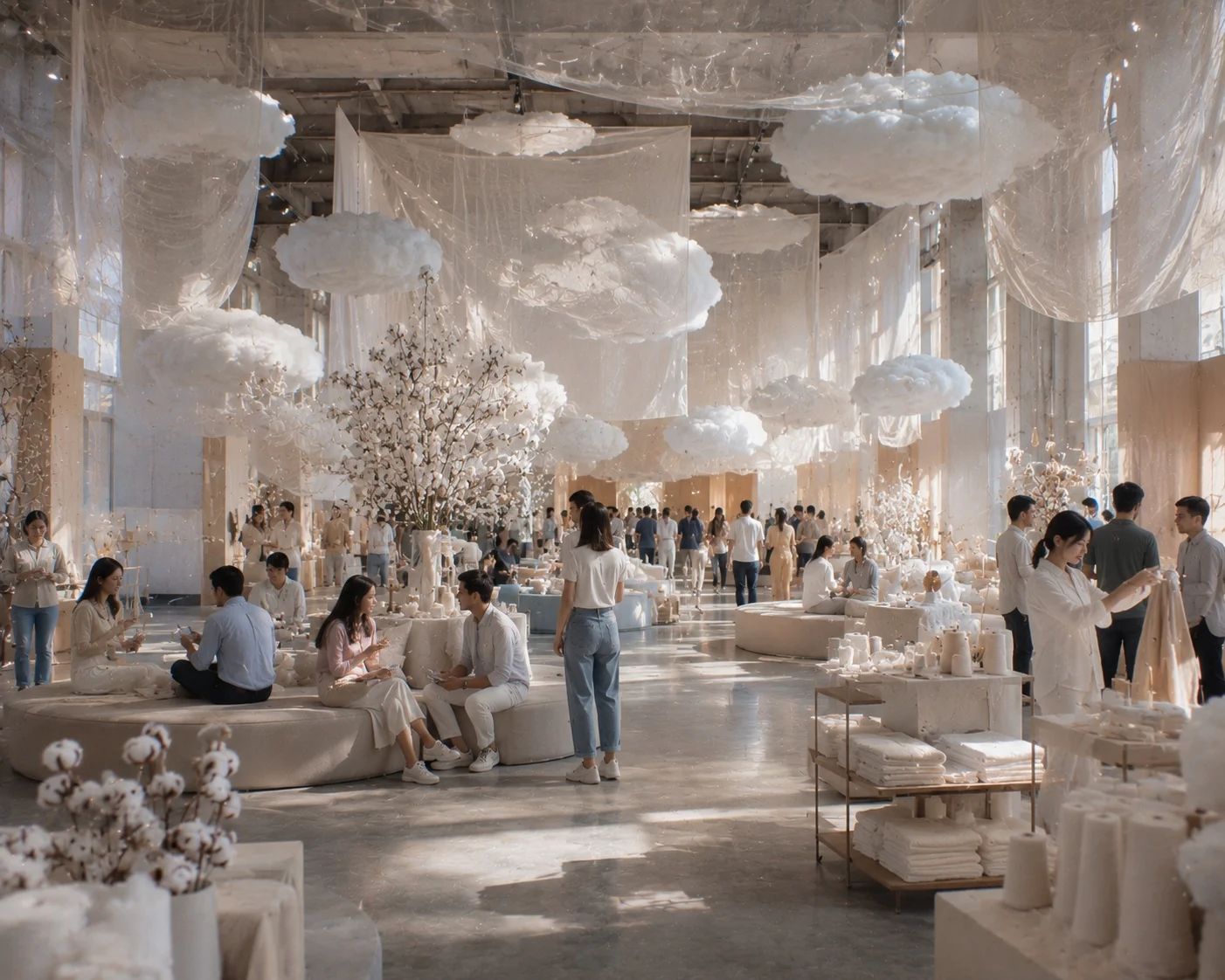
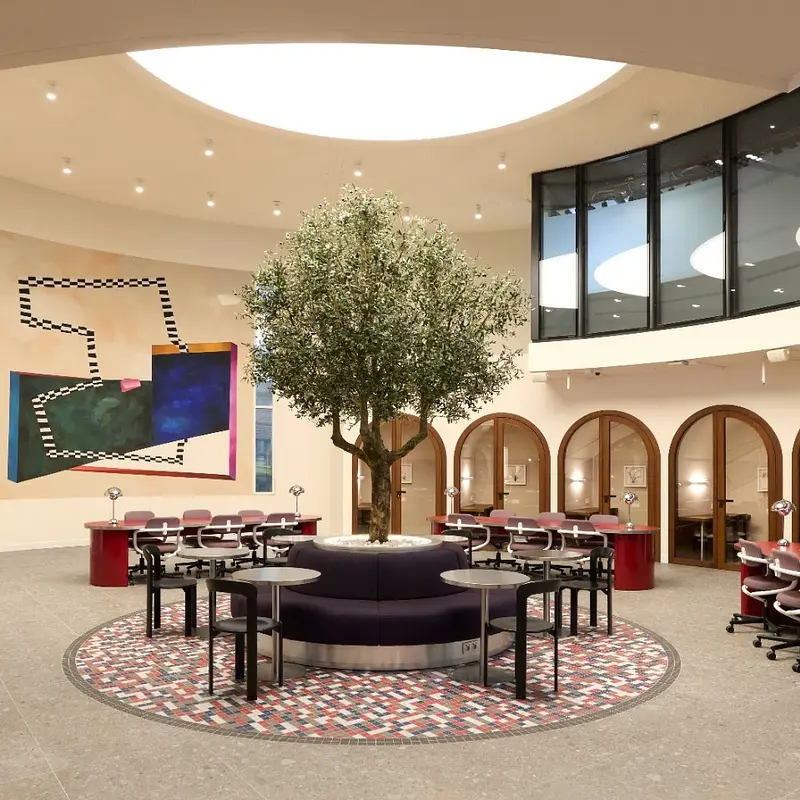
Dwell time is one of the most direct measures of cultural resonance. When people stay, explore, and return — the environment is working. AI-generated.
Designing for Earned Media Without Designing for Instagram
The moment a client brief includes the word "Instagrammable," a warning light should come on.
It's not that shareability is the wrong goal. Organic social content generated by a genuinely powerful brand environment is among the highest-value earned media a brand can produce — real people, in a real space, communicating something real to their audiences.
The problem is when shareability becomes the primary brief, rather than a consequence of doing the design work properly.
Spaces designed to be Instagrammable tend to be exactly that and nothing more: a sequence of photogenic moments without the connective tissue of a real world. They generate images but not experiences. People photograph them and leave. Dwell time is low. Cultural resonance is near zero. And the images, recognisably constructed for social media, carry a faint whiff of cynicism that audiences have become increasingly good at detecting.
The spaces that generate the most durable, high-quality earned media are the ones designed for depth, not documentation. When a space has genuine conceptual substance — when it is doing real cultural work — the social content it generates reflects that. People don't just take photographs; they write about it, recommend it, bring other people to it. The earned media is richer, more diverse, and more credible precisely because it was not engineered.
Experiential space design at this level treats organic sharing as a consequence of cultural depth, not a substitute for it.
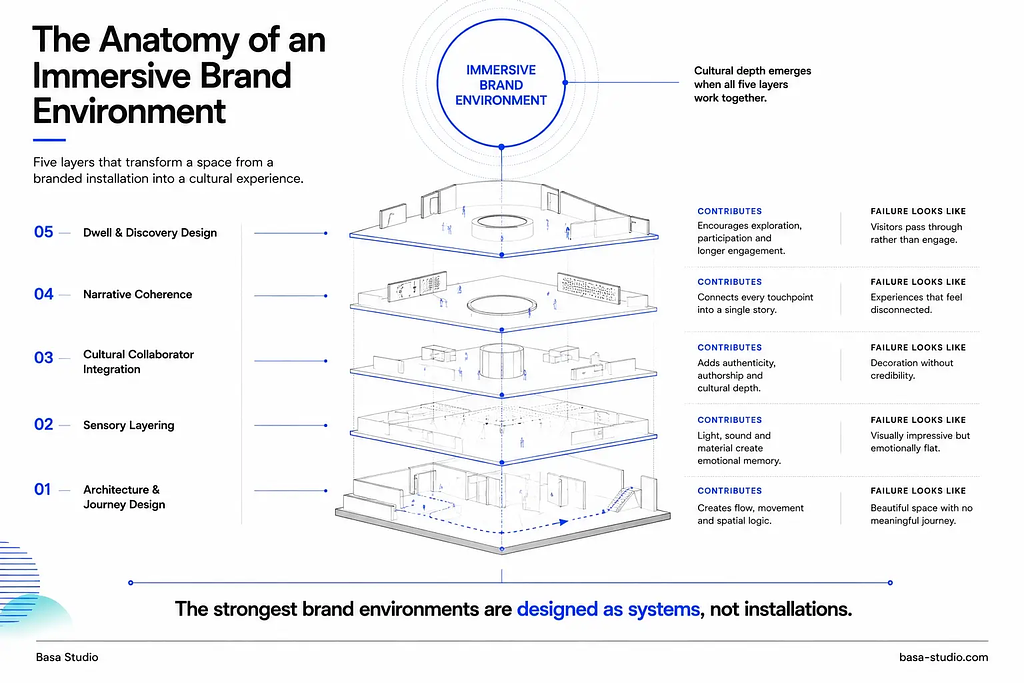
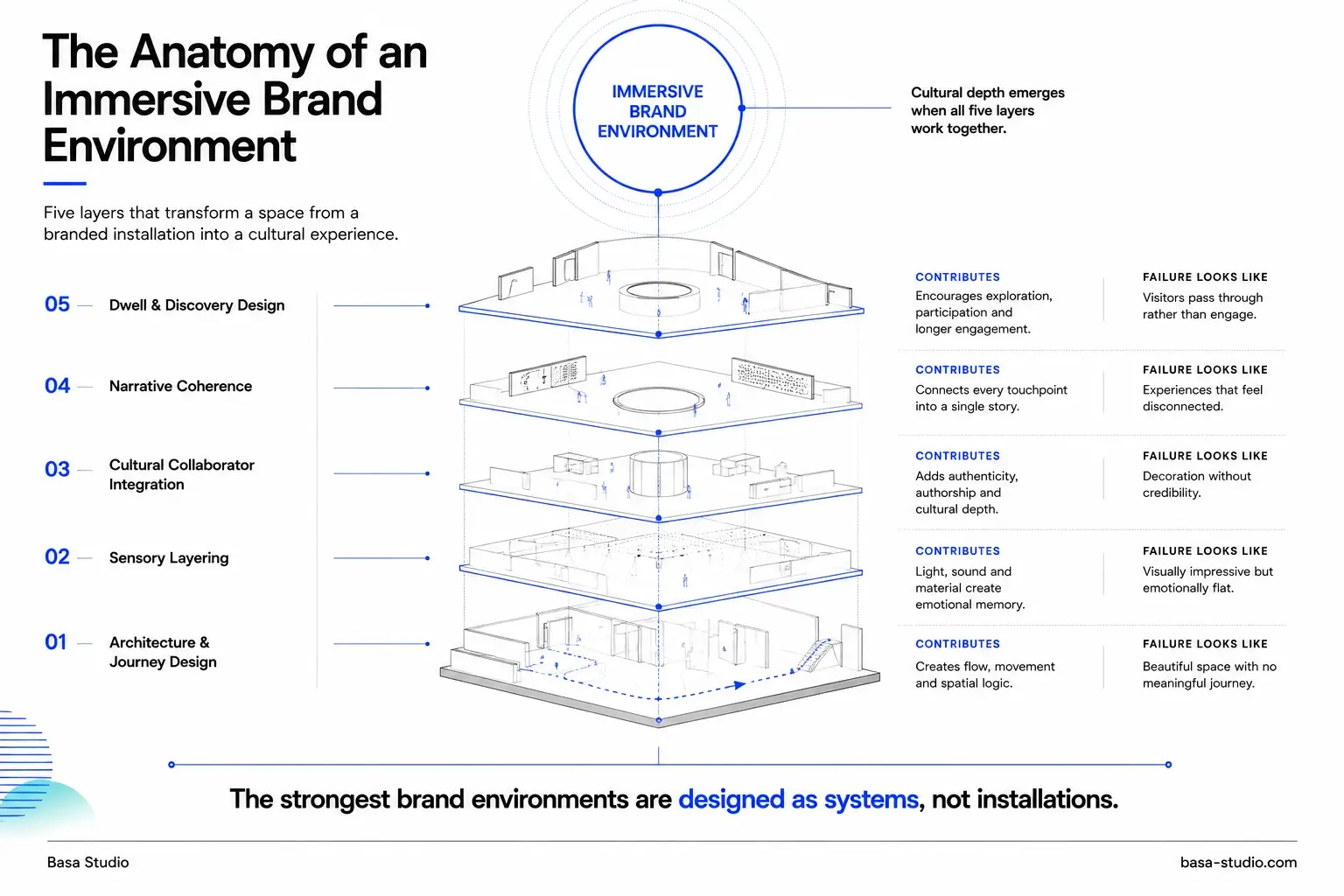
The spaces that do this well tend to share the same underlying structure: a coherent spatial journey shaped by architecture, sensory layering across light, sound, and material, cultural collaborators integrated from the strategy stage, a single narrative idea expressed consistently throughout, and discovery design that rewards close attention and drives dwell time.
An immersive brand environment is not just a space — it’s a system of connected layers designed to create meaningful cultural experiences.
What Cultural Collaboration Changes About What's Possible
There is a ceiling to what a standard architecture or interior design brief can produce in a brand environment. Not because the disciplines are limited — architecture and design are among the most powerful expressive tools available — but because their default brief is functional: the space should work, flow, look excellent, and reflect brand guidelines.
A cultural collaboration brief starts from a different question: what does this brand mean, and how can space make that meaning legible, surprising, and memorable?
The answer to that question comes from somewhere other than brand guidelines. It comes from lived experience, from a specific perspective on materials or craft or community, from the kind of conceptual thinking that artists, artisans, and cultural innovators carry precisely because their work is not constrained by commercial convention.
The most effective spatial collaborations tend to combine two types of cultural contributor: globally recognised practitioners who bring conceptual ambition and cultural authority, and local artisans or makers who bring specificity, community connection, and the kind of craft detail that rewards close attention. Neither substitutes for the other. The globally acclaimed set the conceptual register; the locally rooted make it feel true to the place it inhabits.
The result is brand environments that could not have been produced by any other method. They carry depth that standard design cannot reach — not because the design is more expensive or more complex, but because the brief was fundamentally different from the start.
The Brands Getting This Right
Aesop has made spatial brand design its primary competitive differentiator, building one of the most distinctive retail identities in premium beauty through a model of radical localisation applied consistently across more than 400 stores. According to Options The Edge, a retail design publication, three elements form the framework of every Aesop store: a single strong idea, a sense of place, and materials relevant to both the inspiration and locale — the brand does not follow a standardised design concept; it responds specifically to each location and space. The results are environments with genuine cultural specificity: as Dezeen documents, the Cambridge store draws on the nearby River Cam, fusing bulrush shelves with hemp accents; a west London location takes its colour from the red sandstone of Glamis Castle in Scotland; the Leeds store references Victorian bathroom interiors. Each store is developed in collaboration with various interior designers, architects, and artists. No two stores look alike, and none explains itself through copy. The brand's values — craft, intelligence, specificity, a commitment to looking closely at place — are communicated through the architecture before a product is touched or a word is read. The model also answers the dwell time question directly: walking into an Aesop store is designed to be a sensory experience that makes you feel like you are partaking in something special and exclusive. People don't pass through. They stay.
Louis Vuitton's Objets Nomades programme offers a structurally different model — a recurring annual exhibition format that turns the brand's founding idea into a world visitors re-enter each year. Since 2012, the initiative has reconnected the maison to its roots in high-end craftsmanship, with the encounter between designers and craftsmen at the heart of a journey that has brought style outside the home but also the journey inside the home. The exhibition format compounds rather than resets: each edition builds on the last, deepening a cultural argument about travel, material intelligence, and the relationship between heritage and contemporary design. According to FashionNetwork, for Milan Design Week 2026 the maison took over the courtyard and the entire piano nobile of Palazzo Serbelloni with an immersive journey interweaving Objets Nomades, historic collections, and new collaborations. The spatial logic is consistent across editions: as Schön! Magazine reported, a room conceived as a train carriage charted the relationship between brand heritage and contemporary design, geometric mountain landscapes borrowed from Charlotte Perriand's 1920s textile archives decorated both tablecloths and contemporary seating, and a hand-painted rug covered the courtyard floor, produced by students from the Brera Academy. The brand's identity is demonstrated through immersive architecture, not stated through messaging. Crucially, because the format recurs, it accumulates cultural authority across editions — each year's audience arrives with memory of the last.
These two examples operate at different scales, in different formats, with different commercial objectives. What they share is the structural logic this article has been building toward: the brand's values are embedded in the space rather than overlaid on it. The brief begins with meaning — what does this brand actually stand for, and how can a physical environment make that legible without language? The collaboration structure, the material choices, the spatial sequence all follow from that question. When the question is asked seriously, and answered with the right people in the room from the start, the result is a space people seek out. When it isn't, the result is a venue.
The Strategic Case for Investing Here
Senior marketers evaluating spatial brand design as a budget line should think about it in terms of what it compounds over time, not what it costs in a single activation.
A genuinely immersive brand environment generates returns across multiple value pools simultaneously: direct footfall and revenue from the physical space; organic social content and earned media at a scale that paid media cannot replicate at equivalent credibility; brand perception data — awareness, preference, consideration — that accumulates with each successive experience; and the kind of cultural authority that makes subsequent activations easier to land, harder for competitors to replicate, and more resonant with audiences who have already been inside the world. McKinsey research on experience-led growth finds that retailers prioritising deeper shopper interactions and longer stays can achieve a 2–7% increase in sales revenue and a 7–10% increase in total shareholder returns — returns that arrive across timelines, not in a single quarter.
The challenge is measurement: these returns don't all arrive on the same timeline, and some of them — particularly the cultural authority dimension — resist the attribution models most marketing teams are built around. That is a real constraint. It is also, in many cases, a feature rather than a bug. The cultural authority that accumulates through consistent immersive brand environments is precisely valuable because it cannot be bought directly or replicated quickly. For a fuller treatment of how to build the business case for cultural investment, the budget and measurement questions are addressed in depth there.
The brands investing seriously in experiential space design are, in most cases, playing a longer game than a single-quarter activation budget allows. The ones doing it best treat it as infrastructure — a recurring investment in the kind of cultural presence that generic activations cannot build. BCG's research on brand equity puts it precisely: brand marketing behaves like capital — when sustained, it compounds; when underfunded, it depreciates quickly and requires disproportionate reinvestment to recover.
For the full argument on how cultural brand building generates measurable ROI, including the metrics and attribution frameworks that make the case to boards and CFOs, that evidence is laid out in full alongside the financial data. Basa Studio designs immersive brand environments from strategy through execution — integrating architects, experiential designers, and cultural collaborators from the brief stage, not the delivery stage. If you're developing a spatial brand project, or simply exploring what cultural depth could change about your next space, get in touch.
Related creative stories
Browse through other features, interviews and guides to discover creative brand collaborations, meet innovative artists and creators, find out how new artforms are energizing advertising, & more.
We're excited to hear from you! If you're looking for artistic solutions for your next creative marketing campaign, send us your briefing. We can also help create a killer concept if you're in an early ideation phase. Check out our services for more.
Send your briefing
About you
THANK YOU
Your inquiry has been sent
We have received your inquiry. We'll get back to you within 24-48 hours to discuss your project. If you need urgent assistance, reach us on WhatsApp: +49 176 432 64506. In the meantime, we invite you to explore our insights, case studies, and lessons from building culturally grounded brand experiences.
Please contact us by phone if you're not able to reach us via this form.
THANK YOU
We have received your inquiry. We'll get back to you within 24-48 hours to discuss your project. If you need urgent assistance, reach us on WhatsApp: +49 176 432 64506. In the meantime, we invite you to explore our insights, case studies, and lessons from building culturally grounded brand experiences.
We use cookies to help empower our artists and make them accessible to clients. Check out our Privacy Policy and Terms of Service to see how your data can make a difference.