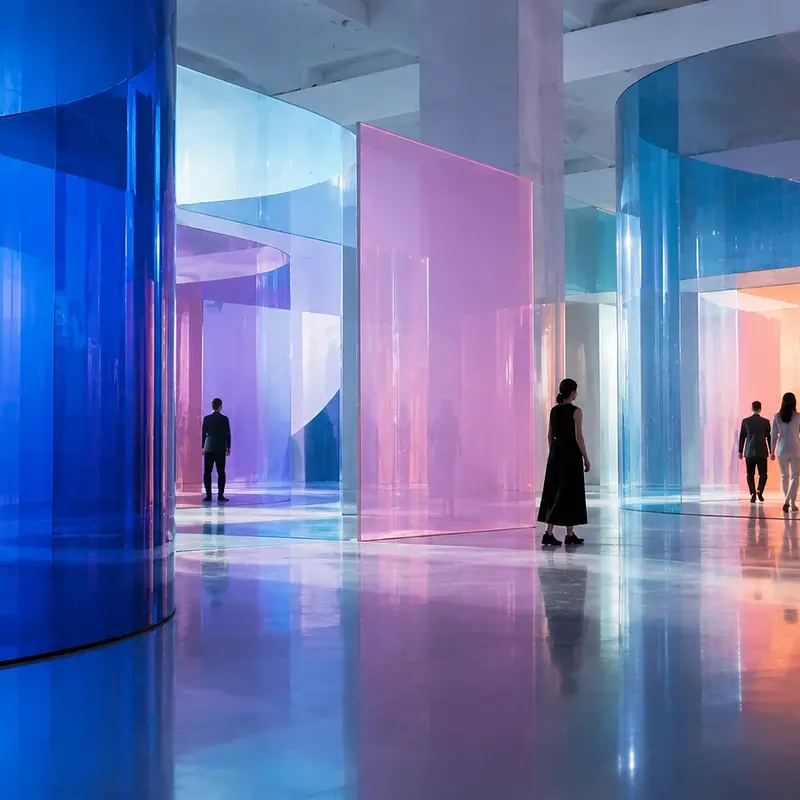
In-store brand displays are among the most overlooked branded in-store touchpoints — and the most underused at the exact moment a customer decides.
While brands spend months refining campaign photography and weeks debating packaging, the physical display that greets a customer at the point of purchase often gets briefed in a single slide and handed to a print vendor. The result is a missed cultural moment dressed up as store operations.
This article is about display-level interventions — a single unit, a seasonal installation, a window concept. If you're thinking about a full retail environment or spatial overhaul, that's a different scope — and a different article. But if you have a display window, a gondola end, a counter unit, or a seasonal moment, you have a cultural opportunity. The question is whether your brief treats it like one.
The Display as Brand Micro-Environment
A well-conceived in-store brand display is not a smaller version of a campaign. It's a concentrated brand world — a self-contained cultural statement that works in three seconds or not at all. The brands that understand this treat retail display design the same way they treat editorial: with a point of view, a material language, and an intentional relationship between object, context, and observer.
The brands that don't produce what most retail floors are full of: laminated card, branded pantone, product photography at scale. Polished. Forgettable. Entirely replaceable by the competitor display one shelf over.
The difference between the two isn't always budget. It's brief quality. A display briefed around "drive awareness of the new SKU" produces very different work than one briefed around "communicate the craft heritage behind this product at the moment a customer reaches for it." The second brief is harder to write. It also produces something worth looking at.
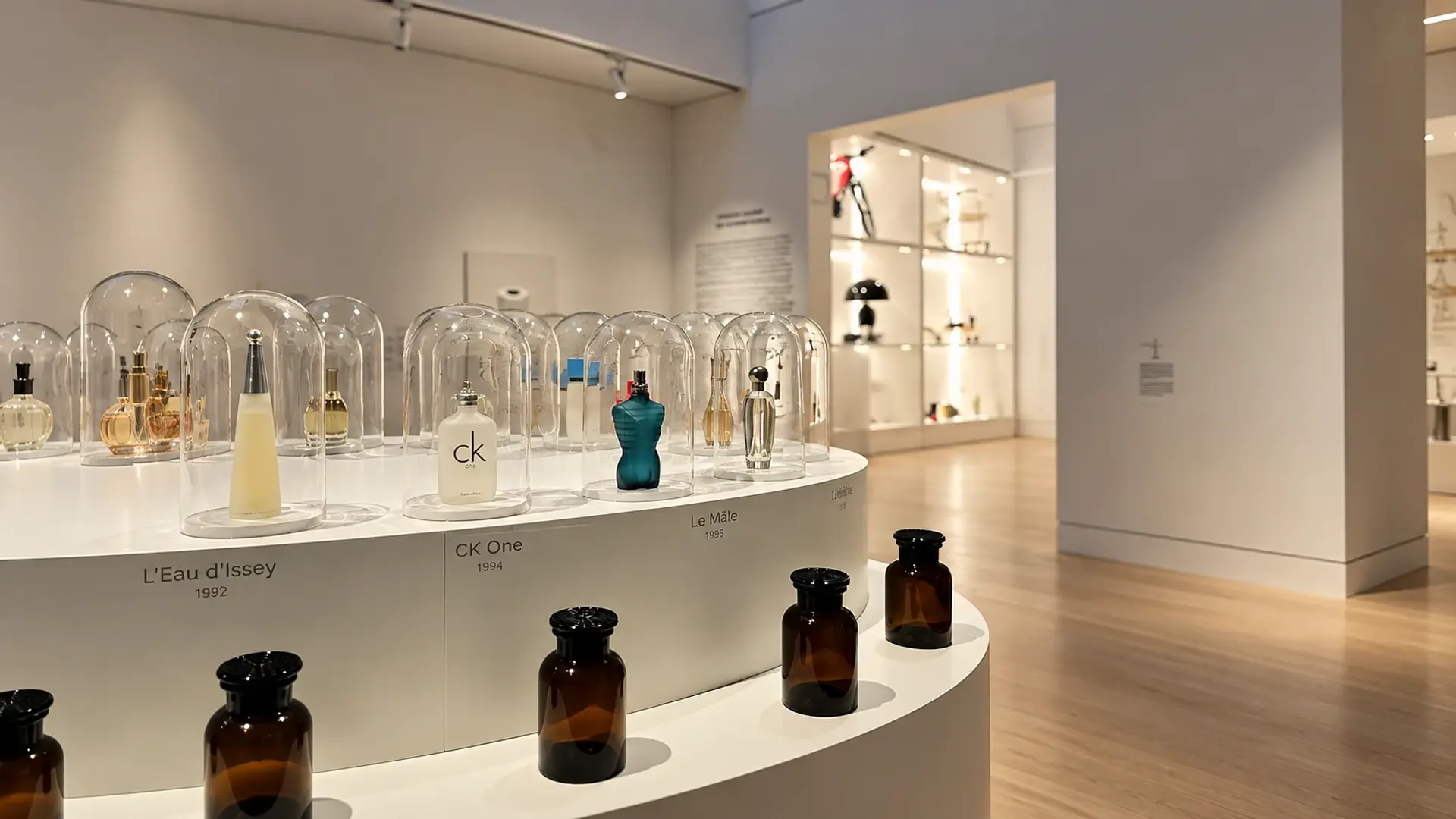
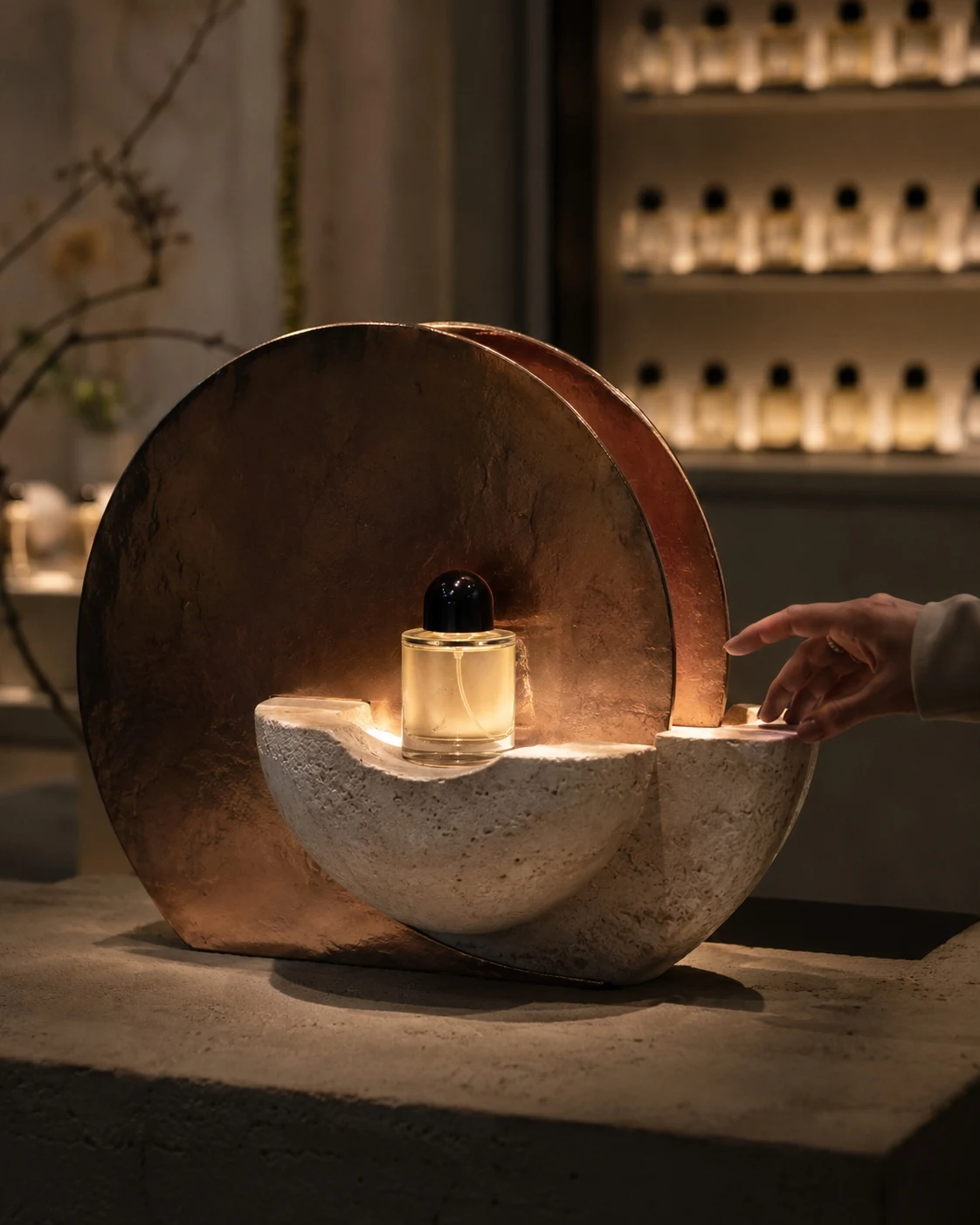
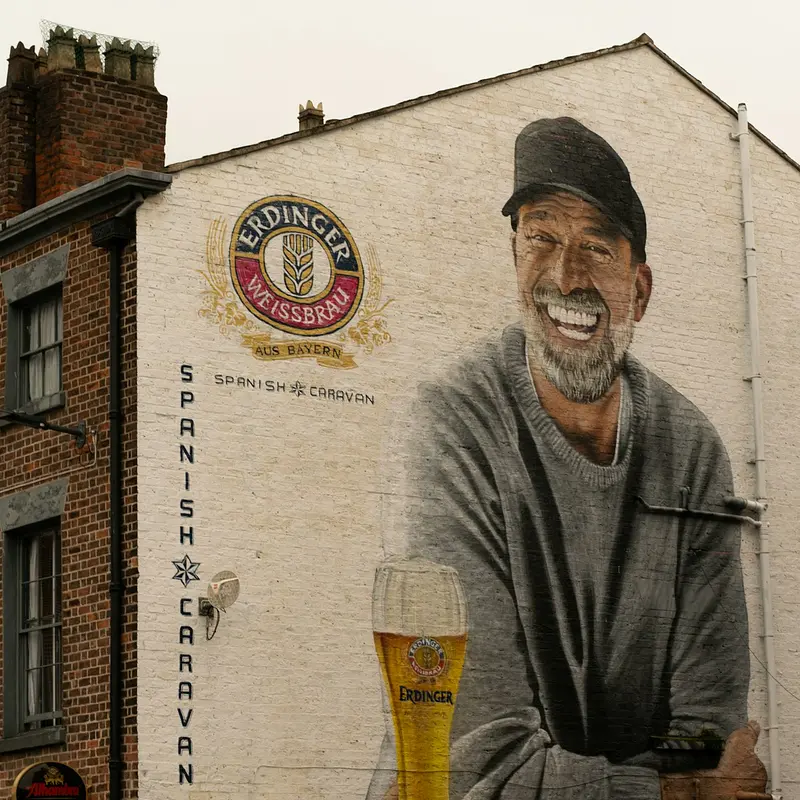
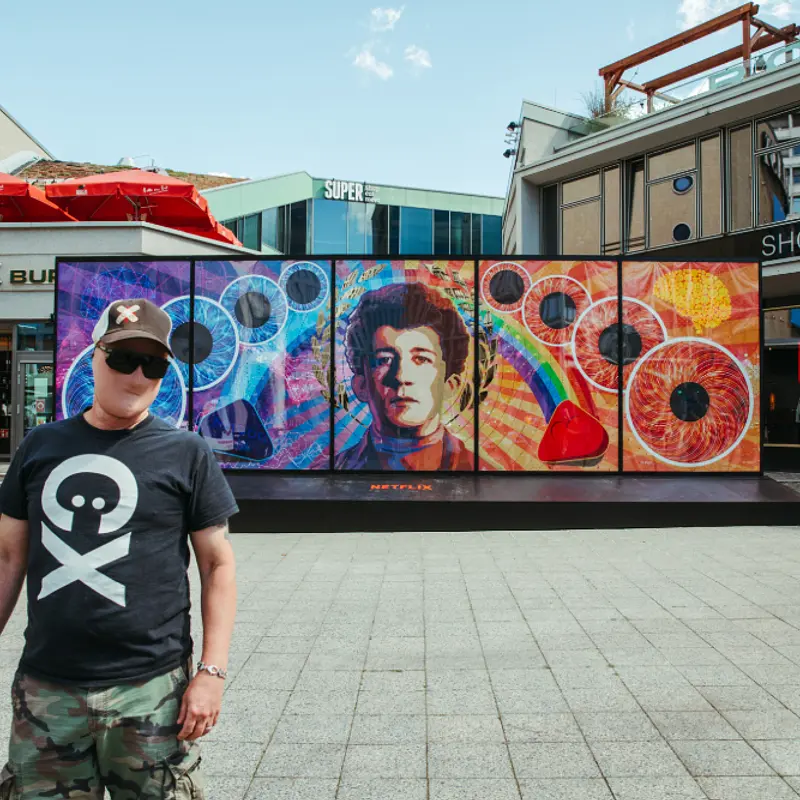
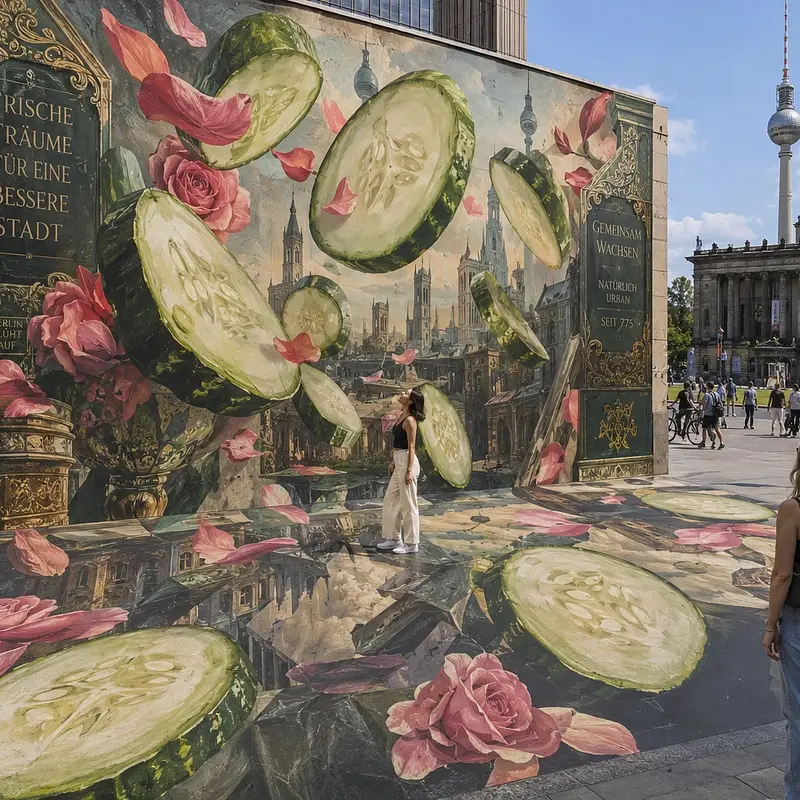
A culturally considered point of sale display does more than hold product — it communicates a brand world.
Why the Window Became an Exhibition Space
Luxury and fashion understood this first. Hermès has treated its retail windows as artistic commissions for decades. Leïla Menchari served as the house's chief window designer from 1978 to 2013, working with stone-cutters, sculptors, and artisans from the Hermès universe to build scenes — giant waves crafted from marble, fantasy Kelly bags in metal, Paris monuments in organza — that drew crowds to the Faubourg Saint-Honoré with no intention of purchasing anything that day. The windows were not advertisements. They were cultural objects.
Selfridges has built a similar practice throug ongoing artist window commissions — ceramicists, filmmakers, sculptors — that treat the Oxford Street façade as a rotating exhibition rather than a promotional canvas. A recent programme, New Age, commissioned fifteen emerging artists to produce windows and films around the theme of longevity, generating earned editorial coverage entirely separate from the retail offer inside.
Dover Street Market, founded by Rei Kawakubo of Comme des Garçons, goes further: the entire retail environment is rebuilt twice a year around a new set of curated installations. Retail consultant Robert Burke has described the approach as "less like a retailer's and more like an artist's." The result is a store that generates design-press coverage and cultural conversation without a conventional marketing budget.
These are not anomalies. They are the visible end of a spectrum of retail display design that prioritises cultural resonance over transactional efficiency — and they generate earned media, social sharing, and brand conversation that a standard POS unit never will. The logic transfers at smaller scale. A single well-conceived counter display for a niche fragrance brand, a seasonal window installation for an independent fashion label, an artisan-made point of sale unit for a premium spirits product — each is an opportunity to create a micro brand-world at exactly the point where a customer is closest to a decision.
What Artisan Craft Does at Point of Purchase
There is a well-documented gap between what customers notice and what they can articulate. In retail, this gap matters. Joann Peck and Terry Childers' foundational study "To Have and To Hold", published in the Journal of Marketing in 2003, demonstrated that haptic information — specifically material properties such as texture, hardness, and weight — is critical to product evaluation, and that barriers to touch (including a poorly designed retail display case) directly decrease consumer confidence and increase frustration. Customers notice the material quality of what surrounds a product. They just don't always have the language for it.
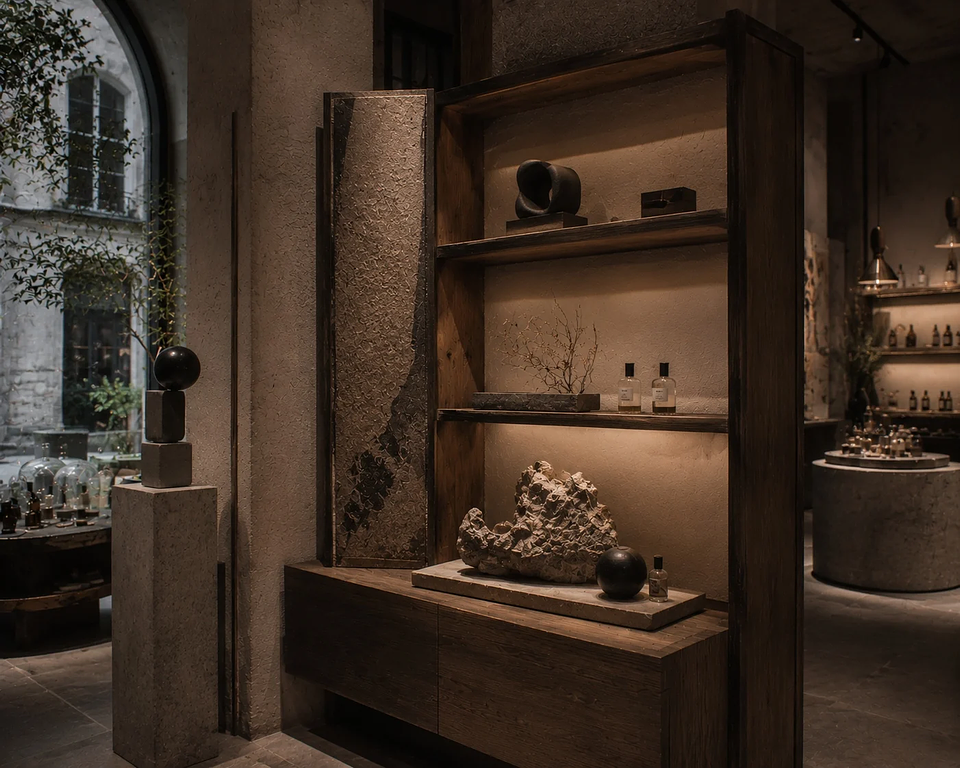
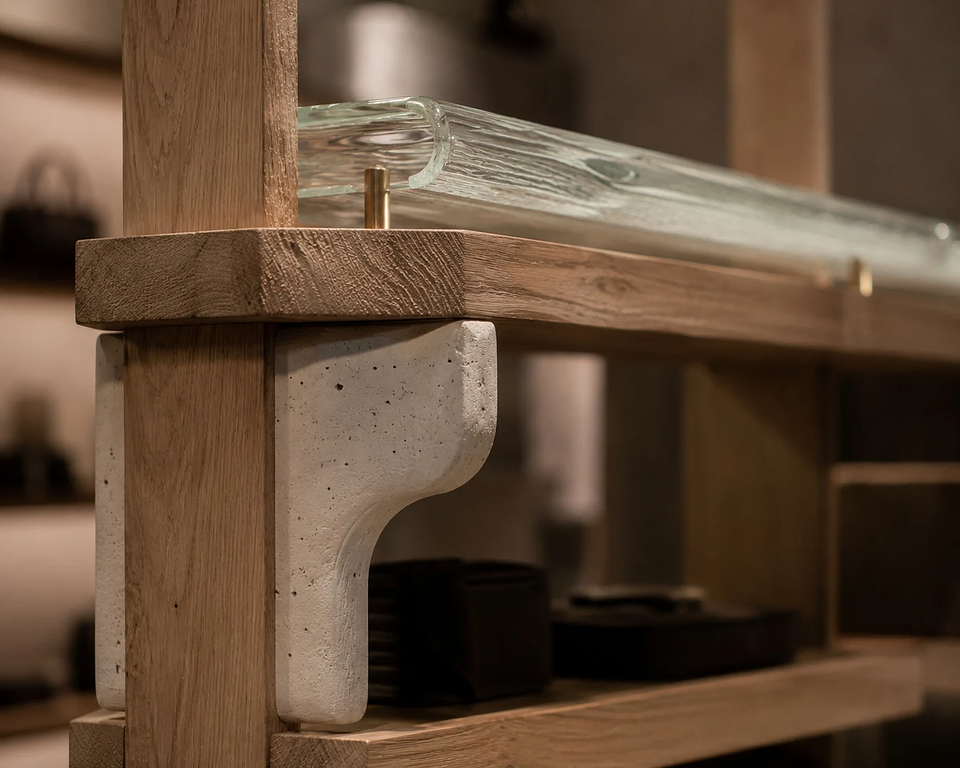
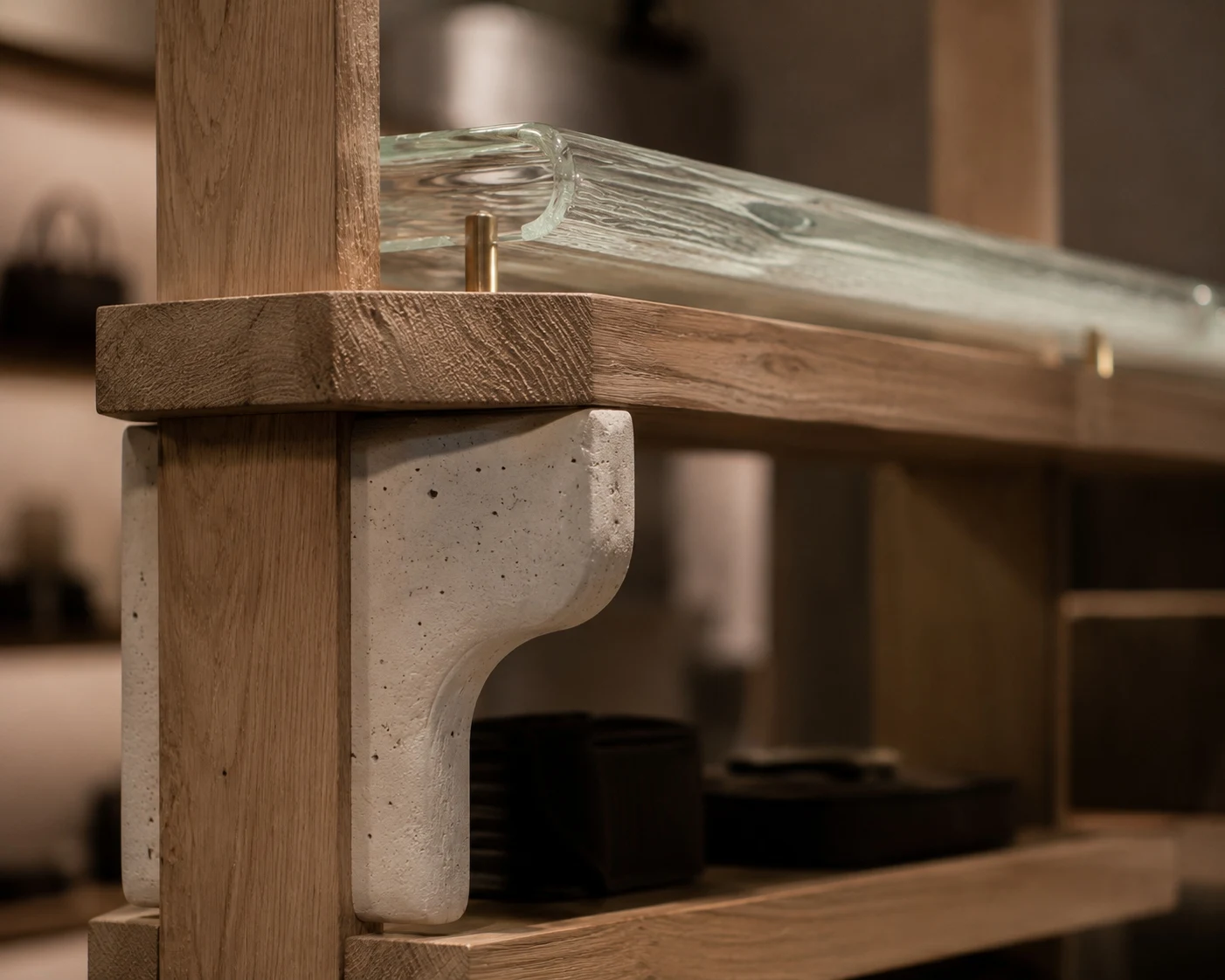
This is where artisan involvement in branded visual merchandising changes the outcome. A display unit produced by a ceramicist, a cabinet maker, or a metalsmith carries material decisions — proportions, surface texture, joinery — that mass-produced POS units structurally cannot replicate. Bottega Veneta applies this logic consistently: at the Soho flagship, creative director Matthieu Blazy collaborated with Brooklyn woodworking studio Vonnegut/Kraft on shoe display fixtures, door handles, and signage; at the Paris Avenue Montaigne store, glass hanging rails were hand-cast by Venetian artisans — a direct material reference to the brand's origins in the Veneto region. Neither detail announces itself. Both are felt. The result is a display environment that communicates craft heritage at a subconscious level, reinforcing exactly the brand signals that the product itself is meant to carry.
This is not about ornamentation. It's about alignment. If your product claims to be handmade, small-batch, or rooted in a craft tradition, the display that holds it should be able to make the same claim. When it can't, there is a gap between what the brand says and what the brand shows — and customers, even without articulating it, feel that gap.
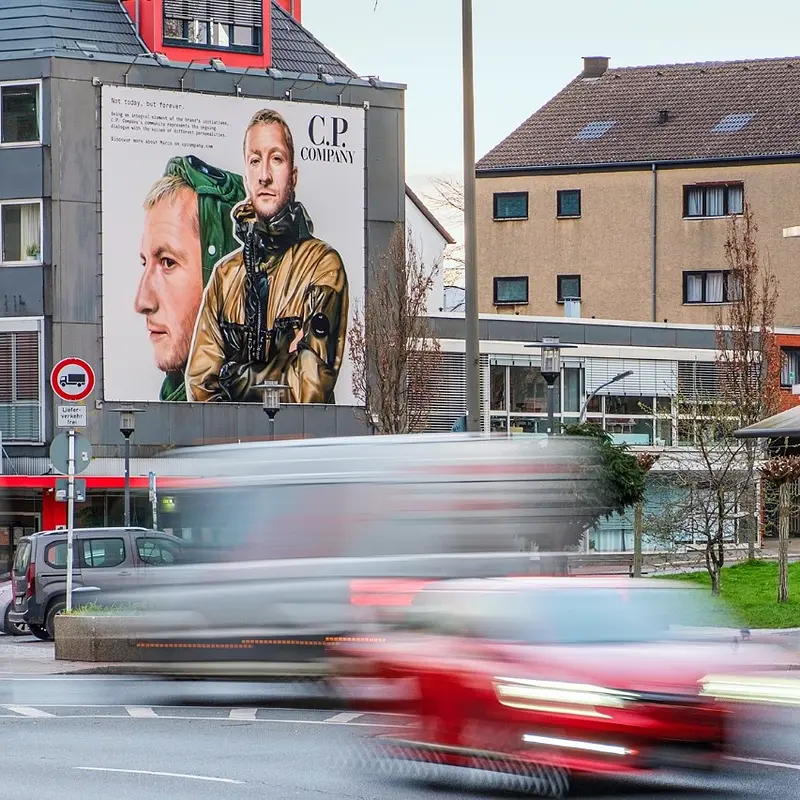
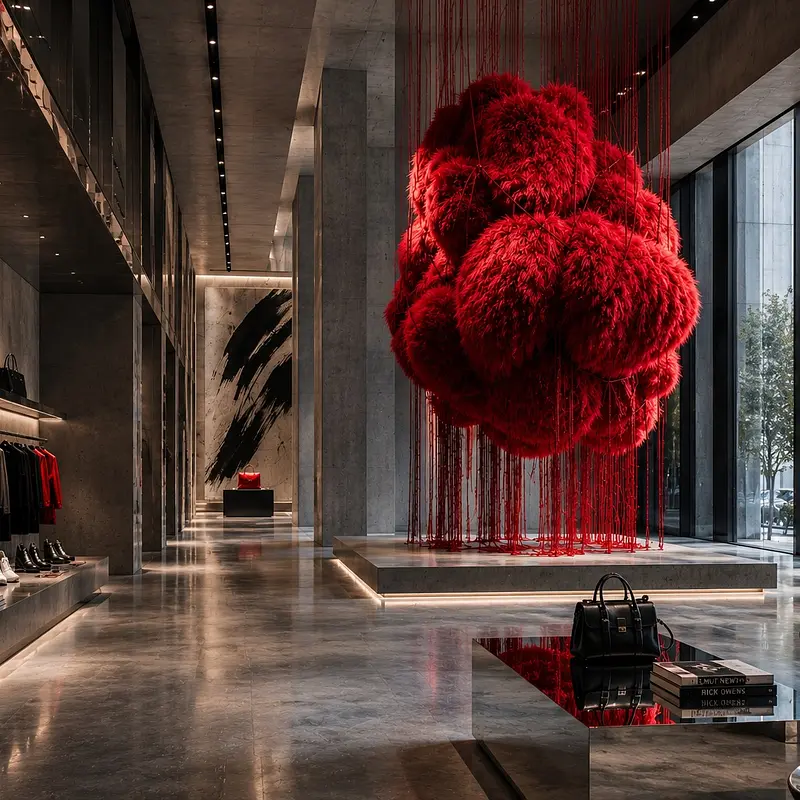
When display fixtures are made by craftspeople rather than manufacturers, the brand's values are communicated before a product is touched.
Seasonal Display Strategy: Staying Culturally Relevant Without a Full Redesign
One of the structural challenges for brands in physical retail is how to stay culturally current without the cost and disruption of a full interior overhaul. Seasonal display strategy is the answer — and it is consistently underused.
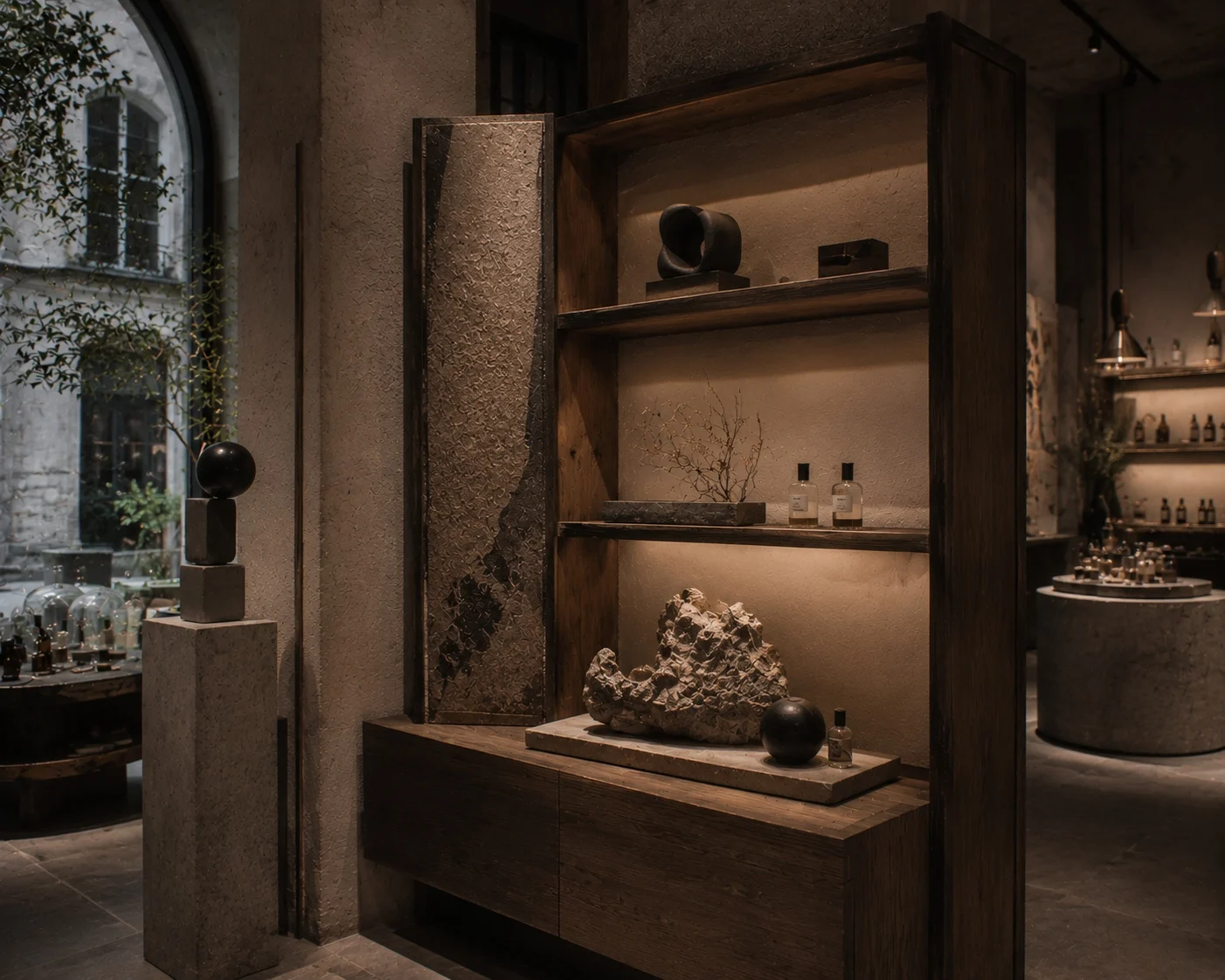
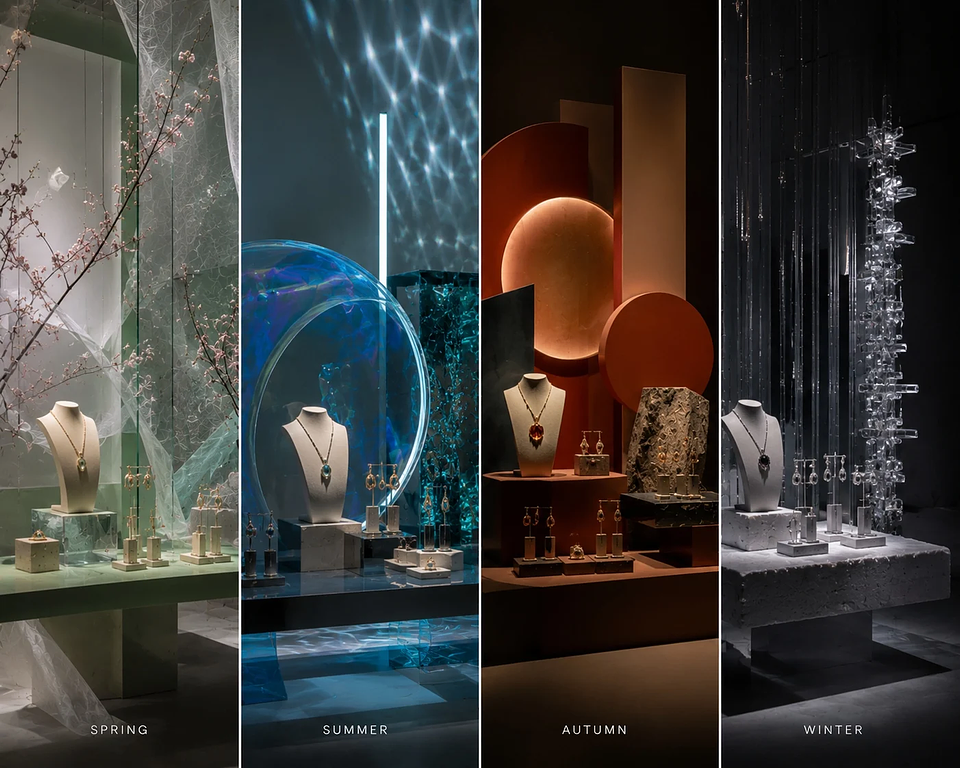
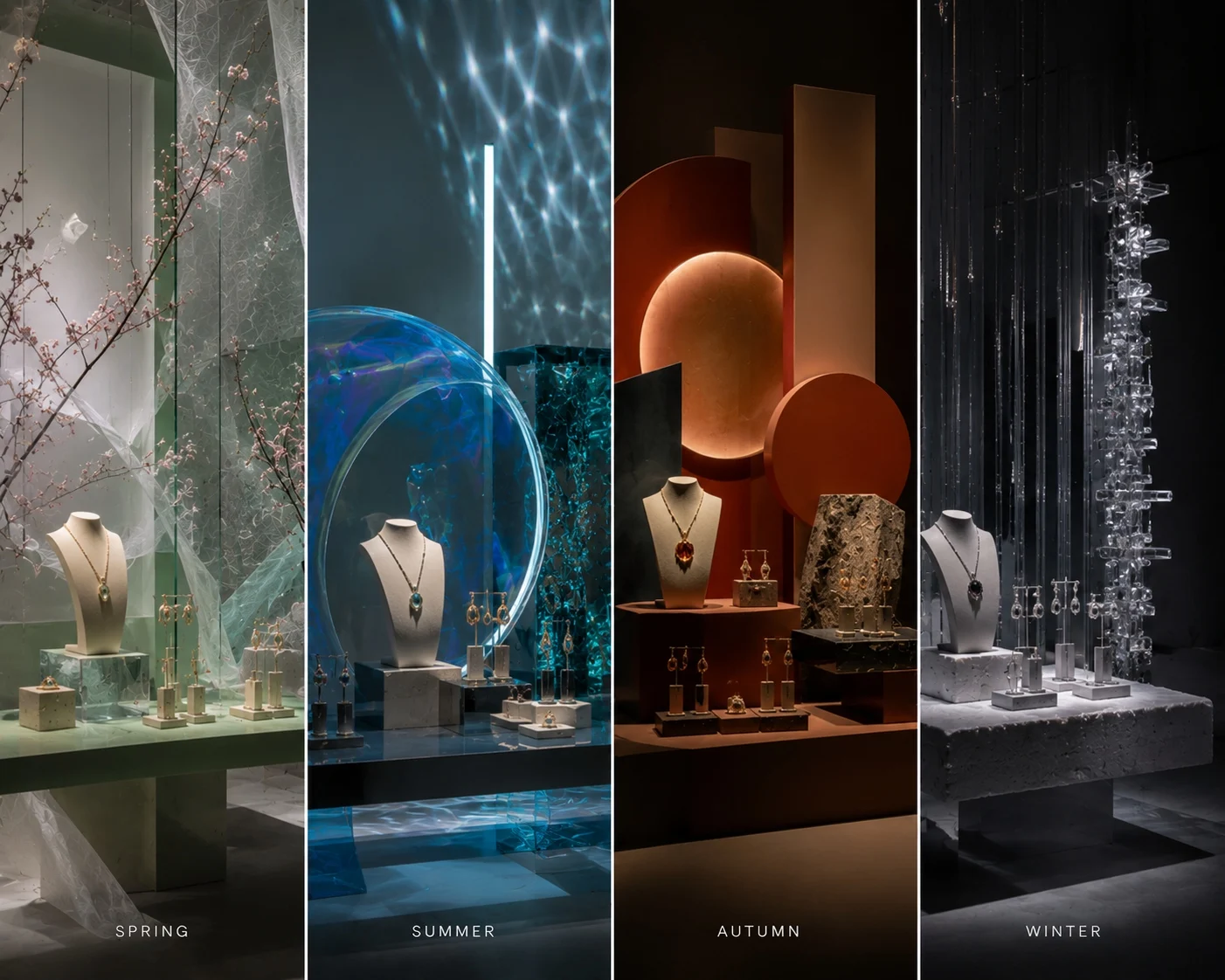
A brand that treats its seasonal point of sale design as a rotating cultural programme — commissioning a different artist, artisan, or cultural collaborator each season — builds something cumulative. Each iteration adds a new layer to the brand's cultural identity. Customers who visit repeatedly experience a brand that is actively in conversation with culture, not one that refreshed its colour palette for autumn.
This approach also creates a repeatable brief structure. Rather than starting from zero each season, the brief becomes: who do we bring in this time, and what aspect of our brand world do we express through their lens? The artistic collaborator changes. The brand's core cultural positioning doesn't. Done consistently, this is how a brand builds cultural authority at the display level — one season at a time, without a full spatial redesign.
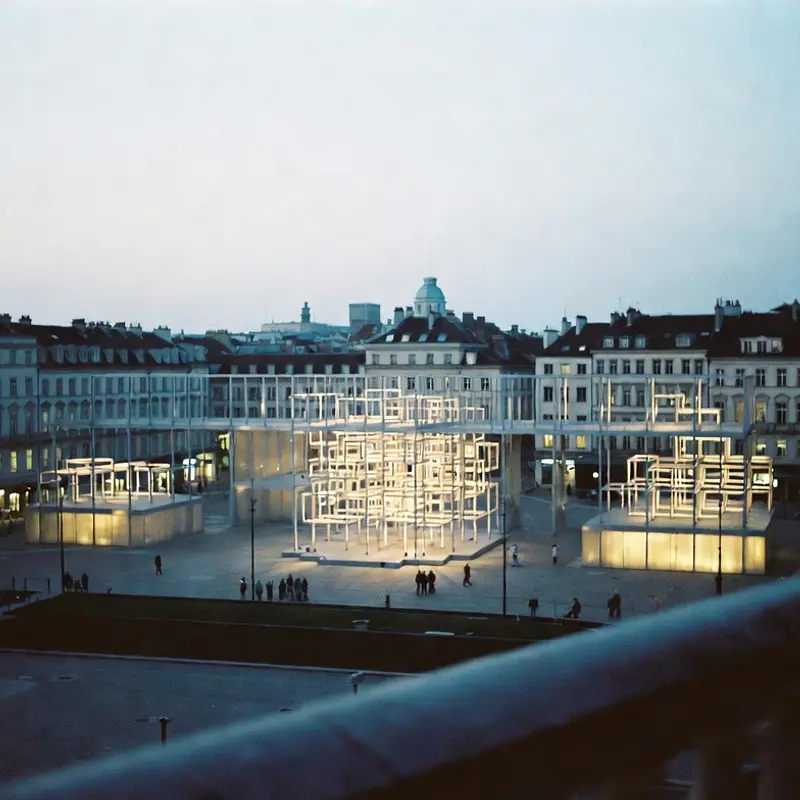
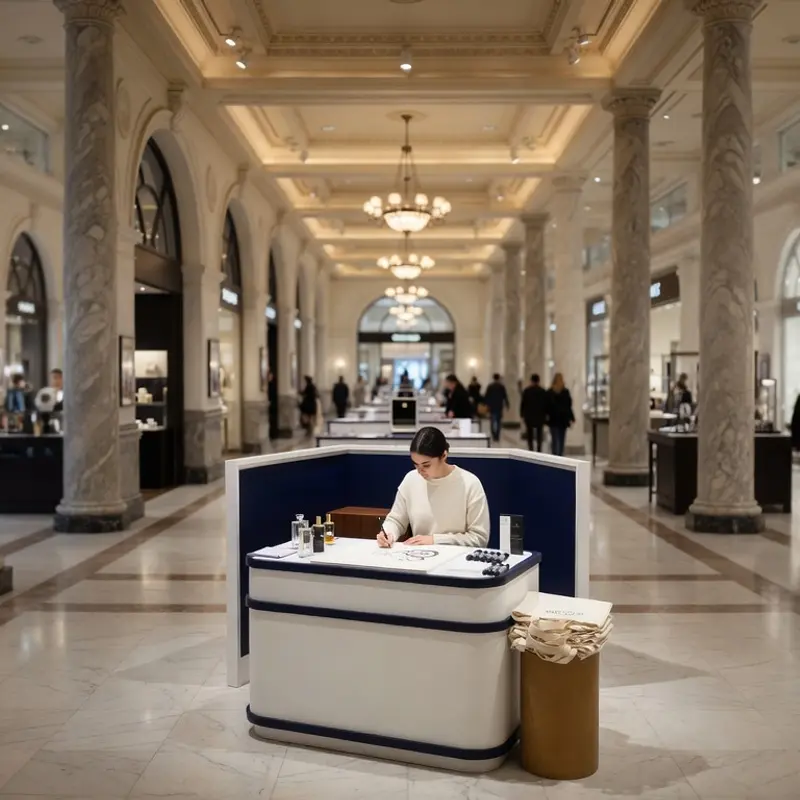
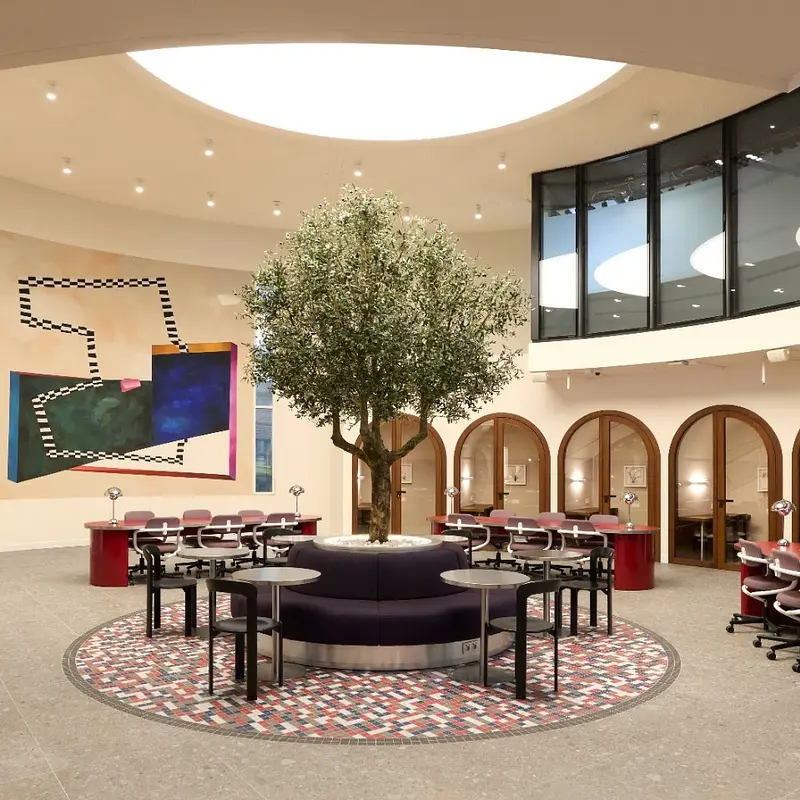
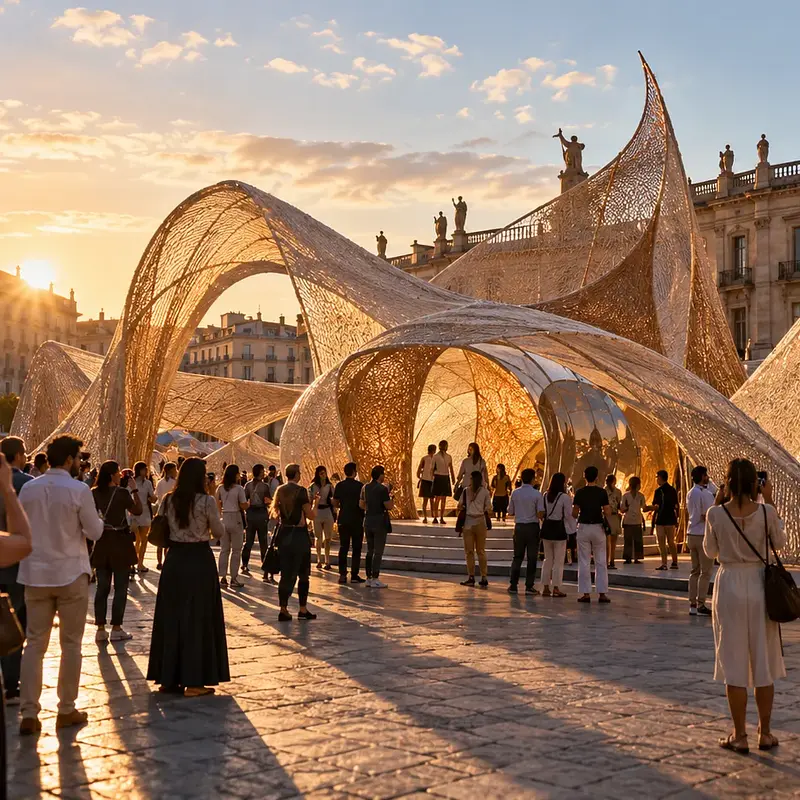
Rotating seasonal displays allow brands to build cultural depth incrementally — without a full spatial redesign. AI-generated.
The Social Moment Hiding in Your Point of Sale
In-store brand displays are predominantly evaluated as physical assets — traffic drivers, product holders, price communicators. The metric is sell-through. But the most culturally considered displays have always generated a second return: they get photographed.
Hermès windows draw tourists with cameras. Dover Street Market installations circulate on design blogs without the brand spending a cent on distribution. The Tiffany & Co. takeover of Selfridges' windows in London — featuring original works by Damien Hirst, Rana Begum, and two other contemporary artists — generated substantial press coverage and guided gallery-tour experiences that extended the display's life well beyond its physical footprint. A considered point of sale design for a niche beauty brand can generate more organic reach from a single display than a paid digital campaign targeting the same audience. The display is physical. Its cultural life is not.
The design decisions that drive social sharing are specific and learnable: compositional depth that rewards closer looking; material or craft details that invite the camera; a conceptual tension that makes someone want to explain what they're looking at. These are not accidental. They are the result of briefing a display for cultural resonance rather than operational efficiency — and they represent a return on investment that standard retail display metrics entirely miss.
How to Brief a Display That Goes Beyond the Mood Board
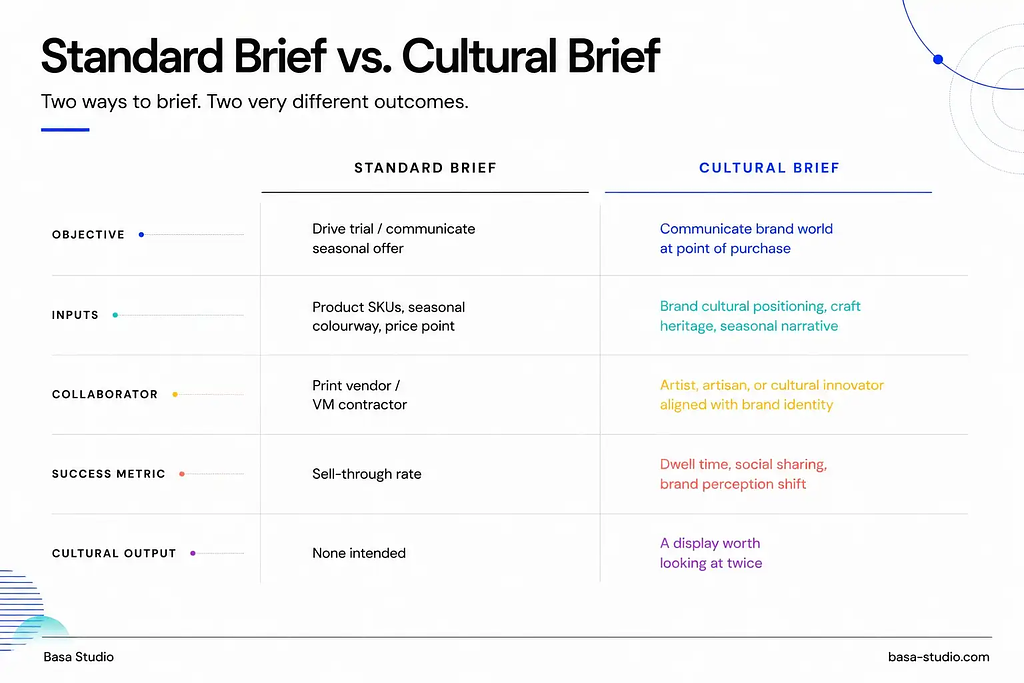
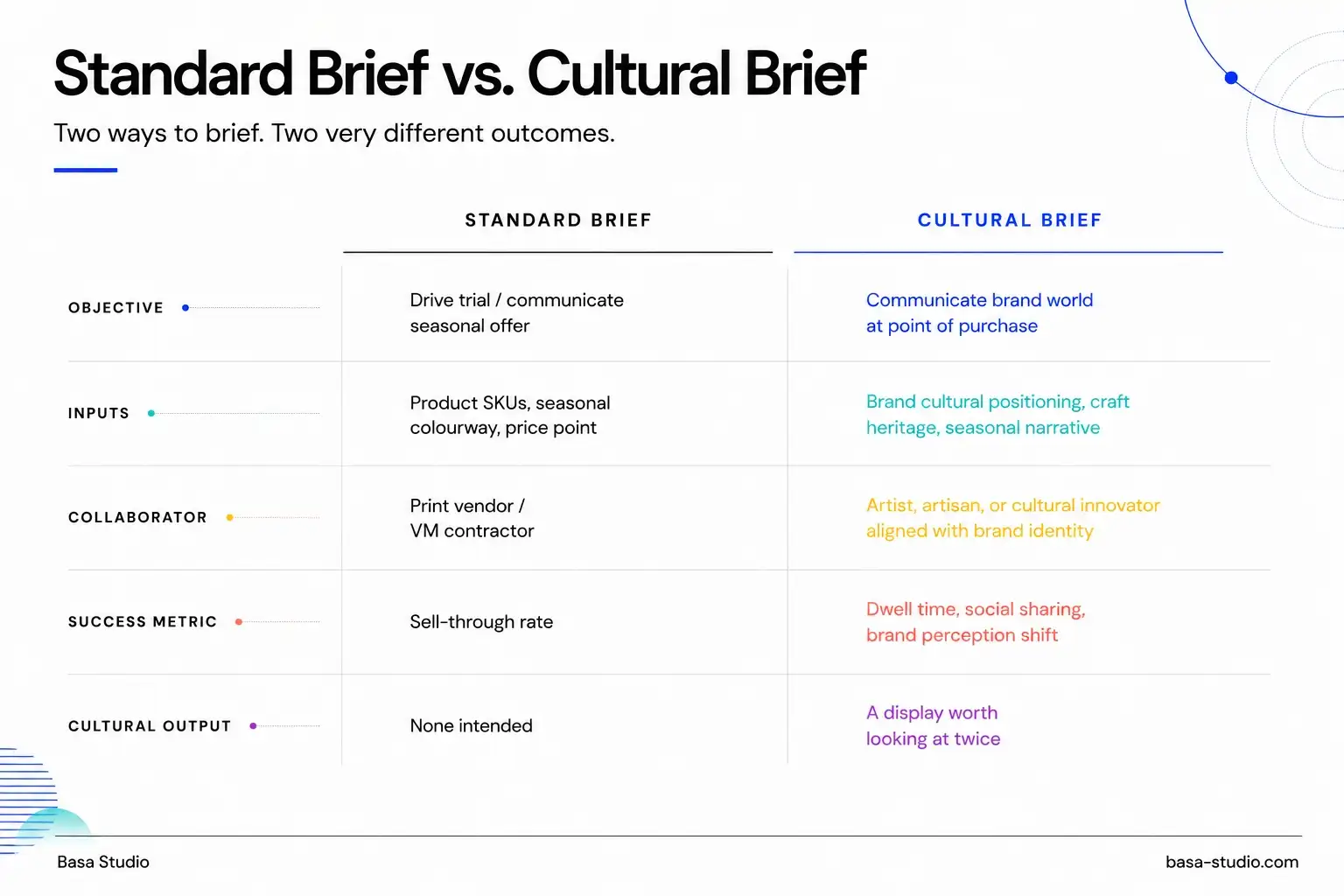
Most display briefs are visual decks. Reference images, colour palettes, product shots, seasonal themes. They communicate the aesthetic direction. They say almost nothing about the cultural idea — what the display should make someone feel, think, or remember.
A brief that produces culturally resonant branded visual merchandising starts with a different set of questions: What does this display communicate about who made our product, and why it was made the way it was? What material language reinforces — rather than contradicts — our brand's claimed values? What is the one cultural signal we want this display to send, and who is the right collaborator to send it?
These questions are harder to answer than "what is our Q3 seasonal colour story." They require brand clarity that not every marketing team has invested in. But they are the questions that separate a display worth looking at from one that simply exists. The practical constraints — timeline, budget, vendor relationships — don't change. What changes is the ambition inside them.
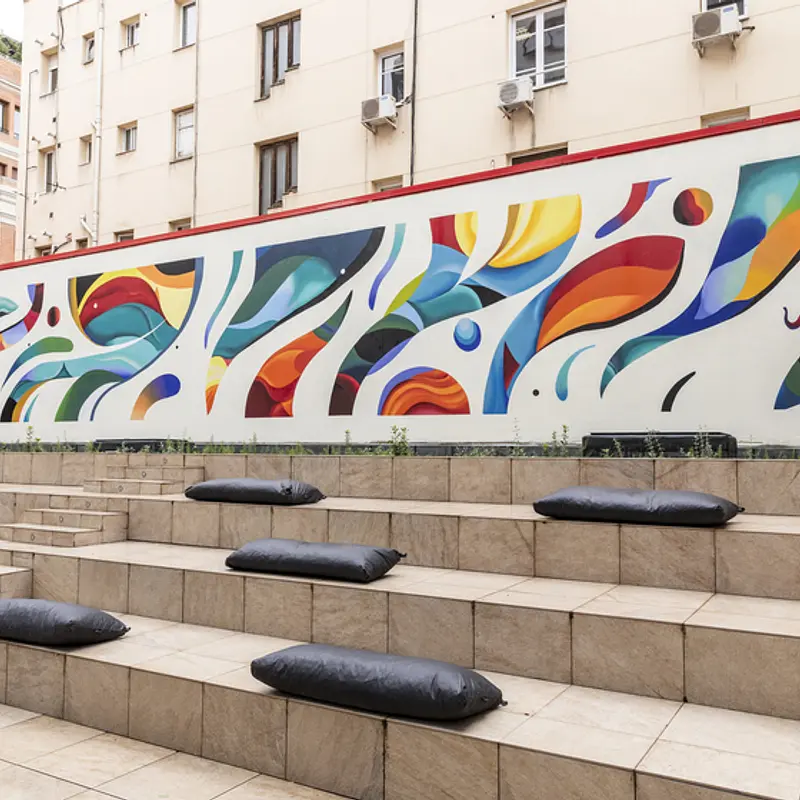
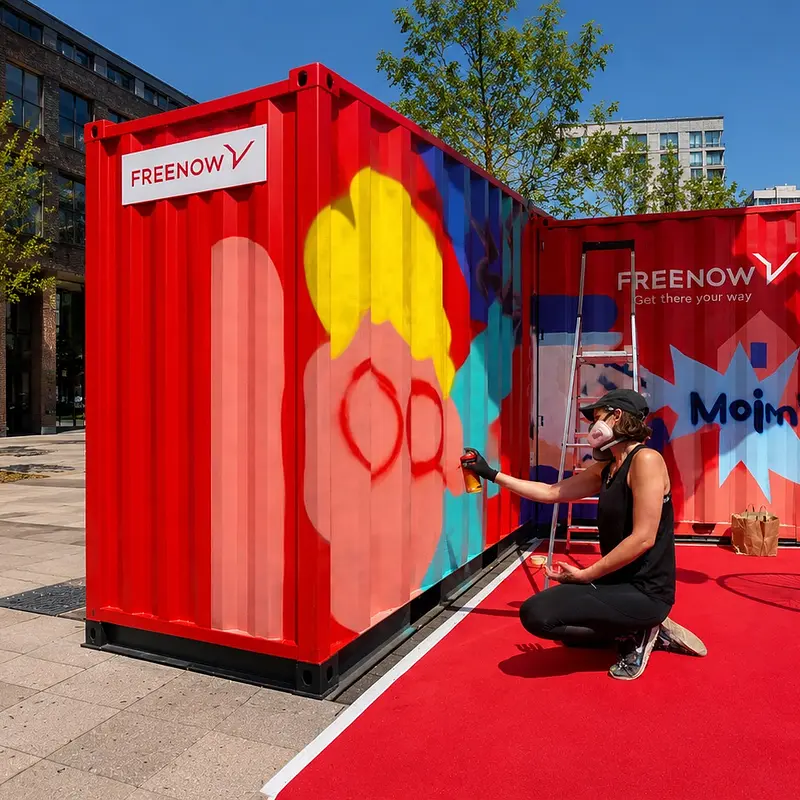
The brief shapes the display: from selling a product to expressing a brand’s cultural identity.
Display Strategy and Brand Cultural Positioning
An in-store display exists within a brand's broader cultural brand building strategy — or it should. When it doesn't, the disconnect is visible at exactly the wrong moment: when a customer has already found the product and is deciding whether to pick it up.
The brands that get this right treat display strategy as a downstream expression of cultural positioning, not a separate operational function. The creative direction that governs their campaigns, their packaging, their spatial environments — the same cultural logic should reach the display. Not a diluted version of it. A concentrated one.
This requires the brand, the agency, and the display execution to be working from the same cultural brief — not just the same visual guidelines. It requires that the person commissioning the display knows what the brand stands for beyond its category and price point. And it requires that the brief leaves enough creative space for the collaborator to bring cultural depth to the execution, not just technical competence.
The Brief Determines the Outcome
In-store brand displays will not disappear. Physical retail — even in a hybrid world — remains a moment of irreducible presence: a customer, a product, a space. What happens in that space is either a cultural statement or a missed opportunity. The budget is not always the variable. The brief almost always is.
Brands that are serious about cultural depth at the display level don't need to spend more. They need to brief differently — to bring the same strategic intentionality to a counter unit that they bring to a campaign. When they do, the display stops being store operations and starts being something a customer remembers.
For brands ready to move beyond the display and rethink the full retail environment, the conversation continues in Retail & Interior Design: Building a Brand World From the Ground Up.
Cultural depth at point of purchase doesn't require a full retail redesign. Sometimes a single display is enough. AI-generated
Related creative stories
Browse through other features, interviews and guides to discover creative brand collaborations, meet innovative artists and creators, find out how new artforms are energizing advertising, & more.
We're excited to hear from you! If you're looking for artistic solutions for your next creative marketing campaign, send us your briefing. We can also help create a killer concept if you're in an early ideation phase. Check out our services for more.
Send your briefing
About you
THANK YOU
Your inquiry has been sent
We have received your inquiry. We'll get back to you within 24-48 hours to discuss your project. If you need urgent assistance, reach us on WhatsApp: +49 176 432 64506. In the meantime, we invite you to explore our insights, case studies, and lessons from building culturally grounded brand experiences.
Please contact us by phone if you're not able to reach us via this form.
THANK YOU
We have received your inquiry. We'll get back to you within 24-48 hours to discuss your project. If you need urgent assistance, reach us on WhatsApp: +49 176 432 64506. In the meantime, we invite you to explore our insights, case studies, and lessons from building culturally grounded brand experiences.
We use cookies to help empower our artists and make them accessible to clients. Check out our Privacy Policy and Terms of Service to see how your data can make a difference.